
Los Angeles · Orange County · San Diego · Las Vegas
South Asian Wedding
Photographer & Videographer
South Asian Wedding Photography & Cinematography
Grand, lavish, and impossible to repeat
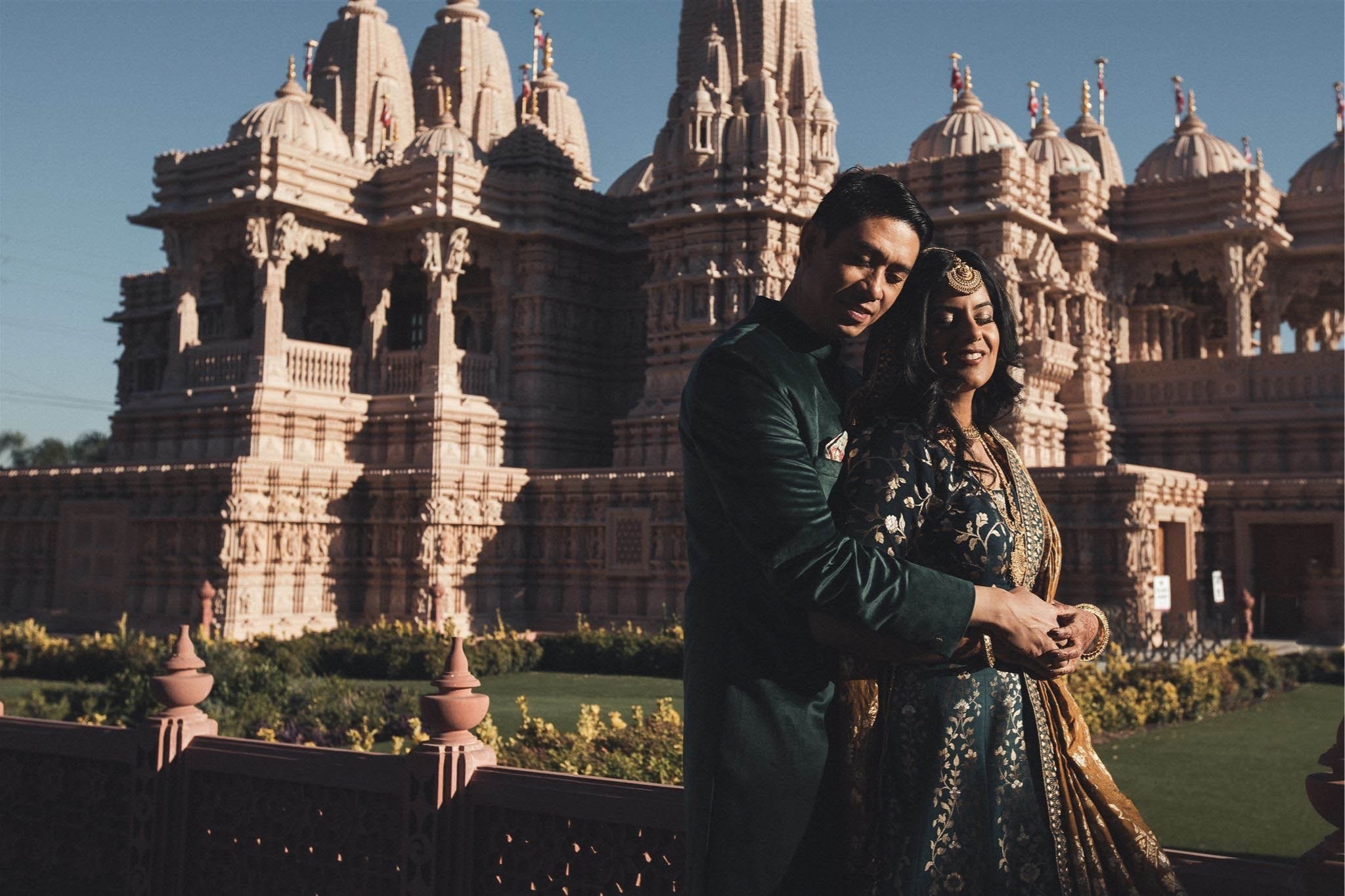
South Asian weddings are a grand and lavish affair that involves several pre-wedding, wedding day, and post-wedding rituals. They are known for their colorful celebrations, intricate decorations, and traditional customs that vary according to the region, religion and community of the couple. Covering one well means knowing what happens next — and standing in the right place before it does.
Recent Indian weddings
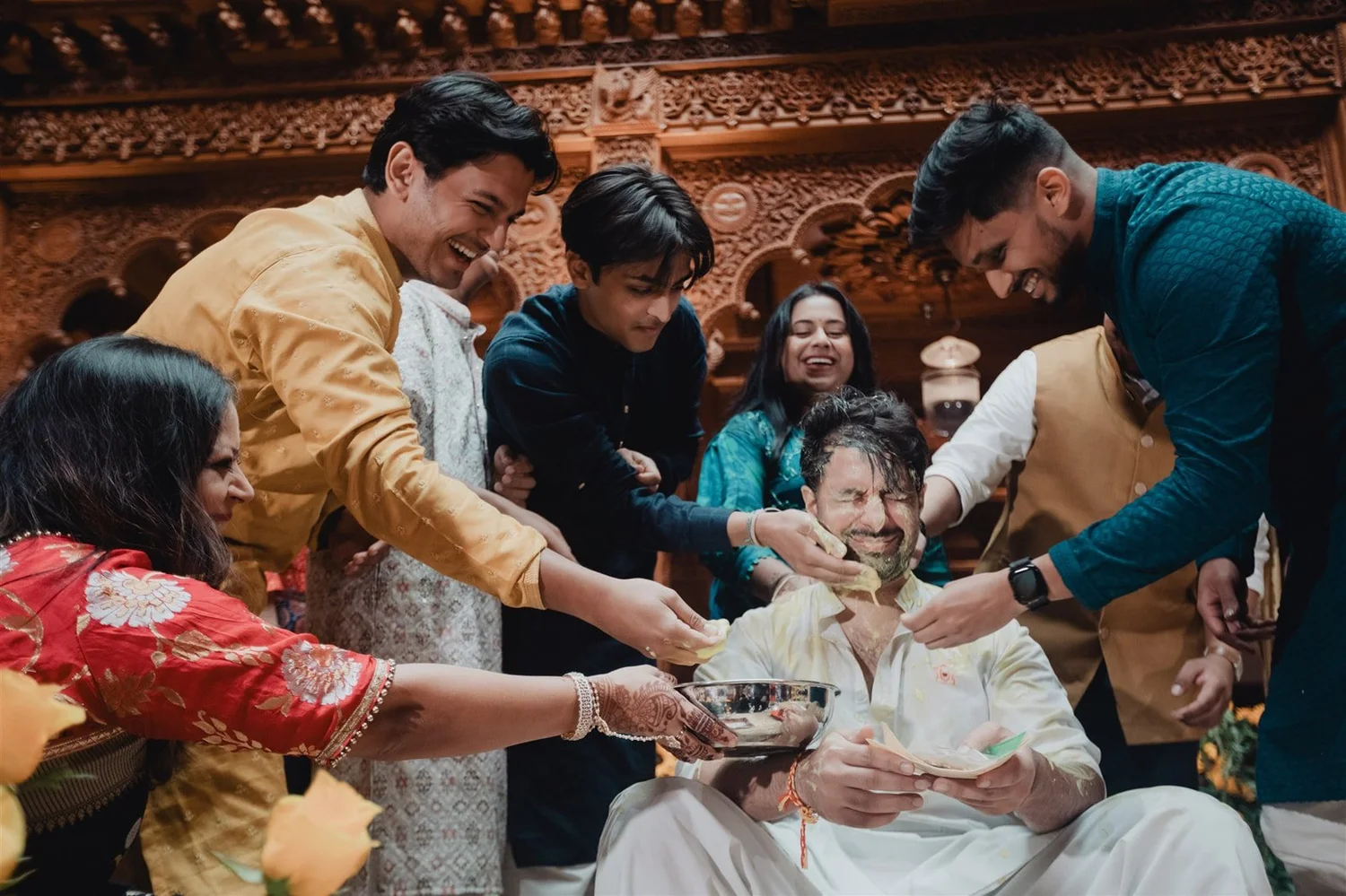
Haldi, Sangeet, Baraat and Pheras — shot across Southern California.
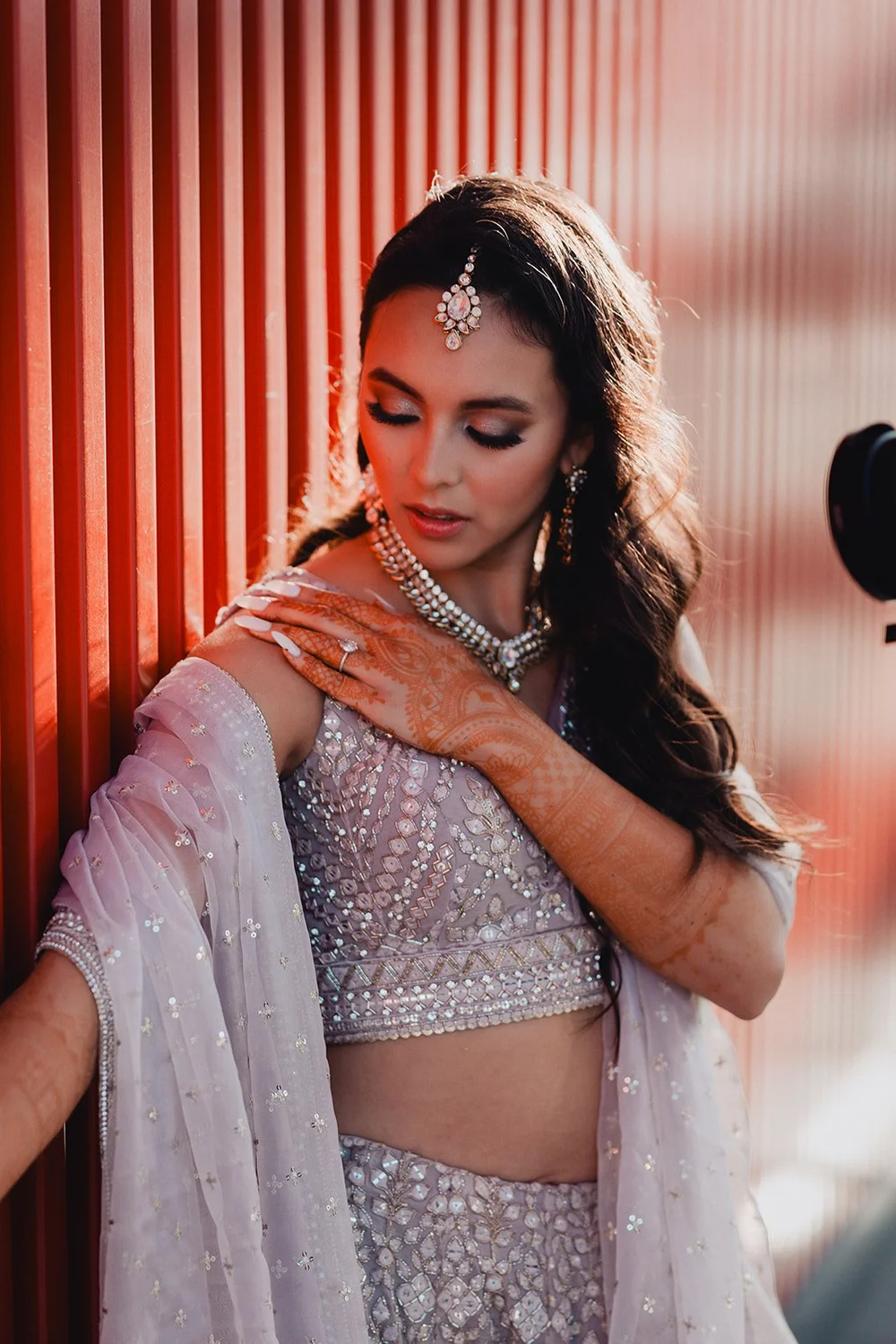
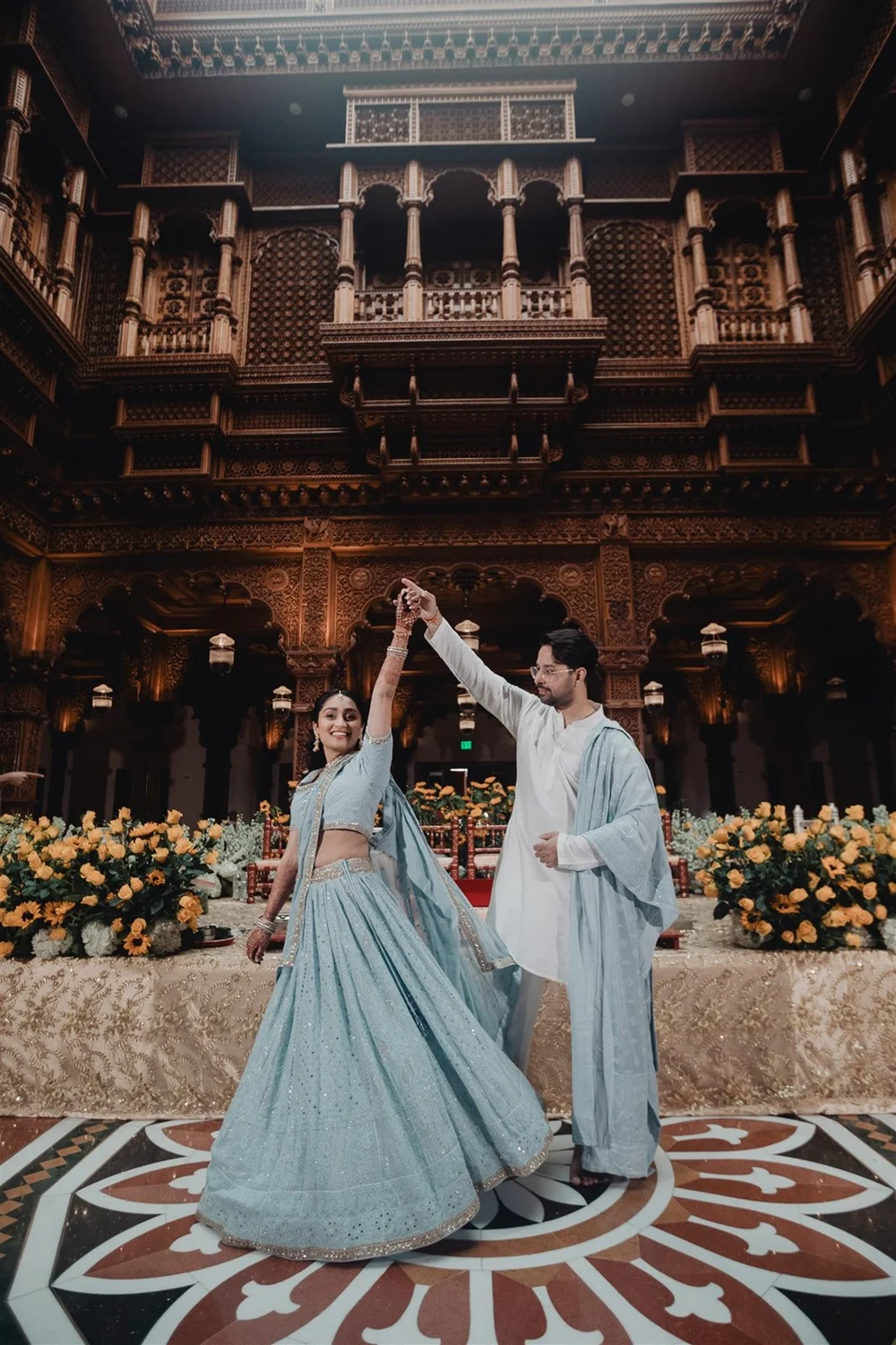
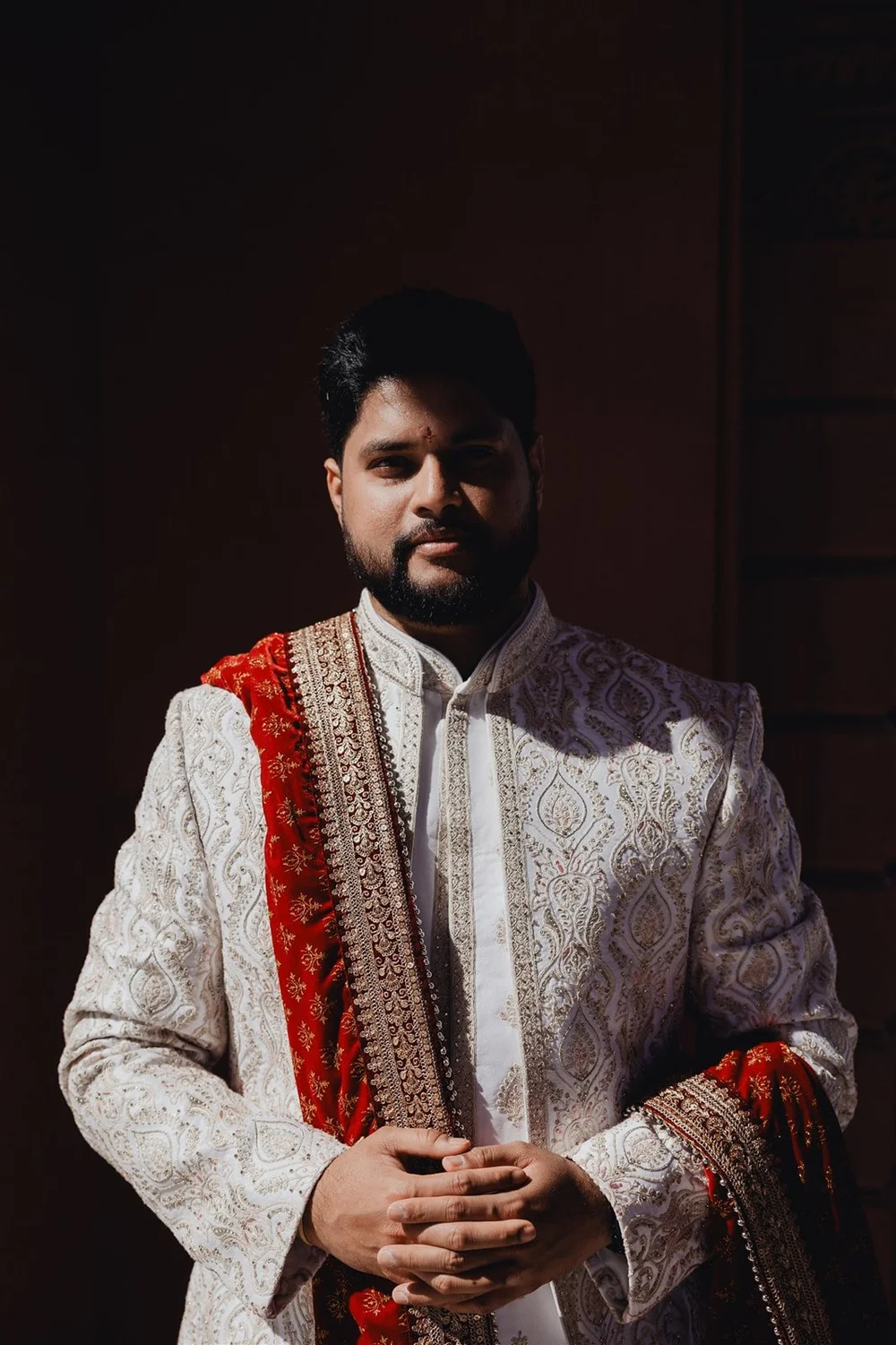
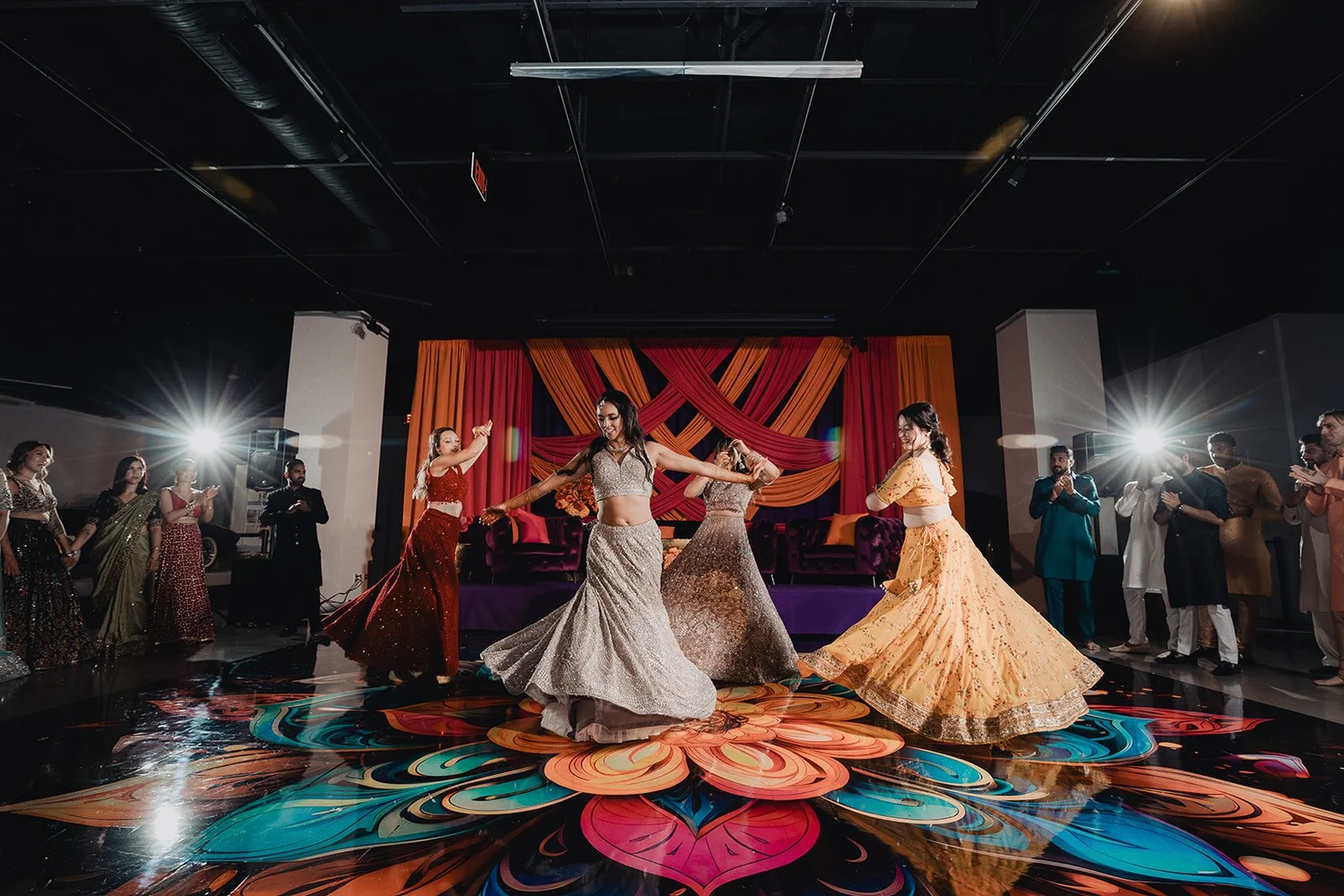
Your wedding day is a once-in-a-lifetime event filled with memories you'll want to hold onto forever.
See the full Indian wedding portfolioEvery Tradition
One studio, many ceremonies
“South Asian” is the umbrella. Underneath it, every community does the day differently — so each one has its own page, with the rituals, timelines and venues that actually apply.
Wedding Videography
The same day, edited before you leave
The same-day edit is the hardest thing a wedding team can pull off — the whole day filmed, cut and color-graded within hours, then played for hundreds of guests before the reception ends. Photo and cinema work as one team, so nothing gets covered twice and nothing gets missed. Two South Asian wedding videos below — press play.
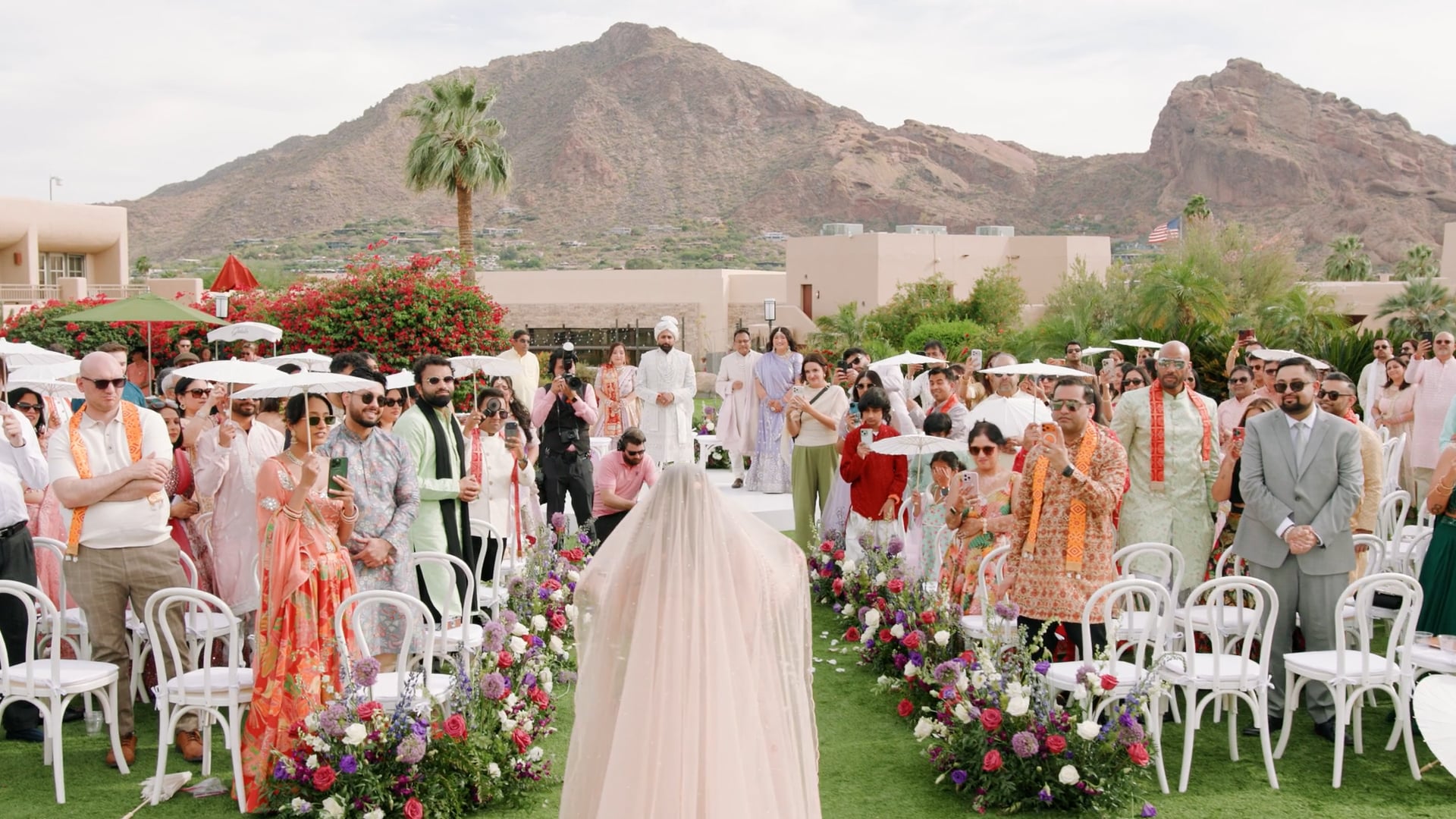
Neki & RishiCamelback Inn & Andaz, Scottsdale, AZ · 4:53
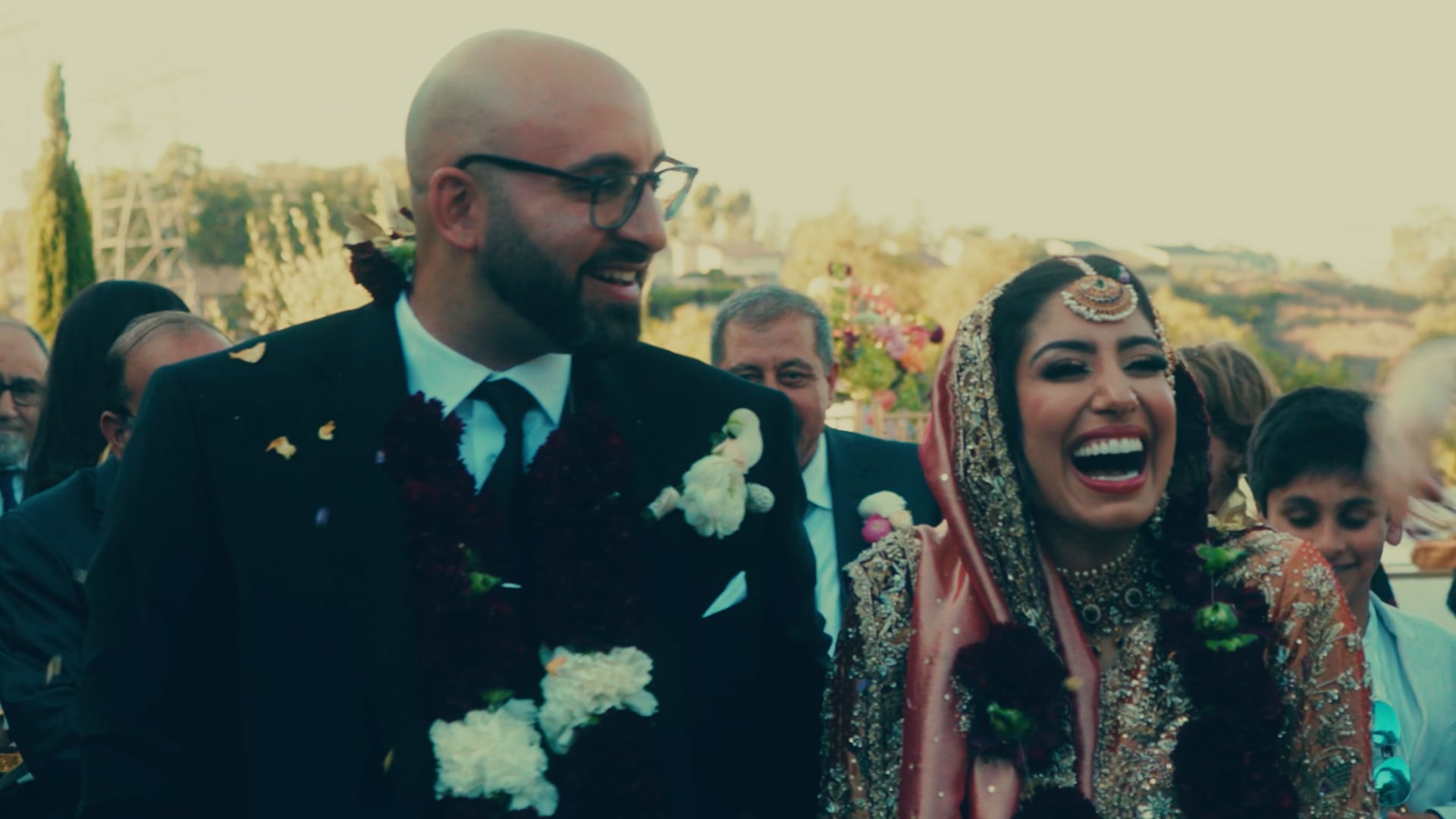
Arshiya & KhaderAnaheim Hills Golf Club · 7:00
More from the reel
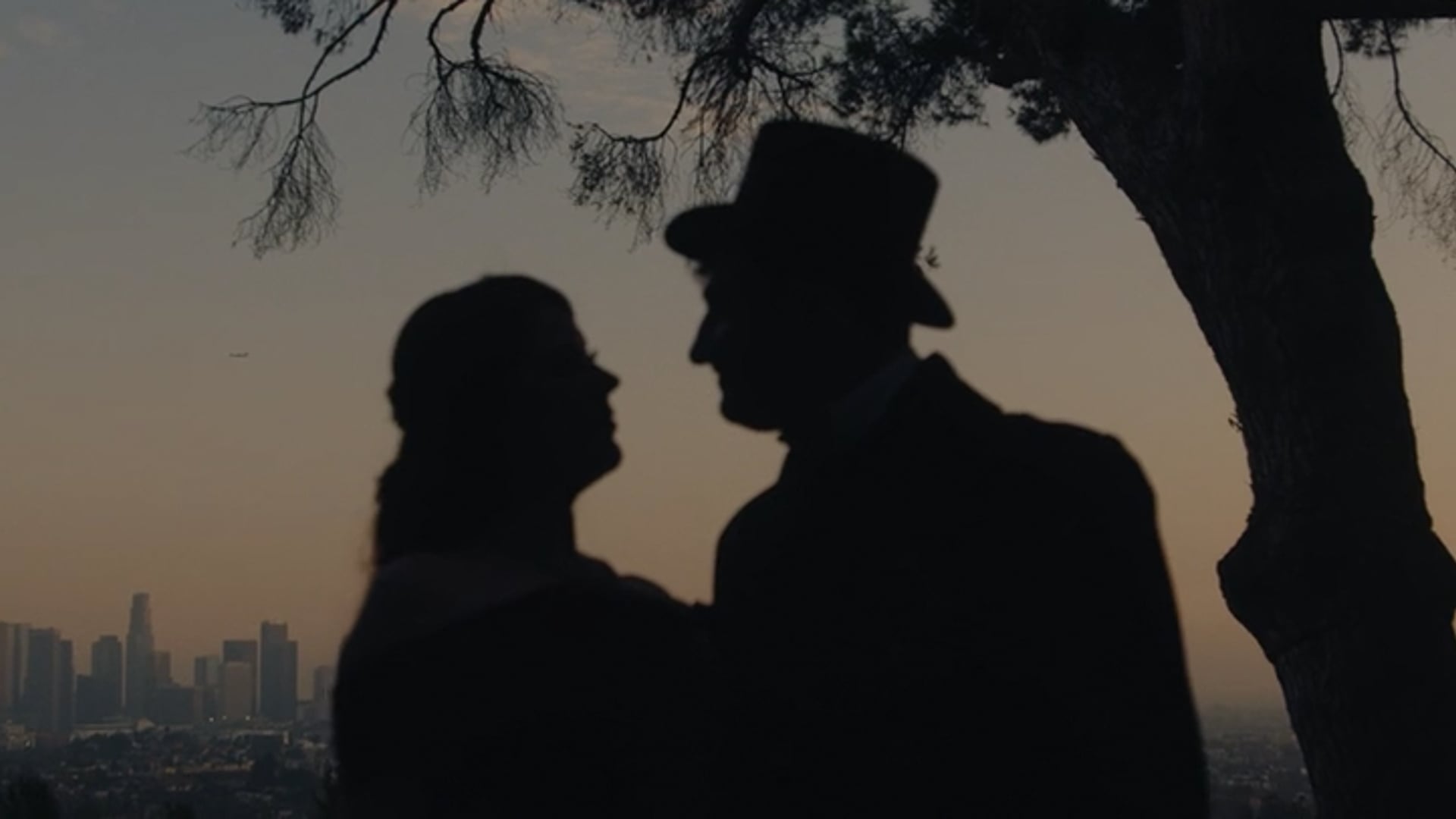
Della & SamThe Paramour Estate · 5:20

Evelyn & RonaldThe Oviatt, Downtown Los Angeles · 4:20
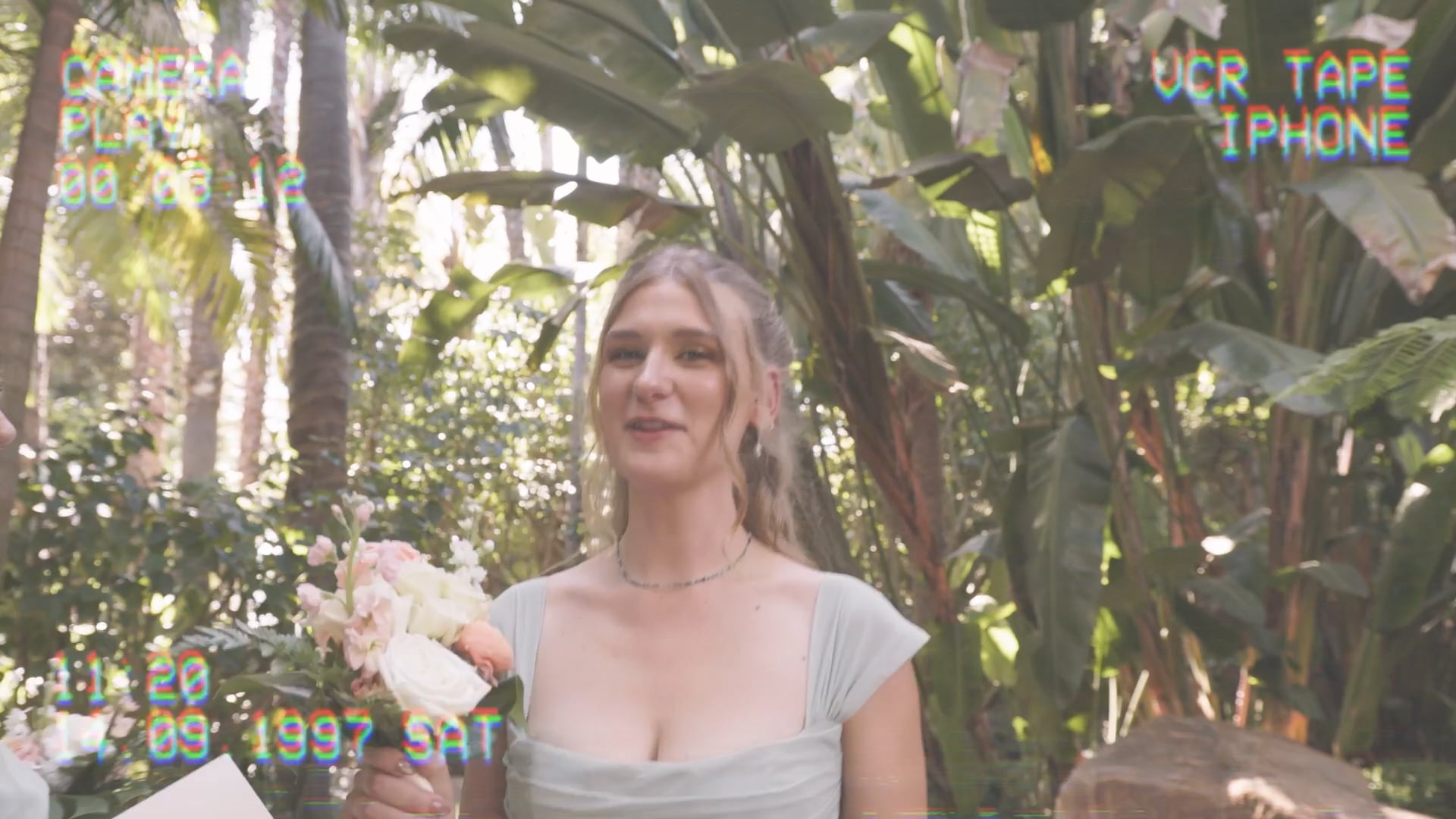
Liz & KellenGrand Tradition Estate · 7:15
Traditions of Indian Weddings
Eleven ceremonies, one story
The ceremonies below are the Hindu Indian sequence — the one we're asked about most. Sikh, Punjabi and Pakistani weddings run differently; each has its own page above.
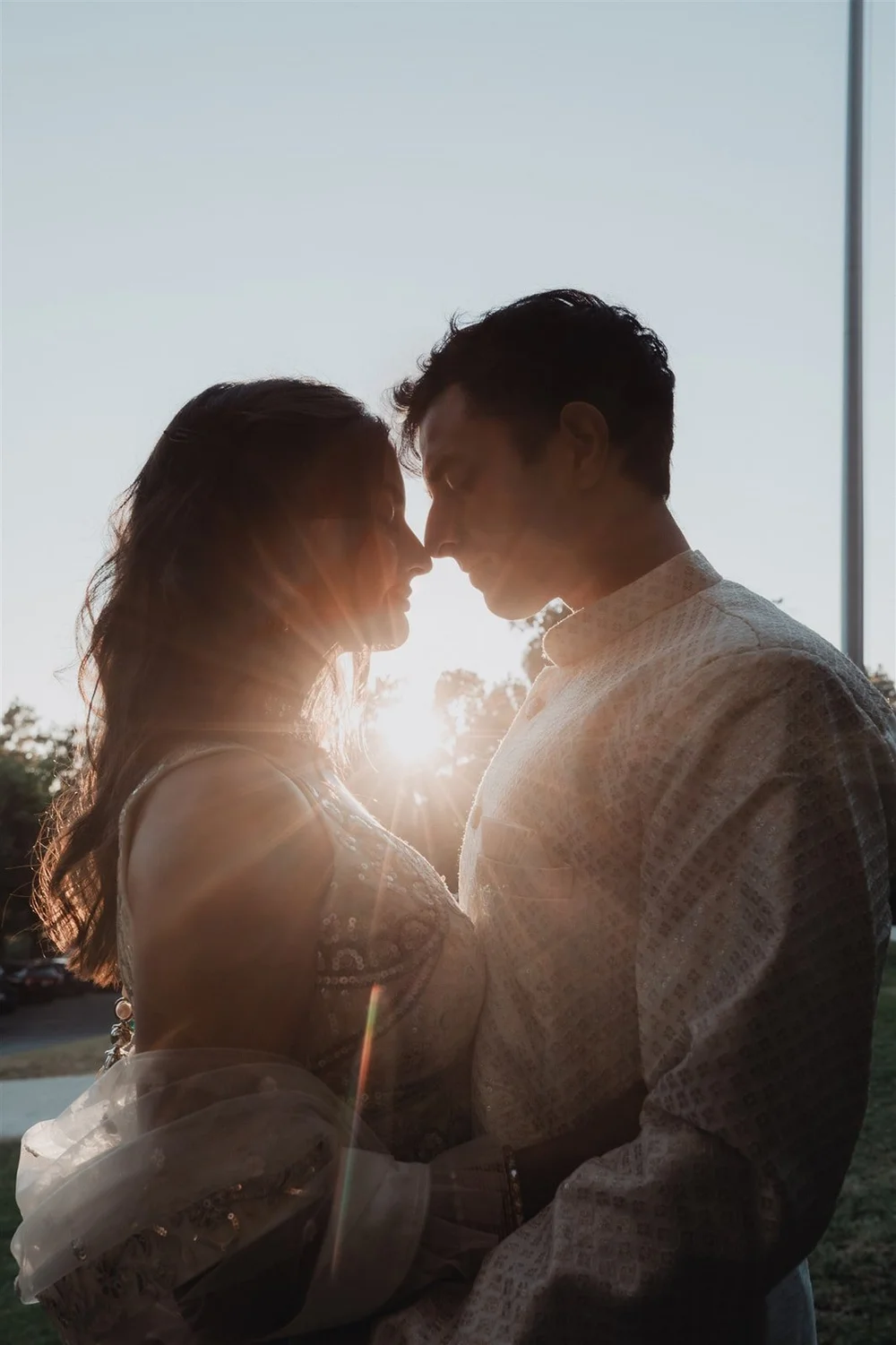
Indian Engagement Ceremony
An engagement ceremony, also known as Sagai, is a pre-wedding ritual where the bride and groom exchange rings and formalize their engagement. This intimate event happens at the bride's home or a banquet hall with close family members and friends as attendees. The exchange of rings symbolizes the couple's commitment to each other and marks the beginning of their journey together.
Roka ceremony guide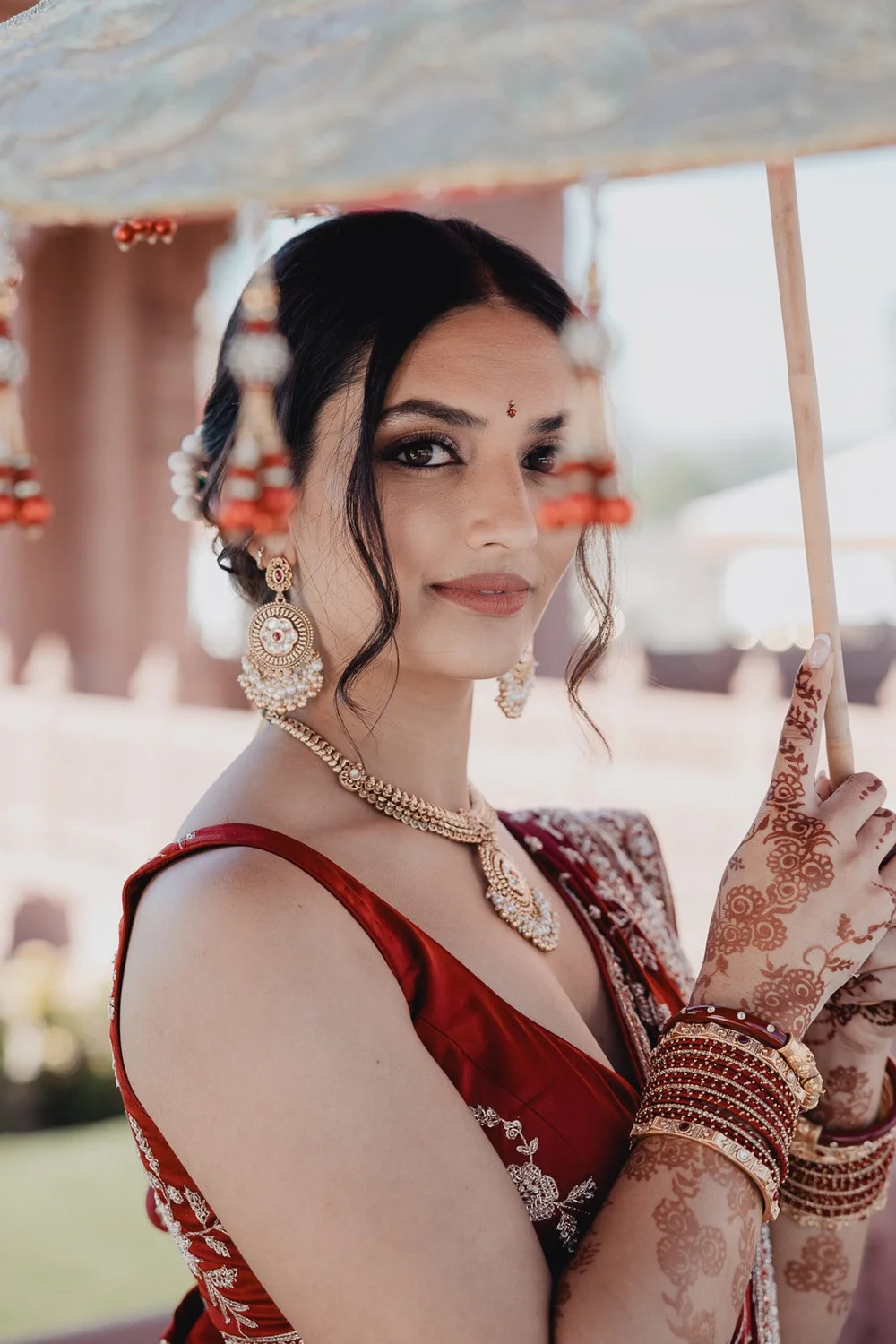
Mehendi Ceremony
The Mehendi ceremony is a pre-wedding ritual held a day or two before the wedding day. During this ceremony, a professional henna artist or a close relative applies intricate henna designs on the bride's hands and feet. The henna designs symbolize love, prosperity, and good luck for the bride. It usually takes a few hours to dry, and the bride is advised to keep it on for as long as possible to deepen the color.
Mehndi guide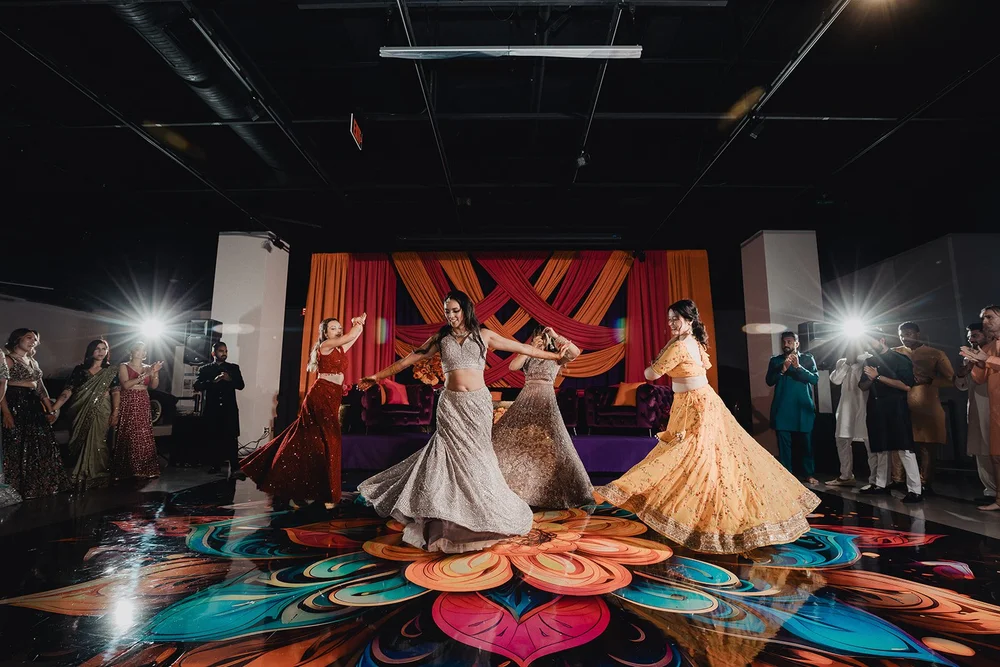
Sangeet Ceremony
Another pre-wedding ritual in Indian weddings is the Sangeet ceremony — an integral part of an Indian wedding and a fun and exciting way to kick off the celebrations. It is a musical evening where the family and friends of the bride and groom come together to sing, dance, and celebrate. The ceremony is usually held separately for the bride and the groom's families, but they may also come together for a joint celebration.
Sangeet guide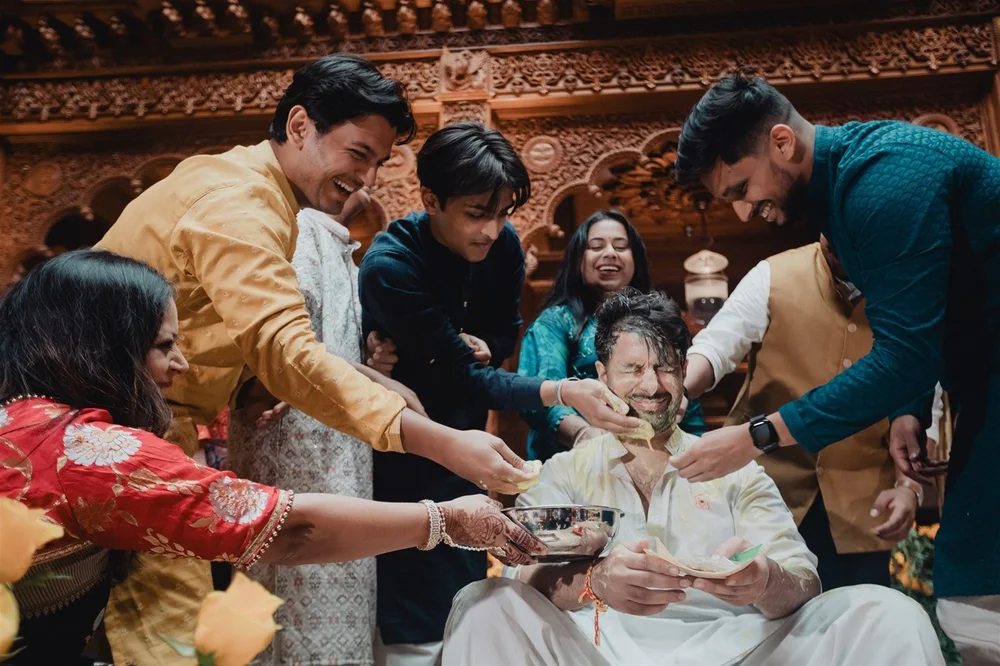
Haldi Ceremony
The Haldi ceremony involves applying turmeric paste, known as Haldi, on the bride and groom's face, hands, and feet. The ceremony is considered auspicious and is believed to ward off evil spirits and bring good luck to the couple. Family members and friends of the bride and groom participate in the festivities of this ceremony.
Haldi guide
Baraat Procession
The Baraat procession is a traditional Indian wedding ritual where the groom and his family arrive at the wedding venue in a grand parade accompanied by music, dance, and fanfare. In this ceremony, the groom usually rides on a decorated horse or elephant while his family and friends dance around him. Marking a joyful celebration, a band or a dhol player creates festive music as the groom marches.
Baraat guideKanya Aagaman
During the Kanya Aagaman (arrival of the bride) in an Indian wedding, the bride is traditionally carried in a dolhi, which can range from a canopy to a highly ornate carriage, by her brothers and male cousins. They also hold a large mesh of fresh flowers over her head, known as a phoolon ki chadar. The chaadar signifies the bride's purity and protects her from negative energy or evil spirits.
Kanyadaan Ceremony
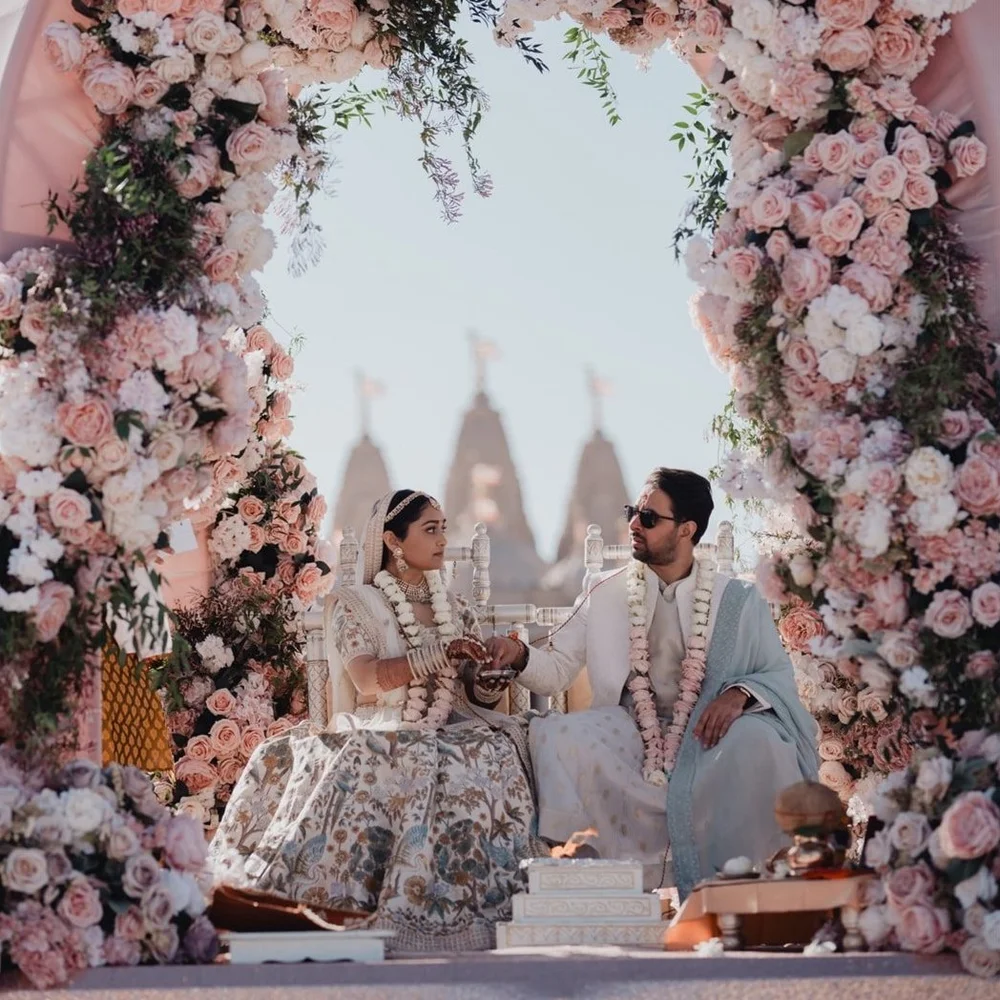
A significant ritual in Hindu weddings, the Kanyadaan ceremony is where the bride's father gives away his daughter's hand in marriage to the groom. The father hands the bride's right hand to the groom's right hand while reciting mantras and seeks the groom's blessings. The Kanyadaan ceremony symbolizes the father's trust and faith in the groom and his acceptance of him as his daughter's life partner. It is a poignant moment in the wedding ceremony and signifies the end of one chapter and the beginning of a new one for the bride and her family.
Kanyadaan guide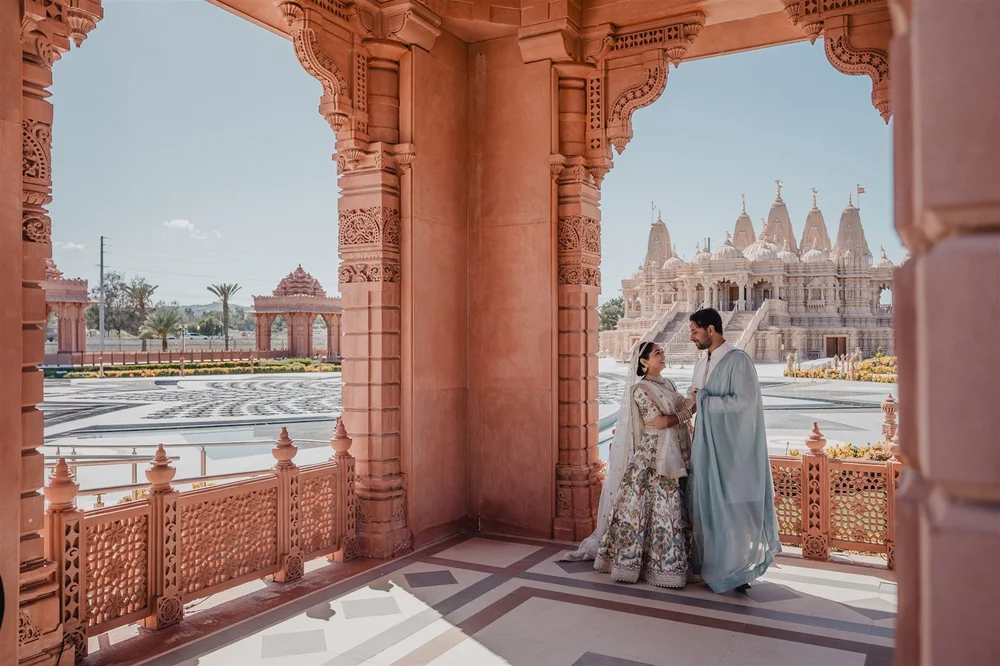
Jai Mala Ceremony
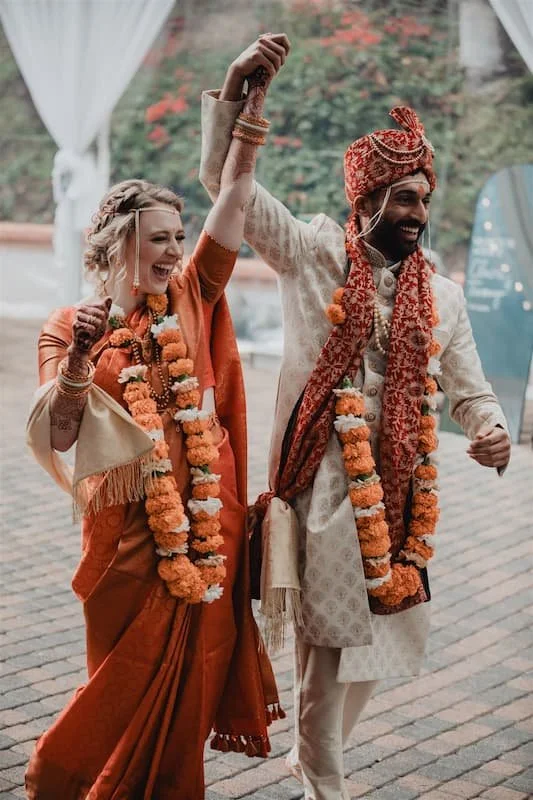
Jai Mala is a significant ritual in Indian weddings where the bride and groom exchange garlands made of fresh flowers. It symbolizes the acceptance of each other as life partners and the beginning of their journey together. During the Jai Mala ceremony, the bride and groom stand on a stage, facing each other, and interchange garlands amidst cheers and applause from their families and friends.
Saat Phere Ceremony
The Saat Phere ceremony is the most significant ritual in Hindu weddings, where the bride and groom take seven vows and circle the holy fire seven times, each time making a promise to each other. The vows signify their commitment to each other, and the ritual is considered the most sacred and binding in Hindu weddings. It marks the culmination of the wedding and signifies the beginning of the couple's journey together as husband and wife.
Mandap guide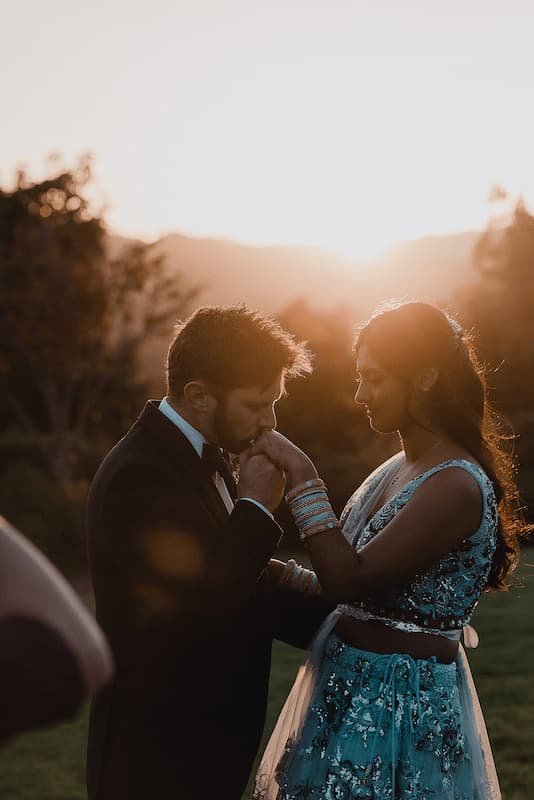
Aashirwad Ceremony
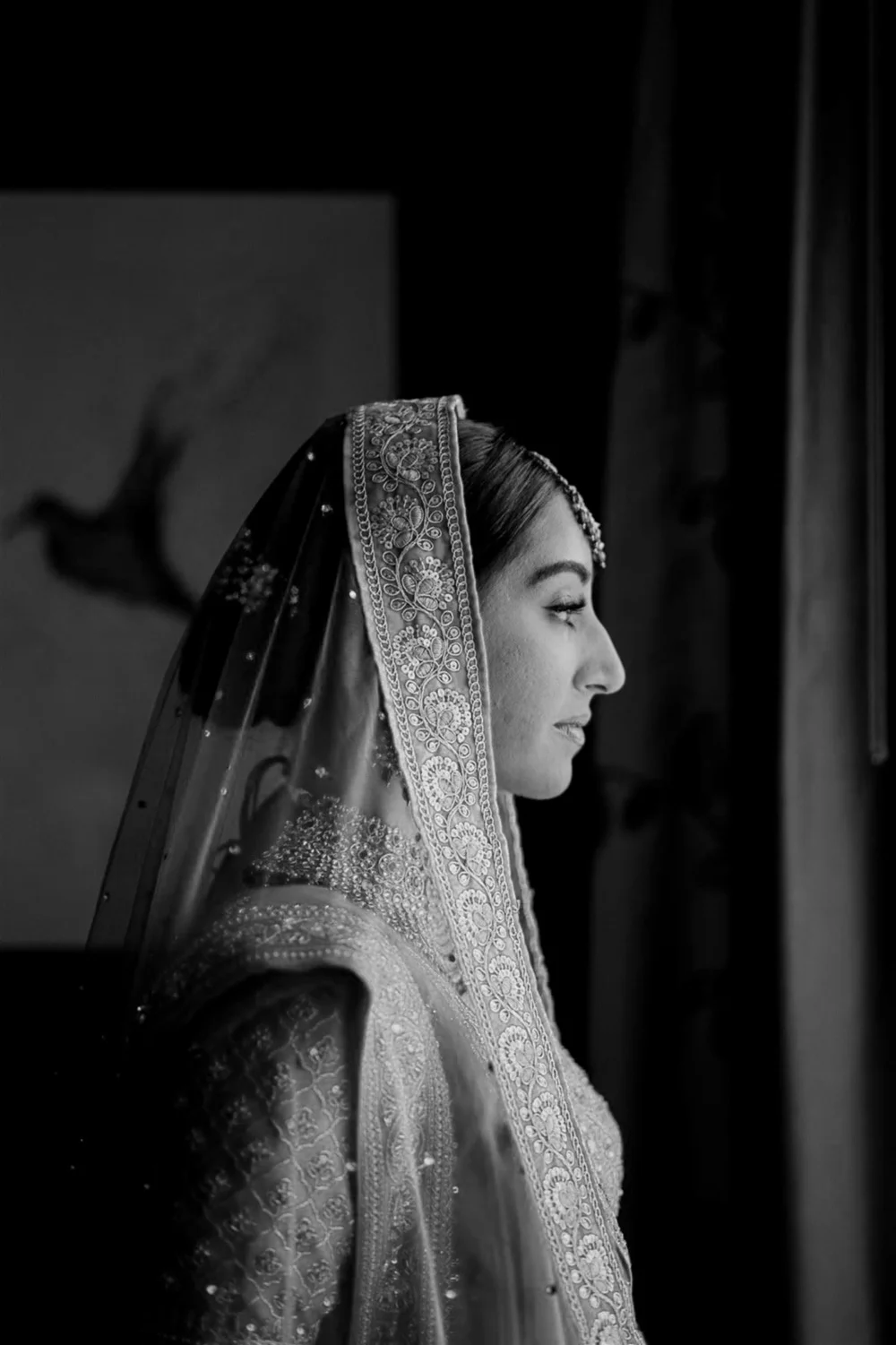
The Aashirwad ceremony is a significant post-wedding ritual in Indian weddings where the newlyweds seek blessings from their elders. During the Aashirwad ceremony, the parents, grandparents, or other close relatives bless the couple and give them their best wishes for a happy and prosperous life together. This ritual shows a sign of respect and gratitude in Indian culture. After the ceremony, it is time for the newlyweds to leave for their new home, but before they do, the bride's mother breaks a coconut at the doorstep, symbolizing good luck for the couple.
Vidaai Ceremony
Finally, the Vidaai ceremony is a poignant moment in an Indian wedding where the bride bids farewell to her family and leaves with her husband to start a new life. It happens after the wedding rituals are completed and is marked by tears, laughter, and hugs. The bride throws rice or flowers behind her as a way to bless her family and thank them for their years of love and support.
Sample Timelines
Four traditions, hour by hour
No two South Asian weddings run the same way. A Sikh Anand Karaj, a Pakistani Nikkah and a South Indian muhurtham each start at a different hour and move in a different order, so pick the one closest to your family below. Timings are typical for Southern California celebrations, and we build the real schedule with you and your planner.
Pre-Wedding Rituals
- Ganesh PujaMorning · 1 hour
A ceremony to invoke Lord Ganesha's blessings for a prosperous and obstacle-free wedding.
- Haldi CeremonyMorning · 1–2 hours
A turmeric paste is applied to the bride and groom's skin by their families for good luck and glowing skin. In the US this is almost always its own day rather than the wedding morning.
- Mehendi CeremonyAfternoon · 2–3 hours
The bride and female relatives get henna designs applied on their hands and feet.
- Sangeet CeremonyEvening · 3–4 hours
A musical evening where both families perform dances and sing songs, celebrating the union of the couple and their families.
Wedding Day
- Getting ReadyMorning · 2–3 hours
Hair, makeup and dressing for both sides, plus the details — jewelry, invitations, the lehenga and sherwani — photographed as the morning unfolds.
- First Look & Family PhotosLate morning · 1–2 hours
We shoot the first look and the formal family portraits before the Baraat, while everyone is dressed, calm and in one place. Doing it here is what keeps the rest of the day from running late.
- Baraat ArrivalLate afternoon · 1–2 hours
The groom's procession arrives at the wedding venue with music, dancing, and celebration.
- Jaimala — Exchange of GarlandsEvening · 20–30 minutes
The bride and groom exchange garlands, signifying their acceptance of one another.
- MadhuparkaEvening · 10–20 minutes
The bride's family offers the groom a mixture of honey, yogurt, and milk, symbolizing the sweetness and purity of their union.
- KanyadaanEvening · 20–30 minutes
The bride's father gives his daughter's hand to the groom, entrusting her to his care.
- Phere — Circling the Sacred FireEvening · 30–45 minutes
The couple takes seven rounds around the sacred fire, making vows and seeking blessings for a prosperous and happy married life.
- Mangalsutra and SindoorEvening · 10–20 minutes
The groom ties the mangalsutra (a sacred necklace) around the bride's neck and applies sindoor (vermilion powder) on her forehead, symbolizing their marital bond.
- Saptapadi — Seven StepsEvening · 10–20 minutes
The couple takes seven steps together, making promises to support and care for each other throughout their lives.
- Blessings and AashirwadEvening · 20–30 minutes
Elders from both families bless the newlyweds, showering them with love and good wishes.
Post-Wedding Rituals
- Vidaai — FarewellMorning · 30–45 minutes
The bride bids an emotional farewell to her family as she leaves for her new home with her husband.
- GrihapraveshMorning · 30–45 minutes
The groom's family welcomes the bride into their home with rituals, signifying her entry into her new family.
- ReceptionEvening · 3–4 hours
A grand party hosted by the groom's family to celebrate the couple's union and introduce the bride to their friends and relatives.
Pre-Wedding Rituals
- Kurmai – EngagementEvening · 2–3 hours
The families meet, gifts and kara are exchanged, and the couple is formally engaged – at the Gurdwara or a banquet hall.
- Chunni ChadaiAfternoon · 1 hour
The groom's mother drapes the bride in a red chunni and gives her the first jewelry from her new family.
- Maiyan & VatnaMorning · 1–2 hours
Turmeric paste is applied at both homes. In the US this is almost always its own day rather than the wedding morning.
- MehndiAfternoon · 2–3 hours
Henna for the bride and the women of both families.
- Sangeet & JaagoEvening · 3–4 hours
Boliyan, giddha and bhangra, and the Jaago procession with lit pots carried through the party.
Anand Karaj
- Getting ReadyEarly Morning · 2–3 hours
Anand Karaj usually begins by 10 or 11am, so hair, makeup and dastar bandi start well before sunrise.
- Ghara Ghardoli & Sehra BandiEarly Morning · 30–45 minutes
Water is drawn for the bride's ceremonial bath, and the groom's sisters tie the sehra before he leaves.
- Baraat & MilniMorning · 45–60 minutes
The groom's procession arrives, then the Milni – matched relatives from both families greet and garland each other one pair at a time.
- Kirtan & ArdasMorning · 45–60 minutes
Shabads are sung in the Darbar Sahib and the Ardas is offered before the ceremony begins.
- Laavan – Four RoundsLate Morning · 45–60 minutes
The couple circles the Guru Granth Sahib once for each Laav. Photography rules differ by Gurdwara, so we confirm with the Granthi in advance and shoot from where we are permitted.
- Anand Sahib, Prasad & LangarMidday · 1–2 hours
The ceremony closes, Karah Prasad is served, and both families eat together in the Langar hall.
Post-Wedding & Reception
- Doli – FarewellAfternoon · 30–45 minutes
The bride leaves with her husband. Twenty of the most emotional minutes of the weekend.
- Pani Bharna & Home WelcomeAfternoon · 30 minutes
The groom's mother welcomes the couple into their home.
- ReceptionEvening · 4–5 hours
Grand entry, speeches, dinner, a bhangra floor that does not empty – and the same-day edit played for the room.
Mayun & Mehndi
- Mayun & UbtanMorning · 1–2 hours
The bride steps back from routine and ubtan is applied by the women of the family, usually at home.
- DholkiEvening · 2–3 hours
Singing and dhol at home. In the US this is often folded into the Mehndi night.
- MehndiEvening · 4–5 hours
The two families sit facing each other in yellow and green, with choreographed dances and a friendly rivalry. The most photogenic night of the weekend.
Nikkah & Baraat
- Getting ReadyAfternoon · 2–3 hours
Pakistani events run late into the evening, so the day starts hours later than a Hindu wedding morning.
- Nikkah CeremonyEvening · 45–60 minutes
The Imam performs the Nikkah, the Ijab-e-Qubool is spoken and the Nikkah Nama is signed. Some families hold this on its own day.
- Baraat Arrival & Stage EntryEvening · 45–60 minutes
The groom's side arrives, the couple enters together and takes the stage.
- Doodh Pilai & Joota ChupaiEvening · 30–45 minutes
The bride's sisters offer milk and hide the groom's shoes for ransom. The loudest and funniest part of the night.
- Dinner & Stage PortraitsEvening · 2 hours
Family after family comes to the stage. This is where almost every group photograph of the weekend is made, so we staff it accordingly.
- RukhsatiLate Evening · 20–30 minutes
The bride's farewell, usually under a Quran held above her head.
Walima
- Couple's PortraitsGolden Hour · 30–45 minutes
The one calm window of the weekend, taken just before the Walima entry.
- Walima ReceptionEvening · 4–5 hours
Hosted by the groom's family. Formal entry, dinner, speeches and the same-day edit.
- Late NightEvening · 1–2 hours
Dancing, dessert and the last of the family who stayed.
Pre-Wedding Rituals
- NichayatharthamMorning · 1–2 hours
The formal engagement, where the families exchange plates and the wedding date is announced.
- Vratham & PandhakalEvening · 1 hour
The bride and groom are blessed separately at their homes the night before.
- Mehndi & SangeetEvening · 3–4 hours
Increasingly common for South Indian families in the US even where it is not traditional.
Muhurtham
- Getting ReadyPre-Dawn · 2–3 hours
South Indian muhurthams often fall between 5 and 9am, so our call time can be 3am. This is the single biggest timeline difference to plan around.
- Kashi Yatra & Mangala SnanamEarly Morning · 30–45 minutes
The groom mock-departs for Kashi and is persuaded back by the bride's father.
- Oonjal – Swing CeremonyEarly Morning · 20–30 minutes
The couple is swung gently while the women sing and circle them with lamps.
- Kanyadanam & MuhurthamMorning · 45–60 minutes
The thaali or mangalsutra is tied at the exact auspicious minute. There is no second take, so we are in position long before it.
- Saptapadi & TalambraluMorning · 30–45 minutes
Seven steps together, then the rice-pouring game between the couple.
- Sadhya & Family PortraitsMidday · 2–3 hours
Lunch on banana leaves, then the family portraits while everyone is still in one hall.
Reception
- GrihapraveshamEvening · 30–45 minutes
The bride is welcomed into her new home.
- ReceptionEvening · 4–5 hours
A stage line, dinner, speeches and the same-day edit played before the night ends.
Jain, Gujarati, Marathi, Bengali, Telugu, Tamil, Marwari and Christian South Asian weddings all borrow from these four. Tell us which rituals matter most to your family and we will map the coverage around them.
Planning for an Indian Wedding
Eight steps, in the order they matter
Planning an Indian wedding can be daunting, given the elaborate rituals, numerous ceremonies, and grand celebrations involved. With careful planning, attention to detail, and a bit of creativity, you can ensure yours is a truly memorable affair.
01Budget
The first step in planning an Indian wedding is to determine the budget for the event. Indian weddings can be expensive, so it's important to identify the expenses involved, such as the venue, catering, decorations, and entertainment. Allocating the budget accordingly helps couples avoid overspending.
—Family Involvement?
Try not to get the family over-involved, for hosting a wedding is very stressful. Adding a layer of comments and suggestions every step of the way is excessive. However, if you cannot avoid this situation, please continue to Step 2.
02Venue
The venue is a crucial consideration for an Indian wedding. Ensure that it can accommodate the size of the wedding party and the various ceremonies that will take place. Popular venue options for Indian weddings include banquet halls, hotels, outdoor spaces, and temples.
03Vendors
South Asian weddings involve several vendors, including caterers, florists, DJs, and photographers. To make the wedding memorable, research and select vendors that specialize in Indian weddings and have experience with the specific rituals and traditions involved.
04Ceremonies
Indian weddings involve several pre-wedding, wedding day, and post-wedding ceremonies. Each event has its own set of rituals and traditions. Hence, coordinate each ceremony, including selecting appropriate attire, arranging transportation, and ensuring all necessary items and accessories are available.
05Wedding Menu
Plan a menu that reflects the couple's preferences and caters to any dietary restrictions. Indian weddings are known for their delicious food, including vegetarian and non-vegetarian options. The appetizers include samosas, pakoras, and kebabs. Among the common main course are biryanis, curries, tandoori chicken, and naan or roti. Desserts include gulab jamun, rasgulla, and jalebi. Beverages like lassi, mango juice, and masala chai are also served.
06Photographer and Videographer
Lulan Studio is devoted to providing photographs that showcase exceptional realism and vivid, true-to-life colors. Your wedding day is a once-in-a-lifetime event filled with memories you'll want to hold onto forever. Invest in a professional photographer and videographer who specialize in Indian weddings to ensure every precious moment is captured perfectly.
07Logistics
Coordinating logistics is essential to ensure a seamless wedding. Arrange for transportation, manage the guest list, ensure that vendors arrive on time, and take care of any last-minute details. Having a dedicated wedding planner can make this process much easier.
08Enjoy your Wedding
An Indian wedding is a joyous occasion. Amidst the chaos of wedding planning and the flurry of activities, it's easy to get caught up in the stress and lose sight of the true purpose of the celebration. Take a moment to appreciate the significance of the rituals and traditions involved and the love and commitment that brought you and your partner together. Connect with family and friends, and savor the food, music, and dance performances. Remember that this is your special day, and it's important to bask in every moment and create lasting memories that you will cherish for years to come.
Why couples book a specialist
South Asian weddings involve several vendors — caterers, florists, DJs, photographers. To make the wedding memorable, research and select vendors that specialize in South Asian weddings and have experience with the specific rituals and traditions involved.
Lulan Studio is devoted to providing photographs that showcase exceptional realism and vivid, true-to-life colors. We've shot the Baraat from the front of the dhol line, held focus through a full Saat Phere, and know that the Vidaai is the frame no one gets a second chance at.
See our Indian wedding photography, Sikh wedding and Punjabi wedding work, or start with collections and rates.
Reviews & Raves
What our South Asian couples actually said
A perfect 5.0 across The Knot, WeddingWire, Google, Yelp and Zola — earned one wedding at a time. Every review below is from a South Asian wedding.
“Lulan came highly recommended to us by a close friend of ours whose wedding he had photographed last year. We were initially a bit hesitant as we weren't sure if Lulan knew South Indian wedding customs well enough to be able to capture the important moments.”
“Recently married on April 3, 2026 and I totally owe Lulan Studio all the praise! We spoke to multiple photo/video teams, and ultimately decided on this team because of their energy and excitement to shoot our wedding! They were extremely responsive throughout the year of wedding planning, and closer to the wedding we scheduled multiple calls with them to go over details.”
“Now that the quiet of the evening has settled and we have begun to reflect on the light and shadow of our celebration, I wanted to express our profound gratitude for your team's efforts and labor. Capturing the spirit of a day this significant is a monumental undertaking, and the tireless devotion the team showed throughout the entirety of our wedding was truly remarkable.”
“Our photography and videography team captured every moment beautifully. Lulan Studio seamlessly blended into the backdrop of the historic venue, turning our special day into a collection of stunning memories.”
“We wanted to embrace the venue's stunning Art Deco charm and evoke that timeless Old Hollywood elegance in our photos. Our photographer delivered beyond our wildest expectations! From the first consultation, they completely understood our vision.”
How South Asian wedding timelines are usually built
Many of the South Asian weddings we photograph run across more than one day, and the events sit at very different hours. A temple ceremony is a morning event. A baraat and reception is an afternoon and evening one. These are the shapes that recur.
A temple ceremony day
- 7:00 AMCoverage begins. Getting ready, attire and jewelry, individual portraits.
- 8:00 AMArrivals, elders greeted, mandap and ritual details photographed.
- 9:00 AMCeremony begins. Opening blessings, entries, the garland exchange, then the core rituals.
- 12:00 PMRituals conclude. Stage group photographs, which take longer than couples expect.
- 12:45 PMFamily and couple portraits on the temple grounds.
- 1:30 PMLunch reception, speeches, guest candids.
- 3:00 PMCoverage concludes, or earlier when the lunch is a short one.
A two-day wedding
- Day 1, morningHaldi or turmeric ceremony, commonly two hours of coverage.
- Day 1, eveningMehndi and sangeet, with performances. Two to five hours depending on the program.
- Day 2, 12:00 PMCoverage begins. Getting ready on both sides, attire and jewelry, family portraits.
- Day 2, 3:00 PMBaraat. The groom arrives in procession with the drums and the dancing.
- Day 2, 3:30 PMCeremony. Length varies widely by tradition, so confirm it with your priest.
- Day 2, 5:15 PMStage photographs, family groups and couple portraits.
- Day 2, 7:00 PMReception. Grand entrance, speeches, dinner, dancing.
- Day 2, 10:00 PMCoverage concludes.
A midday ceremony, evening reception
- 8:00 AMCoverage begins. Getting ready on both sides, then a first look where there is one.
- 9:45 AMBaraat, with the procession and the greeting at the ceremony site.
- 10:15 AMCeremony.
- 12:30 PMStage photographs, family groups and couple portraits.
- 1:30 PMStandby break. Guests rest and the couple changes for the evening.
- 4:30 PMCoverage resumes. Evening portraits and reception details.
- 5:30 PMCocktail hour and guest candids.
- 6:45 PMReception. Grand entrance, first dance, speeches, dinner.
- 10:00 PMCoverage concludes.
A fusion day, two ceremonies
- 8:30 AMCoverage begins. Getting ready for the first ceremony.
- 10:00 AMA short baraat where there is one, then the Hindu ceremony.
- 12:15 PMLunch for guests while the couple changes. Coverage usually pauses here.
- 3:00 PMWestern ceremony, with the second outfit.
- 3:30 PMFamily formals and couple portraits.
- 4:30 PMCocktail hour, reception details.
- 6:30 PMReception. Entrance, dinner, speeches, first dance, open dancing.
- 10:00 PMCoverage concludes.
What shapes a South Asian wedding timeline
The things that most often change the plan, and that are worth settling before the timeline is finalized.
Venues that host these weddings
Temples for the ceremony, then a hotel, banquet hall, country club or estate for the reception. Some couples do everything at one hotel across two days, which removes travel from the whole weekend.
- Malibu Hindu Temple
- BAPS Shri Swaminarayan Mandir, Chino Hills
- Sherwood Country Club
- Hotel Maya, Long Beach
- Rancho Las Lomas
- Orcutt Ranch
- Bel-Air Bay Club
- Hilton San Diego Bayfront
- Richard Nixon Library, Yorba Linda
- Los Angeles banquet halls
FAQs for Indian Weddings
Questions we're asked most
What are the traditions of a wedding in India?
What is traditional Indian wedding attire?
What color do Indian brides wear?
How long is an Indian wedding ceremony?
What do Indian brides wear on their hands?
What do Indian grooms wear on their heads?
More from Lulan Studio
Tell us about your three days
Send us the dates, the venues, and which ceremonies matter most to your families. Still choosing between muhurat dates? See our calendar of auspicious wedding dates for 2027 and 2028. We'll tell you exactly how we'd cover them.
Check your date Prefer to talk it through? Schedule a call · 620 S Main St, Los Angeles CA 90014 · +1 (626) 662-1844