
Los Angeles · Real Kodak & Ilford emulsion
35mm Film Wedding Photography in Los Angeles
Film is not a filter we add in editing. It is Kodak and Ilford emulsion, shot on 35mm bodies alongside our digital coverage, developed at a professional lab and scanned frame by frame.
The short version
Film at every wedding. Digital in parallel.
Lulan Studio is a Los Angeles wedding photography team that shoots real 35mm film alongside digital at every wedding we cover. If you found us searching for a 35mm film wedding photographer in Los Angeles, this page explains exactly how our hybrid coverage works, what it costs, and how to plan your day for it.
The look
Why couples choose 35mm film.
Highlight roll-off
Bright light lands softly
Film compresses bright light gradually, so a white dress in the California sun keeps its texture and sunset skies keep their color.
True grain
Structure, not noise
Film grain is structure, not noise — it is why film frames feel dimensional in albums and large prints.
Color memory
Skin tones you recognize
The warm skin tones you love in your parents’ wedding album are film stocks doing what they still do best.
Film wins
Skin tones, warmth, prints, nostalgia, and the discipline of intentional frames. A photographer with 36 exposures composes differently than one with a 128 GB card.
Digital wins
Low light once the dance floor opens, speed, guaranteed volume, and an instant second copy of every frame before we leave the venue.
Our answer: shoot both. You should never have to choose between the film look and complete coverage.
How we cover a day
One gallery. Both mediums.
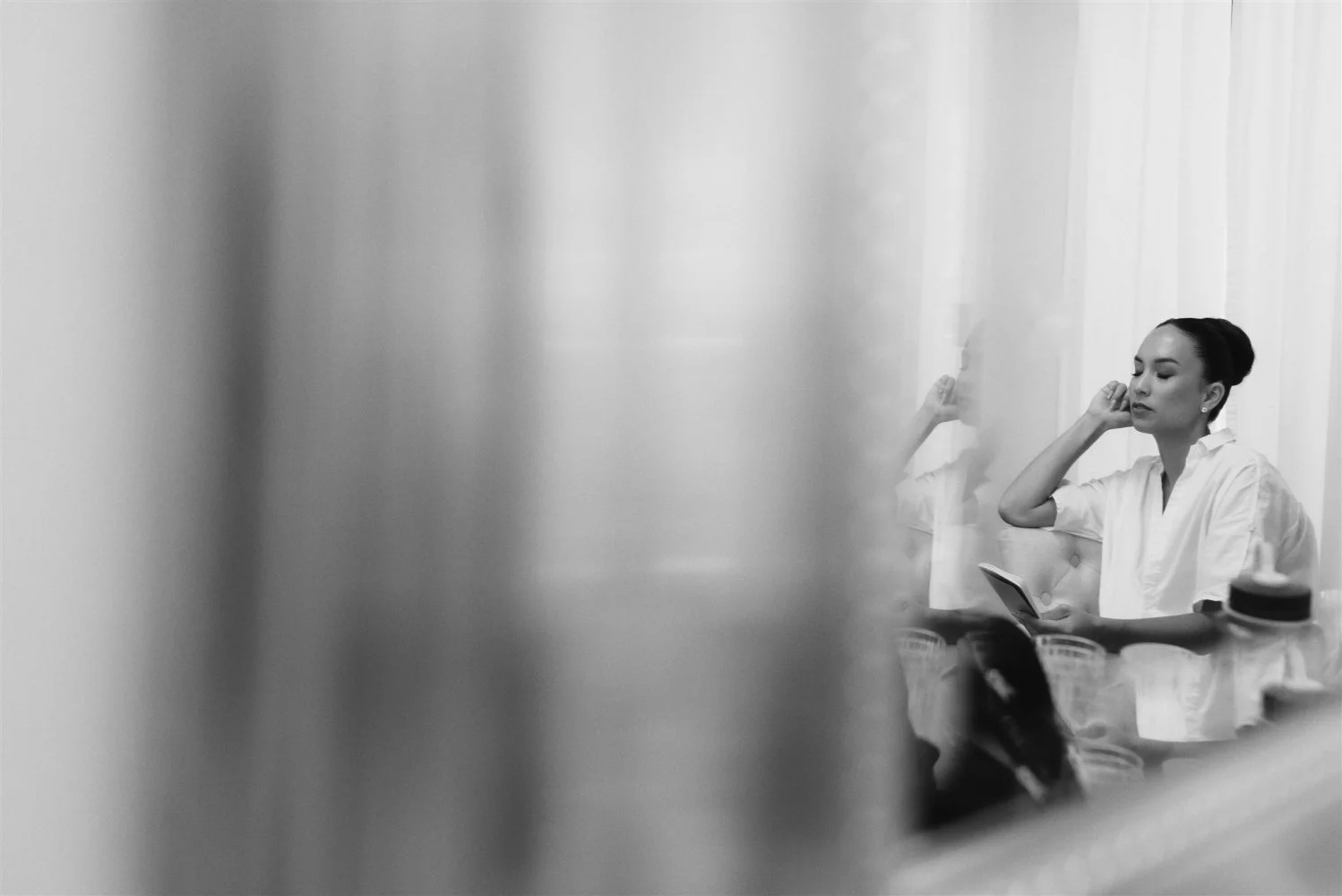
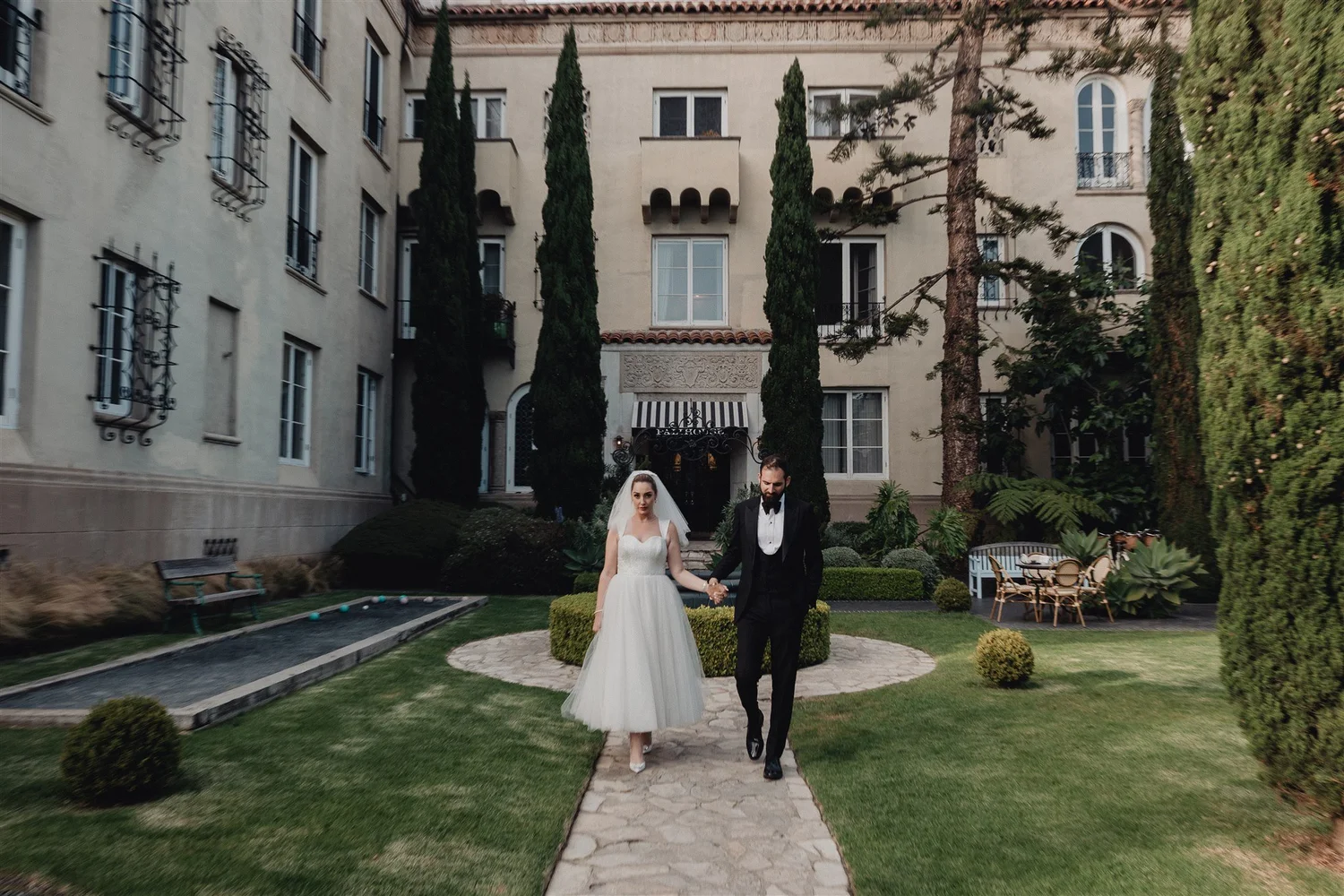
Many studios treat film as an add-on of a couple of rolls. We build coverage the opposite way: every critical moment is captured digitally in parallel, while our 35mm bodies come out for the moments film renders best — portraits, golden hour, and the quiet in-between candids. You receive one blended gallery with the film frames woven through it, and nothing missing.
Curious about the equipment itself? See the rangefinders and SLRs we carry on our cameras and equipment page, or read how the two formats differ on 35mm and 120 film on Leica and Hasselblad. This page is about the pictures; that one is about the cameras.
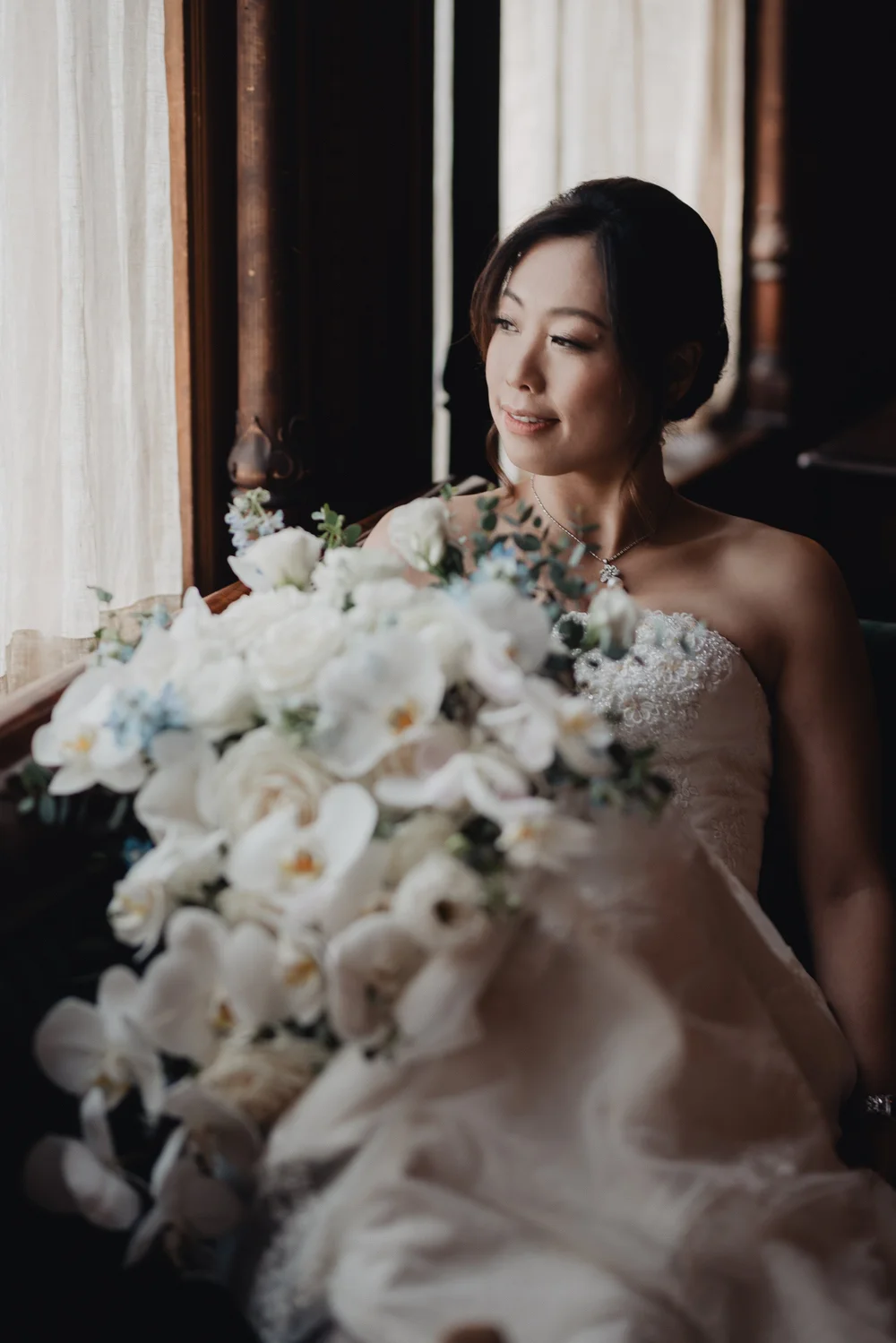
Planning
A film-friendly wedding timeline.
Film asks only one thing from your schedule: light. Here is the eight-hour framework we suggest to Los Angeles couples who want the most from their film frames.
1:00 PM
Getting ready
Window light and details on film: invitations, dress, perfume bottle.
2:30 PM
First look
Digital for the reaction sequence, one roll of color film for the stills you will frame.
3:30 PM
Ceremony
Primarily digital — there are no re-dos — with film for the wide establishing frames.
4:30 PM
Family formals
Digital for the checklist, film for one relaxed frame per grouping.
5:15 PM
Golden hour portraits
This is film’s hour. We schedule 30–40 minutes and shoot most of our rolls here.
7:00 PM
Reception
Digital carries the dance floor; a roll of black & white catches toasts and candids.
Planning reception coverage in detail? Watch our short guide on how to plan photography coverage for your wedding reception, or compare hours with the 8 vs 10 vs 12 hour timeline guide and timeline examples by season.
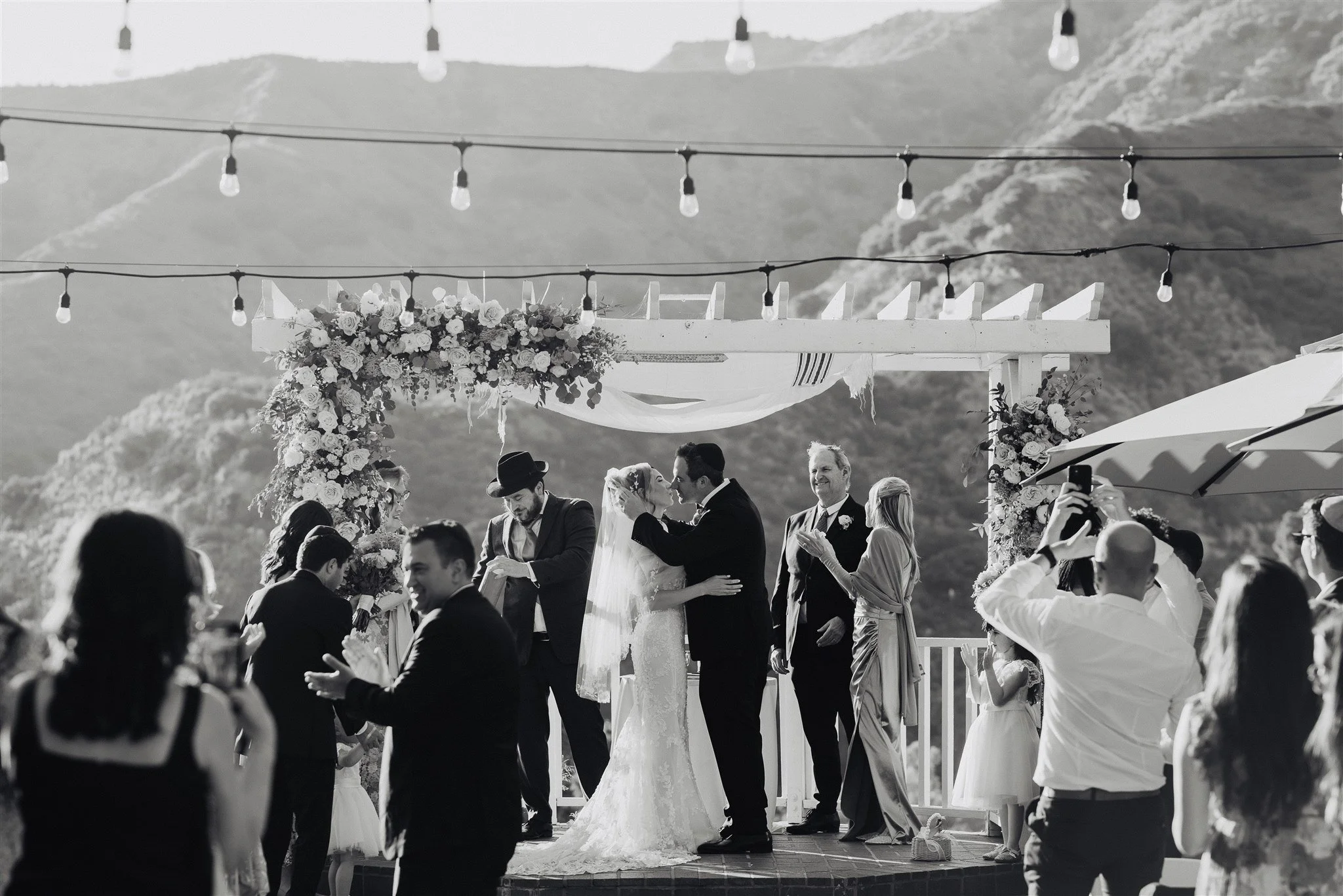
Frames
Shot on film. Not filtered.
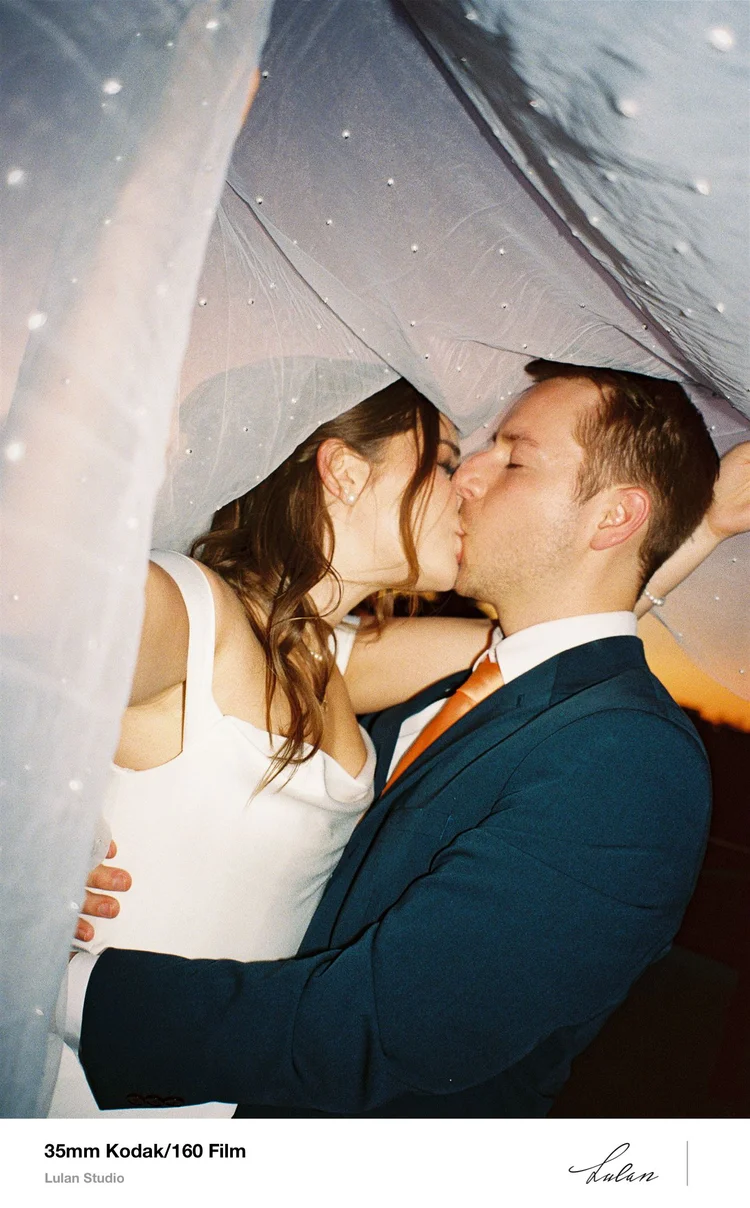
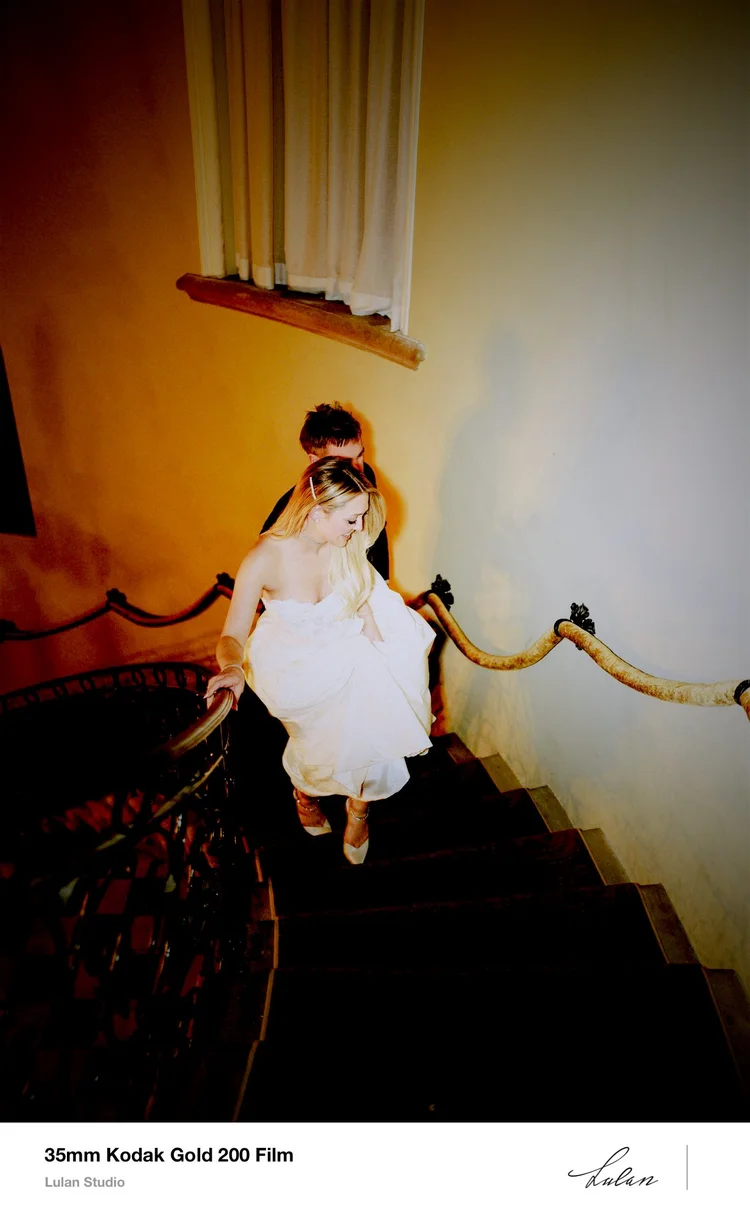
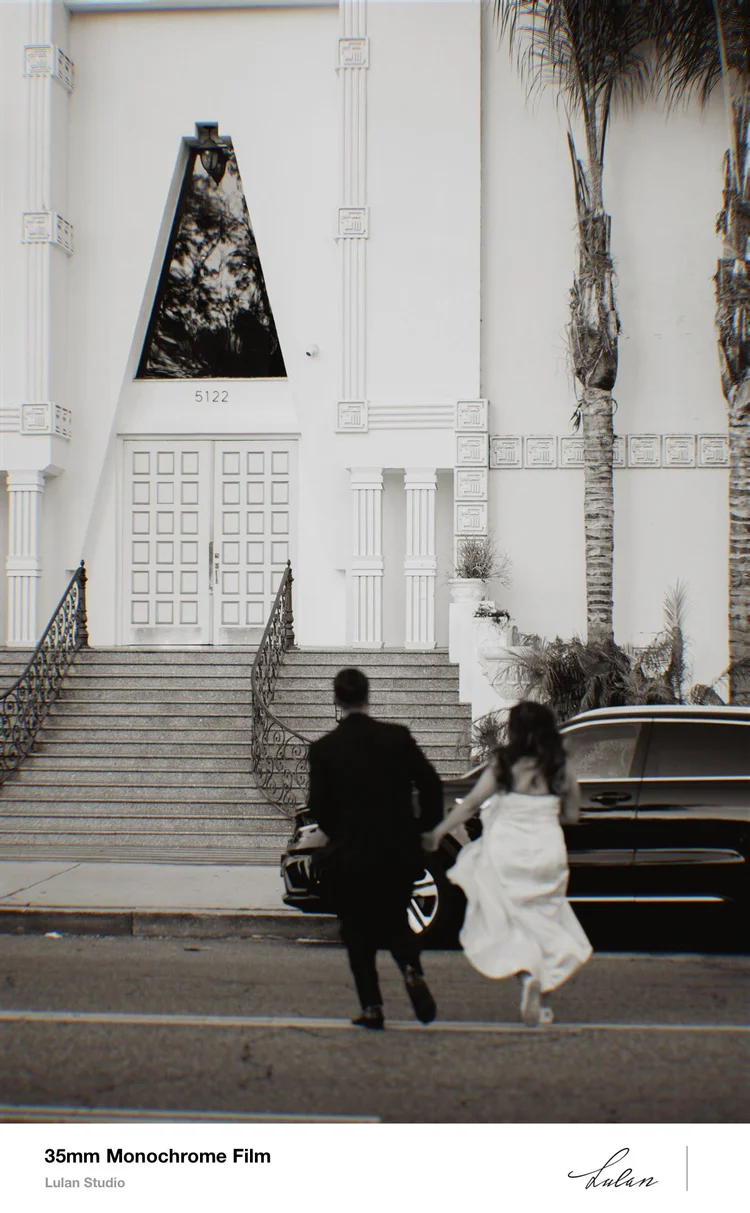
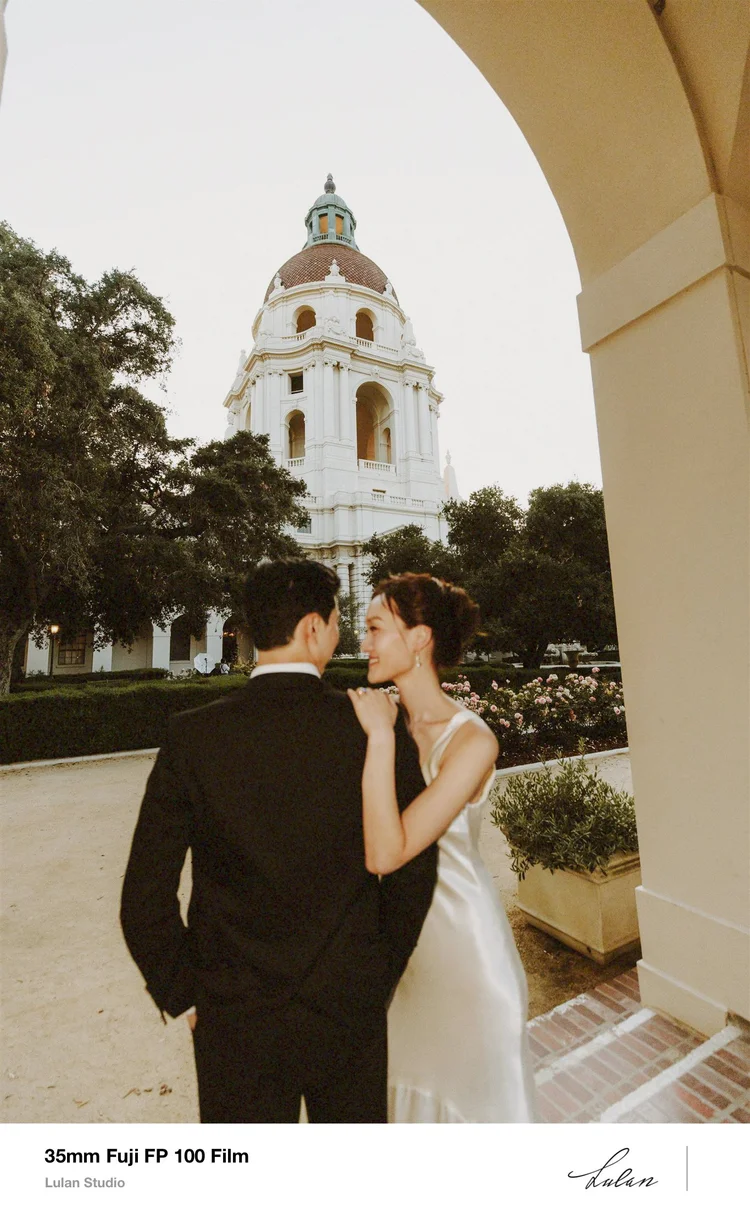
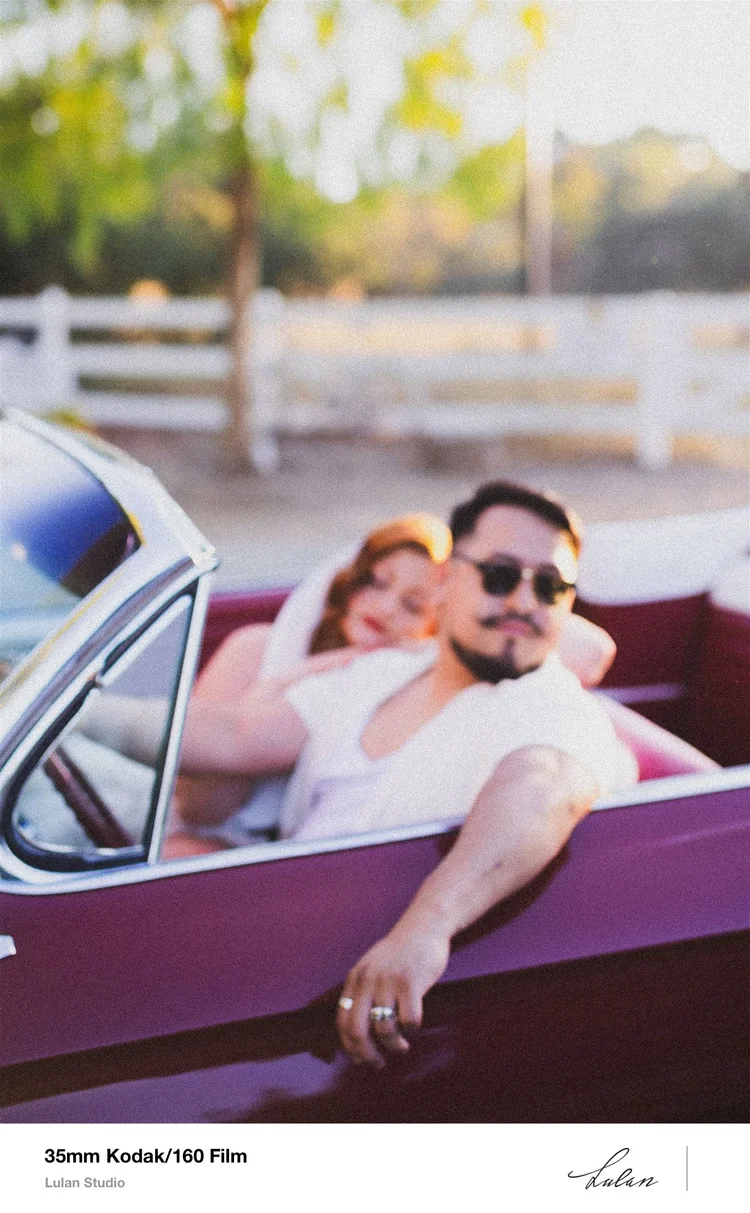
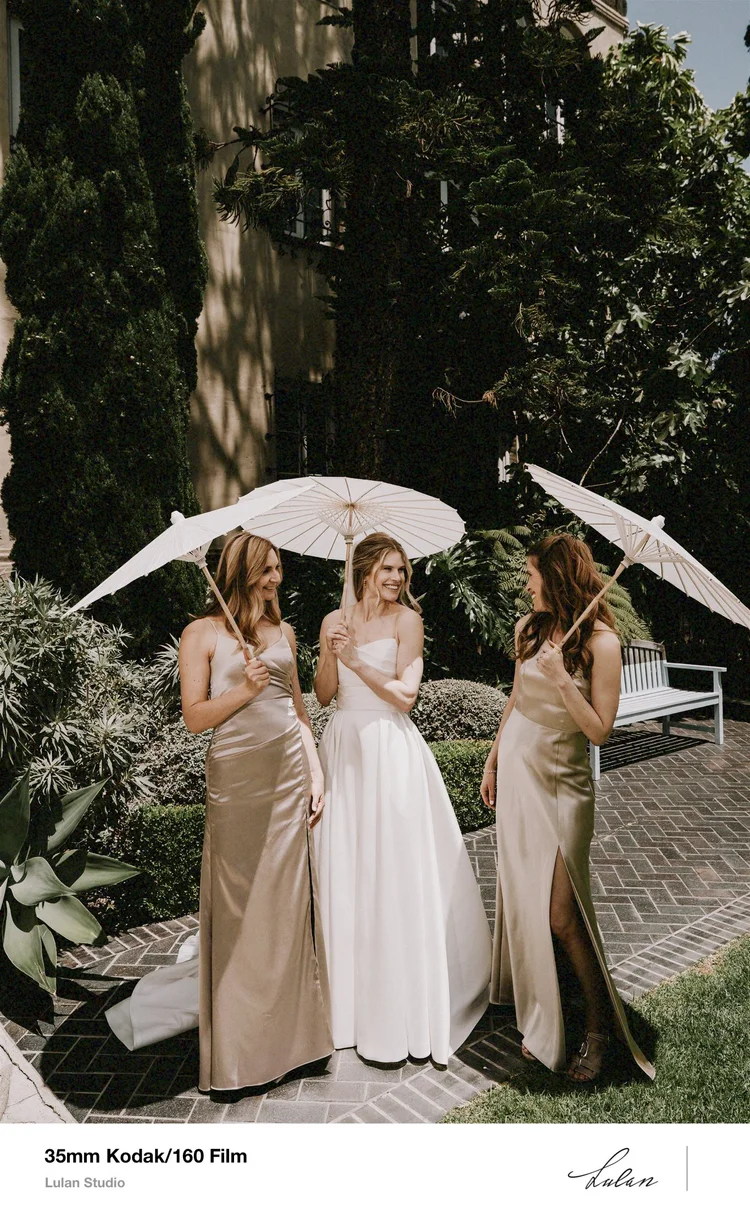
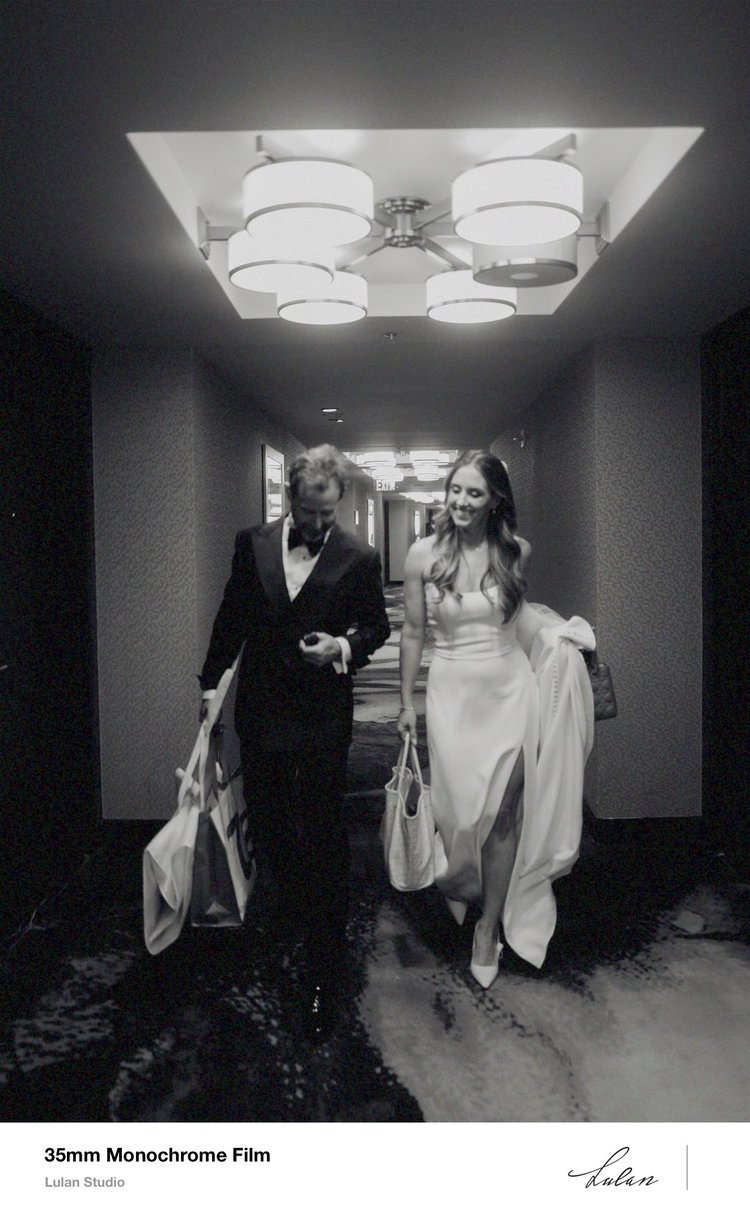
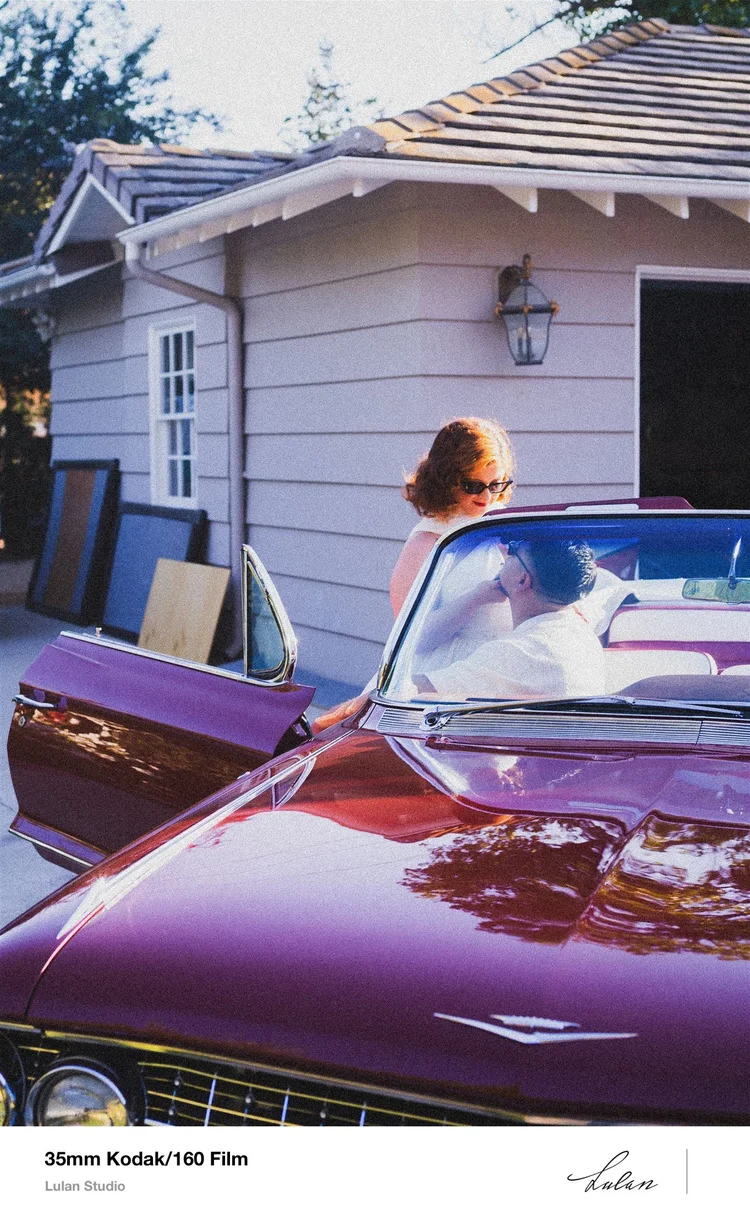
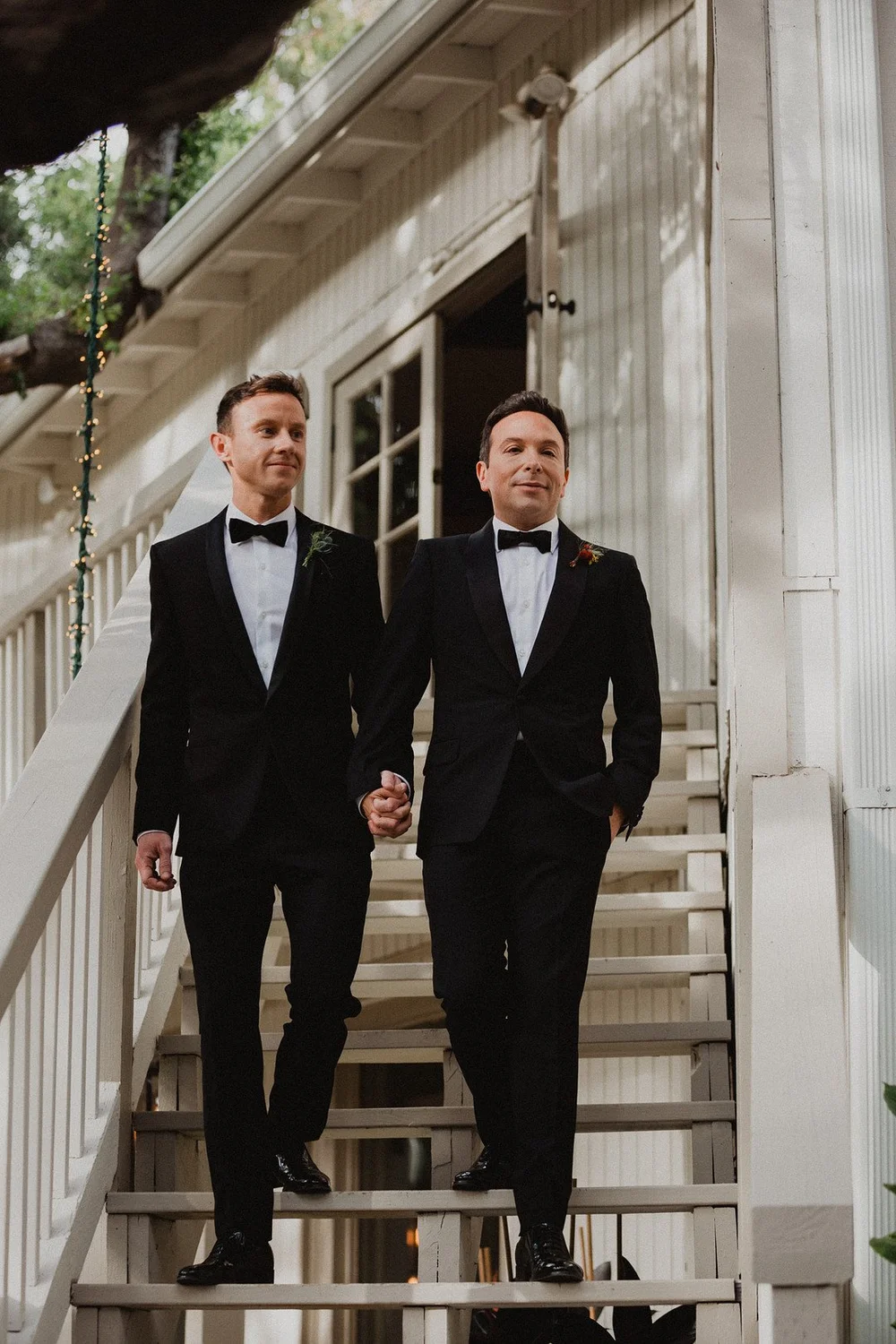
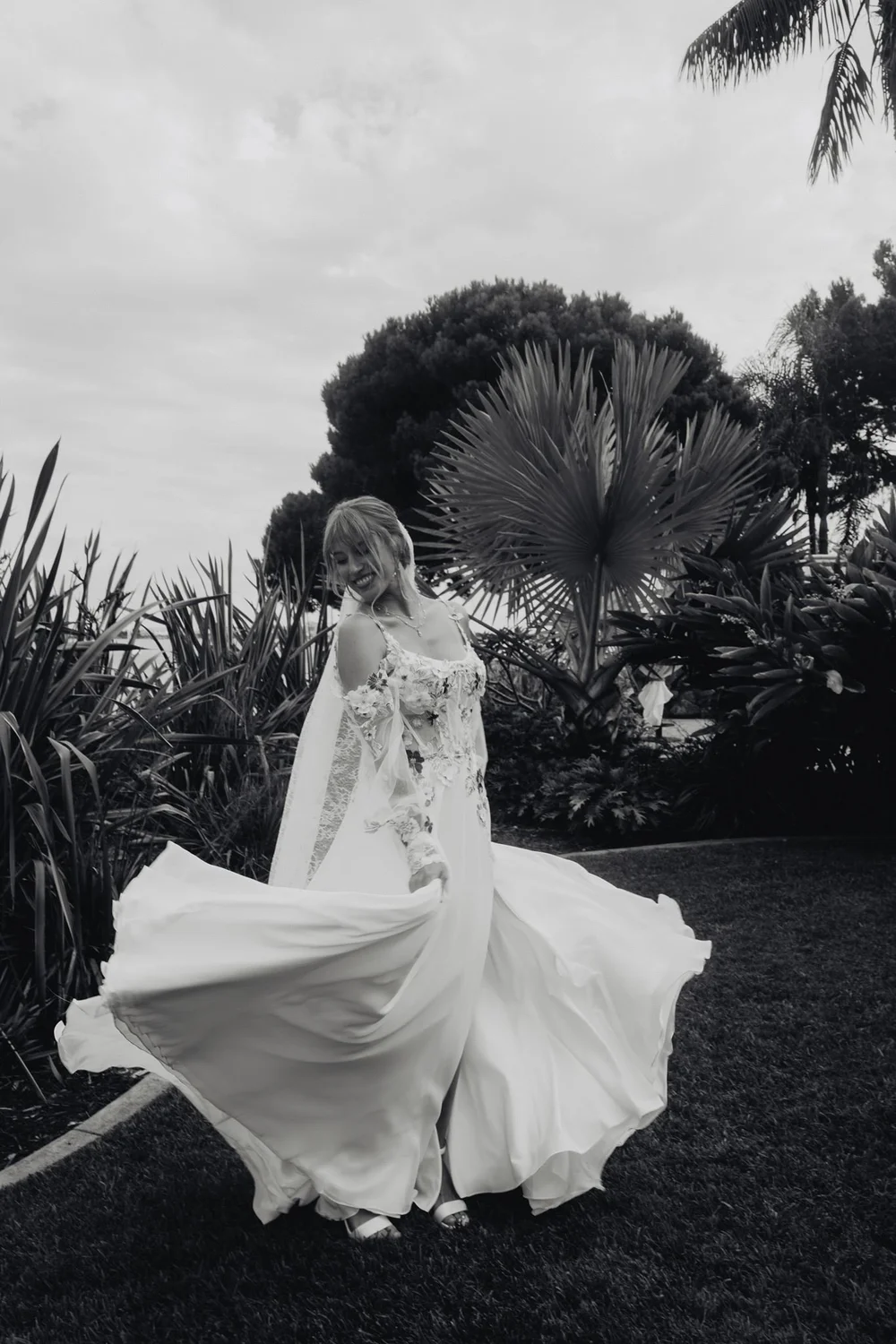
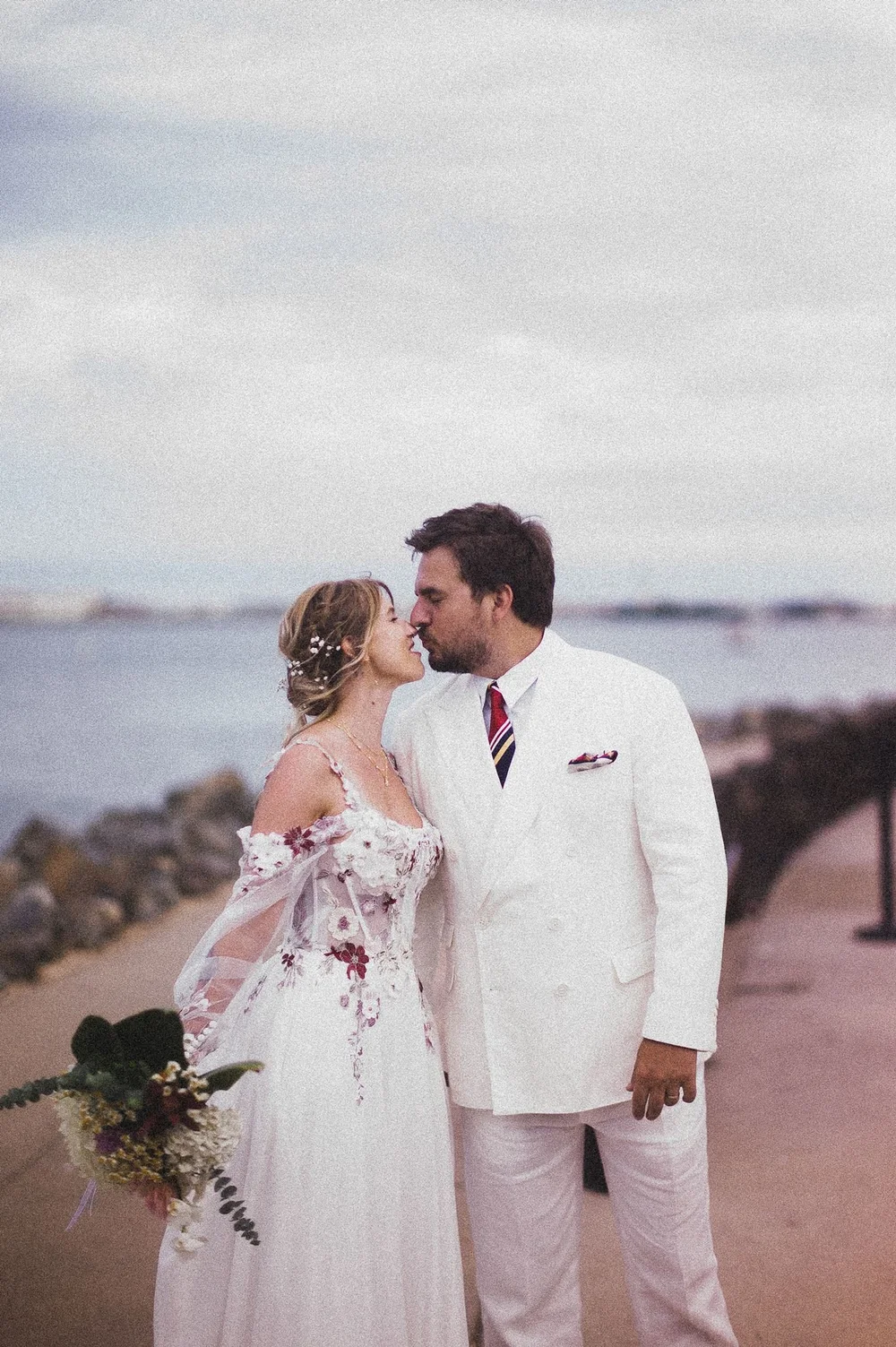
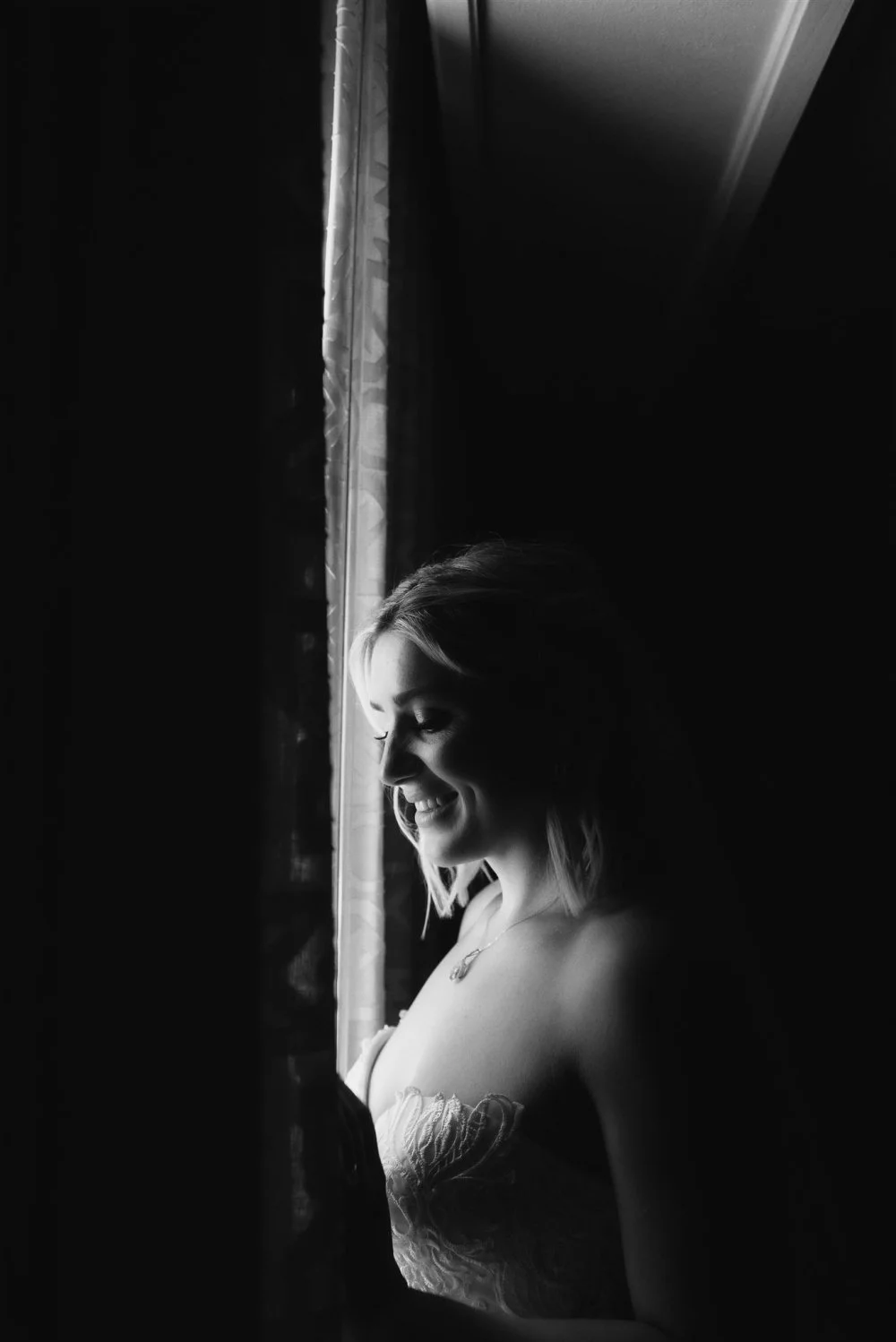
Every frame below came off a roll. The stock is printed on the scan itself — Kodak Gold 200, Fuji FP-100, or black & white — so you can see exactly what each emulsion does with light, skin and shadow.
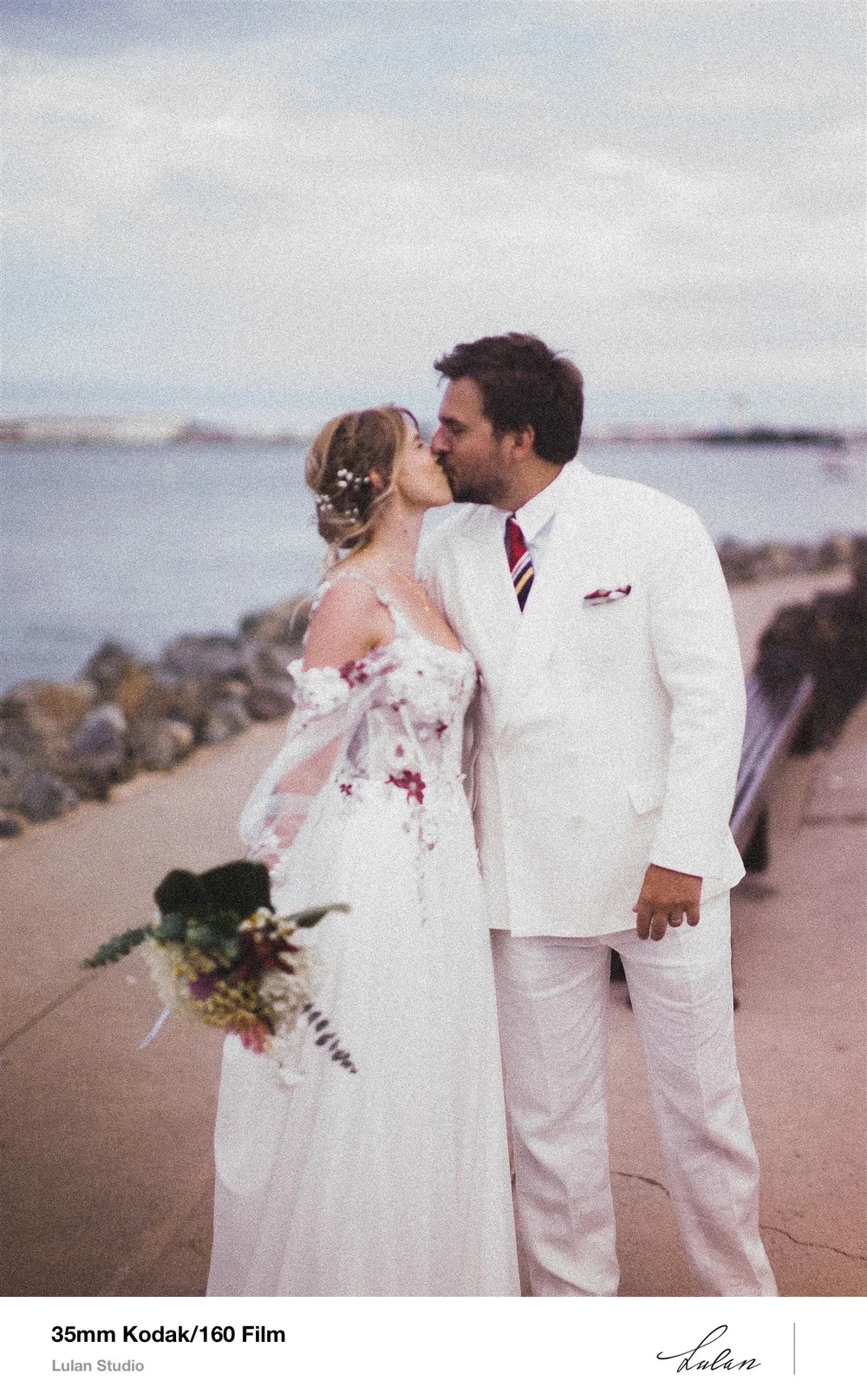
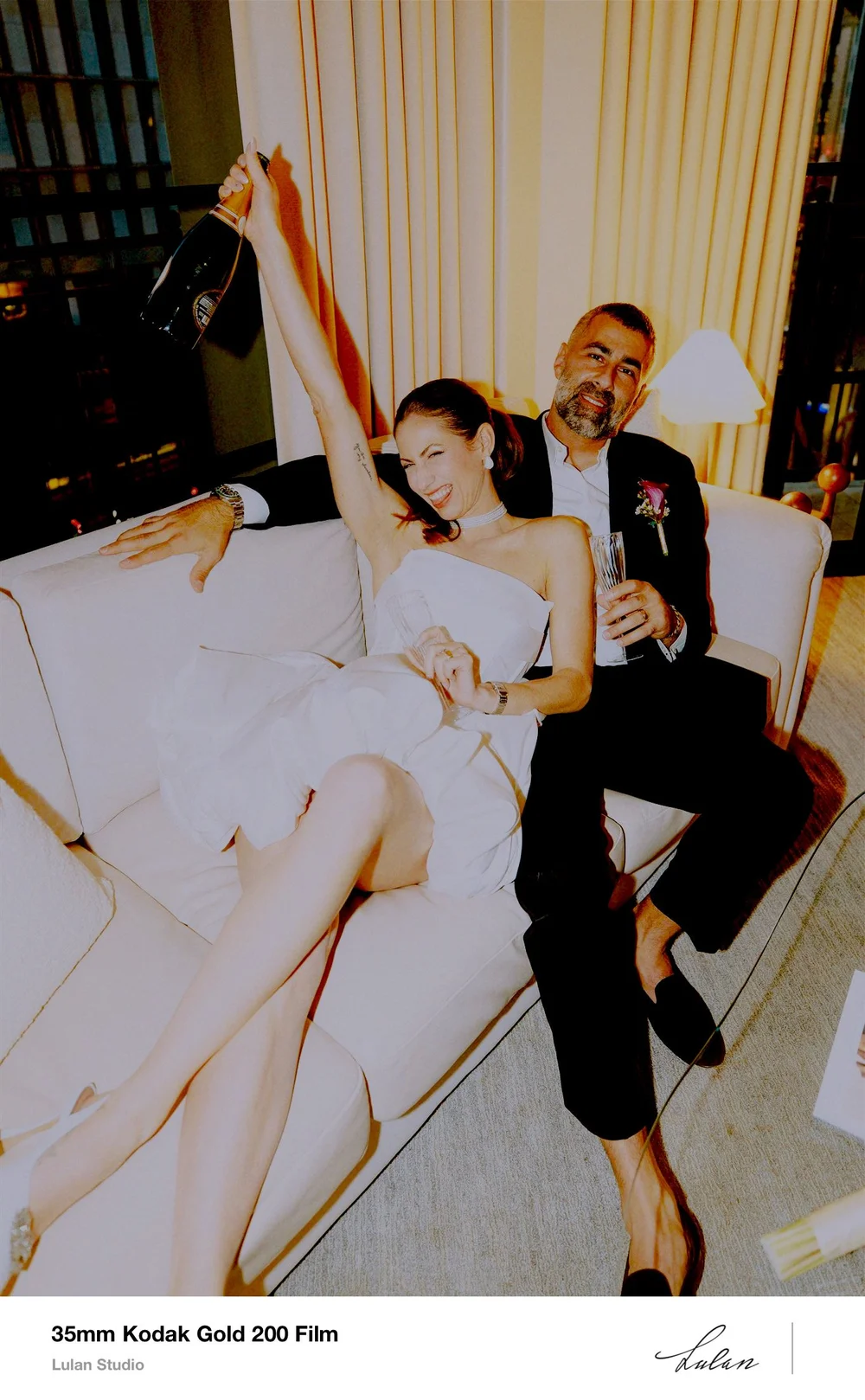
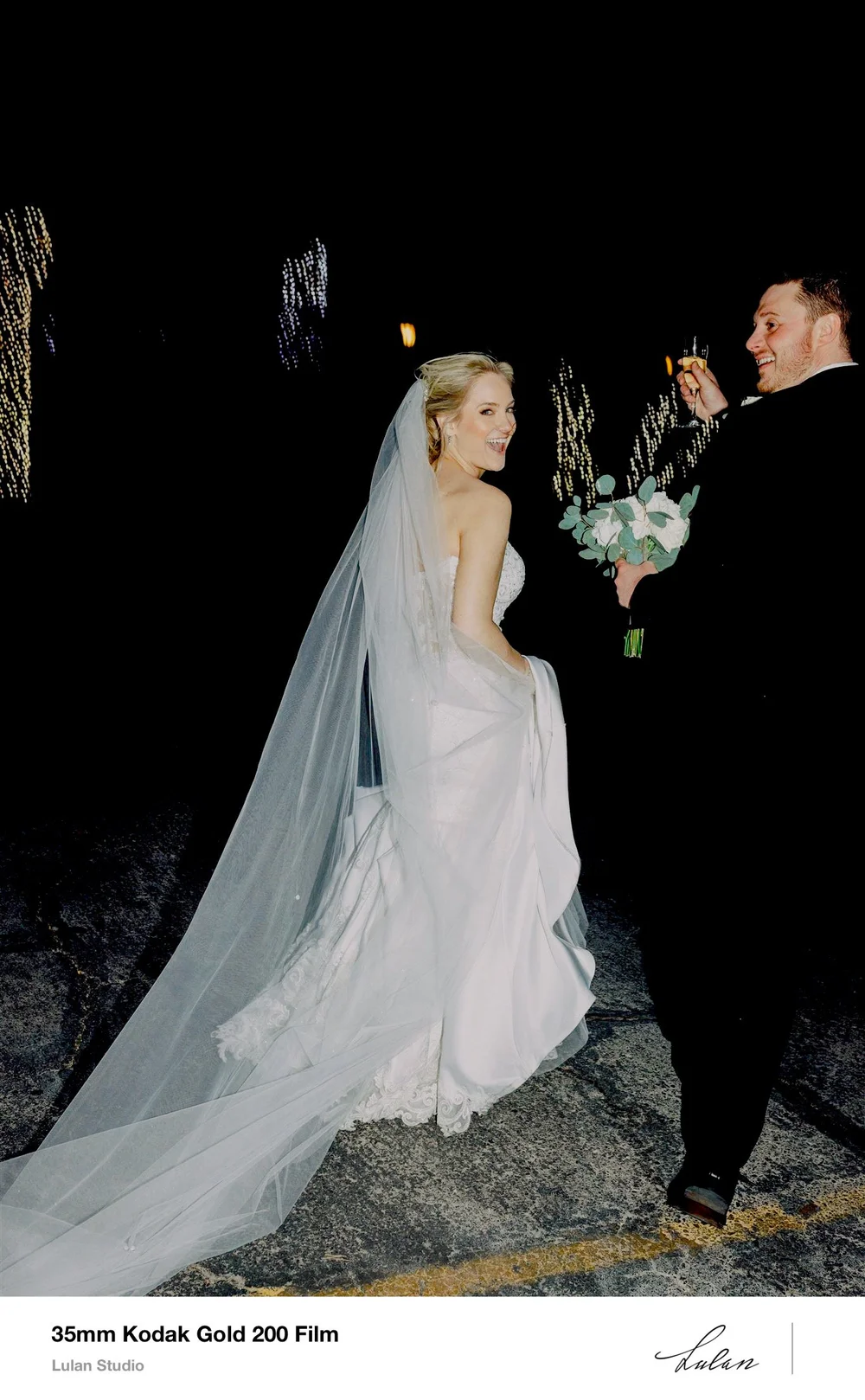
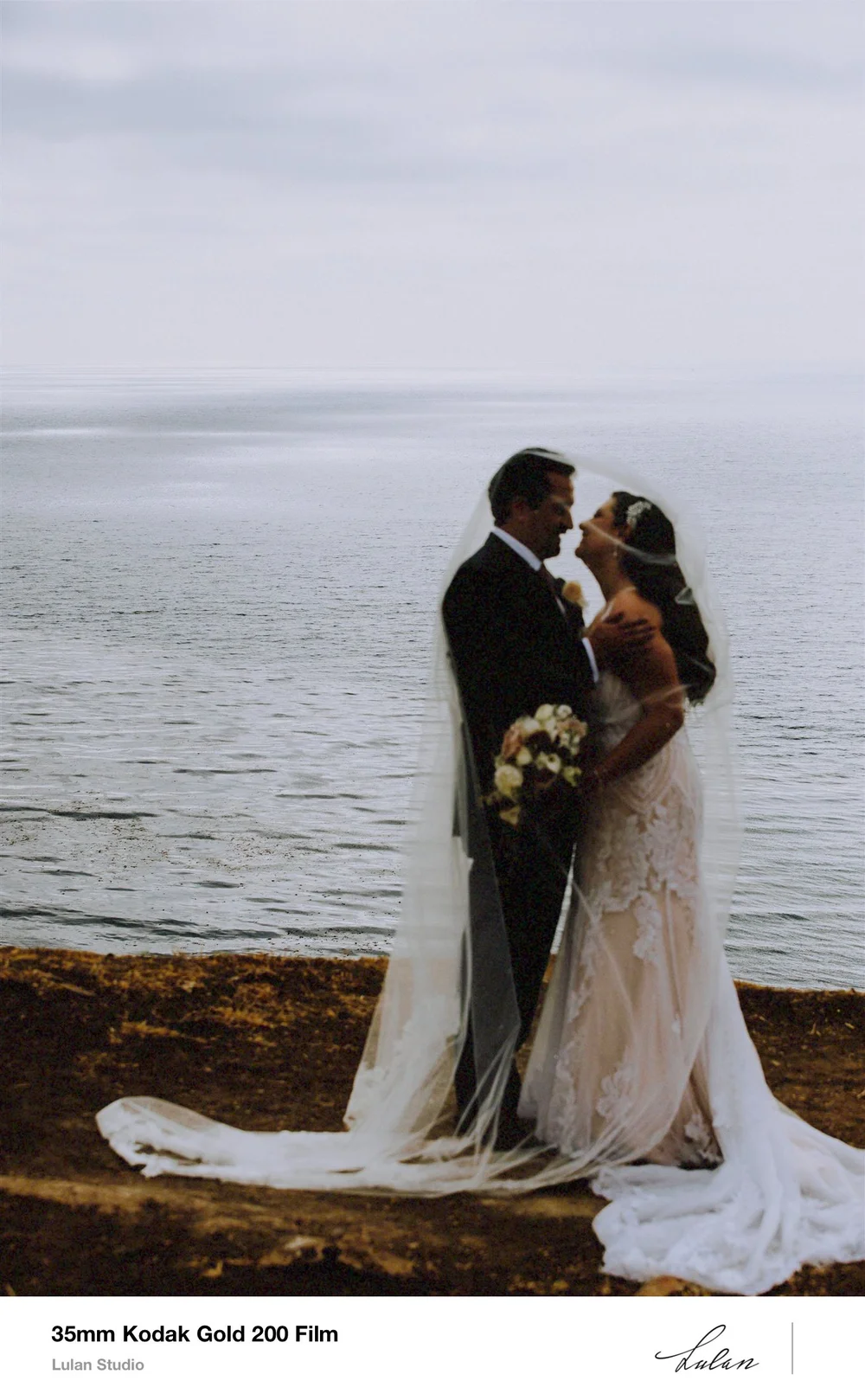
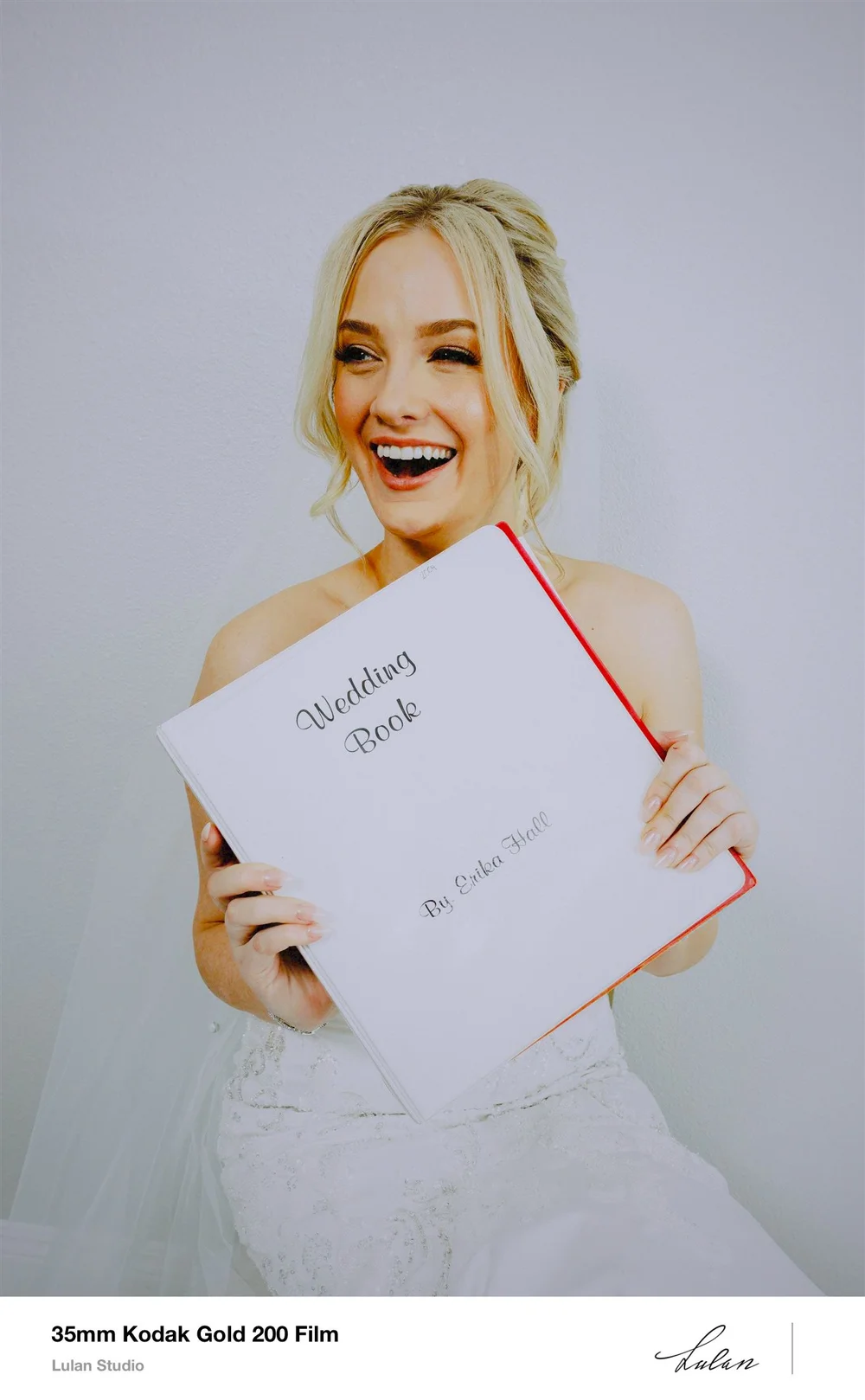
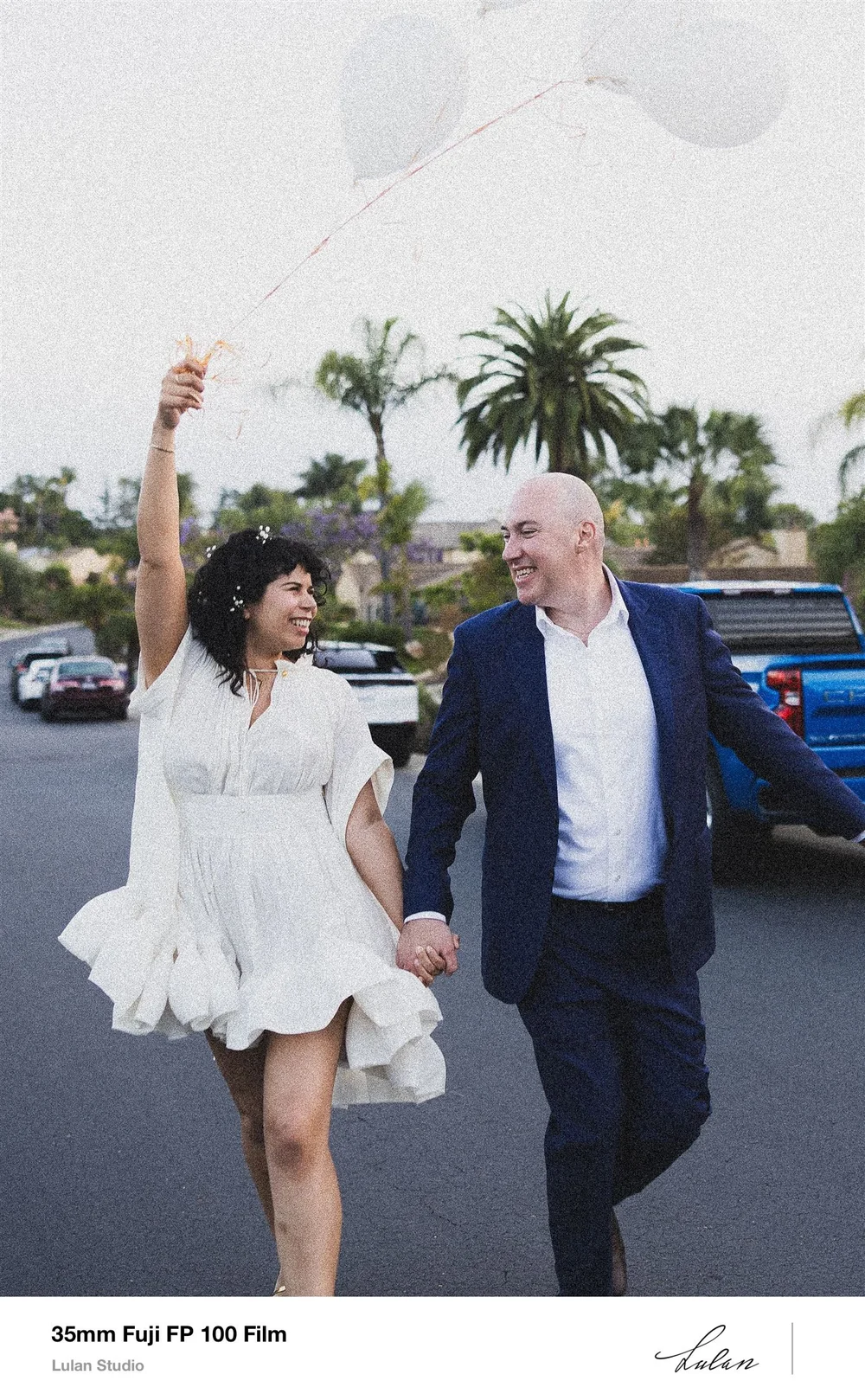
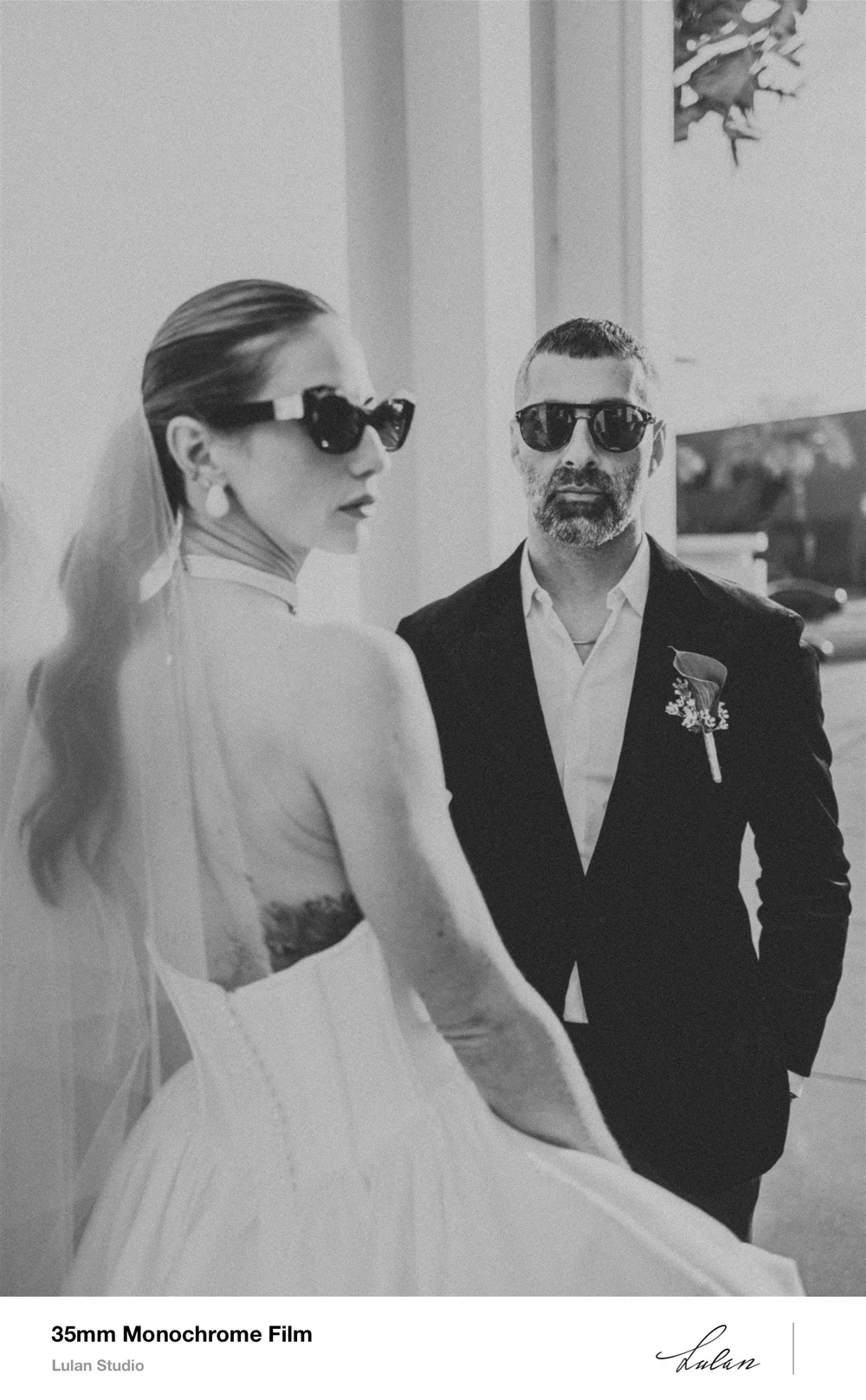
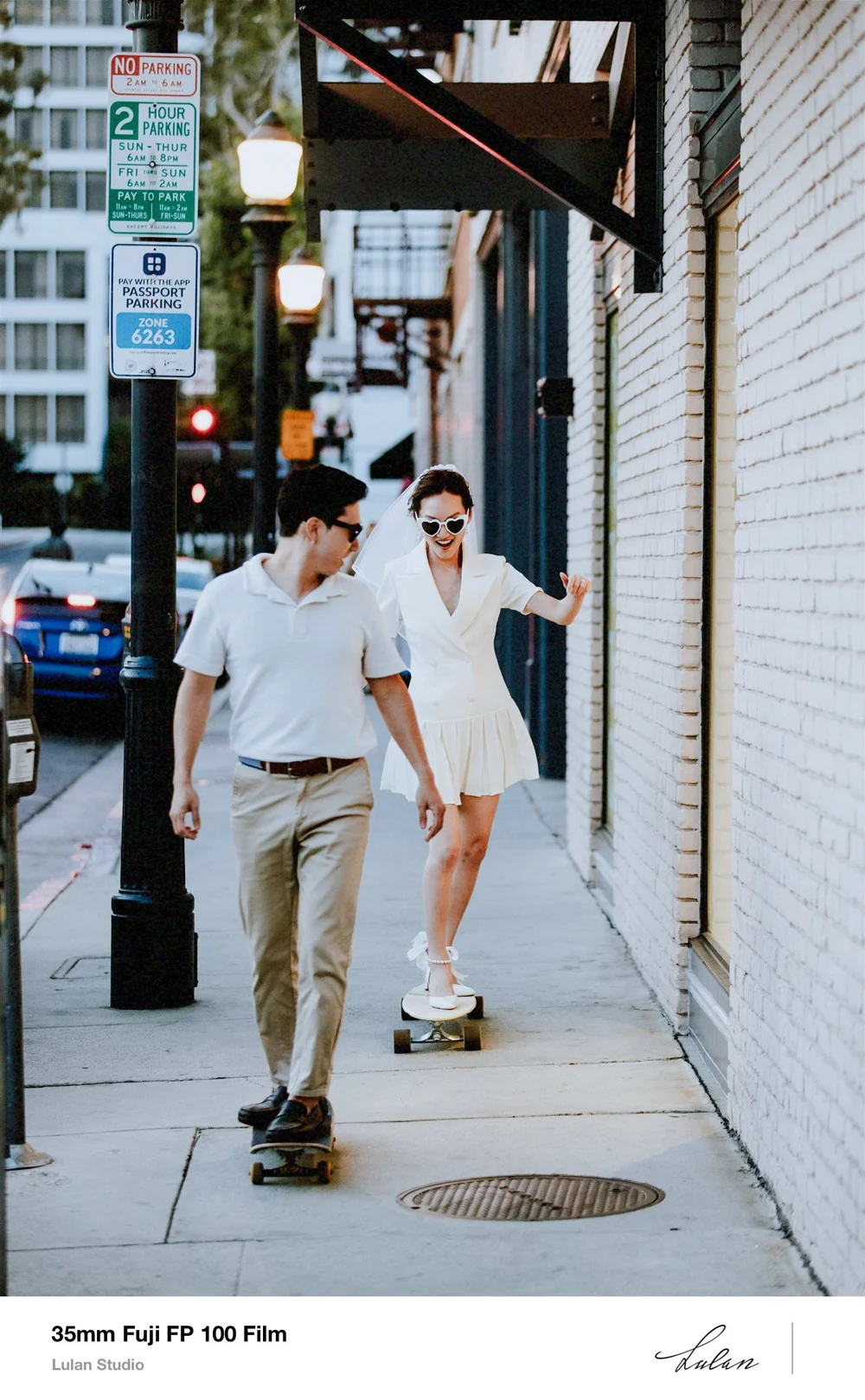
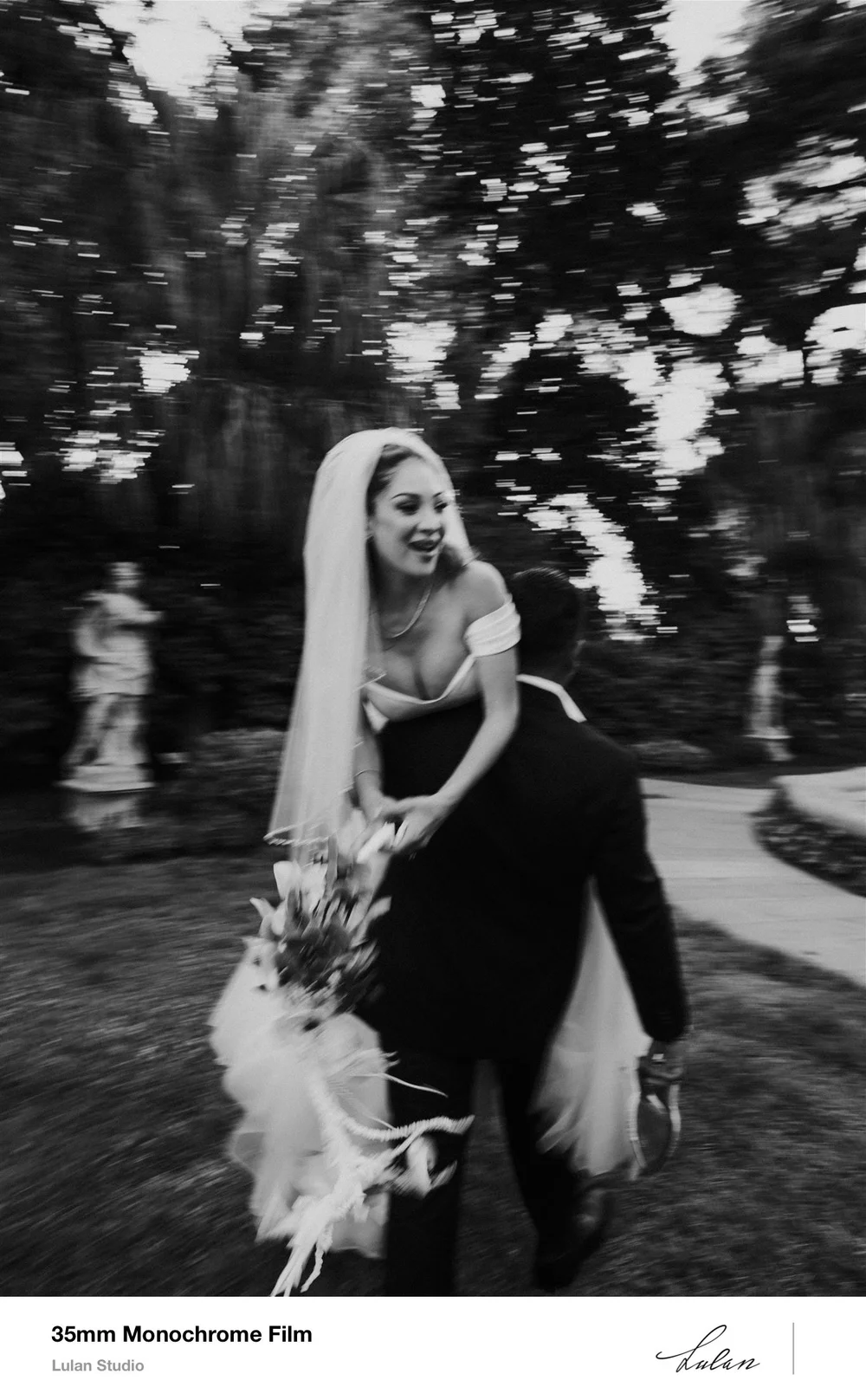
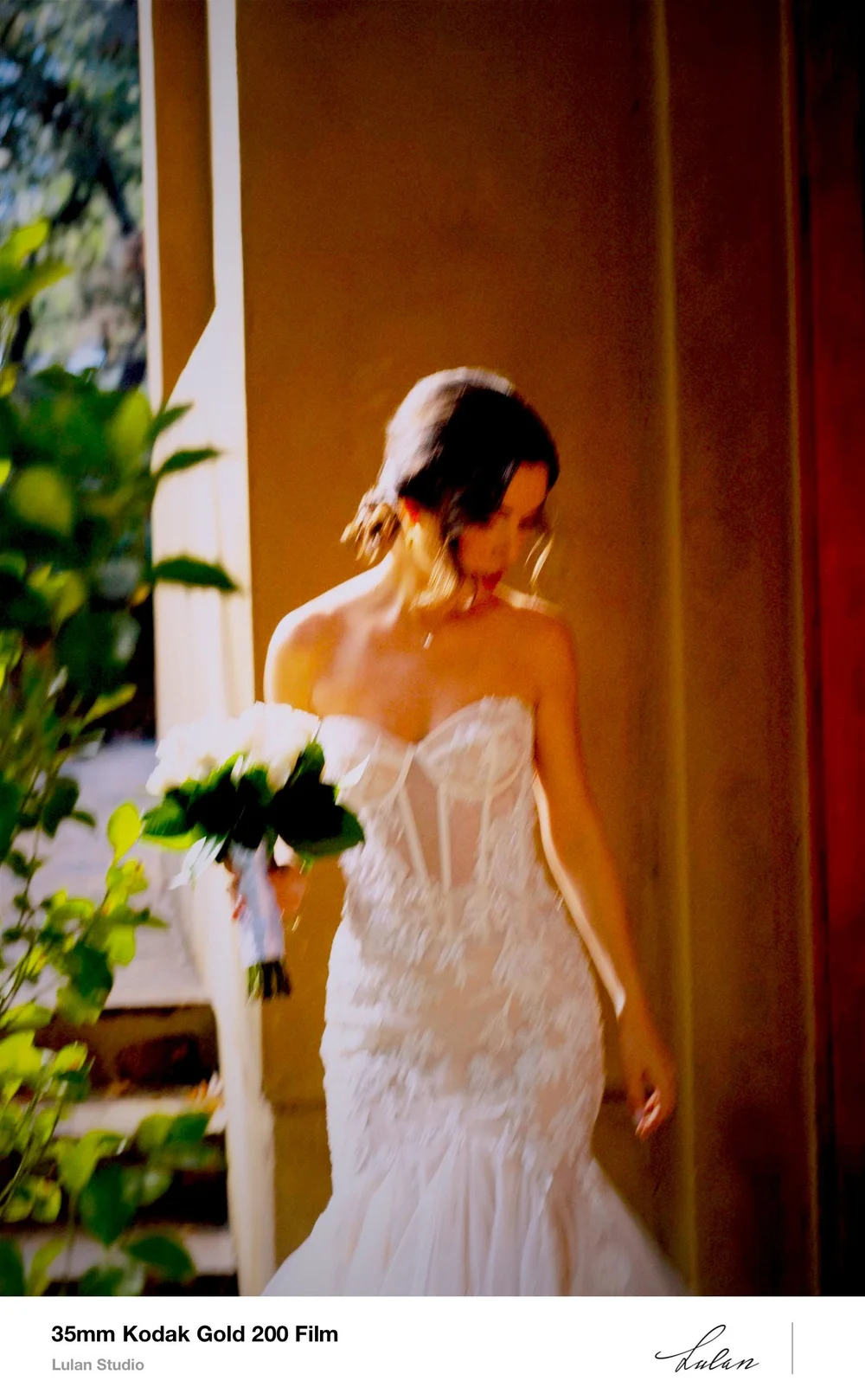
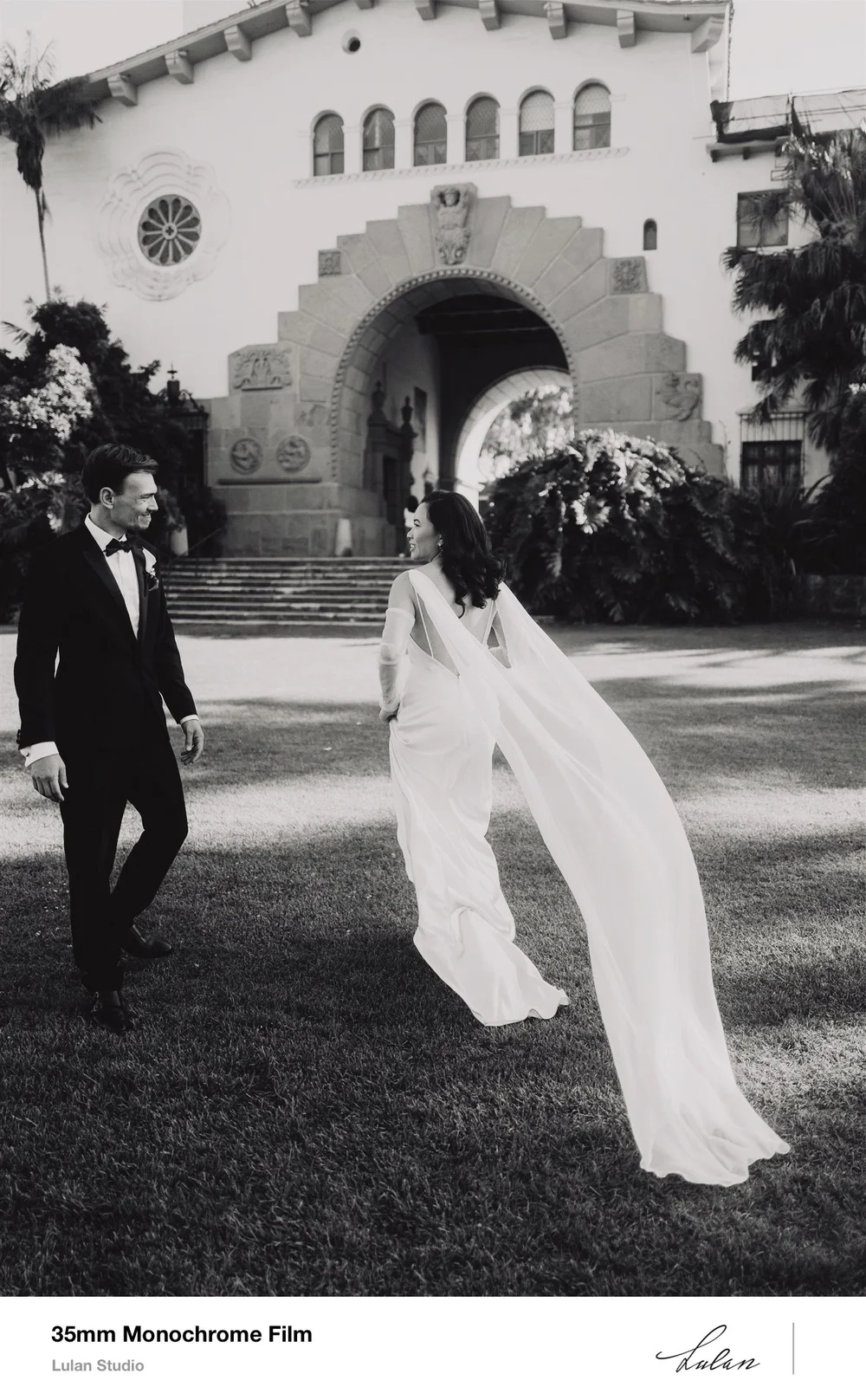
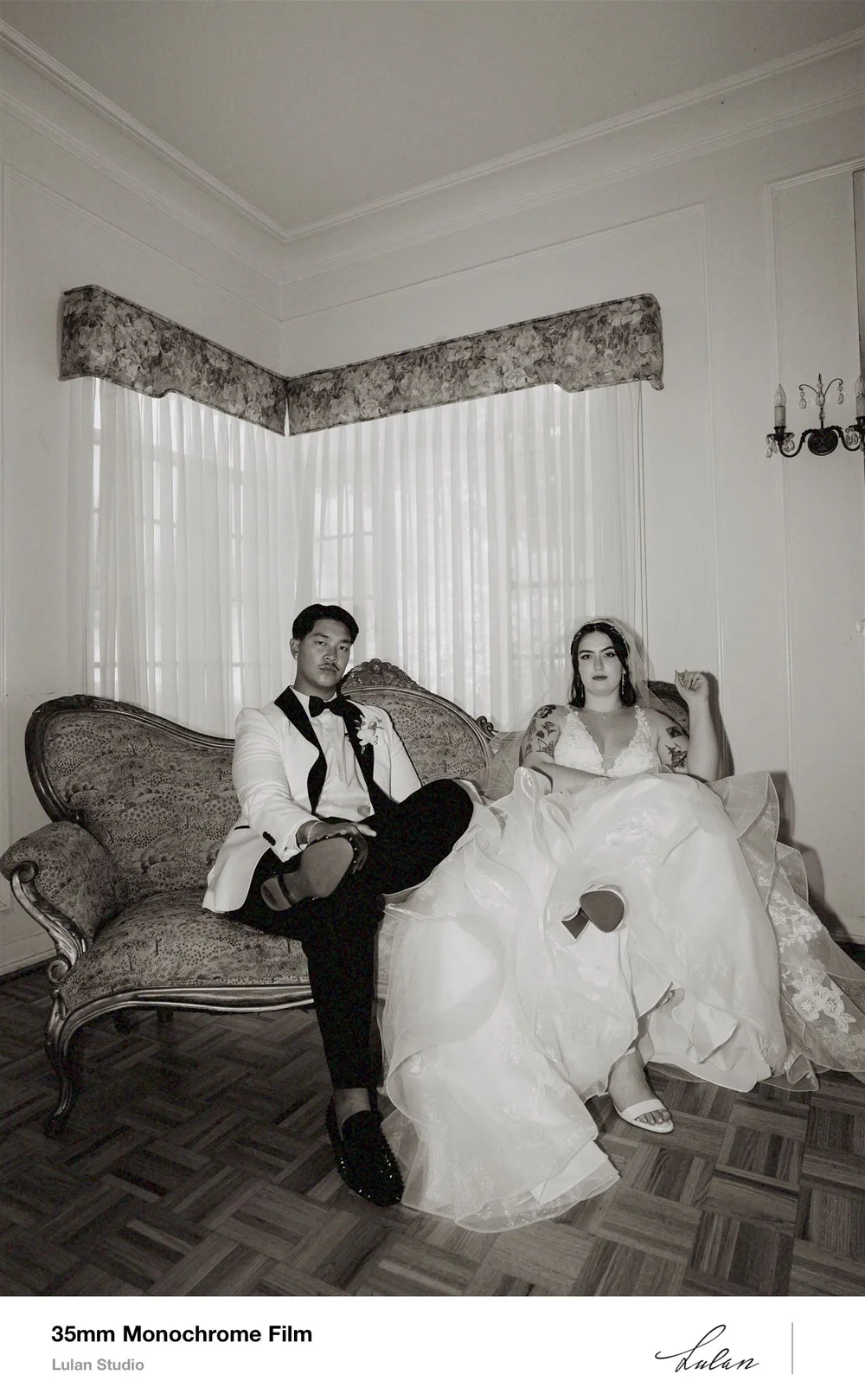
More of the same rolls live in the Leica gallery — frames straight off our favorite rangefinder.
Cost
What film adds to your budget.
A straight answer, because almost nobody publishes one.
That cost is already built into our collections, which start at $3,497. There is no film surcharge and no per-roll upsell — see current wedding collections and pricing.
The emulsion
The film stocks we reach for.
Every stock has a personality, and matching it to your wedding is part of the craft.
Kodak Portra 400
The wedding classic — warm, forgiving skin tones and gentle contrast. Our default for golden-hour portraits.
Kodak Gold 200
Sunnier and more nostalgic — beautiful for daytime ceremonies and beach elopements.
Ilford HP5 / Kodak Tri-X
Black & white with real grit — toasts, dancing, and documentary moments that feel timeless.
CineStill 800T
Tungsten-balanced for receptions — halation glow around candles and string lights that digital cannot fake.
Not sure what suits your venue and season? We recommend a mix on your planning call, and we flag the film-friendly rooms in our guide to the top wedding venues in Los Angeles.
Advice
Five ways to get the most from film on your day.
Protect golden hour
Ask your planner to hold the last 40 minutes before sunset for portraits — film rewards that light more than any other.
Mix color and black & white
A blend of stocks gives your album range; we recommend a ratio based on your venue and season.
Keep one quiet moment unscheduled
A ten-minute walk with no shot list produces the most-framed film photos we deliver.
Think in prints
Film negatives enlarge beautifully — plan for at least one statement print or an album spread from your film frames.
Trust the wait
Lab developing adds about two weeks for those frames. Your digital gallery arrives first; the film frames are worth it.
Real weddings
See the film look on a whole day.
Full galleries where the film frames sit next to the digital ones, exactly as you would receive them.
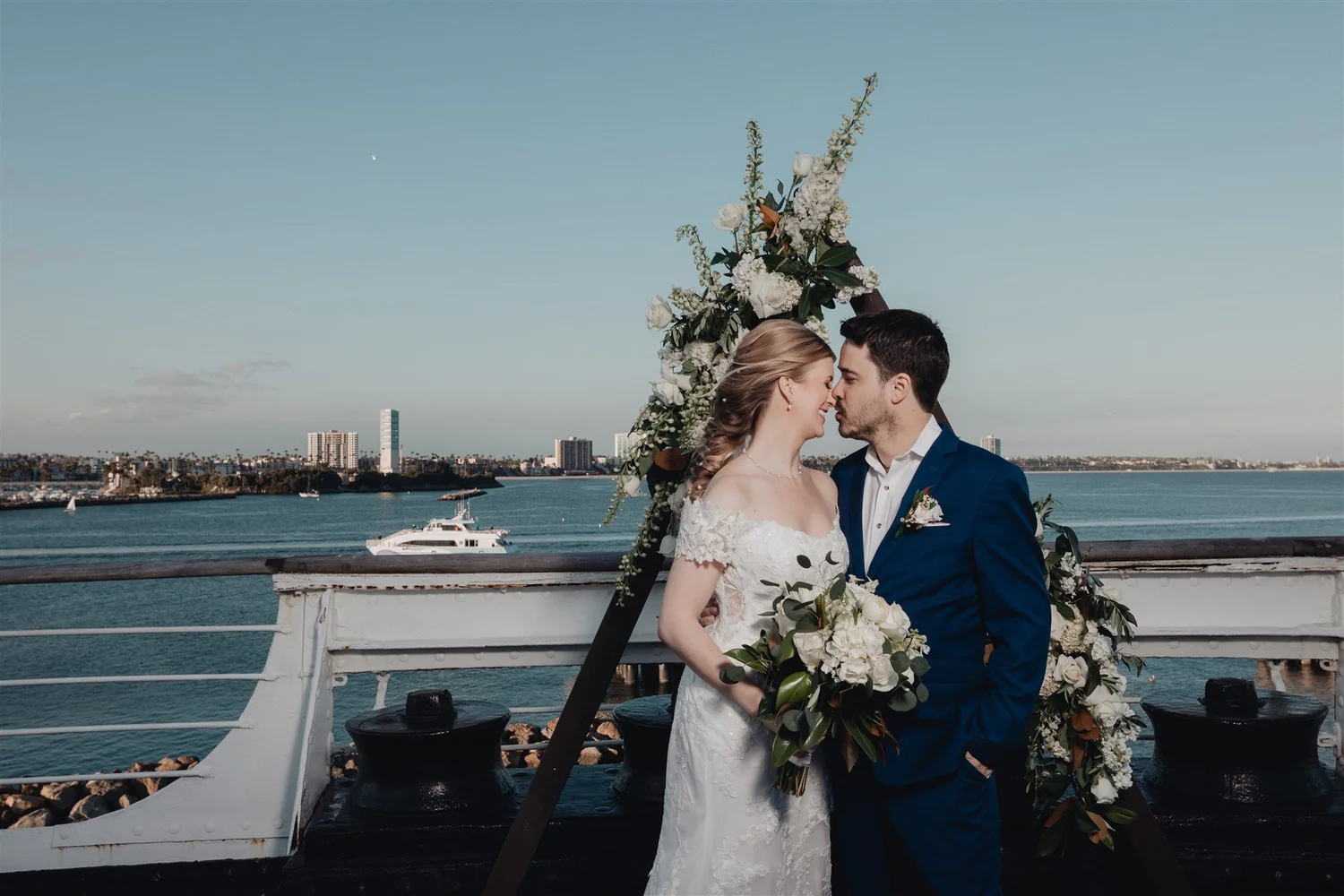
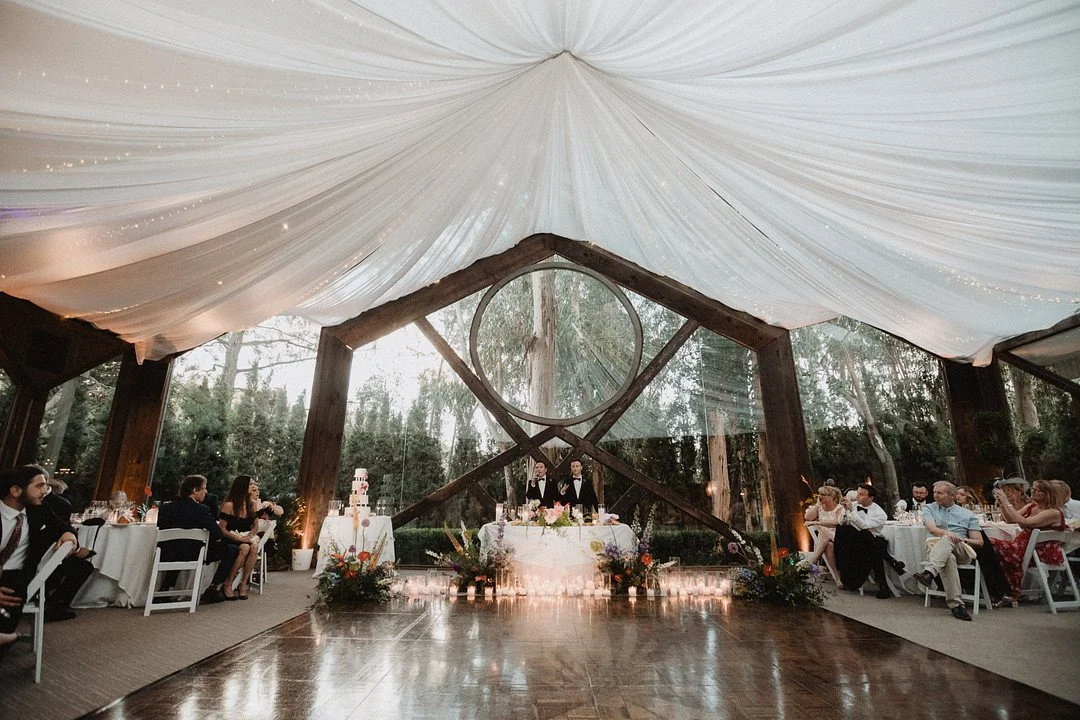
Weddings and elopements we photographed on film
Each of these is a real gallery from a Lulan Studio wedding, not a styled shoot.
Golden-hour elopement at El Matador State Beach Art Deco rooftop wedding at the Oviatt Penthouse Gatsby night at the Houdini Estate The Leica galleryQuestions
35mm film wedding FAQ.
How many rolls of film do you shoot at a wedding?
Is shooting film at a wedding risky?
How long until we see our film photos?
Do the film photos come in the same gallery as the digital ones?
Can you shoot film at a dark reception?
Can we book an all-film wedding?
Does film photography cost extra?
Availability
Check your date for a film wedding.
We photograph a limited number of film weddings across Los Angeles, Orange County, San Diego, and Santa Barbara each year, and popular dates book 12–18 months out.
More film and motion formats we shoot
These are format pages — what the camera is and what it gives you. None of them is a venue or city guide.
35mm & 120 on Leica and Hasselblad Cameras and equipment Super 8 & 16mm wedding film Polaroid wedding crew RED cinema camera videoReading before you decide
Honest comparisons, written for couples who have not booked yet.
Film vs digital — what you actually get Documentary vs cinematic video Delivery times, albums and prints2,300+ weddings photographed · 35+ national awards · 382 five-star reviews — shooting film since 2016.
Full-day coverage: Los Angeles wedding photography · wedding videography · same-day edit video · rates and collections.