
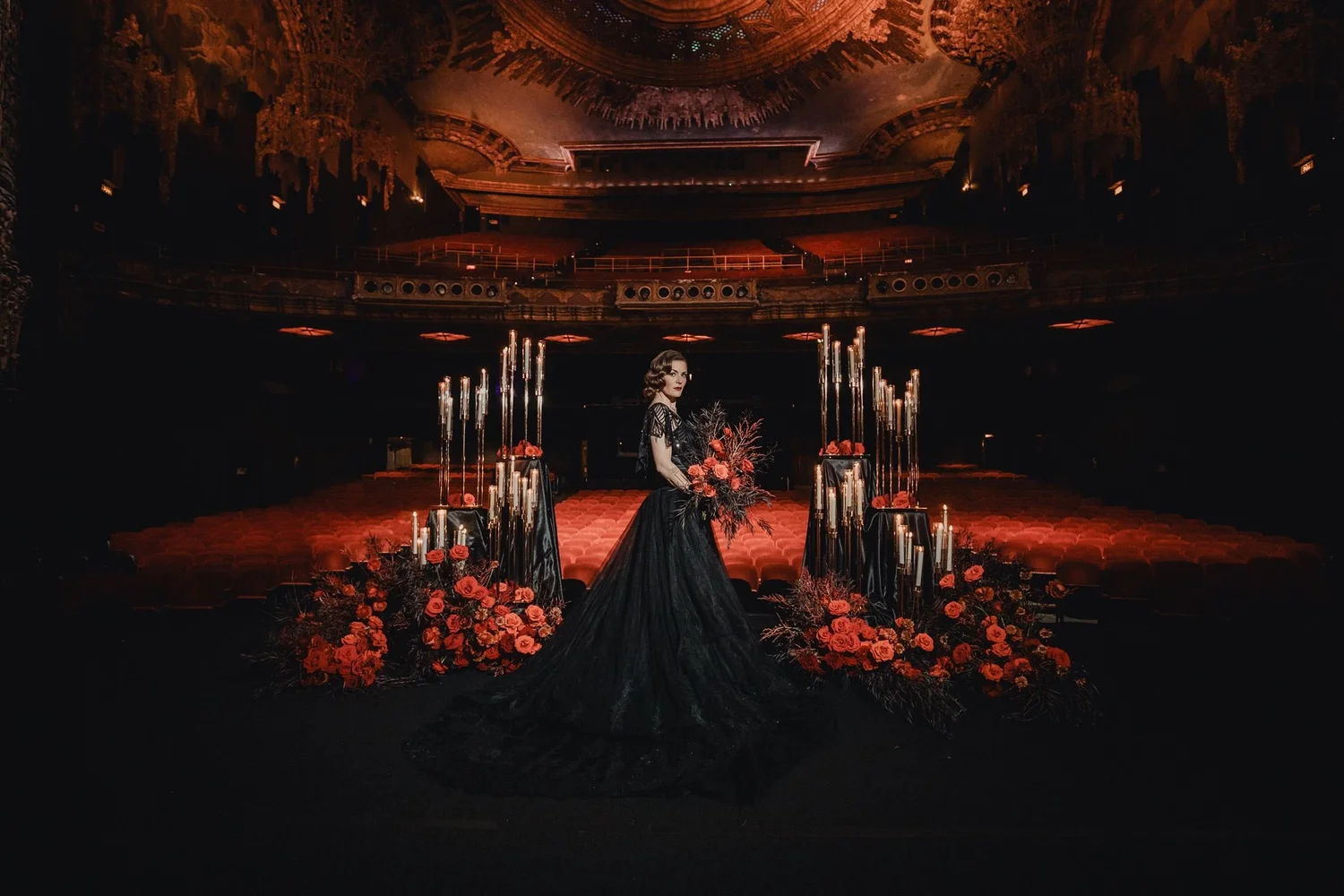
The wedding dresses of 2026, worn by real brides
Color, corsetry, bubble hems, 3D florals, gloves and the return of the dramatic veil — the 2026 bridal trends that actually turned up at Los Angeles weddings, on real brides, in real rooms.
- 33gowns
- 8guides
- 2,300+weddings shot
- 382five-star reviews
What 2026 bridal fashion actually looks like
Every season there are two versions of bridal fashion. There is the runway version — reported out of New York Bridal Fashion Week each spring and fall, full of ideas that may or may not ever leave the showroom. And there is the version that walks down an aisle in Pasadena on a Saturday in October.
We photograph the second one. Over 2,300 weddings across Los Angeles, Orange County, San Diego and Santa Barbara, most recently through 2025 and 2026 — and the gowns on this page are all from that work. No stock images, no runway samples, no borrowed press photographs. Thirty-three dresses, worn by thirty-three brides, at thirty-three weddings we were hired to shoot.
What is interesting is how much the two versions now agree. Six of the trends the trade press named for 2026 are visibly present in our own archive.
 Trend 01
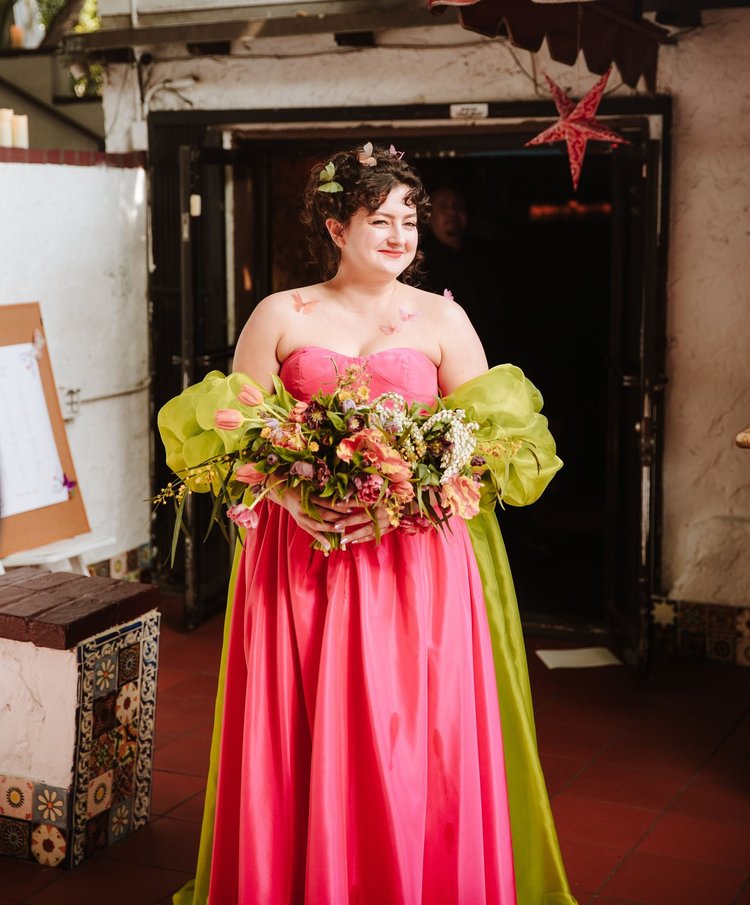
Color, finally
Butter yellow, dusty rose, pale blue and pistachio ran through the 2026 collections. Ours went further: pale blue, blush, black and this hot pink and chartreuse ball gown.
Read the color guide →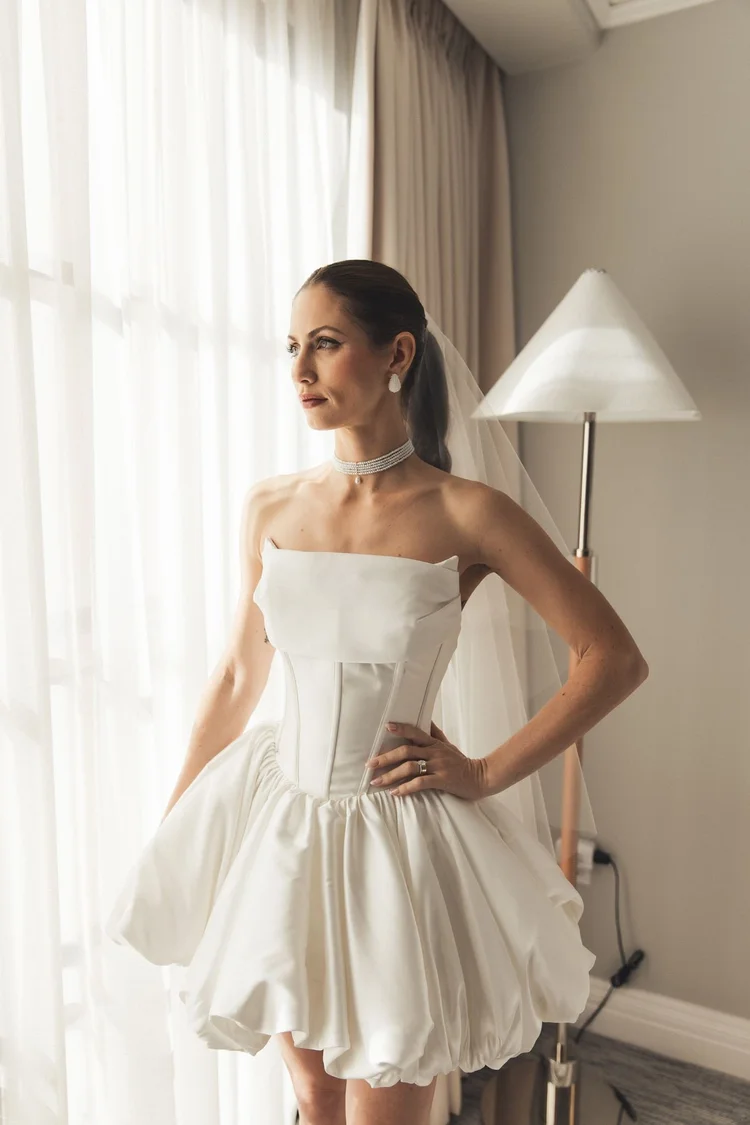 Trend 02
Structure you can see
Exposed boning, long-line corsets and the bubble hem were on nearly every runway. We photographed a strapless corset mini with a fabric choker this year.
Read the structure guide →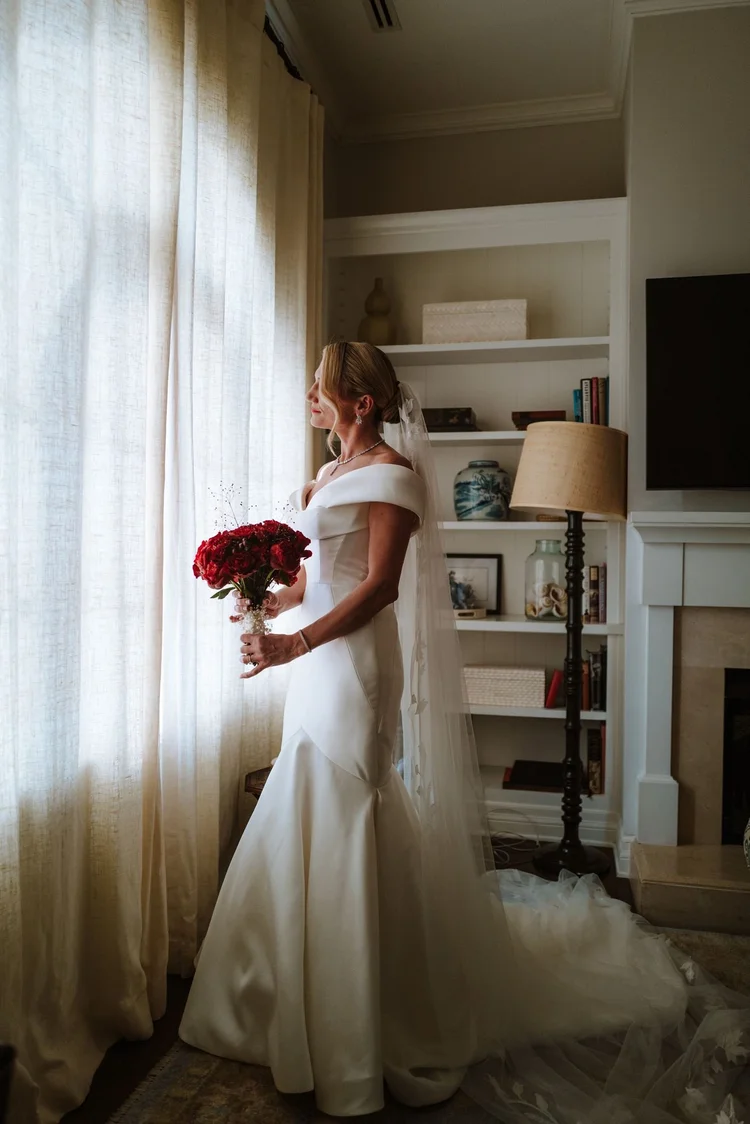 Trend 03
Off the shoulder, everywhere
Nine of these thirty-three gowns are off-the-shoulder — comfortably the most-worn neckline we photograph, and the most flattering under almost any light.
Read the neckline guide →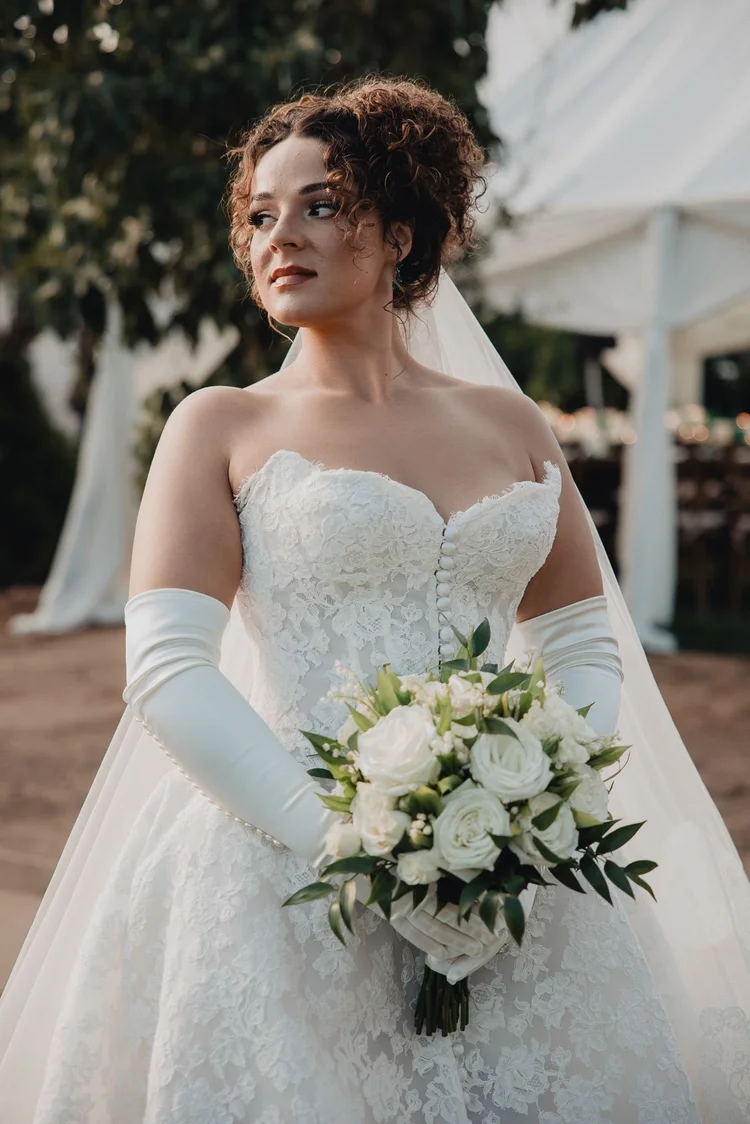 Trend 04
Gloves are back
Opera-length satin, matched lace, textured and feathered. Gloves returned alongside chokers, capelets and neck scarves. Three of these brides wore them.
See the gloves →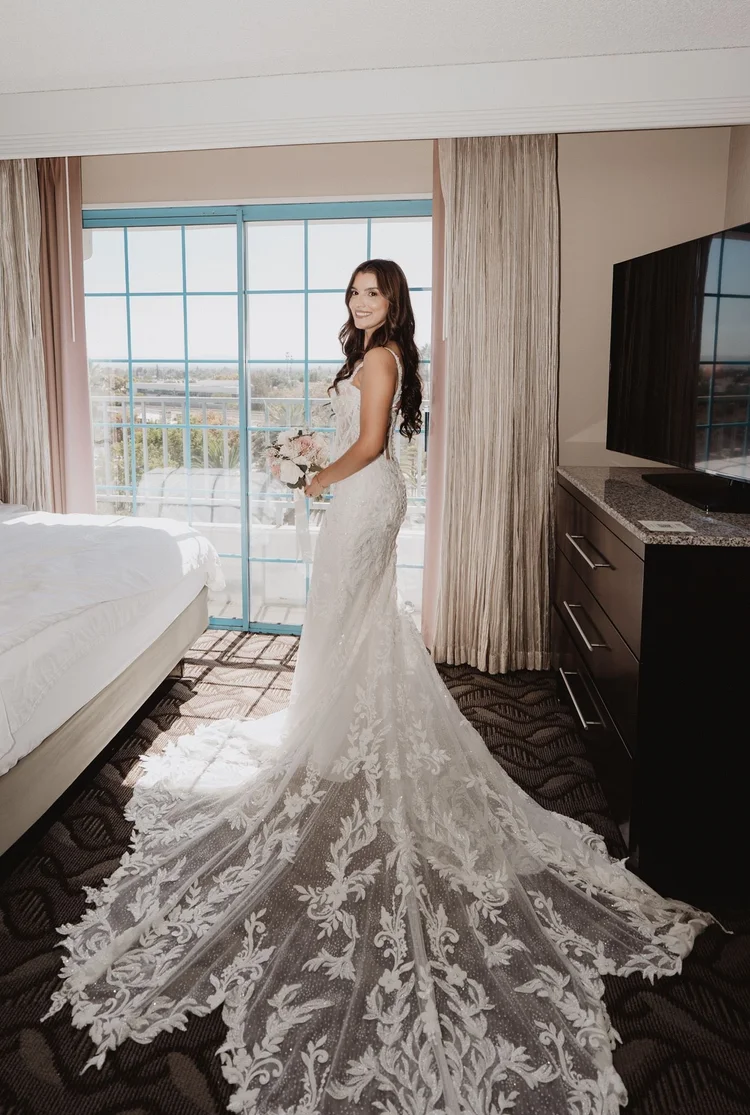 Trend 05
Maximal texture
3D florals, oversized appliqué, tiered ruffles and feathers. Applied texture casts its own shadows, which is why it photographs well under almost any light.
Read the fabric guide →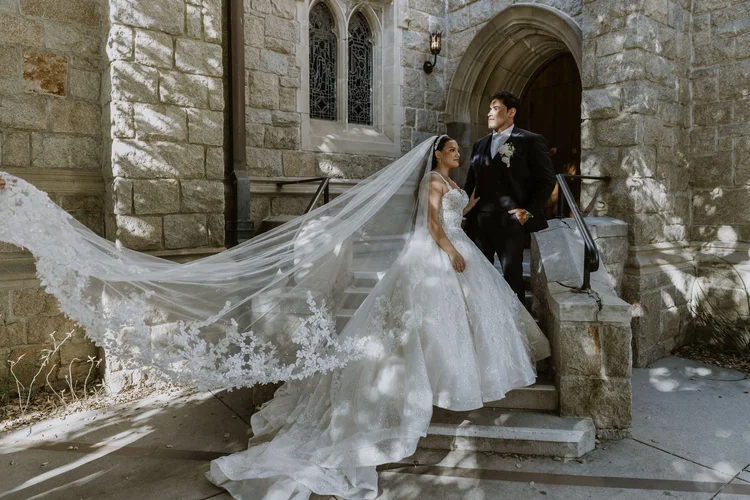 Trend 06
The dramatic veil
Mantilla veils, 3D floral veils and cathedral lengths all returned at once. The veil is cheaper, lighter and far more reversible than a long train.
Read the veil guide →And one trend nobody put on a runway
Convertibility. Detachable trains, removable sleeves and overskirts turned up in this collection more often than any single silhouette did. Brides are buying one dress and wearing two — a detachable cathedral train costs a fraction of a second gown, removes the need for a bustle entirely, and gives you a ceremony silhouette and a reception silhouette out of one purchase. That guide is here →
Eight guides, written from behind the camera
Each of these is built from the same thirty-three gowns, looked at a different way. They are written for brides who are about to go dress shopping and want to know what a choice will actually do — to the day, and to the photographs.
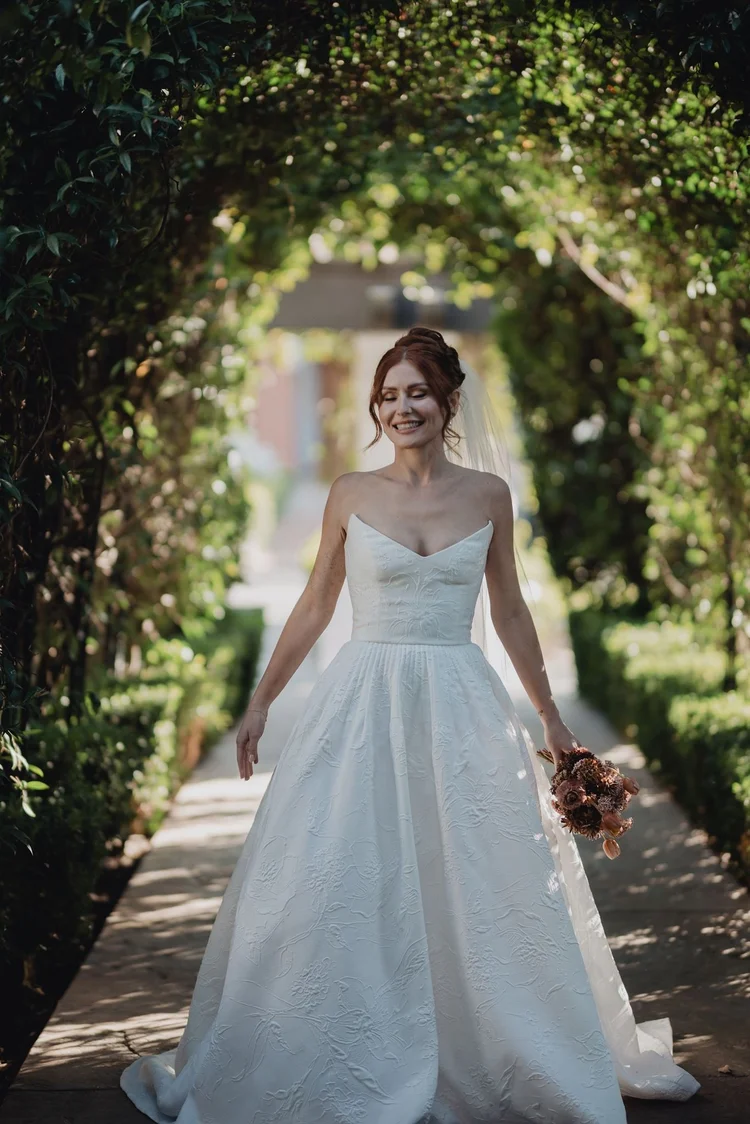 SilhouettesA-line, ball gown, mermaid, sheath, fit-and-flare and the short dressSix shapes, and what each one does once a bride starts moving. The foundation guide.
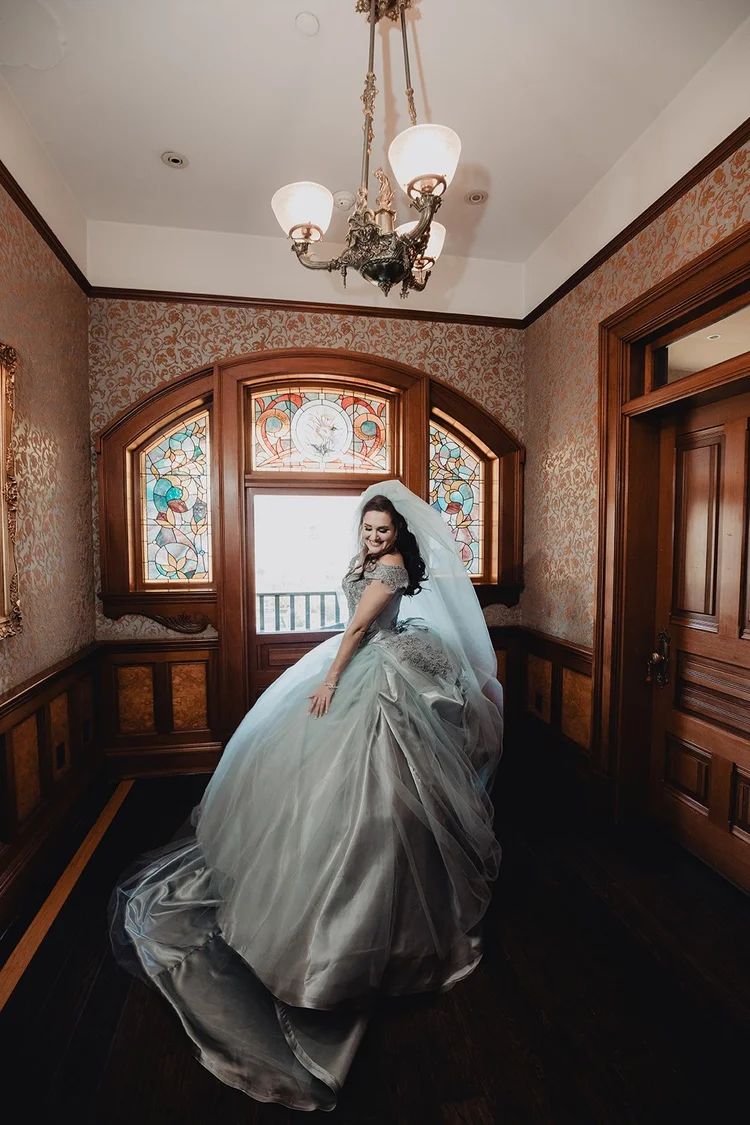 TrainsSweep, court, chapel and cathedral trainsWhat each length does to your aisle, your bustle, your car and your portraits.
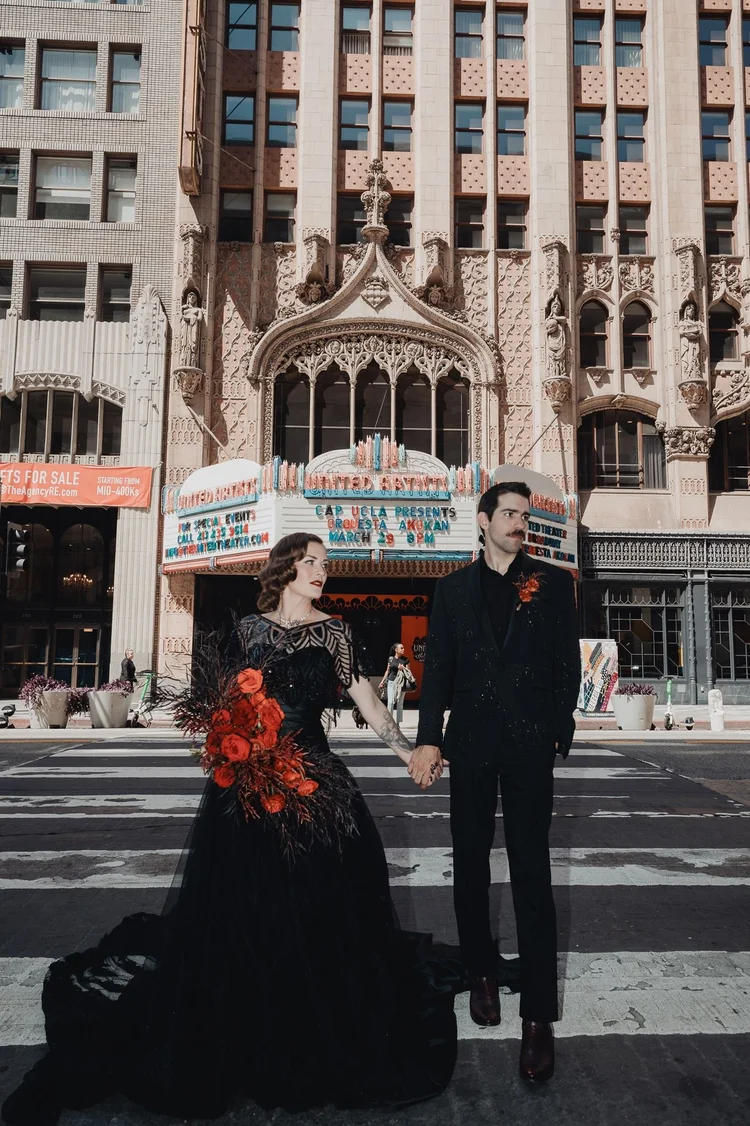 ColorBlack, blue, blush and hot pinkColor was the biggest bridal story of 2026. Four Los Angeles brides who committed to it.
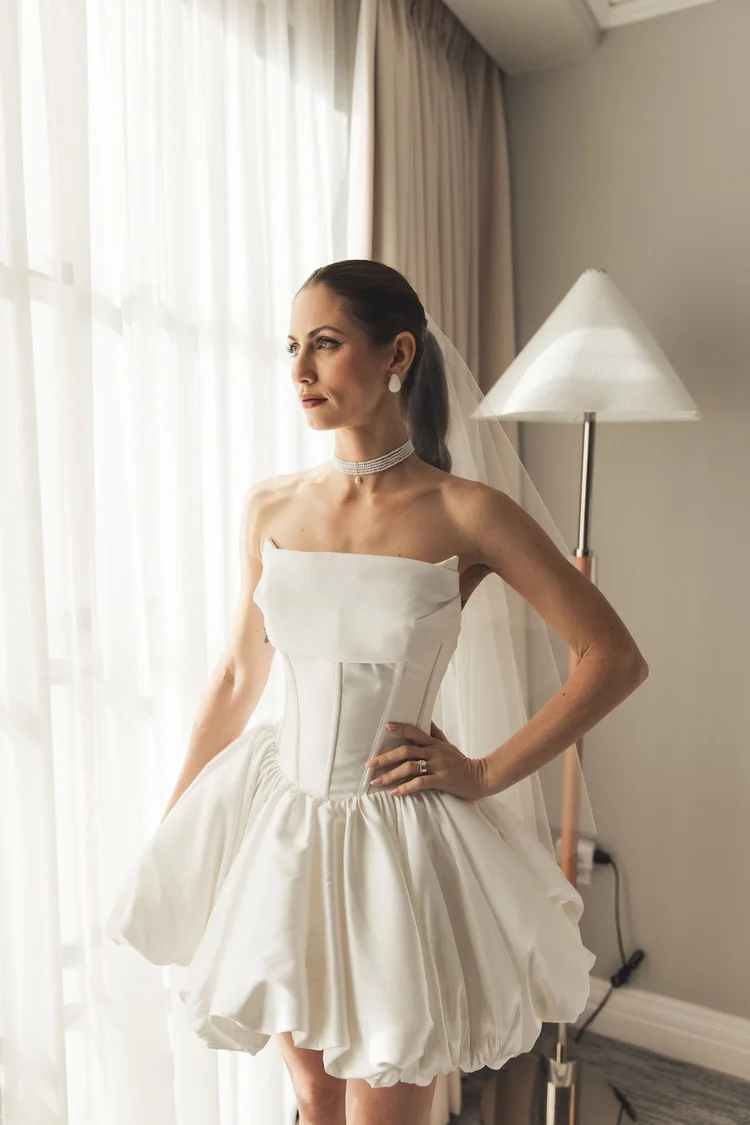 StructureExposed corsetry, boning and the bubble hemVisible structure was on every 2026 runway. What it does for a photograph, and for a 12-hour day.
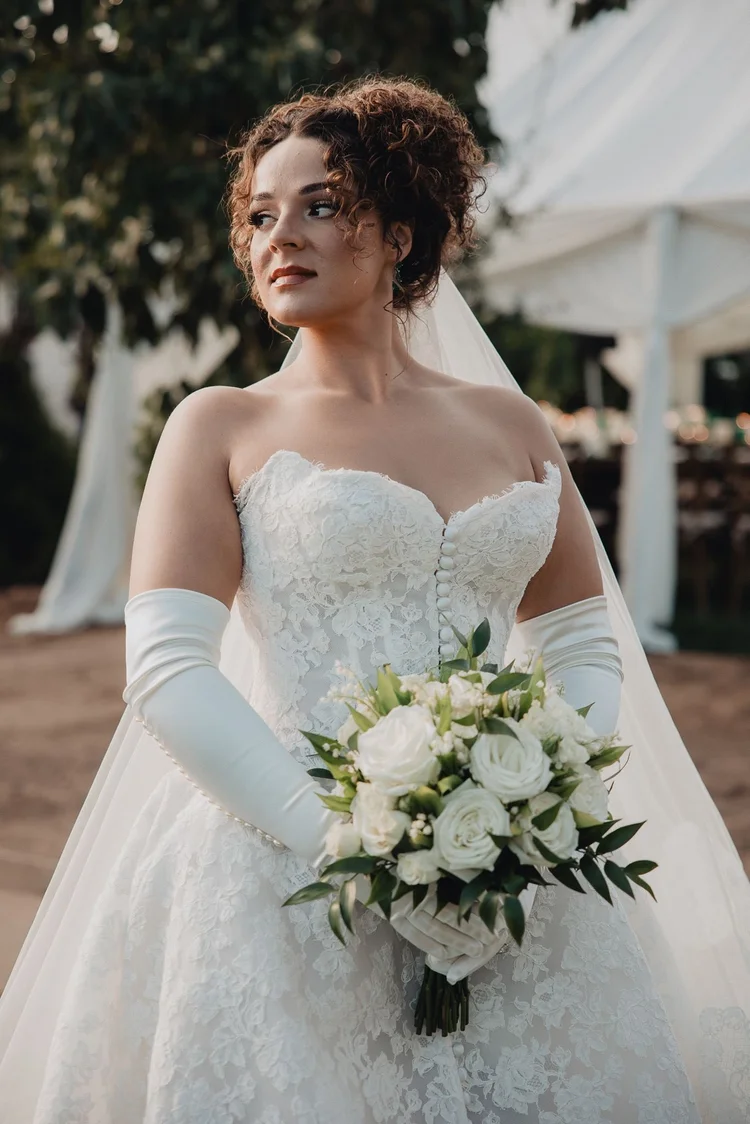 NecklinesOff-the-shoulder, illusion sleeves and glovesThe most-worn neckline in our archive, and the accessory that came back after thirty years.
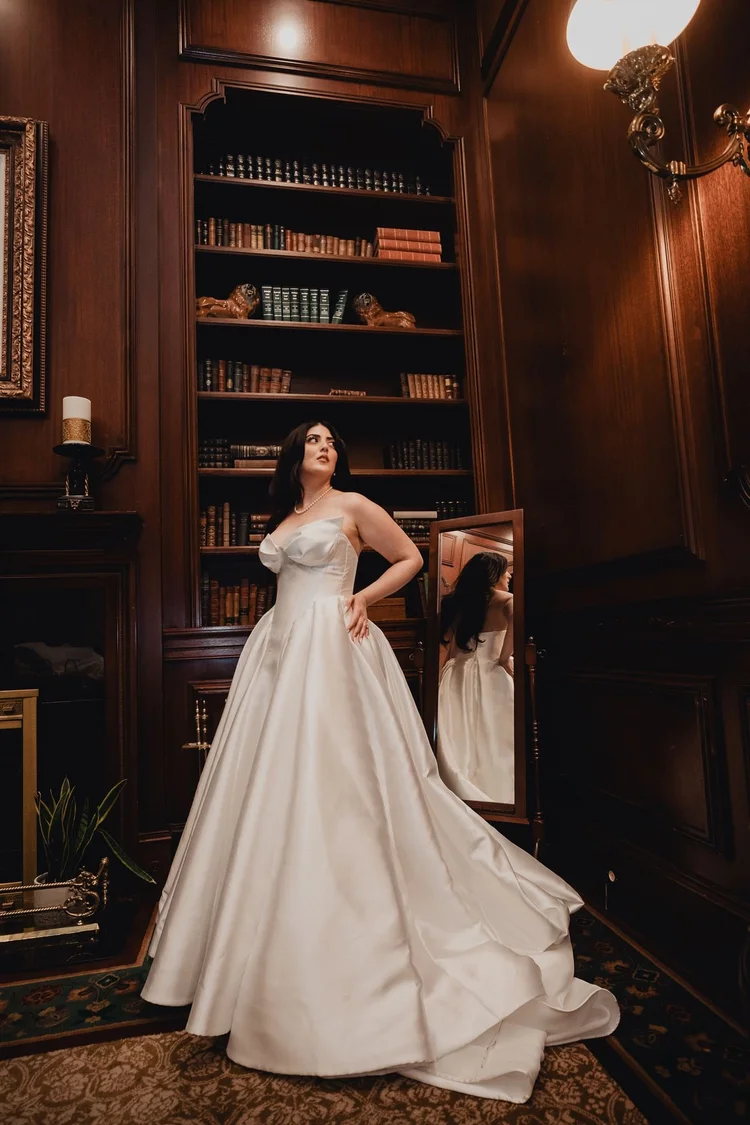 FabricLace, silk, Mikado, chiffon and tulleTwo gowns with the same silhouette can photograph nothing alike. This is why.
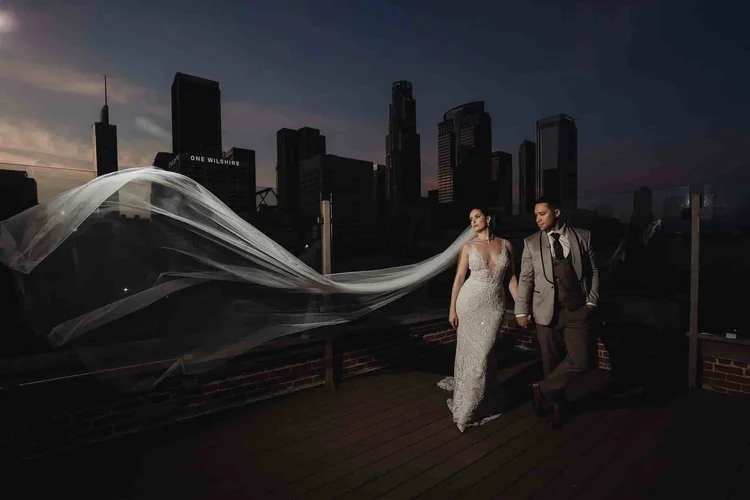 VeilsVeil lengths and the dramatic veilFingertip to cathedral, mantilla veils, 3D florals — and why the veil beats the train.
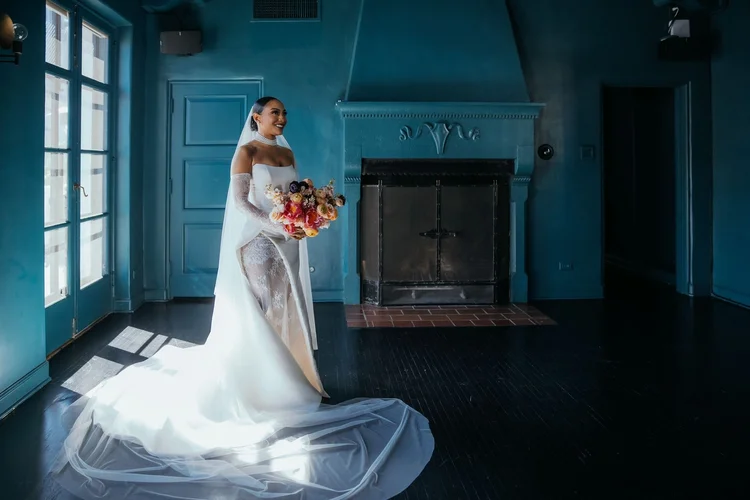 Two looksDetachable trains, overskirts and the reception changeHow one gown becomes two, usually in under a minute and for a fraction of the price.
Choose a style, see the gowns
Every photograph in this collection, tagged by silhouette, color, detail and train length. Pick a style below to narrow it down, then open any gown to see the full set of photographs from that wedding.
33 gowns · 81 photographs
If you are about to go dress shopping
- Book the first appointment to test shapes, not to buy. Ask for one of each silhouette in roughly your size regardless of price. You are learning what you like on your own body.
- Decide the train before the dress. Sweep, court, chapel and cathedral change your aisle, your bustle, your car and your portrait timings. It is far harder to change later.
- Photograph yourself from behind. Your guests look at the back of your gown for the entire ceremony. Most brides never see it before the day.
- Ask what is detachable. A removable train, overskirt or sleeve is the cheapest possible second dress, and the question is much easier to answer at the point of order.
- Match the gown to the venue, not the season. A cathedral train in a narrow garden aisle is a hazard. A plain crepe column in a spectacular ballroom is a missed opportunity.
- Tell your photographer what you chose. Color, fabric and veil length all change how a wedding is lit and where the camera stands. It is a two-minute conversation that changes the whole gallery.
Bridal fashion questions we are asked most
What are the biggest wedding dress trends for 2026?
Color (pale blue, blush, butter yellow, pistachio and black), visible structure (exposed boning, long-line corsets and bubble hems), off-the-shoulder necklines, sheer and illusion lace, 3D florals and other applied texture, and the return of accessories — gloves, chokers, capelets and decorated veils. Convertible gowns with detachable trains and sleeves are arguably bigger than any of them.
Is white still the standard for wedding dresses?
White and ivory remain the overwhelming majority, but color is no longer unusual. In this collection of thirty-three recent gowns, five are meaningfully not white — pale blue, blush, champagne, black and hot pink — and several more are warm nudes that read as ivory at a glance.
How far in advance should I buy my wedding dress?
Nine to twelve months before the wedding for a made-to-order gown, because production plus alterations routinely takes six to eight months. Sample and off-the-rack gowns can be much faster. If your date is inside six months, say so at the first appointment.
What wedding dress silhouette is most flattering?
There is no single answer, but A-line and fit-and-flare suit the widest range of bodies with the least alteration, which is why they dominate most collections. Mermaid and sheath can be the most striking gowns in the room, but they are the least forgiving of fit.
Does my dress change how my wedding is photographed?
Yes, more than most couples expect. Fabric decides how a gown responds to light — tulle needs backlight, silk needs direction, crepe needs a beautiful room. Train and veil length change portrait timings. A black or heavily saturated gown changes how the whole scene has to be lit. Telling your photographer in advance costs nothing and changes a lot.
Can I see more of your wedding photography?
Yes — our Los Angeles wedding photography page, our blogs and galleries, and our reviews are the best places to start. You can also check your date or schedule a call.
We would love to hear about your dress
Lulan Studio is a Los Angeles wedding photography and videography team of fifteen artists, shooting on film and digital across Los Angeles, Orange County, San Diego and Santa Barbara. Over 2,300 weddings, 35+ awards and 382 five-star reviews.
Check your dateSchedule a call