Lace, Silk, Chiffon, Tulle and Mikado: How Wedding Dress Fabric Reads on Camera
Silhouette gets all the attention. Fabric decides the photograph. Two gowns cut to the identical A-line pattern — one in silk Mikado, one in tulle — do not look like relatives in a picture, because they are doing opposite things with light. One reflects it in hard planes. The other scatters it.
This is the guide we wish every bride had before her first appointment, written from behind a camera rather than from a fabric swatch book.
Silk, satin and Mikado — light in broad planes
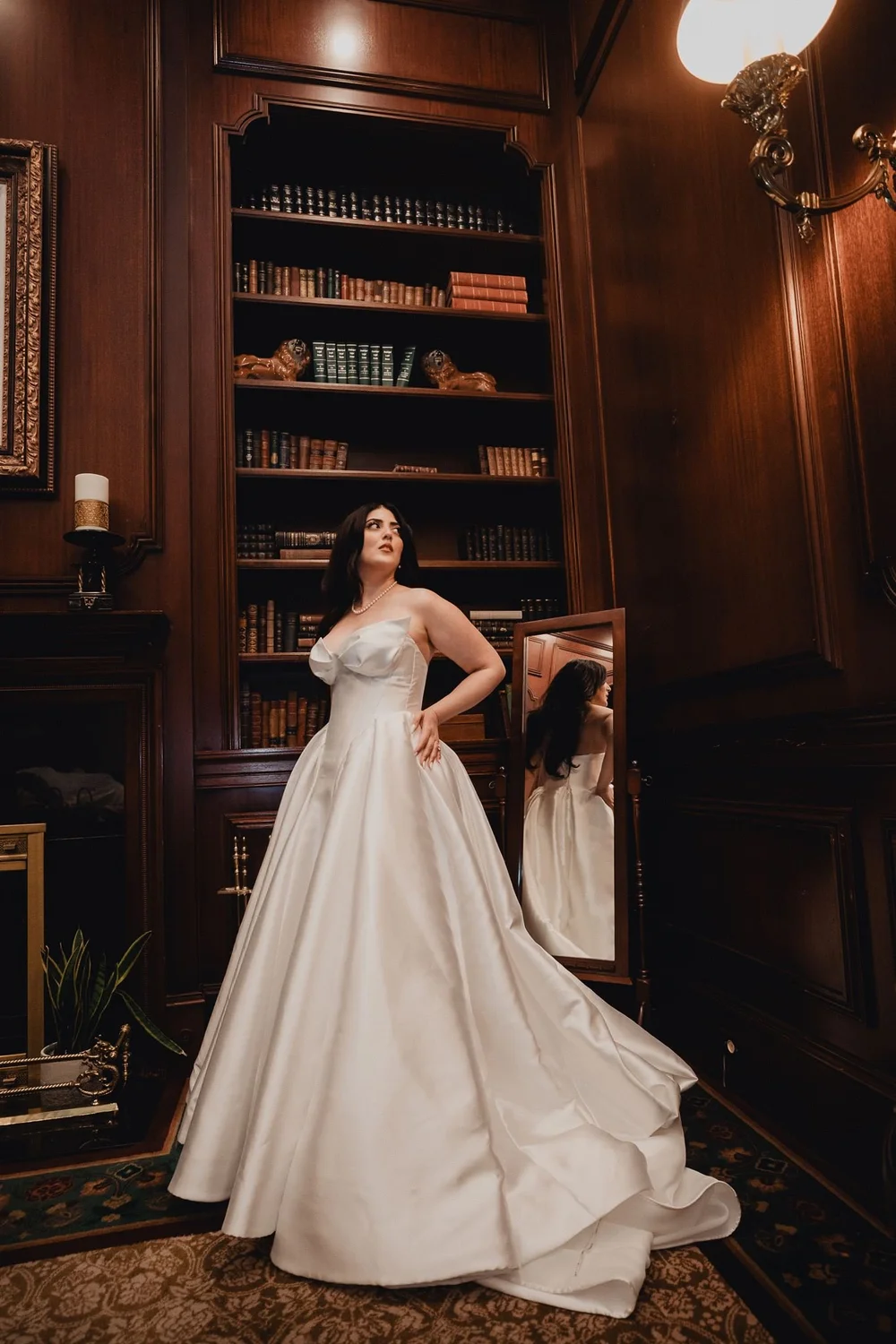
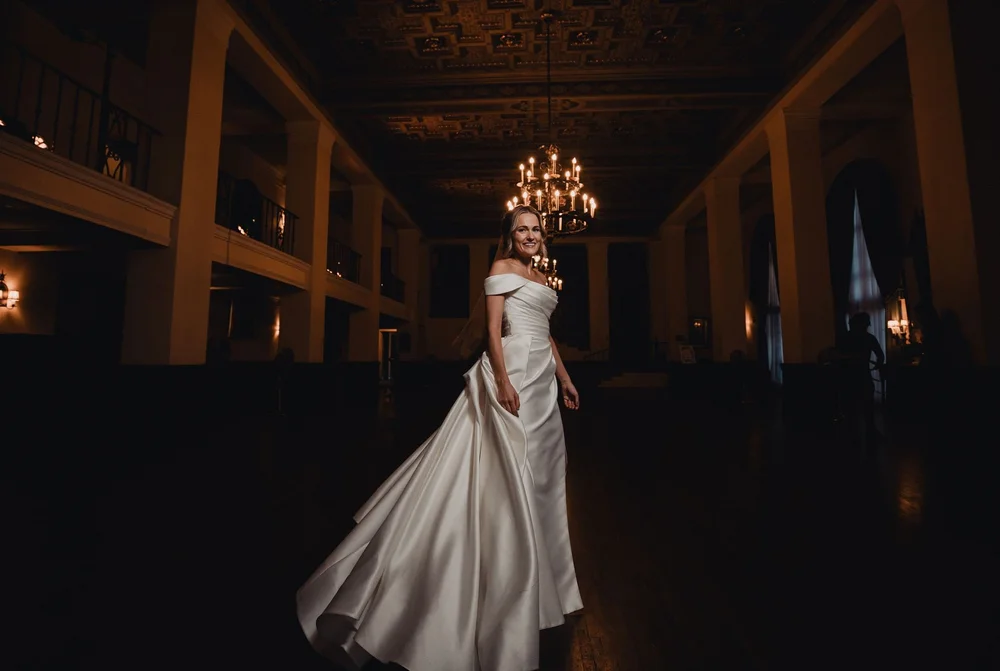
Heavy silks — duchess satin, Mikado, faille — behave like sheet metal that happens to be soft. They hold a fold. A pleat stays a pleat. Light hits them in large flat planes and reflects back with a soft sheen rather than a sparkle.
What that means in practice: a silk gown gives you shape in a photograph. In a dark room the folds catch highlights and read as sculpture. In flat overcast light a silk gown can go slightly dull, because there is no directional light to build a highlight — which is worth knowing if your ceremony is a midday garden in June.
Silk is also the fabric that shows every mark. Foundation on a bodice, a fingerprint, a water spot from a champagne glass — all of it stays. Bring a stain pen. Genuinely.
Lace — the one that survives distance
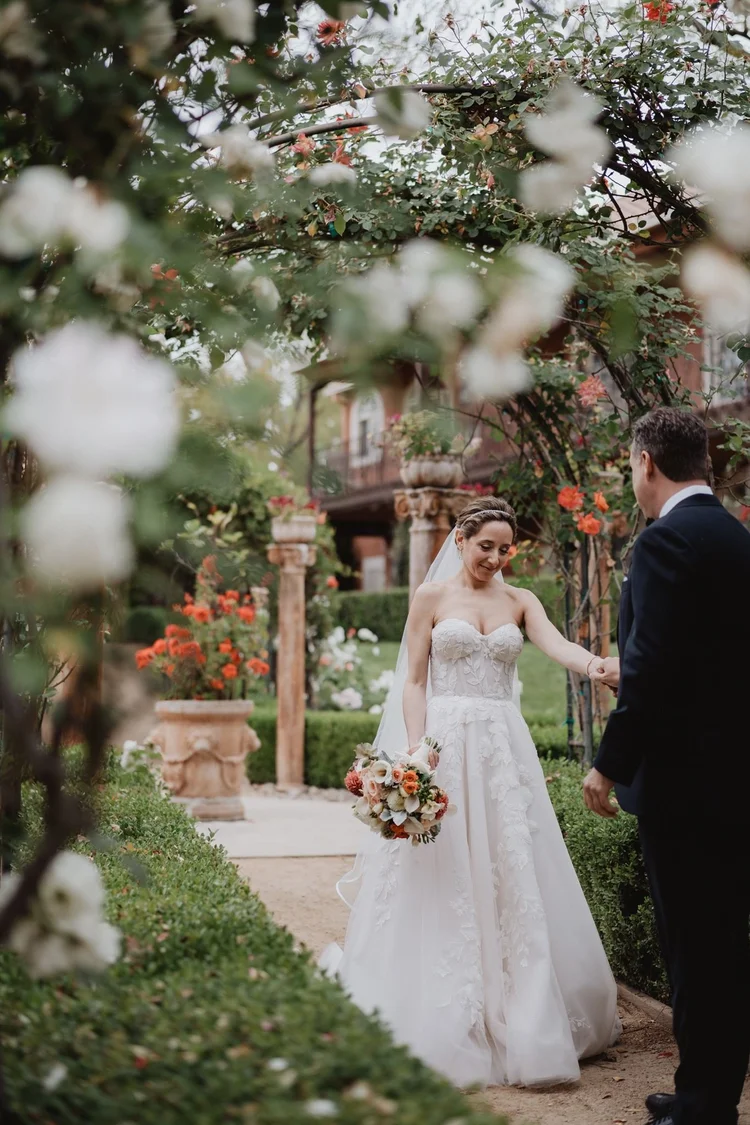
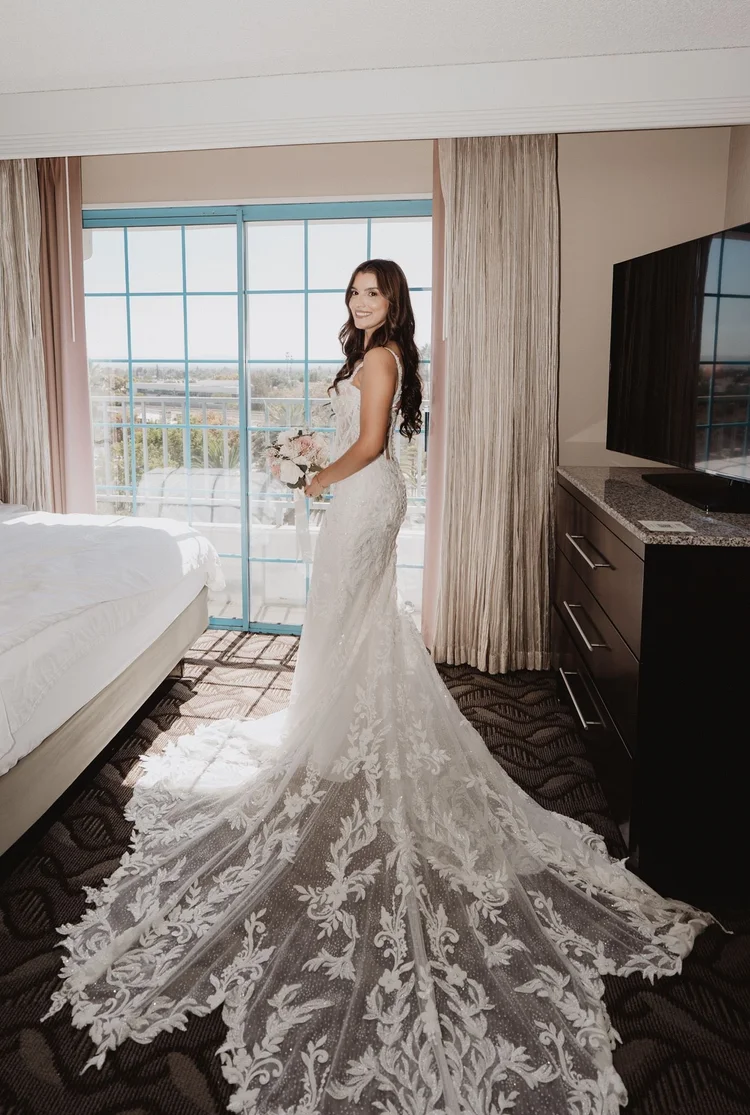
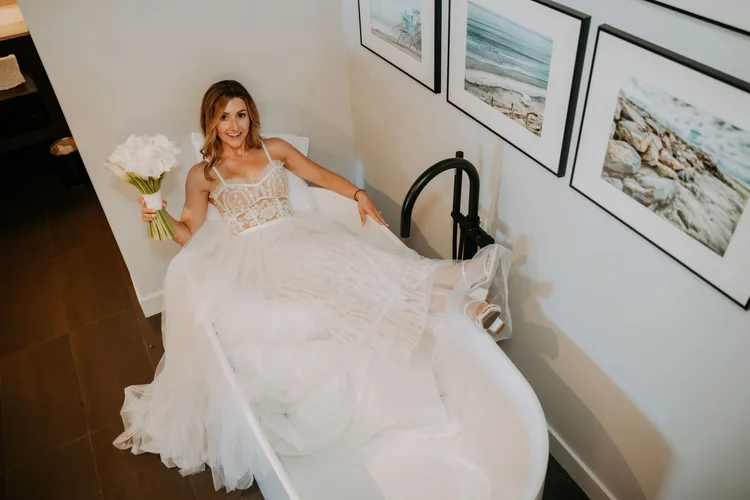
Lace is the most photographed fabric in bridal for one reason: it holds texture at every distance. A plain crepe gown at thirty feet is a shape. A lace gown at thirty feet is still a pattern. That matters enormously in ceremony coverage, where a photographer is often working from the back of a room.
- Chantilly — fine, soft, delicate. Photographs as a whisper; reads best in close frames and backlight.
- Alencon — corded outlines around each motif. The most photogenic lace at a distance because the cording catches light.
- Guipure / Venise — heavy, no net ground, strong graphic shapes. Modern, architectural, and it reads almost as embroidery.
- Appliqued illusion — motifs laid onto sheer tulle. Coverage that photographs as air. See illusion sleeves.
Tulle — the fabric that wants the sun behind it
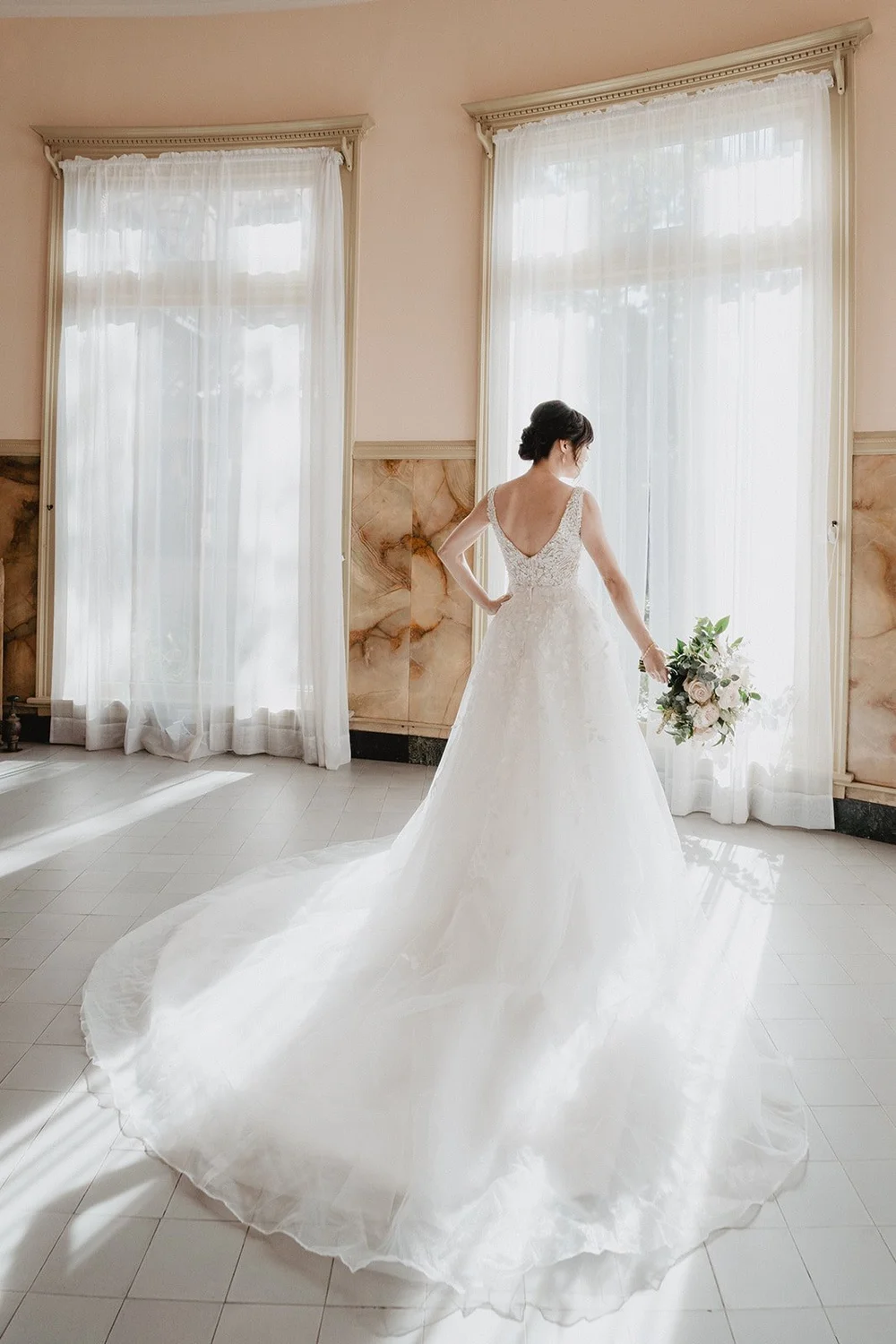
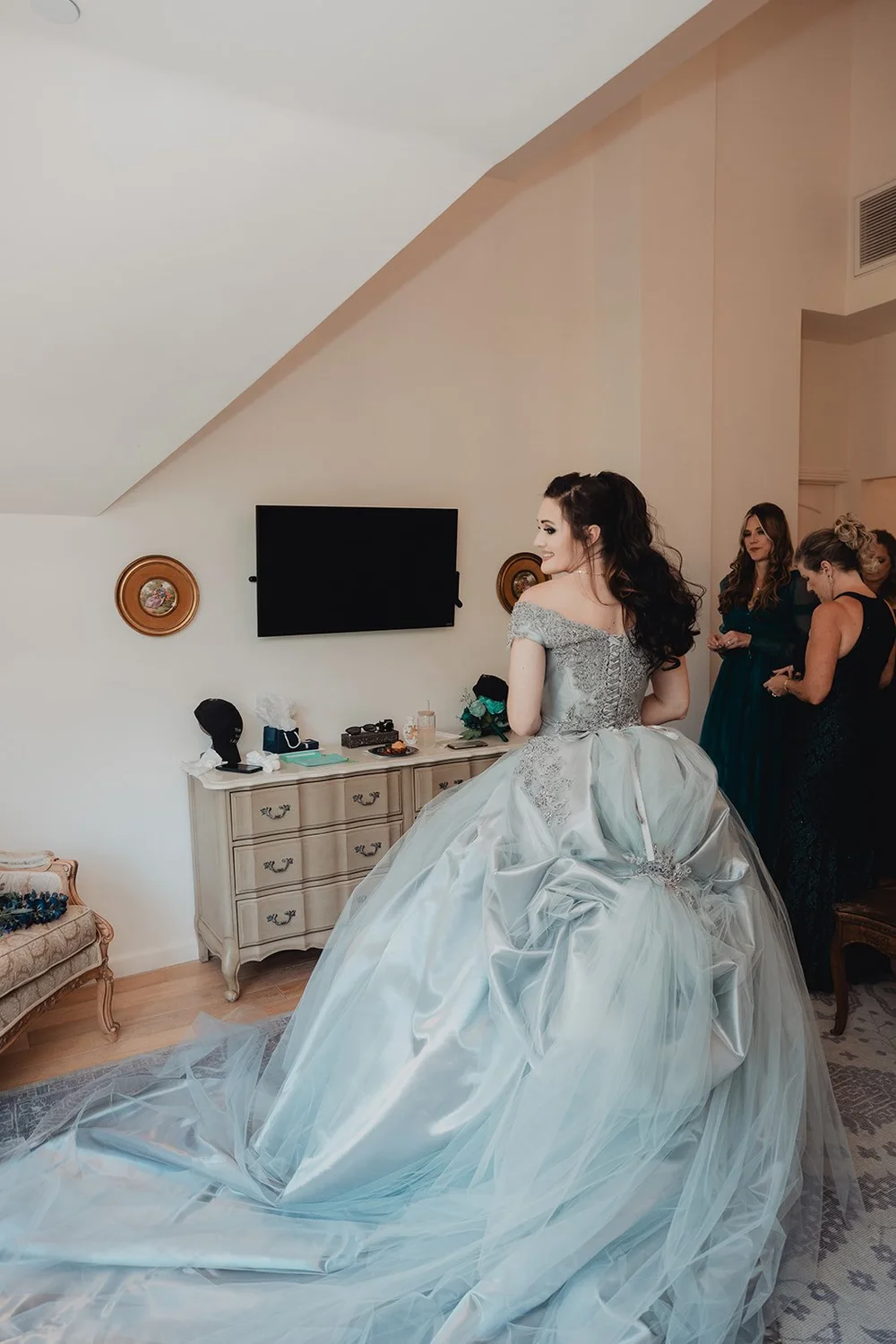
Tulle is the opposite of silk. It does not have a surface to reflect from, so instead it transmits — light passes through the layers and gets scattered on the way. Backlight a tulle skirt and it glows. Light it from the front and it goes slightly flat and gray.
This is the single most useful thing to know about tulle: if you are buying a tulle gown, ask where the sun will be at your ceremony and portrait time. A tulle ball gown with the sun behind it is the most reliably spectacular image in wedding photography. The same gown at high noon with the sun overhead is a much harder photograph.
Layer count matters more than fabric name. Three layers of tulle over a lining is a soft A-line; nine layers is a ball gown that fills a doorway. Ask how many, and ask whether there is a hoop or horsehair braid underneath.
Chiffon and georgette — fabric that moves
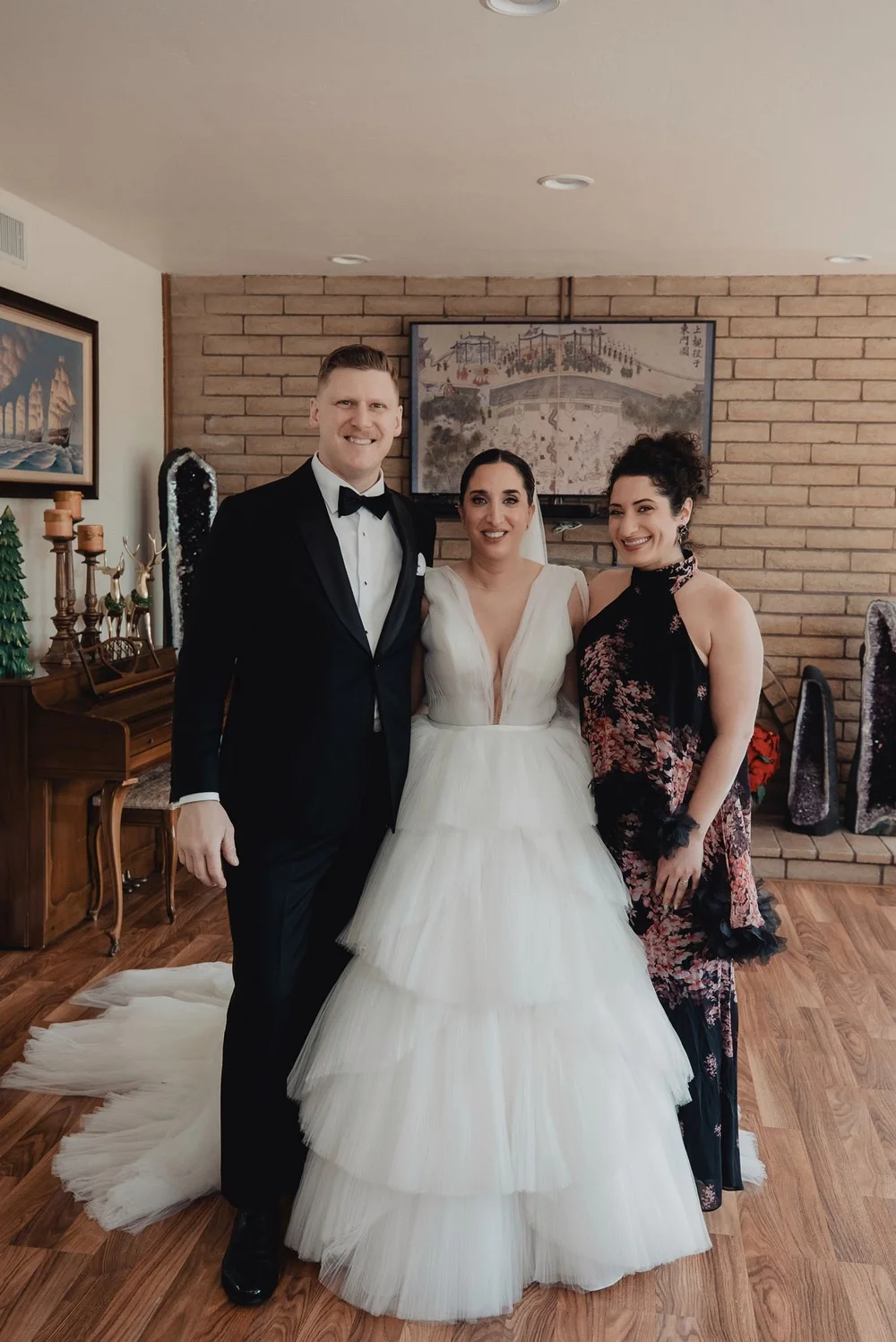
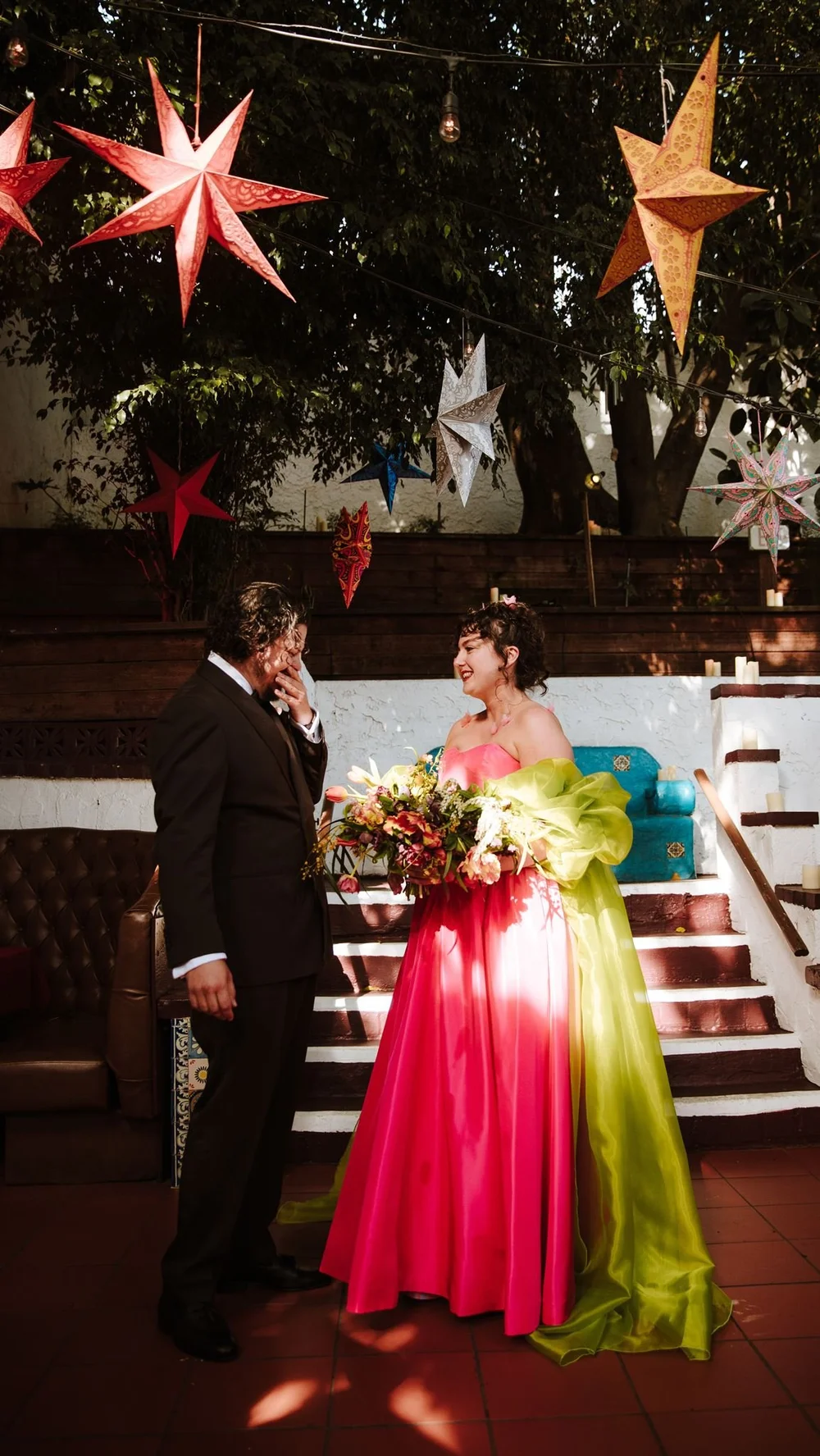
Chiffon is light, semi-sheer and fluid. It does almost nothing standing still and a great deal in motion, which makes it the most video-friendly fabric in bridal. If you are booking a wedding film as well as photography, chiffon and georgette are the fabrics that pay for themselves in slow motion.
The trade-off is structure — chiffon has none. It drapes off whatever is holding it and it creases if it is sat on for an hour. It is usually used as an overlay, a sleeve or a draped detail rather than as the whole gown, and that is the right way to use it.
3D florals, ruffles and feathers — the maximal end
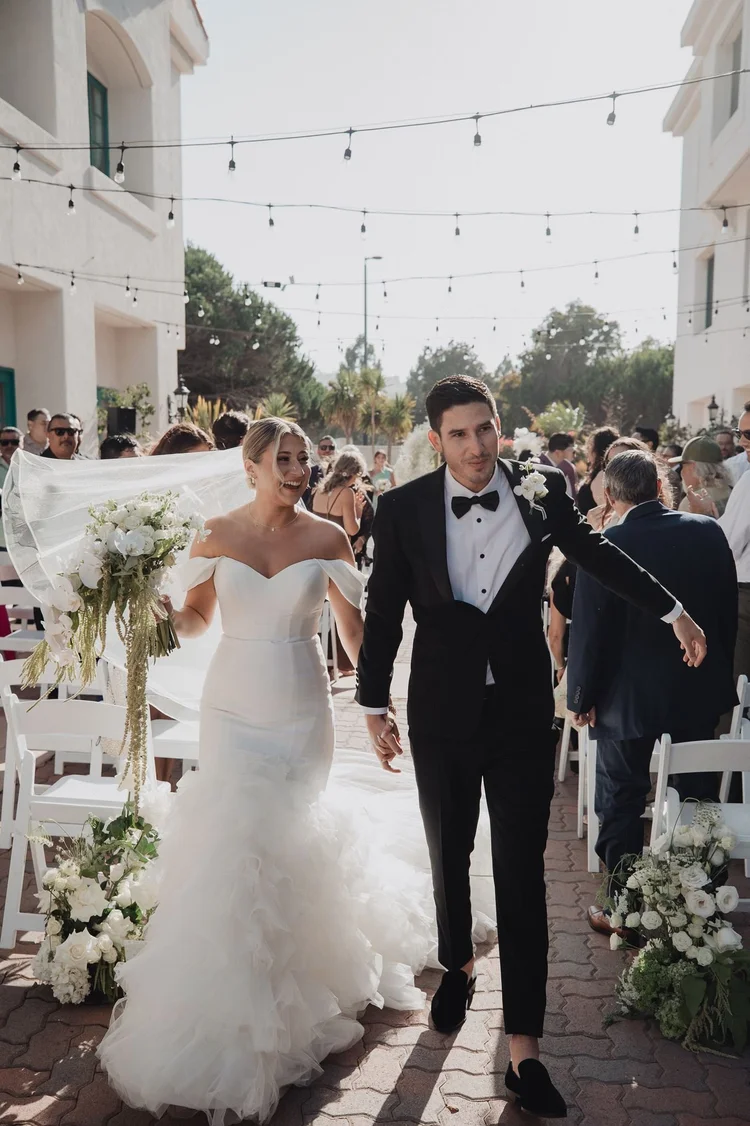
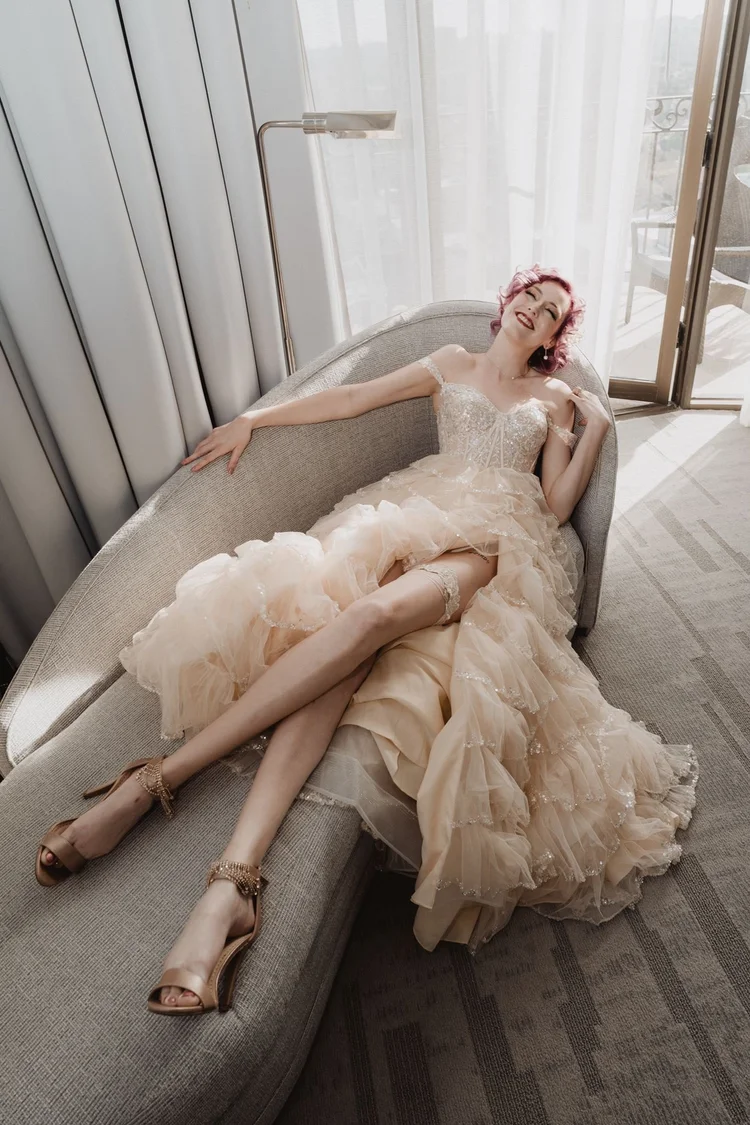
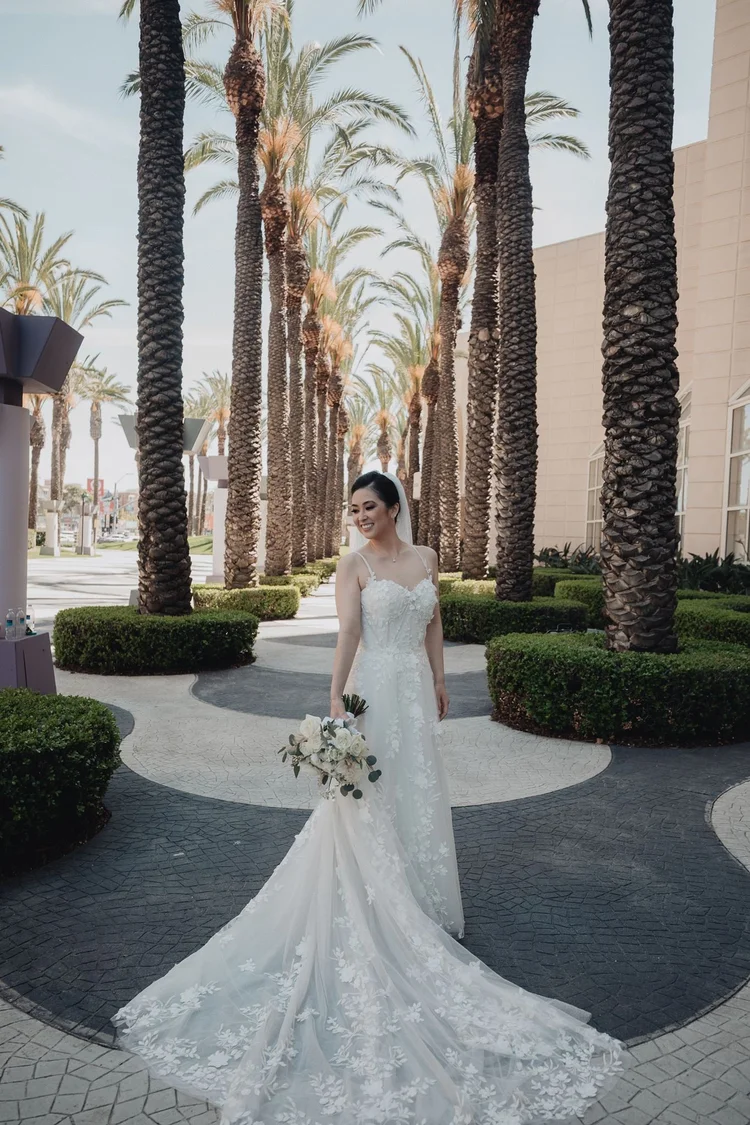
3D florals, tiered ruffles and feather trim were all over the 2026 runways, and they behave in photographs the way nothing flat does: they cast their own shadows. A flat lace bodice is illuminated by whatever light you give it. A 3D floral bodice creates hundreds of tiny highlight-and-shadow pairs and stays interesting under almost any light.
The one caution is scale. Applied texture reads best at full length and in movement. In a tight portrait it can crop into a confusing pattern, so expect your photographer to work slightly wider with a heavily textured gown — that is a feature, not a compromise.
Crepe and the case for the plainest fabric in the room
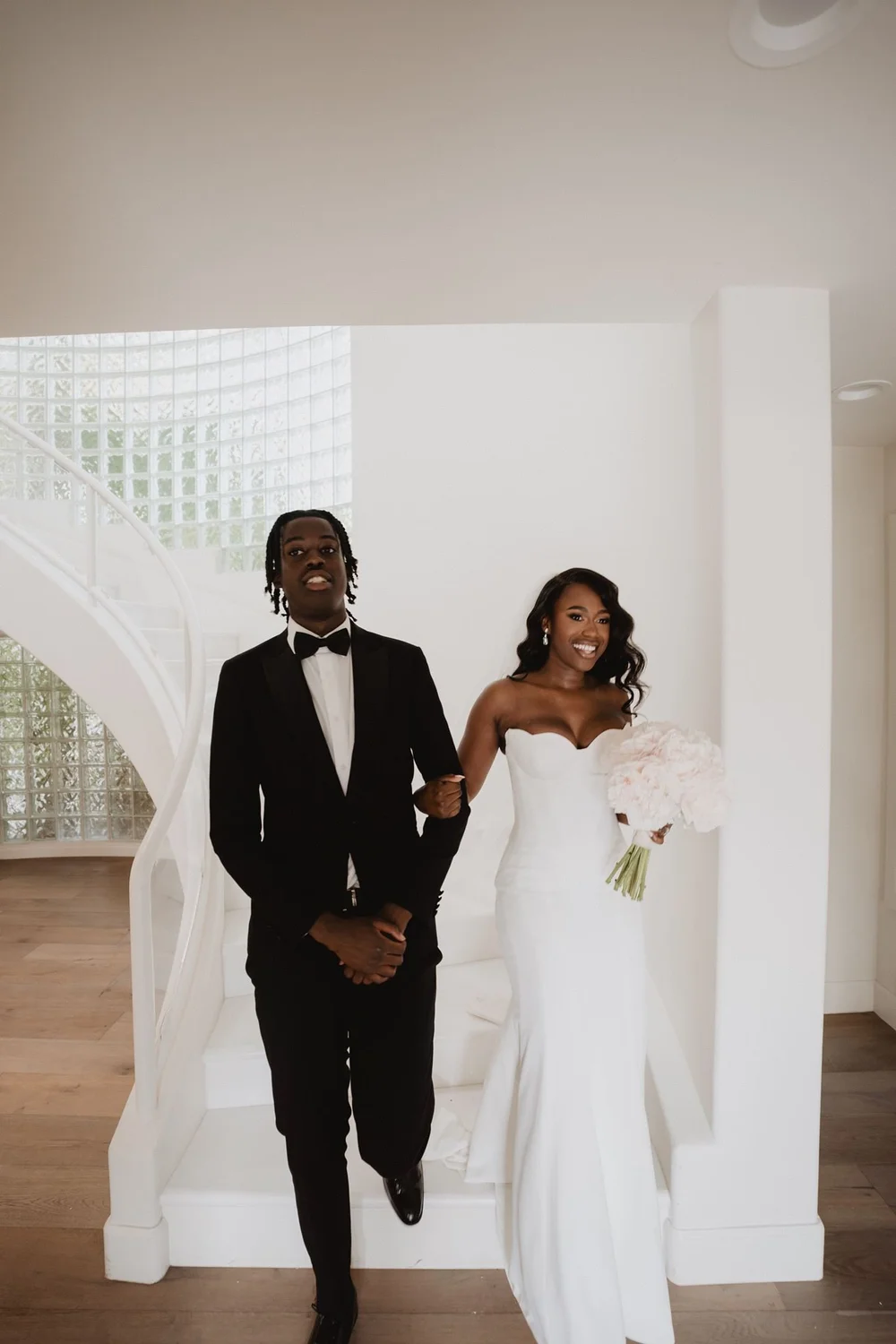
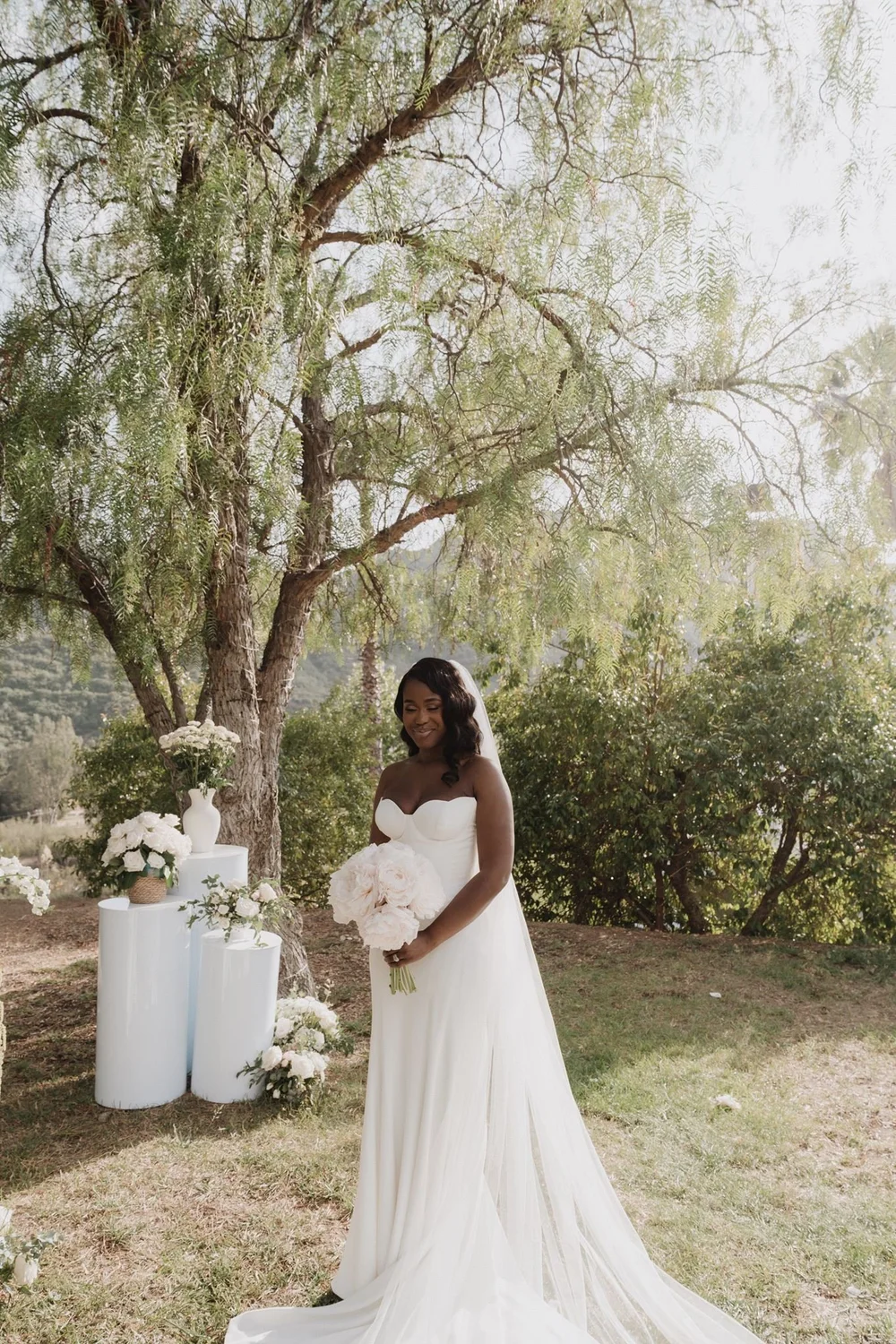
Crepe is matte. It has almost no sheen, a slight grain, and it clings to the body more honestly than any other bridal fabric. Every 90s-minimalism gown in the current collections is built from it.
It photographs as pure line. No highlight, no pattern, no texture — just silhouette and skin. That is either the cleanest thing in your gallery or the least interesting, and the difference is almost entirely the venue and the light. Crepe in a beautiful room is extraordinary. Crepe in a flat function room is a plain white dress.
Fabric questions we get asked
What wedding dress fabric photographs best?
Lace holds detail at any distance, which makes it the most reliably photogenic. Tulle is the most spectacular but depends entirely on having light behind it. Heavy silk gives the strongest sculptural shape in a dark or dramatic room. Crepe is the cleanest and the most dependent on a beautiful setting.
What is Mikado fabric?
A heavy blended silk with a slight sheen and a lot of body. It holds a structured shape without needing petticoats or hoops, which is why it appears so often in modern architectural gowns and in bubble hems.
Which fabric is best for a summer wedding in Los Angeles?
Chiffon, georgette, organza and fine tulle are the lightest and the most breathable. Heavy duchess satin and multi-layer tulle ball gowns are warm — if you want one for an August wedding here, plan the portrait block for late afternoon rather than midday.
Does the fabric change how much a dress wrinkles?
Substantially. Crepe and chiffon crease and stay creased; Mikado and duchess satin hold a crease sharply; tulle and lace barely wrinkle at all. If you are traveling with your gown or sitting through a long drive, ask the boutique specifically about creasing.
Can two dresses in the same fabric look different in photos?
Yes — layer count, lining color and whether the fabric is matte or sheened all change the result more than the fabric name does. Always look at the actual gown, in the actual color, under a window.
Booking photography and film?
Fabric is one of the few things that changes how we light a wedding. Tell us what you are wearing and where, and we will plan around it — across Los Angeles, Orange County, San Diego and Santa Barbara.
Check your dateSchedule a callMore from our bridal fashion series
Photographs by Lulan Studio — Los Angeles wedding photography and 35mm film weddings. See our cameras and equipment or check your date.
We’d love to hear about your day
Lulan Studio is a Los Angeles wedding photography and videography team, shooting on film and digital across Los Angeles, Orange County, San Diego and Santa Barbara.
Or take a look at our rates and packages.