
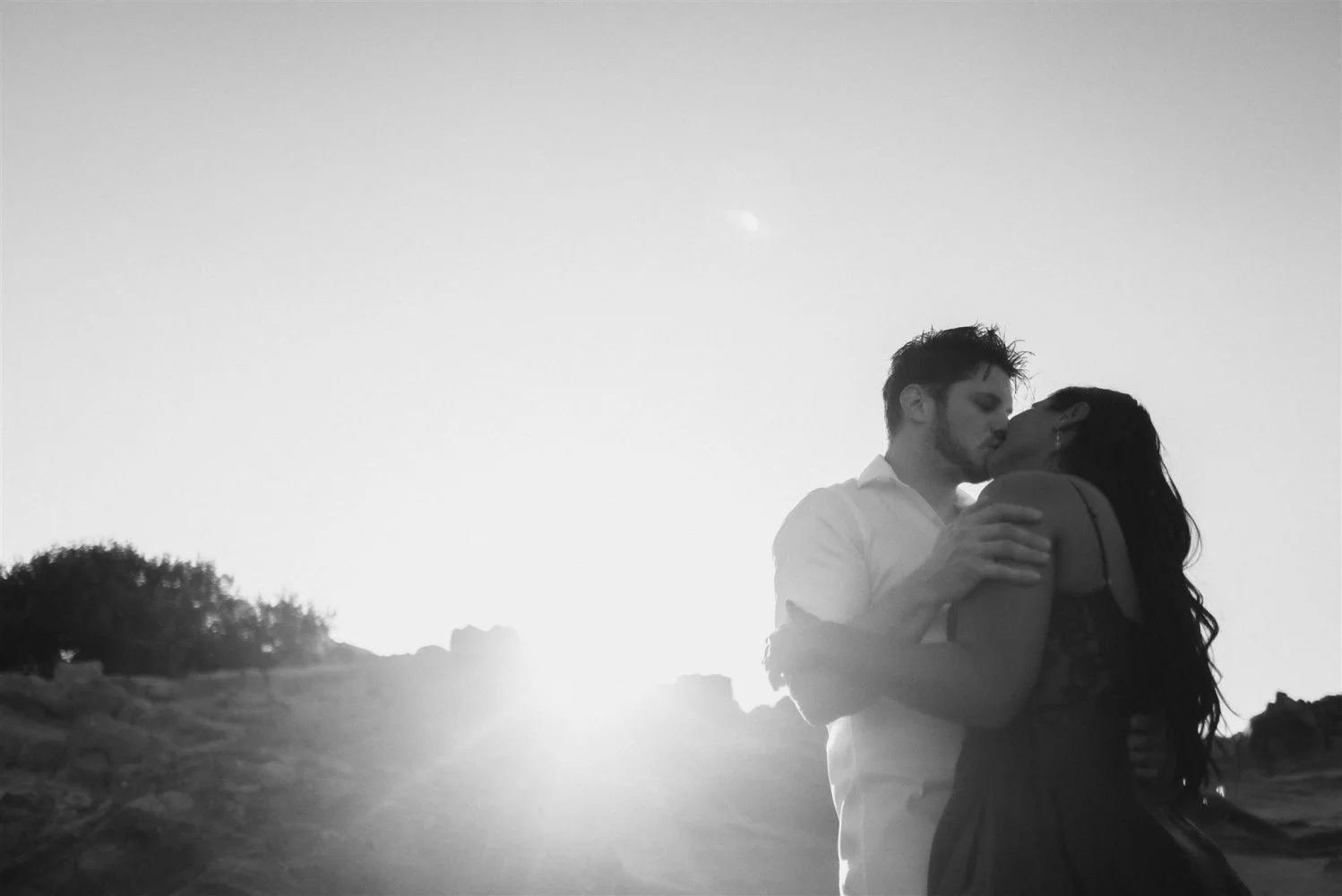
Wedding photography equipment we actually carry
Digital and real film, side by side, at every wedding.
Every camera on this page has actually photographed a wedding for us.
The honest inventory
Gear is never the whole story. It does tell you whether a studio can hold a dark church, a sunset portrait and a full reception without missing anything.
Below is the working inventory — bodies, glass, lighting and film cameras — and what each one is actually for. Every critical moment is captured digitally in parallel, so film is always additive, never your only copy of a moment.
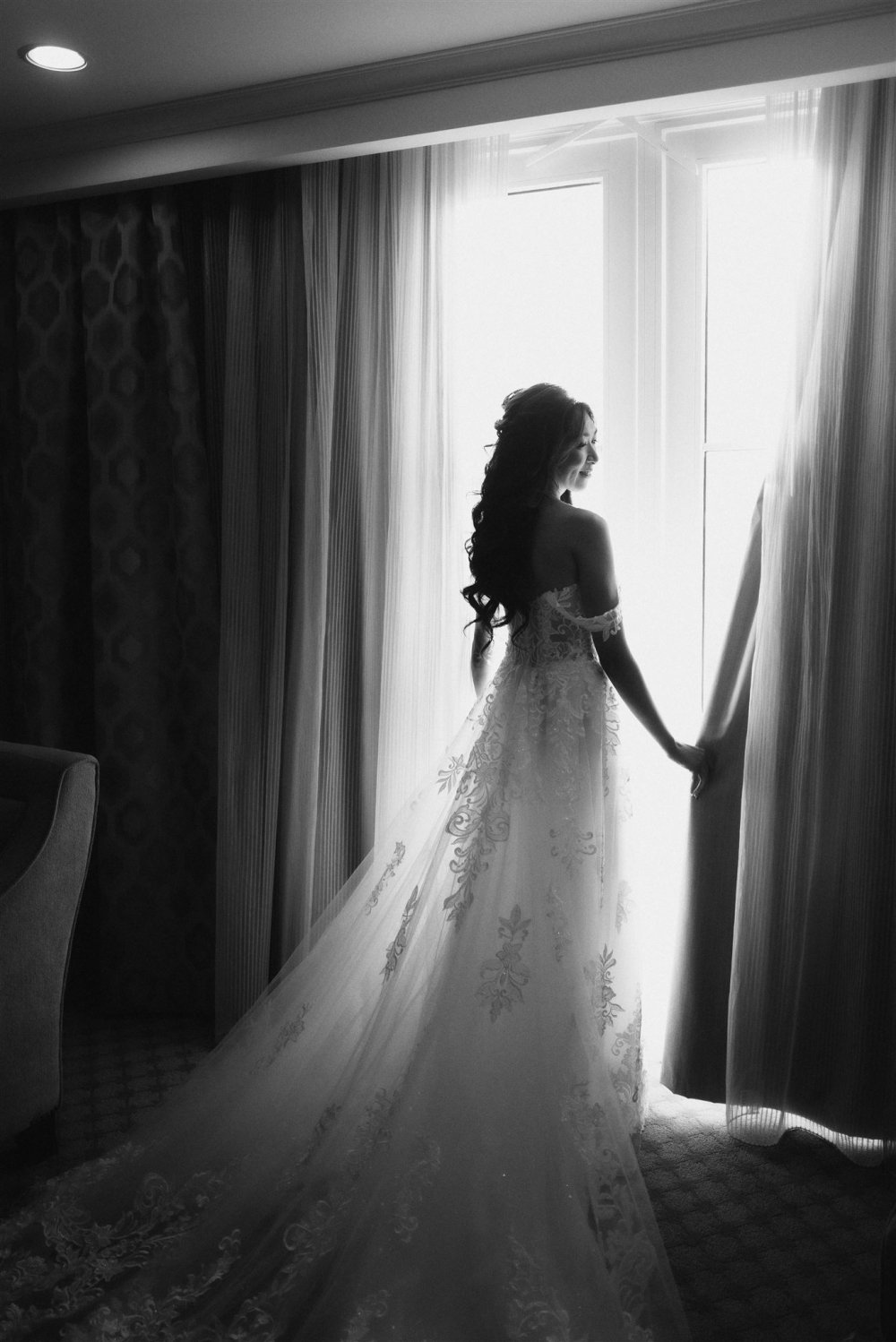
The cameras that make the film frames in your gallery
Nothing here is a digital preset. It is emulsion, developed at a professional lab and scanned frame by frame.
Leica M4
Fully mechanical, quick-load spool, no built-in meter — nothing to fail and nothing to hear. The near-silent shutter is why it lives in our hands through vows and toasts.
Leica M6
The M4’s discipline plus a simple built-in meter, still fully mechanical. Our most-used film body for candids and golden hour, paired with Leica glass that renders skin with a depth digital rarely matches.
Mamiya
A negative several times larger than 35mm. Loaded for a handful of standout portraits where we want finer detail and a softer, more editorial falloff.
Hasselblad
The classic square medium-format look. Reserved for a few key frames rather than full-day coverage — the kind of portrait you enlarge and hang.
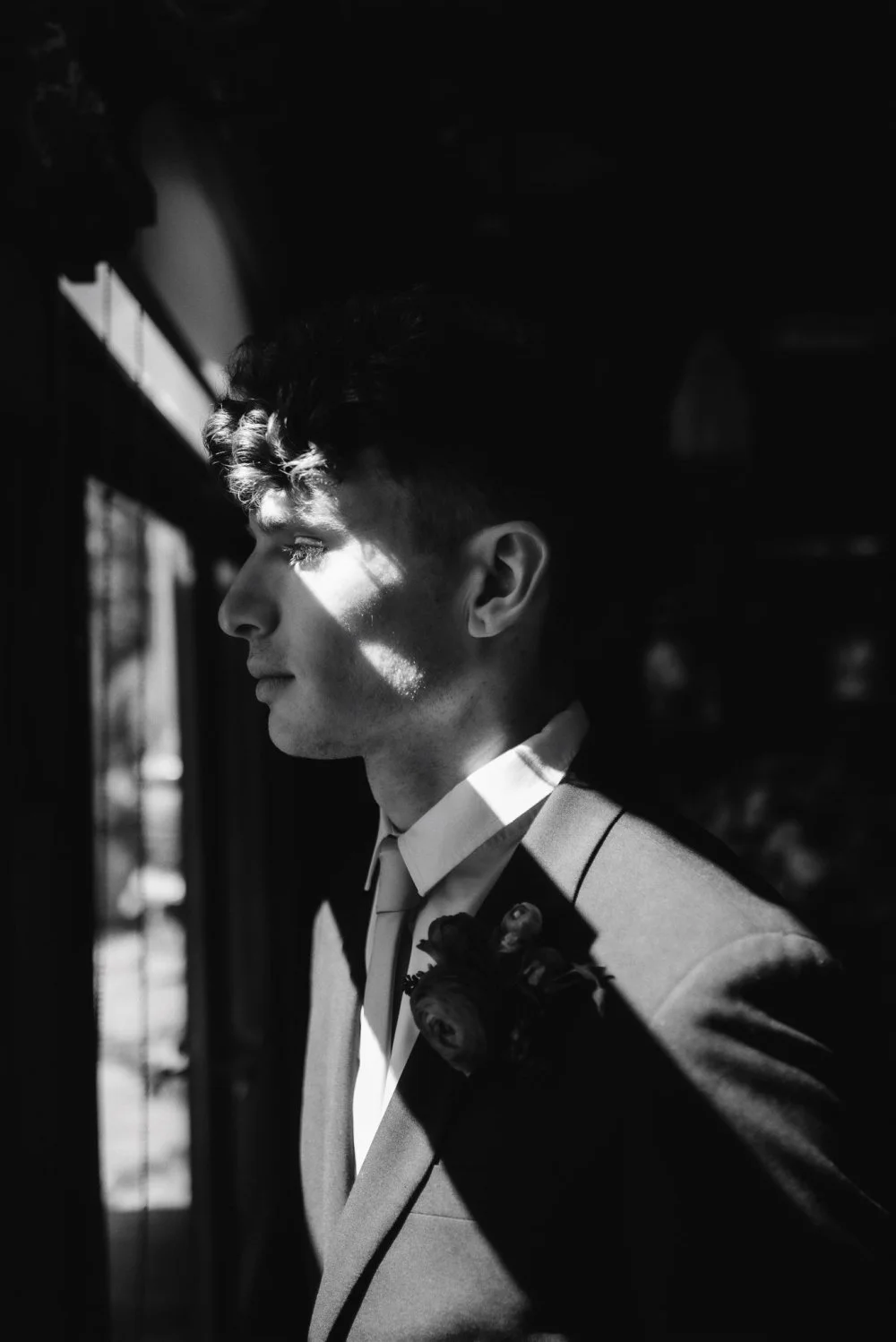
The film stocks we shoot — and why
Four scans straight from the lab — the stock is printed on each one.
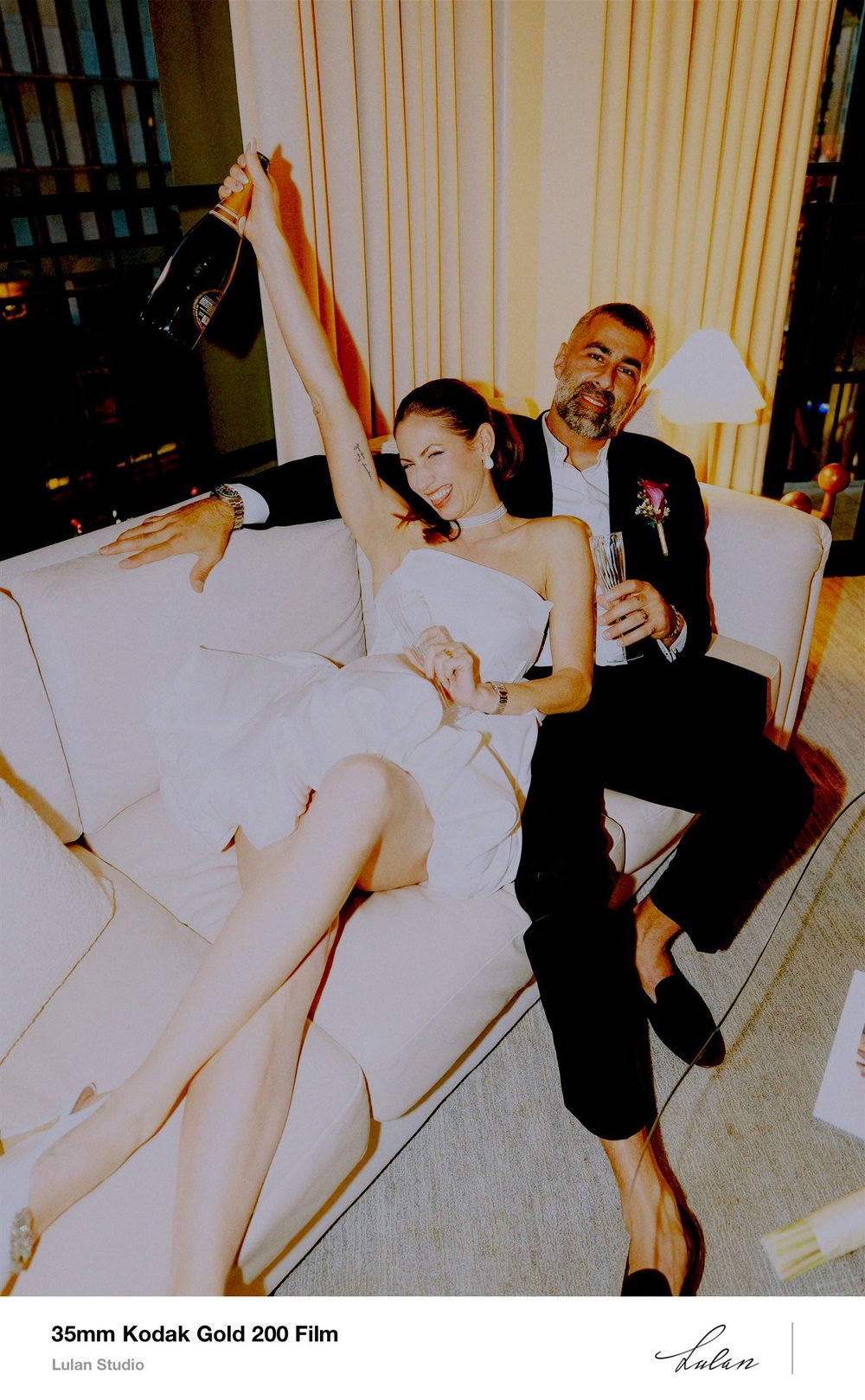
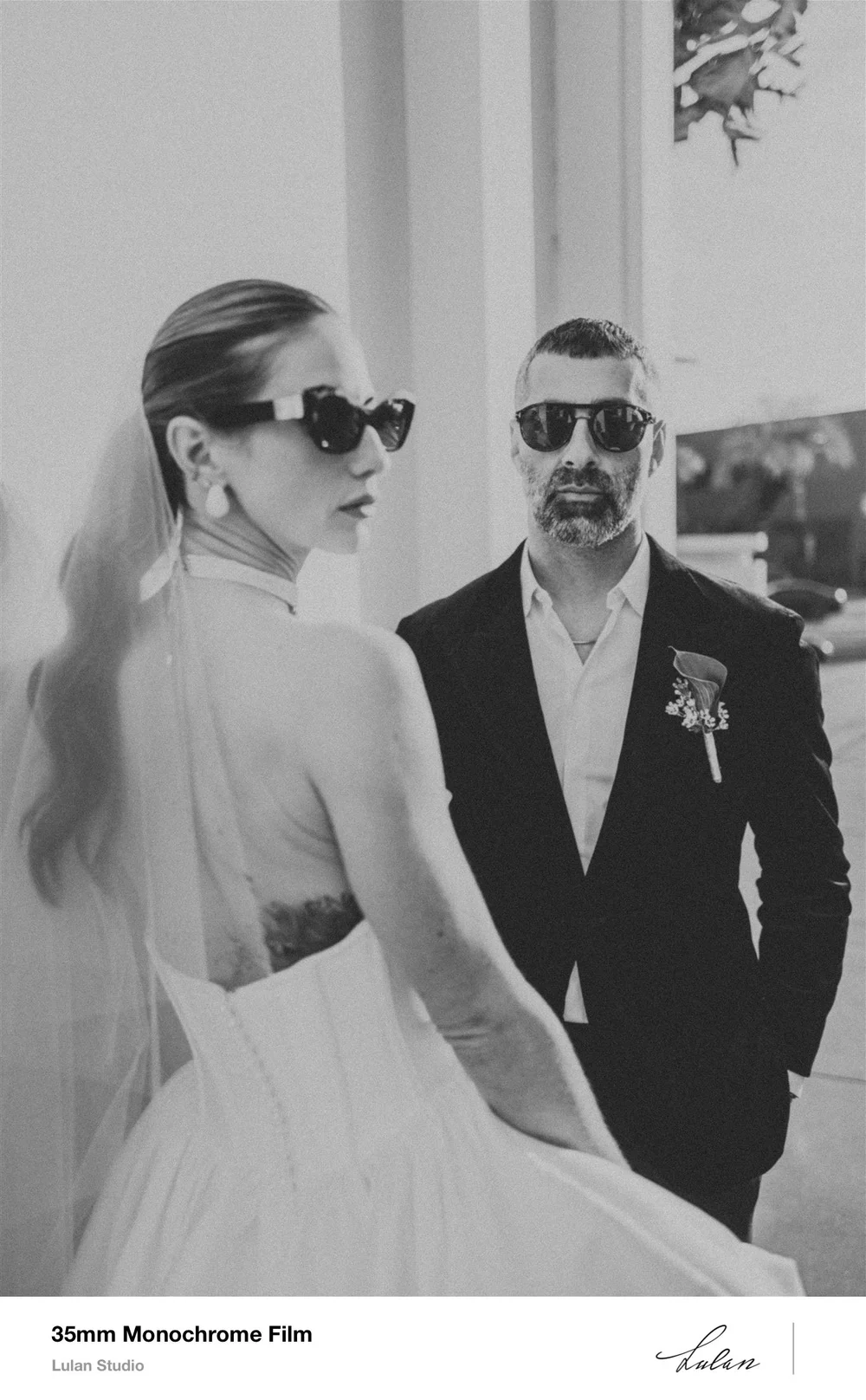
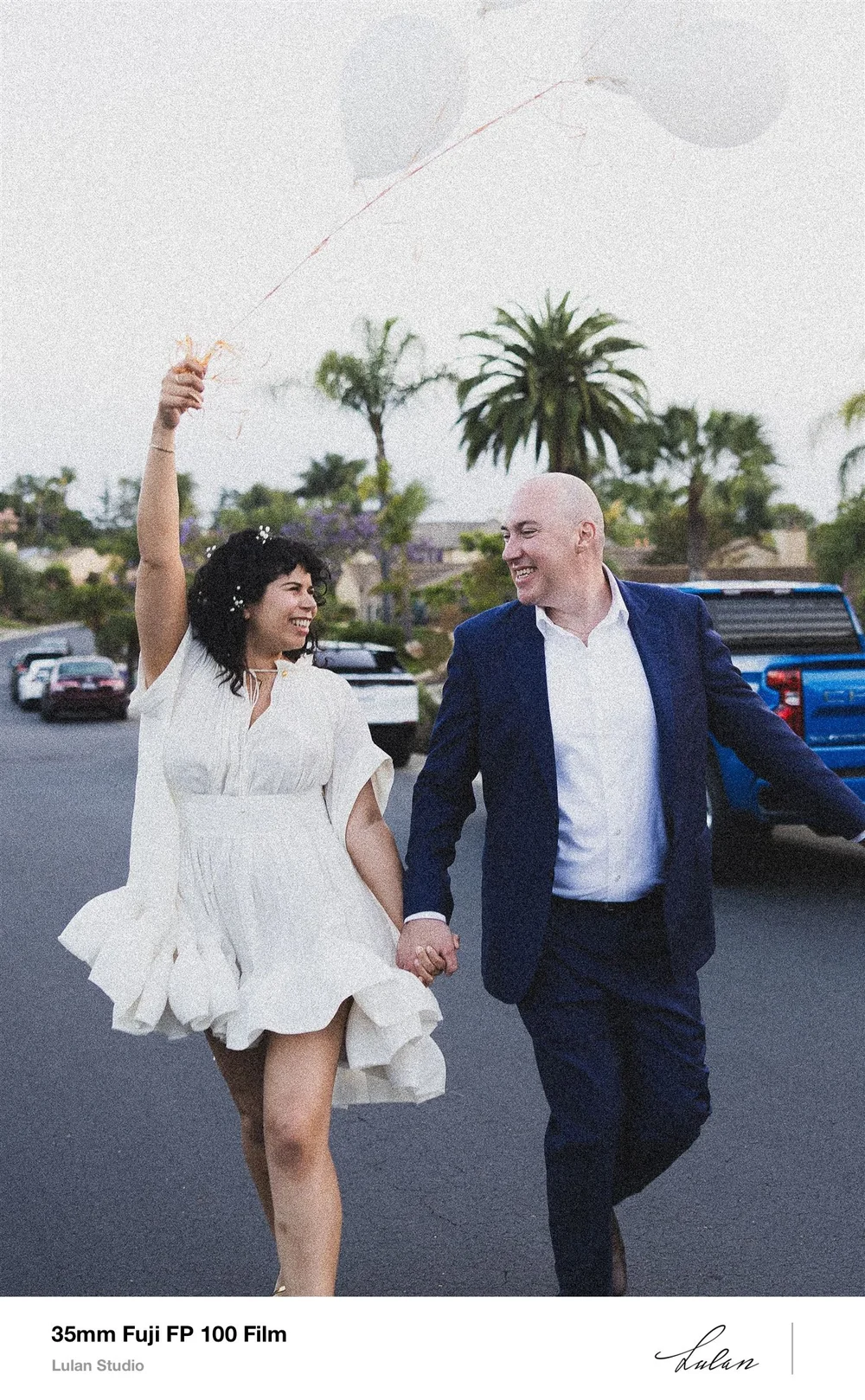
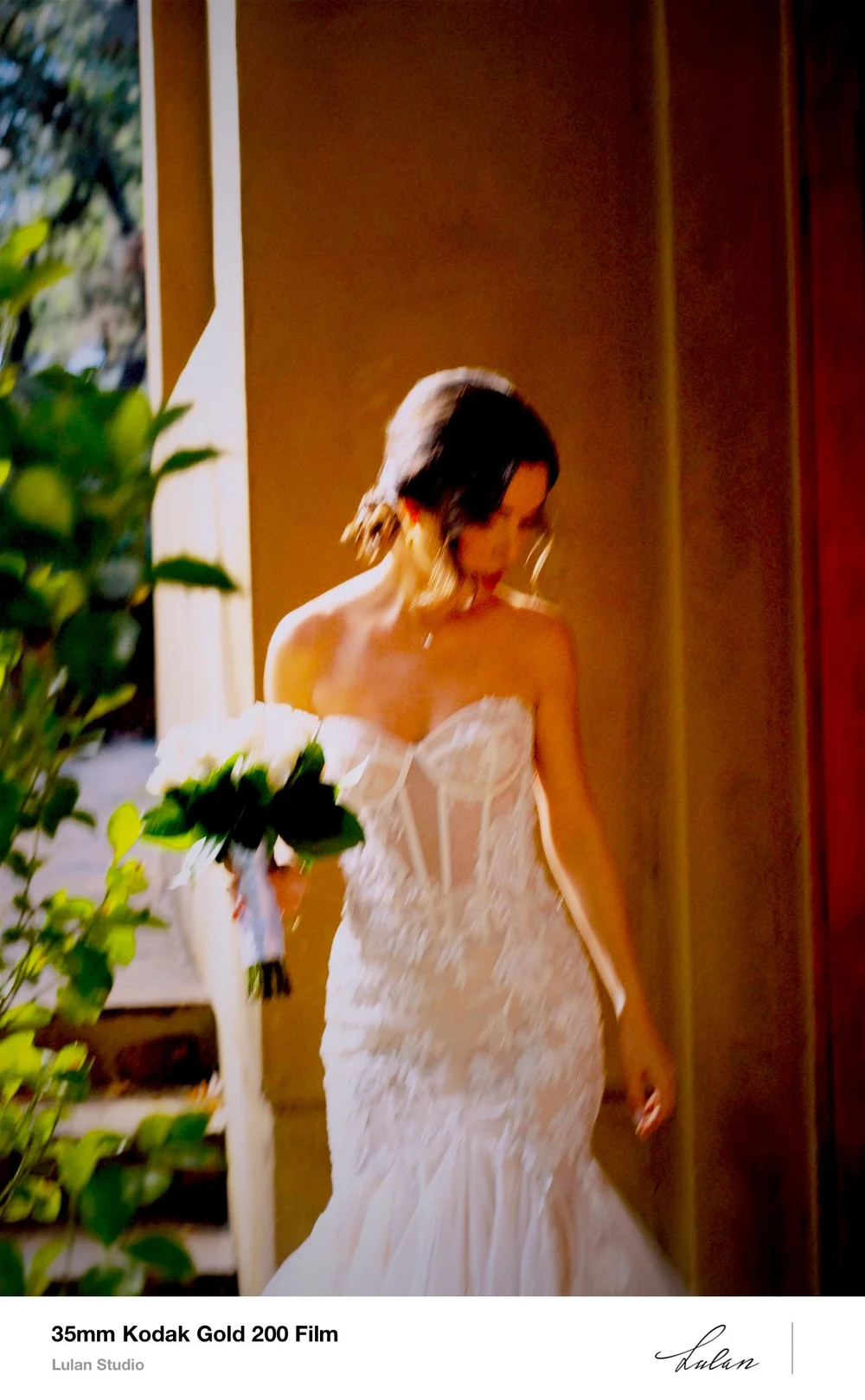
- Kodak Portra 400Color · skin
- Kodak Gold 200Color · warmth
- Ilford HP5Black & white
- Kodak Tri-XBlack & white
- CineStill 800TTungsten receptions
More on how this works on our 35mm film wedding photography page, and the frames themselves are in the Leica gallery. Moving film lives on the Super 8 and 16mm page.
Digital camera bodies — two of everything, always
Every critical moment is captured digitally in parallel. All three systems are current-generation mirrorless — quieter through a ceremony, cleaner in a dark reception and faster to focus than the DSLRs they replaced. We never arrive with a single body.
Nikon
- Nikon Z8Primary
- Nikon Z6 IIIPrimary
- Nikon Z7 IISecond body
Sony
- Sony a9 IIIPrimary
- Sony a7R VPrimary
- Sony a7 IVSecond body
Canon
- Canon EOS R1Primary
- Canon EOS R3Primary
- Canon EOS R5 Mark IIPrimary
- Canon EOS R6 Mark IISecond body
Medium format & compact
- Fujifilm GFX 50RCommercial
- Leica QLifestyle
- Leica Q2
- Leica Q2 Monochrom
- Leica M9
- Leica M11
A note on the words “medium format”: the Fujifilm GFX 50R is a large digital sensor, while our Mamiya and Hasselblad bodies shoot 120 roll film. Both get called medium format — only one of them is film.
Our earlier DSLR bodies — Canon 5D Mark IV, Nikon D4s and Sony a7R III — still travel with us as third bodies and second-shooter cameras, but the mirrorless bodies above carry every wedding.
Wedding photography lenses — fast primes, working zooms
Native RF, E and Z-mount glass on the mirrorless bodies, with our EF and F-mount primes adapted where the older optic is still the better rendering. Primes for portraits and low light, professional zooms for ceremonies where we cannot walk in front of your guests.
Nikon Z
- Nikon Z 14-24mm f/2.8 S
- Nikon Z 24-70mm f/2.8 S
- Nikon Z 70-200mm f/2.8 VR S
- Nikon Z 50mm f/1.2 S
- Nikon Z 85mm f/1.2 S
- Nikon Z MC 105mm f/2.8 VR S Macro
Nikon F — adapted
- Nikon 14-24mm f/2.8
- Nikon 24-70mm f/2.8
- Nikon 70-200mm f/2.8
- Nikon 85mm f/1.4
- Nikon 105mm f/2.8 Macro
Canon RF
- Canon RF 15-35mm f/2.8L IS USM
- Canon RF 24-70mm f/2.8L IS USM
- Canon RF 70-200mm f/2.8L IS USM
- Canon RF 28-70mm f/2L USM
- Canon RF 50mm f/1.2L USM
- Canon RF 85mm f/1.2L USM
- Canon RF 100mm f/2.8L Macro IS USM
Canon EF — adapted
- Canon EF 16-35mm f/2.8L II & III USM
- Canon EF 24-70mm f/2.8L & II USM
- Canon EF 70-200mm f/2.8L IS & II IS USM
- Canon EF 100-400mm f/4.5-5.6L IS USM
- Canon EF 100mm f/2.8L IS USM Macro
- Canon EF 50mm f/1.4 USM
Sony FE
- Sony FE 16-35mm f/2.8 GM II
- Sony FE 24-70mm f/2.8 GM II
- Sony FE 70-200mm f/2.8 GM OSS II
- Sony FE 50mm f/1.2 GM
- Sony FE 85mm f/1.4 GM
- Sony FE 90mm f/2.8 Macro G OSS
Fujifilm GF
- Fujifilm GF 32-64mm f/4 R LM WR
- Fujifilm GF 63mm f/2.8 R WR
- Fujifilm GF 110mm f/2 R LM WR
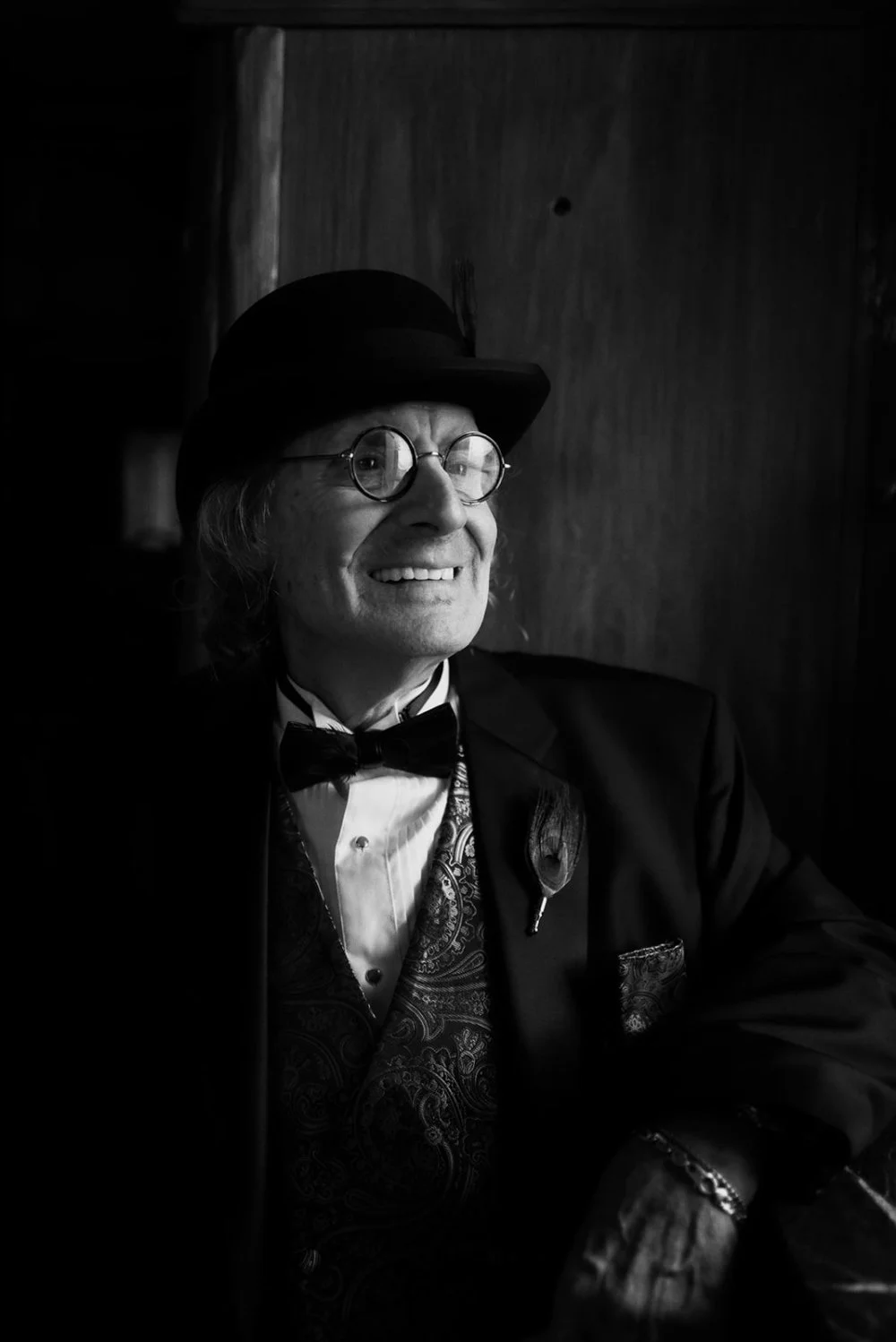
How we light a dark reception — dance floors are darker
We light them properly instead of pushing a file until it falls apart — Profoto on camera and off it, so the light on the dance floor matches the light in your portraits.
Strobes & continuous
- Profoto B1 500 AirTTL
- Profoto D1 Air 500W
- Profoto D1 Air 1000W
- Paul C. Buff Einstein E640 Studio Flash
- Westcott Flex LED Mats
On-camera flash
- Profoto A10 AirTTL
- Profoto A2
- Canon Speedlite 600EX-RT
- Sony HVL-F45RM
- Godox V1
- Godox AD200
- Godox AD300
Modifiers & support
- Profoto RFi 1.0 x 6.0′ Softbox
- Profoto RFi 1.0 x 4.0′ Softbox
- Photoflex OctoDome3 Softbox, 7′ Large
- Profoto Shallow White Umbrella, 33″
- Impact Turtle Base C-Stands
- Profoto Connect remotes
Backdrops
- Hand-painted canvas backdrops
- Seamless backdrop papers
Hand-edited on calibrated displays, then backed up before we sleep.
Cards are offloaded the same night onto field SSDs and into the studio’s NAS array, so two copies of your wedding exist before anyone sleeps, with a third kept off-site. Film scans are merged into the same gallery as your digital frames, so you receive one blended set rather than two disconnected deliveries — and the gallery stays online for life.
Film adds roughly two weeks for lab development and scanning; your digital gallery always arrives first.
Workstations
- Mac Studio
- Apple Studio Display, color-calibrated
- MacBook Pro 16-inch with XDR display
- Wacom Intuos Pro Pen Tablet PTH660
Storage & archive
- Synology NAS — multi-bay RAID array
- Field SSDs for same-night offloads
- Off-site backup copy of every wedding
The same bag, different days
Every page below is a kind of coverage this equipment is carried to — not a venue guide.
Film and digital, one day
How the two systems travel together from getting ready to the last dance.
Film35mm film coverage
What loading real film on a wedding day actually involves, and what comes back.
VideoCinema cameras
The film side of the studio — RED bodies, Super 8, and how a wedding film is cut.
GalleryShot on Leica
A gallery made entirely on the M-series bodies listed on this page.
The people carrying it are on the team page; what each collection includes is under collections and pricing; and the rest of the common questions are answered in our wedding photography FAQ. Cinema-camera work has its own page at RED cinema camera videography, and same-day edits at same-day edit wedding video.
Wedding photography equipment FAQ
What cameras do you use to photograph weddings?
Current-generation full-frame mirrorless carries the day — Canon EOS R1, R3 and R5 Mark II, Sony a9 III and a7R V, Nikon Z8 and Z6 III — always with a second body on us. Alongside them we shoot real film on Leica M4 and M6 rangefinders, and occasionally Mamiya or Hasselblad medium format for a few portraits.
Do you shoot real film, or is it a digital filter?
Real film. Kodak and Ilford emulsion, loaded in a mechanical camera, developed at a professional lab and scanned frame by frame. Nothing on our film pages is a preset applied in editing — here is how the 35mm coverage works.
Do you bring backup cameras to a wedding?
Always. Every photographer carries a second body, and we bring backup lenses, flashes and batteries to every wedding. Film is never anyone’s only camera — every moment is covered digitally in parallel.
What is the difference between 35mm film and 120 medium format?
35mm is the classic film frame our Leica M4 and M6 shoot — fast, discreet, and grainy in the way people love. 120 roll film in a Mamiya or Hasselblad uses a much larger negative, giving finer detail and a softer falloff. We use 120 for a handful of standout portraits rather than full-day coverage.
Why does the Leica matter for a wedding?
The M-series shutter is nearly silent and the body is small, so we can work through vows and toasts without becoming part of the ceremony. Leica glass also renders skin tones and shadows with a depth zoom lenses rarely match — the results are in the Leica gallery.
How do you back up our photos?
Cards are offloaded the same night onto field SSDs and into our Synology NAS array, then edited on calibrated displays and archived off-site as well. Film scans are merged into the same gallery as your digital frames, so you receive one blended set.
Does film delay our gallery?
Film adds roughly two weeks for lab development and scanning, and your digital gallery always arrives first. Photographs are delivered in four to eight weeks overall; wedding films in eight to twelve.
Can we ask which camera made a particular frame?
Yes — ask on your planning call and we will tell you the body, the lens, and if it was film, the stock. We enjoy the question.

Curious which camera made a particular frame?
Ask us on your planning call — whether film suits your venue and season is a good conversation to have early.