
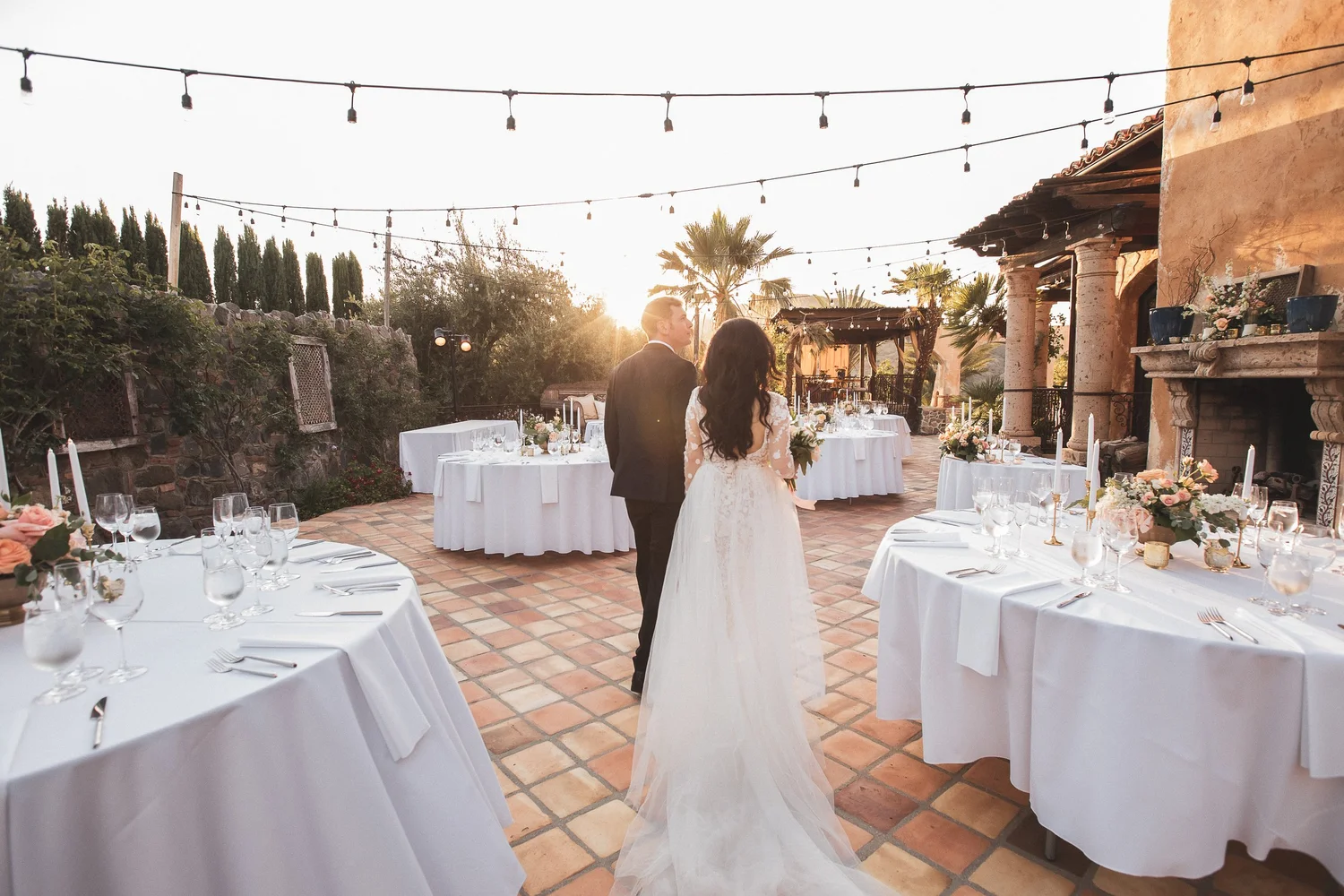
Vietnamese wedding traditions · Los Angeles
Vietnamese Wedding Traditions
and Photography in Los Angeles
Lễ Gia Tiến and the tea ceremony, the mâm quả procession, the áo dài, lì xì envelopes — and twenty-eight door games ranked by how well they actually play. Written by a Los Angeles studio that photographs these mornings every season.
Where to start
Planning a Vietnamese wedding, start to finish
Planning for a Vietnamese wedding is an exciting and rewarding experience, although it can also be challenging. From the traditional ceremonies and customs to the modern elements of the reception, there are many details to consider and decisions to make. With careful planning and attention to detail, a Vietnamese wedding can be a beautiful and joyous occasion that celebrates the love and union of two families.
Step by step
The decisions, roughly in this order
Budget
Establish a budget before you start planning. Determining a budget that works for you and your partner helps set your priorities and avoid overspending. Consider the number of guests, the venue, catering, decor, and other wedding-related expenses. It is essential to have a budget plan on how much you are willing to spend and to stick to it.
Family Involvement?
Try not to get the family over-involved, for hosting a wedding is very stressful. Adding a layer of comments and suggestions every step of the way is excessive. However, if you cannot avoid this situation, please continue Step 2.
Choose a Wedding Date
Choosing a wedding date in Vietnam is an important and complex process. Couples often consult with an astrologer to determine the most auspicious date and time-based on the lunar calendar. Zodiac signs and the meanings of Chinese characters are considered. Family traditions may also dictate the timing of weddings.
Select a Venue
Couples should choose a venue with enough capacity to accommodate all their guests comfortably. Other factors to consider are accessibility, parking, and nearby accommodations for out-of-town guests. By noting these considerations, couples can choose a venue that meets their needs and creates a beautiful and memorable wedding celebration.
Traditions
Incorporating traditions into a Vietnamese wedding is an essential step in the planning process. Some traditions are the tea ceremony, red color, wedding dress, money in red envelopes, lion dance, wedding cake, and first dance to make their wedding more meaningful and memorable. These traditions honor Vietnamese heritage and symbolism and can create a special experience for the couple and their guests.
Wedding Attire
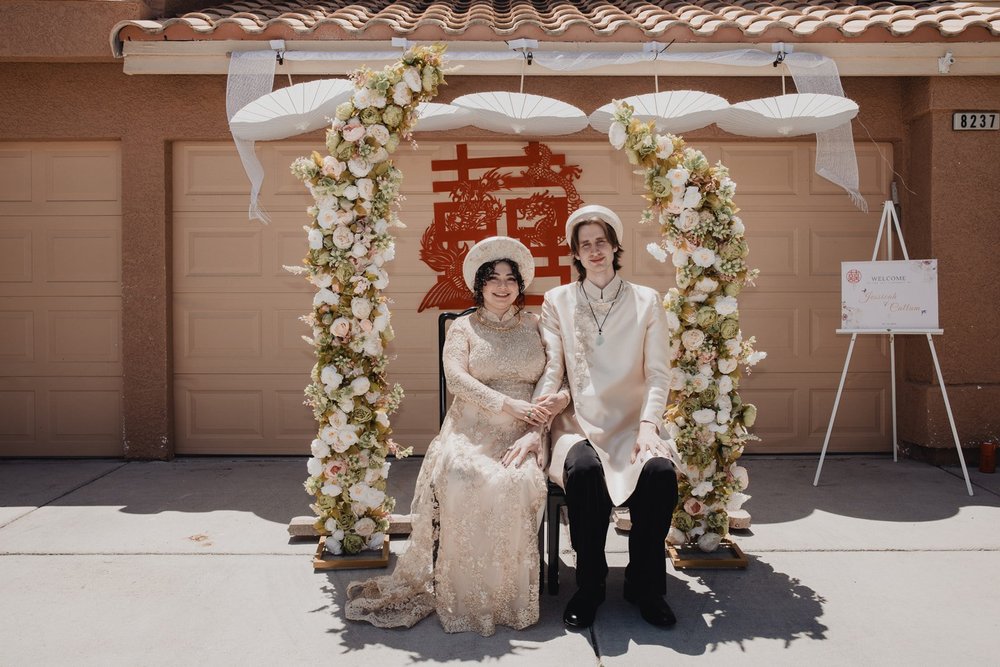
The bride usually wears an ao dai, a form-fitting, high-collared tunic with long flowing pants. The bride's headpiece (khan dong) is made of red silk and features elaborate beading and embroidery. The groom typically wears a simpler version of the ao dai or a Western-style suit. Accessories such as jewelry, a fan, an umbrella, or gloves are also traditional. By incorporating these wedding attire traditions, couples can honor their Vietnamese heritage and create a beautiful and meaningful wedding celebration.
Banquet Menu
The menu should include traditional dishes such as pho, spring rolls, and banh mi. Seafood dishes like grilled shrimp and steamed clams are a must. Don't forget to offer vegetarian options to accommodate guests with dietary restrictions. Desserts like che and banh lot can also be included.
Invitations
Couples should send invitations in advance to allow guests enough time to make arrangements to attend. The couple's family members, friends, and colleagues are some attendees to invite. Finally, include an RSVP card to know the number of guests expected to attend.
Photographer and Videographer
Hire us!LOL! Kidding aside, Lulan Studio is committed to delivering photographs with stunning realism and vibrant, natural colors that mirror the human eye's perception. Your wedding day is a beautiful and unforgettable moment that you will want to cherish forever. Hire a professional photographer and videographer specializing in Vietnamese weddings to capture every moment.
Enjoy Your Wedding
On your wedding day, bask in all the good memories and enjoy every moment. Remember that your wedding celebration reflects your love story. It is a day to celebrate your union with your partner, family, and friends.
Planning a Vietnamese wedding in the States can be challenging, but with these tips and advice, you can create a beautiful and memorable celebration that blends both cultures together. Congratulations and best wishes on your wedding day!
We photograph Vietnamese weddings throughout Los Angeles and Orange County, including Little Saigon. From the tea ceremony - Le Vu Quy at the bride’s home and Le Tan Hon at the groom’s - with gifts carried in red lacquered boxes, to ao dai portraits, the candle-lighting ritual, and multi-course banquet receptions, we understand the rhythm of the day and the family moments that matter most. As a Vietnamese wedding photographer in Los Angeles, we document both tradition and celebration with color-true, timeless editing.
The customs
Vietnamese wedding traditions, one by one
Vietnamese weddings are rich in tradition and cultural symbolism. Incorporating these traditions into a wedding honors the couple's heritage and creates a unique experience. From the engagement ceremony to the tea ceremony, procession, altar ceremony, and banquet reception, every aspect of a Vietnamese wedding has a significant meaning. Understanding and respecting these traditions is crucial to planning a successful and authentic wedding celebration.
Engagement Ceremony (Le An Hoi)
The engagement ceremony is the first formal meeting between the two families at a Vietnamese wedding. The groom's family brings betrothal gifts to the bride's family to request her hand in marriage. This ceremony is an opportunity for both families to meet and for the groom's family to show their sincerity and respect to the bride's family.
Tea Ceremony (Đám Hỏi)
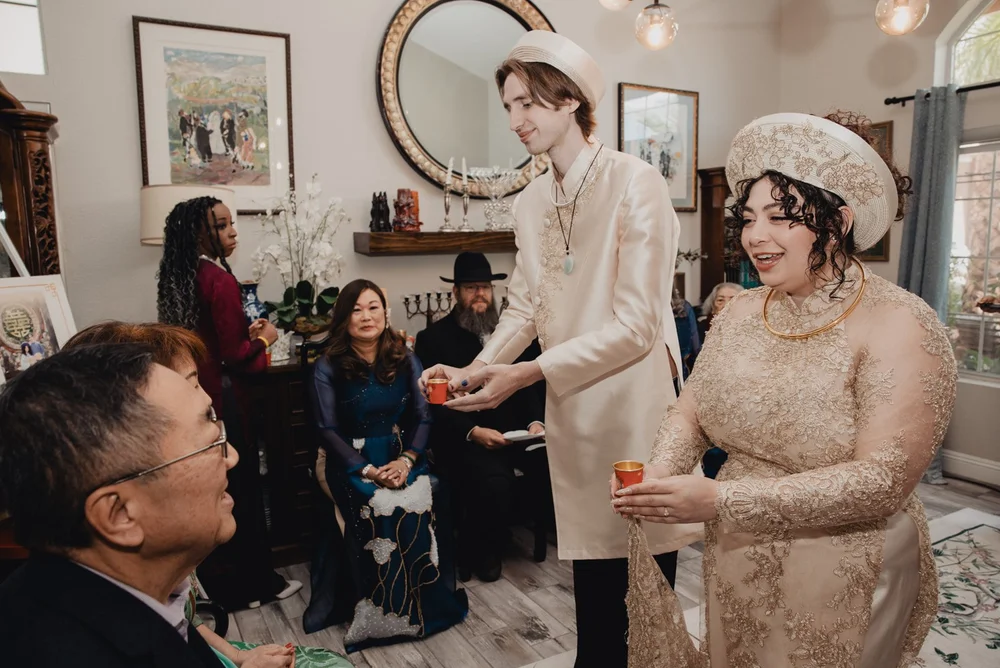
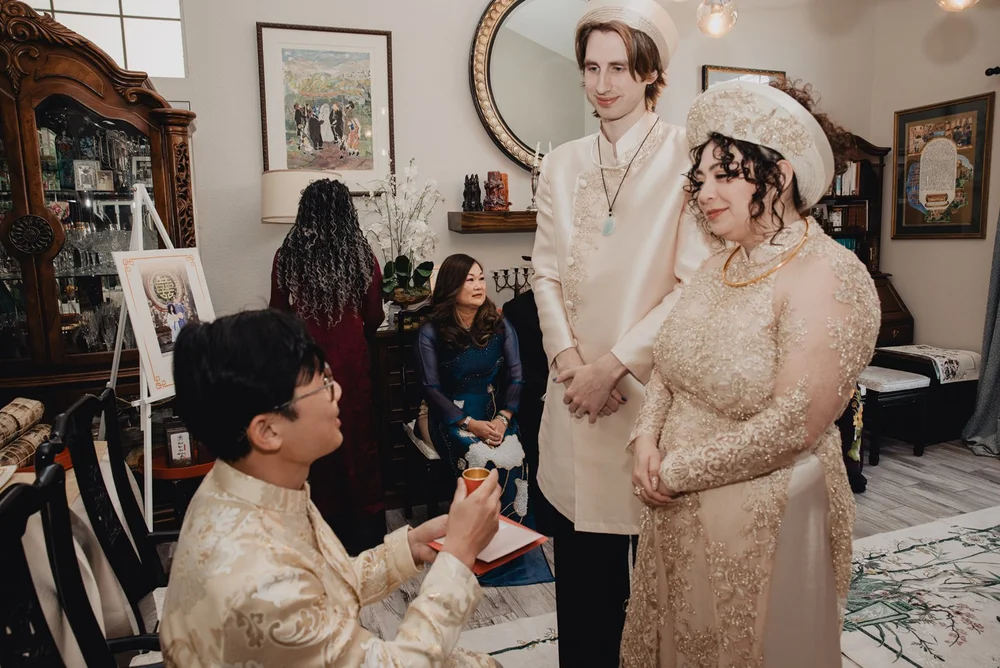
The tea ceremony is a traditional Vietnamese wedding ritual performed on the morning of the wedding day. The bride and groom serve tea to their parents, grandparents, and elders as a sign of respect and gratitude. This ceremony represents the couple's deep appreciation for their elders and commitment to family values.
The tea ceremony, photographed
Vietnamese tea ceremonies photographed by Lulan Studio in Los Angeles and Orange County.
Procession
The procession is a traditional Vietnamese wedding ritual where the groom and his family go to the bride's house to pick her up and take her to the groom's home. The bride's family usually follows the procession to the groom's house. This ceremony symbolizes the bride's transition from her family to her new home with her husband.
Altar Ceremony
A traditional Vietnamese wedding ceremony happens at the groom's house or a separate venue. It includes the exchange of vows, rings, gifts, and offerings of tea, wine, and fruits to ancestors.
Wedding Dress
The bride wears a traditional ao dai, a form-fitting, high-collared tunic with long flowing pants that are often made of silk or other luxurious fabrics, while the groom wears a simpler version of the ao dai or a Western suit.
Money in Red Envelopes
Guests usually give monetary gifts to the newlyweds in red envelopes, which symbolize good luck and prosperity. Red is considered to be a lucky color in Vietnam, so it is used extensively in wedding decorations, clothing, and invitations.
First Dance
The bride and groom share their first dance as a married couple, usually to a romantic song.
Bouquet Toss
The bride tosses her bouquet to the single female guests at the reception, and the one who catches it is believed to be the next to get married.
Lion Dance
It is usually performed during the wedding reception to bring good luck and fortune to the newlyweds. The lion dancers will perform a lively and colorful dance while accompanied by drums and cymbals.
Before the door opens
Twenty-eight door games, ranked
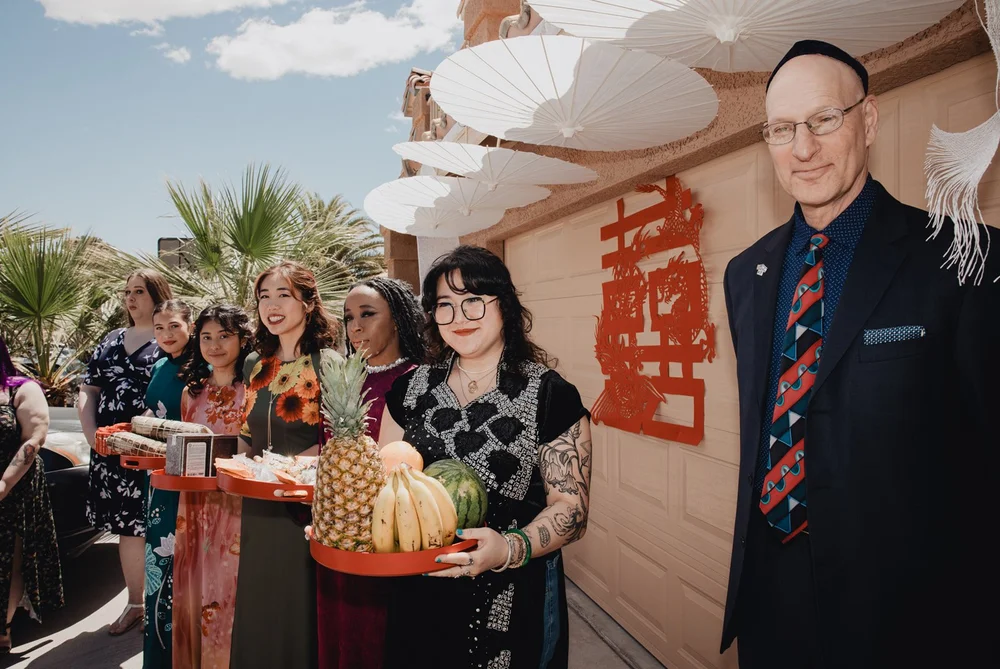
Before the groom can collect his bride, he and his groomsmen have to survive the door games: the playful gauntlet the bridesmaids set up at the front door during the ruoc dau (bride pickup). They are equal parts hilarious, chaotic, and, for us behind the camera, pure gold. Here is our completely unscientific, deeply committed ranking, scored on the only metric that matters on a wedding morning: the Photo-Op Scale.
The Four Flavors Challenge — ★★★★★
The groom eats something sweet, sour, bitter, and spicy to prove he will take marriage's ups and downs. A spoon of honey, a wedge of lemon, a bite of bitter melon, a raw chili, and a face that tells the entire story of married life. Unbeatable for candid reactions.
Serenade at the Door — ★★★★★
He has to sing her a love song before the door opens. Off-key sincerity always outperforms a polished performance, and the bride's reaction from the top of the stairs is the shot of the morning.
The Push-Up Proposal — ★★★★☆
One push-up for every reason he loves her, announced out loud between reps while the groomsmen "help." Expect trembling arms, heckling, and at least one dramatic collapse.
Guess Her Kiss — ★★★★☆
Bridesmaids press lipstick prints onto a card and the groom must pick out his bride's. He will get it wrong at least once, on purpose or not.
How Well Do You Know Her? — ★★★★☆
A rapid-fire trivia round: her favorite food, their first date, her coffee order. Every wrong answer earns a small forfeit and a big laugh.
The Runway Walk — ★★★★☆
The groomsmen strut a catwalk to the front door, bonus points if heels are involved. Peak group-photo chaos.
The Plank of Devotion — ★★★☆☆
Hold a plank while reciting vows or reasons to be let inside. Simple, sweaty, effective.
The Li Xi Toll — ★★★☆☆
When all else fails, red envelopes of lucky money buy safe passage past the bridesmaids. The classic finale: reliable, a little cheeky, and it always ends with the door swinging open.
The Wasabi Roulette — ★★★★★
A tray of identical sushi, one piece secretly loaded with wasabi. One brave groomsman takes the hit for the team while the whole line flinches on his behalf.
Baby Photo Match — ★★★★☆
Match baby photos to each groomsman and the groom. The reveals are pure delight, and nobody aged the way they think they did.
The Wax Strip of Love — ★★★★★
A leg-hair wax strip, applied and ripped in the name of devotion. Loud, unnecessary, unforgettable, and the reaction shots write themselves.
Blindfolded Hand Hunt — ★★★★☆
Blindfolded, the groom has to find her hand in a lineup of bridesmaids. He will absolutely second-guess the real one.
The TikTok Routine — ★★★★☆
The groom and his crew perform her favorite dance trend. Points for commitment, deductions for none.
Sour Warhead Endurance — ★★★☆☆
Hold a mouthful of the most sour candy and still say I love you clearly. Watering eyes, wobbly vowels, big laughs.
Ice, Ice, Groom — ★★★☆☆
Hold a block of ice until he confesses three things he loves about her. The cold makes him poetic remarkably fast.
Human Wheelbarrow Race — ★★★★☆
Groomsmen pair up and race on their hands down the hallway. Chaos in a suit, and a gift to any photographer.
Chubby Bunny — ★★★☆☆
Stuff marshmallows and declare his love with a very full mouth. Adorable and slightly horrifying in equal measure.
Pass the Orange, No Hands — ★★★★☆
The groomsmen pass an orange chin to chin down the line. Personal space: officially gone.
Guess Her Perfume — ★★★☆☆
A blind smell test to pick out her scent. Confidence high, accuracy deeply questionable.
Draw the Bride from Memory — ★★★★☆
Sixty seconds, one marker, zero talent required. The portrait becomes a keepsake nobody asked for and everyone keeps.
The Squat Serenade — ★★★☆☆
One squat per compliment, held at the bottom until the compliment truly lands. Thighs and feelings both burning.
Karaoke Duet — ★★★★☆
The groom sings a duet with a bridesmaid before he can pass. Harmonies optional, embarrassment guaranteed.
Say I Love You in Five Languages — ★★★★☆
He must declare his love in five languages, accents fully committed. Bonus points for starting in Vietnamese.
Spell Her Full Name — ★★★☆☆
Middle name and all, no hints allowed. Consider it the first pop quiz of married life.
Balloon Squeeze Pop — ★★★★☆
The couple pops a balloon between them using no hands. A hug with a punchline.
Limbo Under the Broom — ★★★☆☆
How low can the groomsmen go in dress shoes? Lower than their dignity, apparently.
The Push-Up Auction — ★★★★☆
The bridesmaids keep raising the price and the groom pays in push-ups. Inflation hits hardest right here.
The Group Freeze-Frame — ★★★★★
For the finale, the whole wedding party strikes a dramatic pose on the count of three. The perfect exclamation point before the door swings open, and our favorite last frame of the games.
Photographer's tip: stage the games near a window or the front steps where the light is soft, give the bridesmaids room to react, and let the chaos breathe. The best frames almost always land a half-second after the punchline.
The shape of the day
A sample Vietnamese wedding day timeline
Planning a Vietnamese wedding requires careful consideration of traditions, customs, and timing. Creating a timeline is an essential step to ensure a smooth and successful wedding day. In this guide, we provide a sample timeline for a traditional Vietnamese wedding, covering each ceremony and event from the engagement ceremony to the wedding reception.
Morning Ceremony:
- 6:00 AM - Groom and his family arrive at the bride's house with betrothal gifts
- 7:00 AM - Tea ceremony with the bride's family to ask for permission to receive the bride
- 8:00 AM - Departure ceremony from the bride's house to the groom's house
- 9:00 AM - Arrival at the groom's house and offering incense to ancestors
Afternoon Ceremony:
- 12:00 PM - Reception of guests and lunch
- 1:30 PM - Wedding ceremony at the groom's house or a separate venue
- 3:00 PM - Tea ceremony with the groom's family
- 4:00 PM - Bride's procession to the groom's house with the groom's family
- 5:00 PM - Exchange of rings and vows
Evening Ceremony:
- 6:00 PM - Wedding reception with speeches, performances, and food
- 8:00 PM - First dance of the newlyweds
- 9:00 PM - Cake cutting and bouquet toss
- 10:00 PM - Final farewell to guests and end of the wedding
Vietnamese wedding FAQs
Questions families ask us
How long does a traditional Vietnamese wedding ceremony typically last?
A traditional Vietnamese wedding ceremony can last several hours, depending on the specific customs and rituals included. The altar ceremony, which involves the exchange of vows, rings, and gifts, typically takes around 30 minutes to an hour. However, when combined with other ceremonies such as the tea ceremony, procession, and other cultural performances, a traditional Vietnamese wedding can last up to several hours or even an entire day. It's important to consider the timing of each ceremony and plan accordingly to ensure that the wedding day runs smoothly and according to schedule.
Can non-Vietnamese guests participate in Vietnamese wedding traditions?
Yes, non-Vietnamese guests are usually welcome to participate in Vietnamese wedding traditions. The bride and groom and their families will usually provide guidance and instructions on how to participate in each ceremony. It's important to respect Vietnamese culture and customs when participating in these traditions and to follow the guidance of the bride and groom and their families.
What are the must-have dishes at a Vietnamese wedding banquet?
There are several traditional Vietnamese dishes included in a wedding banquet:
- Pho - A hearty and flavorful noodle soup that is a staple of Vietnamese cuisine.
- Spring Rolls - A popular appetizer made with rice paper wrappers filled with pork, shrimp, and vegetables.
- Banh mi - A Vietnamese sandwich made with a crispy baguette, pickled vegetables, and a variety of meats or tofu.
- Grilled shrimp or fish - Seafood is a significant part of Vietnamese cuisine, and grilled shrimp or fish is a common dish served at weddings.
- Banh xeo - A savory pancake made with rice flour and filled with shrimp, pork, and bean sprouts.
- Nem nuong - Grilled pork patties served with fresh herbs and rice paper for wrapping.
- Com dia - Steamed rice served in a special bowl with various toppings like grilled pork, fried egg, and pickled vegetables.
- Che - A sweet dessert soup made with beans, fruits, and tapioca pearls.
What gift do you give at a Vietnamese wedding?
It is customary to give monetary gifts in red envelopes at weddings in Vietnamese culture. The amount of money given varies depending on the relationship between the guest and the couple, but it is typically an even number and ends in a 0 or 5. Guests may also choose to give a physical gift in addition to or instead of a monetary gift. The common gifts include tea sets, household appliances, or personalized items with the couple's names or initials.
What is the significance of the tea ceremony in a Vietnamese wedding?
The tea ceremony is a significant part of Vietnamese wedding traditions and represents the couple's deep appreciation for their elders and commitment to family values.
How Vietnamese wedding timelines are usually built
About 60% of the Vietnamese weddings we photograph include a tea ceremony, most often at a family home in the morning, with a ceremony and reception somewhere else later. About 25% include a church ceremony or mass. How far apart those parts sit is what decides the shape of the day.
Tea ceremony and evening reception, one day
- 9:30 AMCoverage begins at the family home. House details, the altar, attire, jewelry, family arriving.
- 10:00 AMThe groom's family arrives with gifts. Introductions and the welcome at the door.
- 10:30 AMTea ceremony. Prayers at the ancestor altar, then tea served to parents, elders and relatives.
- 11:45 AMFamily and wedding party portraits in traditional attire, then couple portraits in ao dai.
- 12:15 PMLunch at the house, then a standby break with no active shooting. Worth agreeing in advance.
- 2:30 PMCoverage resumes at the venue. Change into the gown, details, first look and couple portraits.
- 4:45 PMWestern ceremony, usually about thirty minutes, then family formals and cocktail hour.
- 6:30 PMGrand entrance, first dance, parent dances, speeches, dinner and table visits.
- 9:30 PMCoverage concludes.
Tea ceremony, church and banquet, one day
- 8:30 AMCoverage begins at the family home. Setup, decor, attire and getting ready details.
- 9:00 AMFamily introductions, ancestral prayers and the tea ceremony. Allow about an hour and a half.
- 10:30 AMFamily photographs, a quick lunch, then travel to the church.
- 11:30 AMArrival at the church. Interior details and guests arriving.
- 12:00 PMCatholic ceremony, about an hour.
- 1:00 PMFamily and wedding party photographs at the church.
- 2:00 PMAfternoon break before the evening.
- 5:30 PMCocktail hour at the reception venue.
- 6:30 PMGrand entrance, dinner, toasts and dances.
Church ceremony and a Little Saigon banquet
- 11:30 AMCoverage begins. Team arrival and details at the getting ready locations.
- 12:00 PMBoth parties prepare.
- 1:30 PMTravel to the church, guest arrivals and final preparations.
- 2:00 PMCeremony. A full Catholic mass runs closer to ninety minutes than sixty.
- 3:30 PMFamily and wedding party photographs at the church.
- 4:30 PMCouple portraits, then travel to the reception venue.
- 5:30 PMCocktail hour.
- 6:30 PMIntroduction of both sets of parents, grand entrance, dinner, toasts.
- 9:30 PMOpen dancing, then coverage concludes.
Tea ceremony on a separate day
- Day 1, 9:30 AMCoverage begins at the family home. Traditional attire, jewelry, gift trays, altar details.
- Day 1, 10:30 AMThe groom's family is welcomed, then prayers and tea with the family. Two to three hours of coverage.
- Day 1, middayFamily formals in traditional attire and couple portraits near the home, then lunch.
- Day 2, morningGetting ready, then a hotel or church ceremony, sometimes with a lunch reception.
- Day 2, eveningEvening banquet, often a much larger guest list than the ceremony.
- Day 2, lateCoverage concludes after the toasts and the dancing.
What shapes a Vietnamese wedding timeline
The parts of the day that most often need more time, or a decision, than couples expect.
Where these weddings happen
Churches, restaurants and venues that recur across the Vietnamese weddings we photograph.
- Family homes in Westminster and Little Saigon
- Family homes in the San Gabriel Valley
- Holy Spirit Catholic Church
- Christ Cathedral
- Paracel Seafood Restaurant
- Diamond Secret Palace
- Richard Nixon Library
- Venue by Three Petals
- Rancho Las Lomas
- Orange County banquet halls
Other traditions we photograph
More cultural wedding guides
Tell us about your day
Planning a Vietnamese wedding in Los Angeles?
We shoot the morning ceremony, the door games and the evening banquet as one continuous story — and we know when to stand back.