
Los Angeles · Family Ceremony
The WeddingTea Ceremony
The moment two families formally become one — and one of the most photogenic half-hours of the entire wedding day.
What It Is
Gratitude, servedone cup at a time.
In both Vietnamese and Chinese weddings, the couple serves tea to their parents, grandparents and elders, offers thanks, and receives a blessing in return — often with a red envelope or a piece of family gold. It is intimate, emotional and, when it is planned well, wonderfully unhurried.
Before the logistics, get clear on what the ceremony means to your families. At its core it is about gratitude and respect: thanking the people who raised you, and asking your elders to welcome your partner in. Keeping that intention front and center makes every later decision easier.
Two Traditions
Same gesture.Different table.
The two ceremonies share a spine — tea, elders, seniority, blessing — but differ in dress, setting and detail. Many of the couples we photograph blend both.
Usually held at the family home on the wedding morning. The groom’s family arrives in procession carrying covered red trays, the couple bows at the ancestral altar, and tea is served to elders in order of seniority.
Often performed twice — once at the bride’s home before she leaves, once at the groom’s. The couple kneels or bows to serve, addressing each elder by title as they present the cup.
The Order
How the half houractually runs.
Order of service is order of seniority: grandparents first, then parents, then aunts and uncles. Settle that list with both sets of parents early — it prevents almost all day-of confusion.
The other family arrives, often in procession with gifts. Everyone gathers; the room is set with the tea table and, in Vietnamese homes, the ancestral altar.
The couple bows at the altar or to the room, marking respect to the generations who came before.
The couple serves each elder in turn with a few words of thanks. Keep introductions short — the warmth is in the eye contact and the small bows, not long speeches.
Each elder sips, offers a blessing, and gives an envelope or piece of jewelry. These unscripted seconds are the ones couples rewatch for years.
Tea ceremonies we have photographed
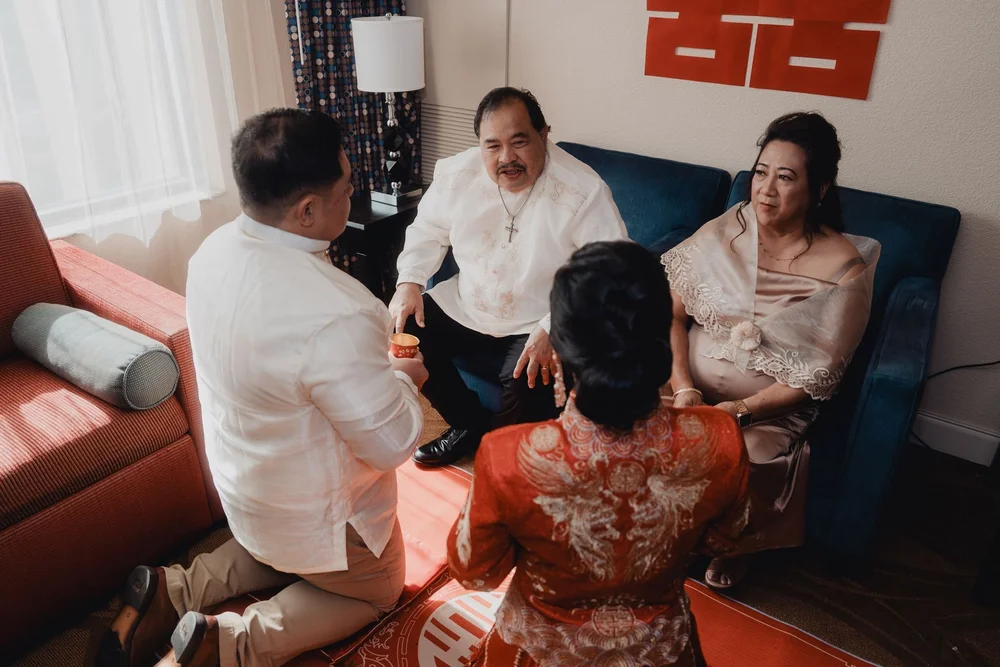
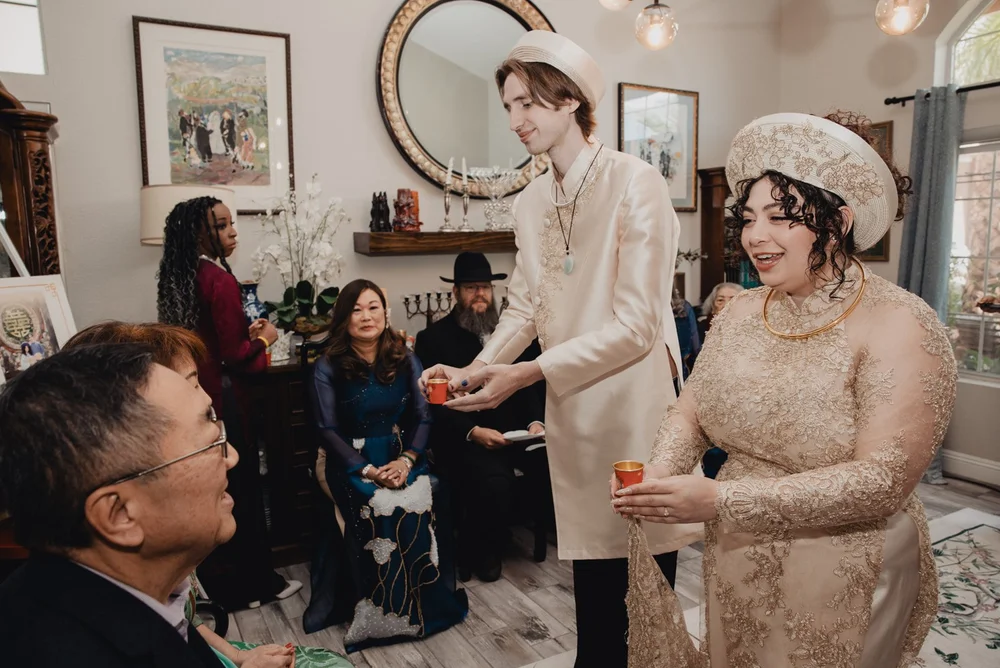
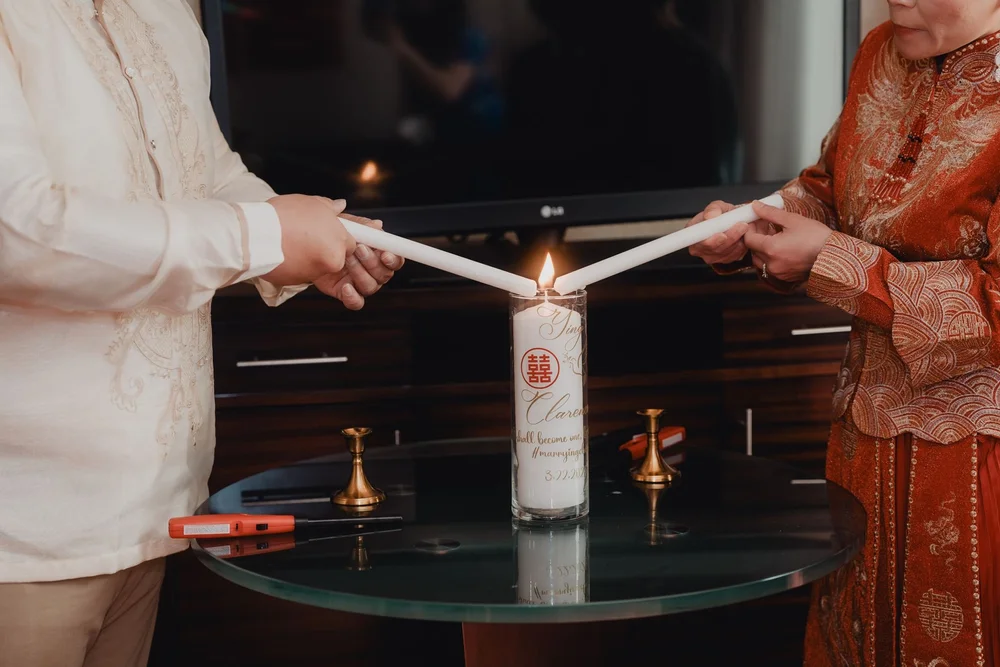
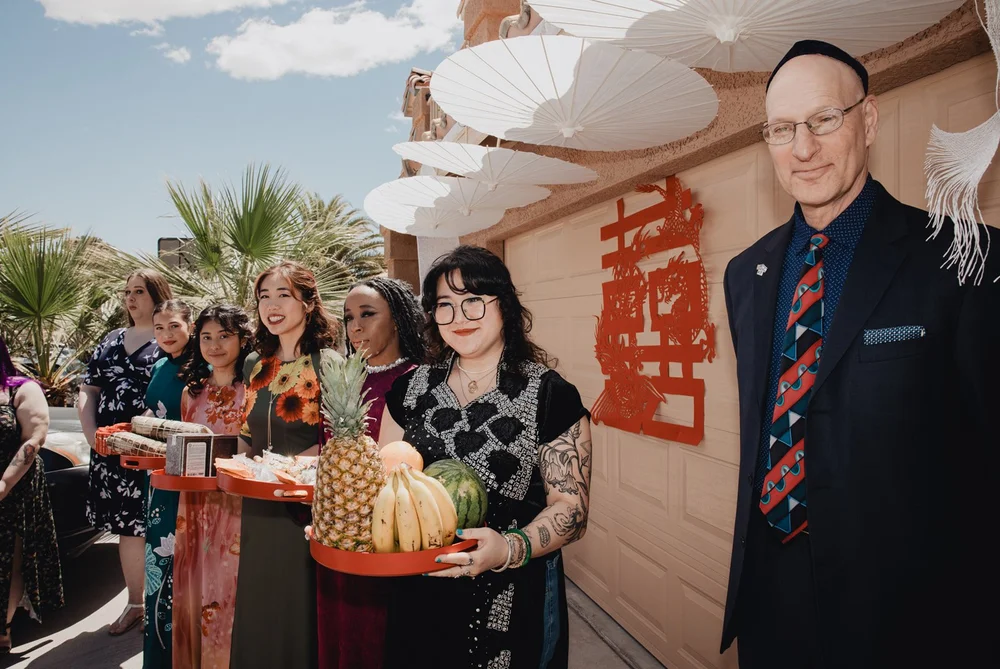
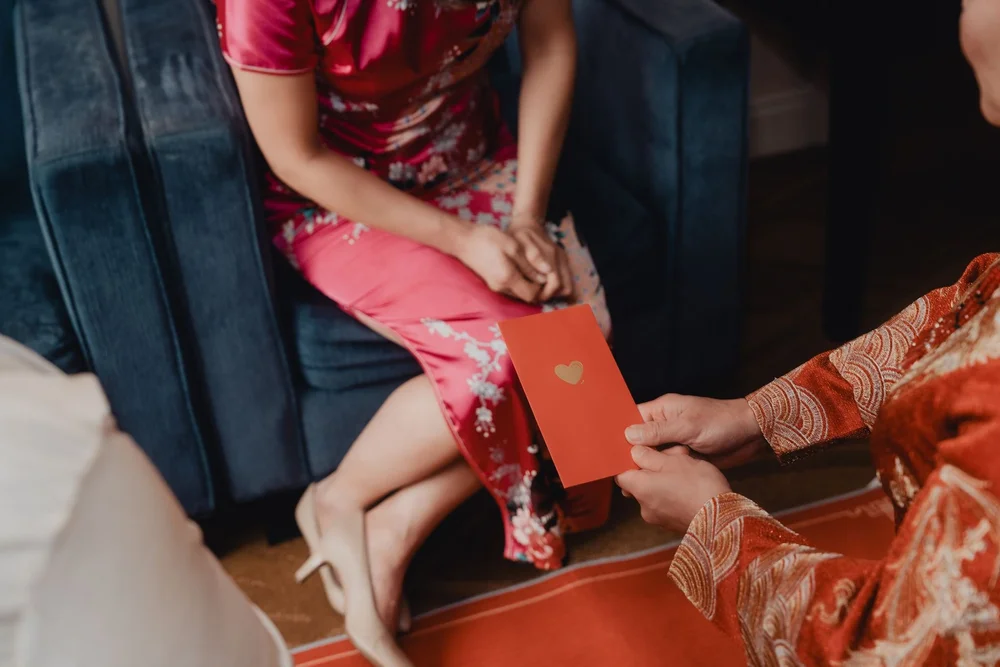
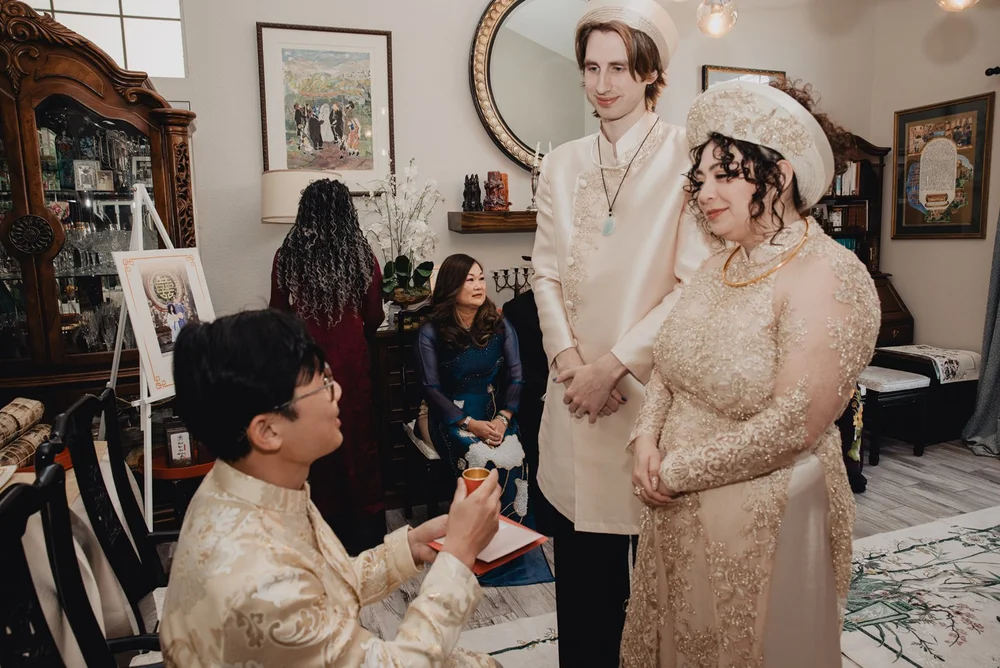
Photographed in Los Angeles, Orange County and San Diego.
What You Need
Everything onthe table.
A short list keeps the morning calm. A helper who refills the pot between rounds is worth more than any decoration.
The most common mistake is over-scheduling. Build a buffer before the ceremony, ask one calm relative to guide the order, and do not rush the blessings.
A Photographer’s Note
Set up neara window.
The tea ceremony is one of the most photogenic parts of the whole day — the áo dài, the steam off the tea, the elders’ faces as they bless you. Give your photographer a clear sightline to both the couple and the elders, and let the emotion play out. The best frames almost always happen in the quiet beats between the pours.
Because the room is usually small and the light is usually one window, this is a part of the day where knowing the running order in advance matters more than any piece of equipment. Tell us the seniority list and we will be standing in the right place before each cup is poured.
Where the tea ceremony sits in the day
The tea ceremony is the part of the day couples most often under-plan. It can be a morning event at a family home, a moment at the restaurant before a banquet, an hour at the venue before the Western ceremony, or a short break during the reception. Each choice changes the whole timeline.
Morning at the family home
- 9:00 AMCoverage begins. House details, decor, the altar, traditional attire and jewelry.
- 9:30 AMThe groom's family arrives, with door games where they are planned.
- 10:00 AMTea ceremony. Introductions, prayers, then serving tea to elders and relatives. Allow one to two hours.
- 11:30 AMFamily photos, often many small groups, then couple portraits in traditional attire.
- 12:00 PMLunch at the house or a nearby restaurant.
- 12:30 PMA break with no active shooting while everyone rests, changes and travels.
- 2:30 PMCoverage resumes at the venue or church for the Western part of the day.
At the restaurant before the banquet
- 3:30 PMCoverage begins while the tables are set.
- 3:45 PMTea ceremony in the banquet room, then family group photos before guests arrive.
- 4:30 PMGuests arrive and mingle.
- 5:00 PMWelcome speeches and toasts.
- 5:30 PMDinner service. The couple visits each table for a photo during the early courses.
- 7:30 PMThe couple's thank-you speech and cake cutting.
- 9:30 PMCoverage concludes.
At the venue, before the Western ceremony
- 1:00 PMCoverage begins. Getting ready and details for both looks.
- 2:00 PMFirst look and couple portraits.
- 2:30 PMChange into traditional attire. Door games here, if the families are playing them.
- 3:15 PMTea ceremony in a garden, gazebo or side room, about thirty to forty five minutes.
- 4:00 PMPortraits with parents and close relatives while everyone is dressed.
- 4:15 PMChange back into the gown.
- 5:00 PMWestern ceremony.
- 6:30 PMGrand entrance and reception.
A short ceremony during the reception
- CeremonyA Western ceremony as normal, about thirty minutes.
- Cocktail hourThe couple changes into traditional attire while guests mingle.
- IntroductionsThe couple is introduced and the reception formalities begin.
- Early receptionTea ceremony between dinner and speeches, for immediate family in a side room or on the floor for everyone.
- Grandmothers onlySome couples keep it to a short tea for the grandmothers, fitted around the ceremony.
- +30 minutesChange back, then first dance and open dancing as planned.
What a tea ceremony costs in time
The practical numbers, drawn from the tea ceremonies we photograph across Chinese, Vietnamese and other Asian weddings. About 50% of the tea ceremony weddings we photograph also include a first look, and about 45% a grand entrance.
Where these ceremonies happen
Settings for the tea ceremonies we photograph, from family homes to banquet halls.
- Family homes in the San Gabriel Valley
- Family homes in Westminster and Little Saigon
- Chinese banquet restaurants
- Hotel suites before the ceremony
- Reception venue side rooms
- Garden gazebos at the venue
- Orange County and San Diego estates
- Summit House
- Almansor Court
- Yamashiro
Questions
Before thefirst pour.
When in the day should the tea ceremony happen?
Who should be invited?
How long should we allow?
Can we do both a Vietnamese and a Chinese ceremony?
Does the tea ceremony cost extra to photograph?
Serving LA, OC, San Diego & Las Vegas