
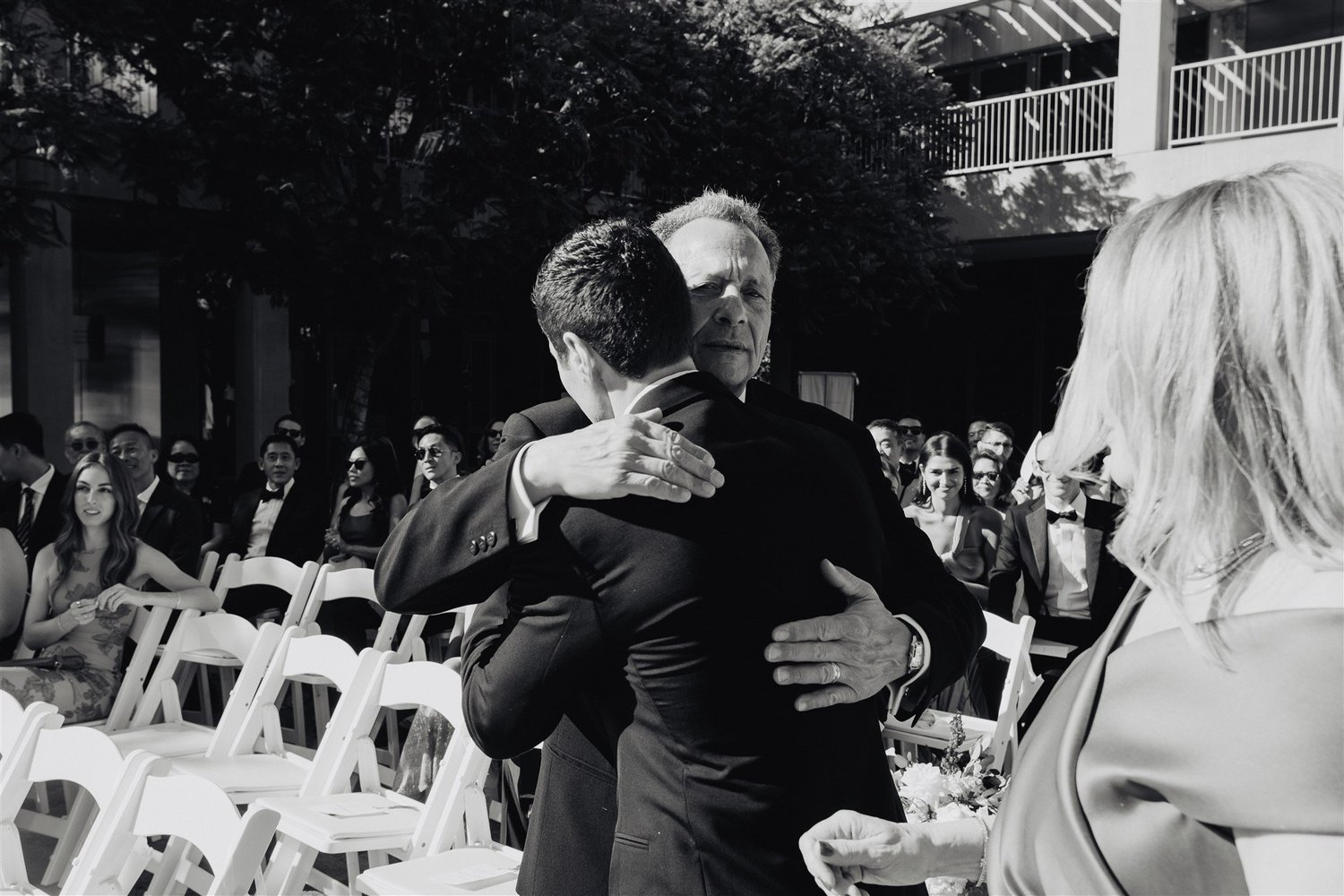
Jewish wedding traditions · Los Angeles
Jewish Wedding Traditions
and Photography in Los Angeles
The ketubah signing, the bedeken, the chuppah and the hora — photographed by a team that knows what happens next and where to stand for it.
An introduction
Jewish weddings in Los Angeles
2,300+ weddings photographed · 35+ national awards · 382 five-star reviews — Cinematic on Film
A Jewish wedding is a sequence, not a single ceremony. The ketubah is signed in a small room before anything else happens. The bedeken follows minutes later. The chuppah holds seven blessings, a glass, and both sets of parents standing in frame. Then the hora, which is the loudest twenty minutes of the year and the hardest to shoot cleanly.
Lulan Studio photographs Jewish weddings across Los Angeles — the Skirball Cultural Center, Bel-Air, the Westside and the Valley — Reform through Orthodox. We ask which traditions you are keeping before the day, because the answer changes where our second photographer stands for an hour of it.
The Ketubah Signing
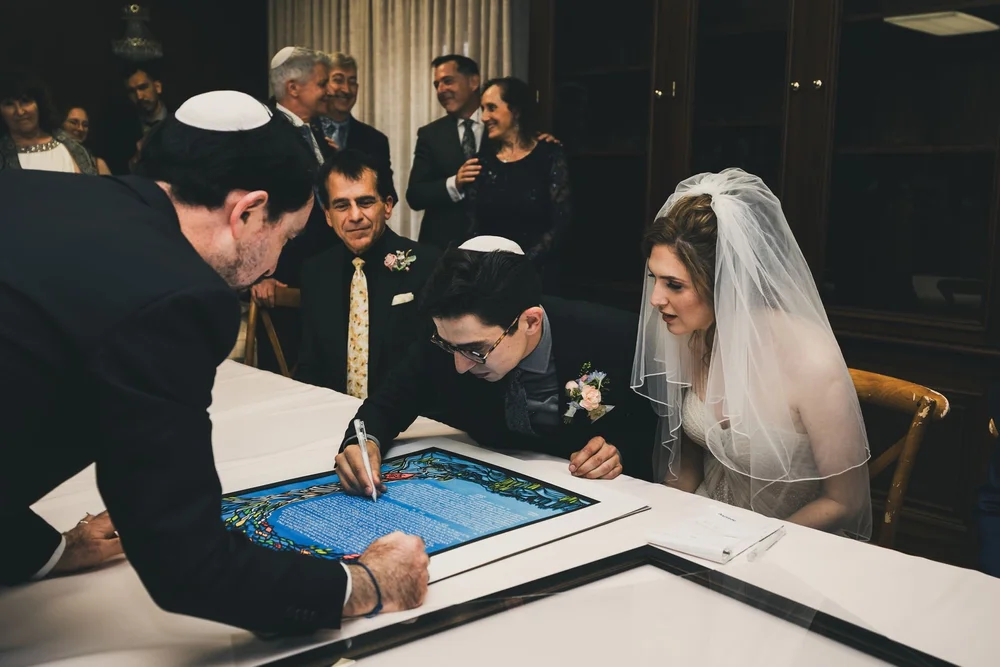
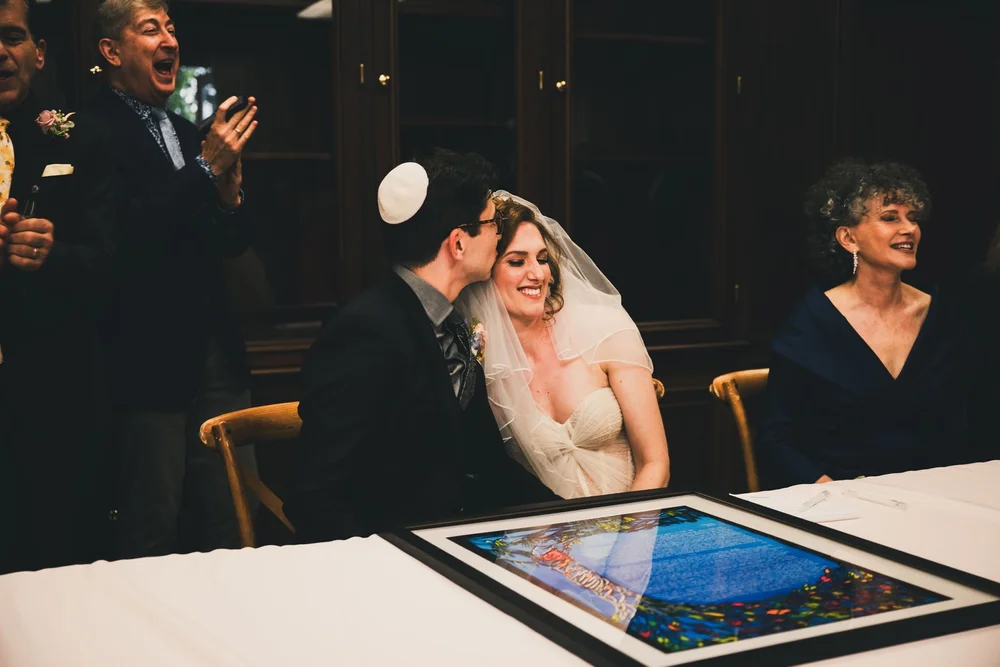
The ketubah signing happens in a side room, usually with poor light and twenty people pressed around a small table. It is also the first time both families are together, which makes it one of the most photographed-badly moments of the entire day. Our approach (the full ritual is covered in our ketubah signing guide):
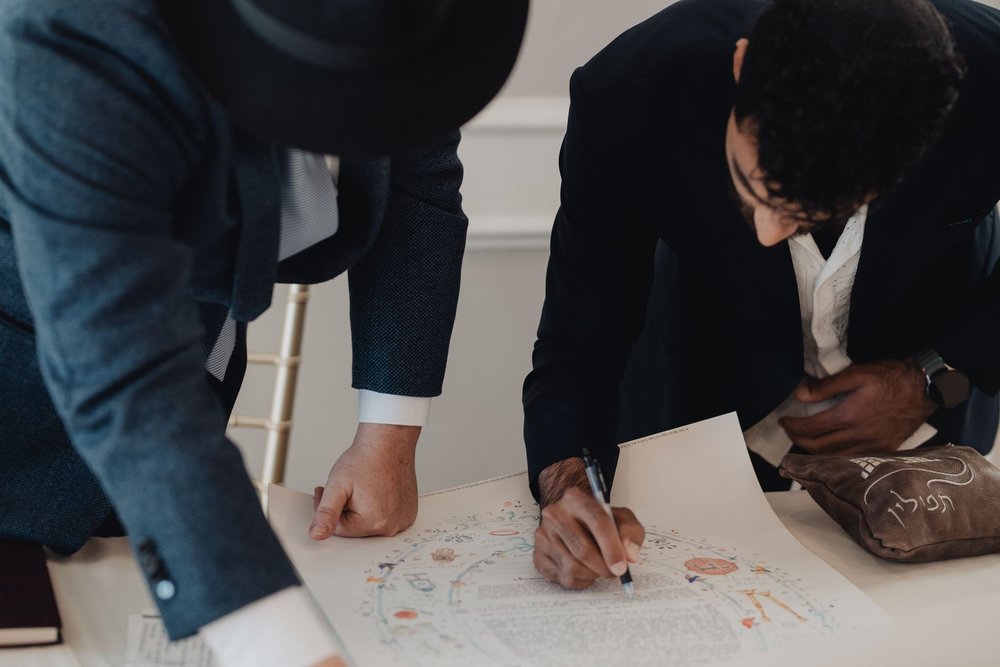
- The document first. Hand-lettered ketubot are artwork. We photograph it flat and clean before anyone signs, because afterwards it is folded and gone.
- The witnesses. Two witnesses and the rabbi — we shoot across the table so their faces are in frame rather than the backs of their heads.
- The pen. A tight frame of the hand signing, which is the detail every album opens with.
- The room, lit. We bring light. Ketubah rooms are almost never window-lit, and available-light frames here come out yellow and soft.
The Bedeken and the Chuppah
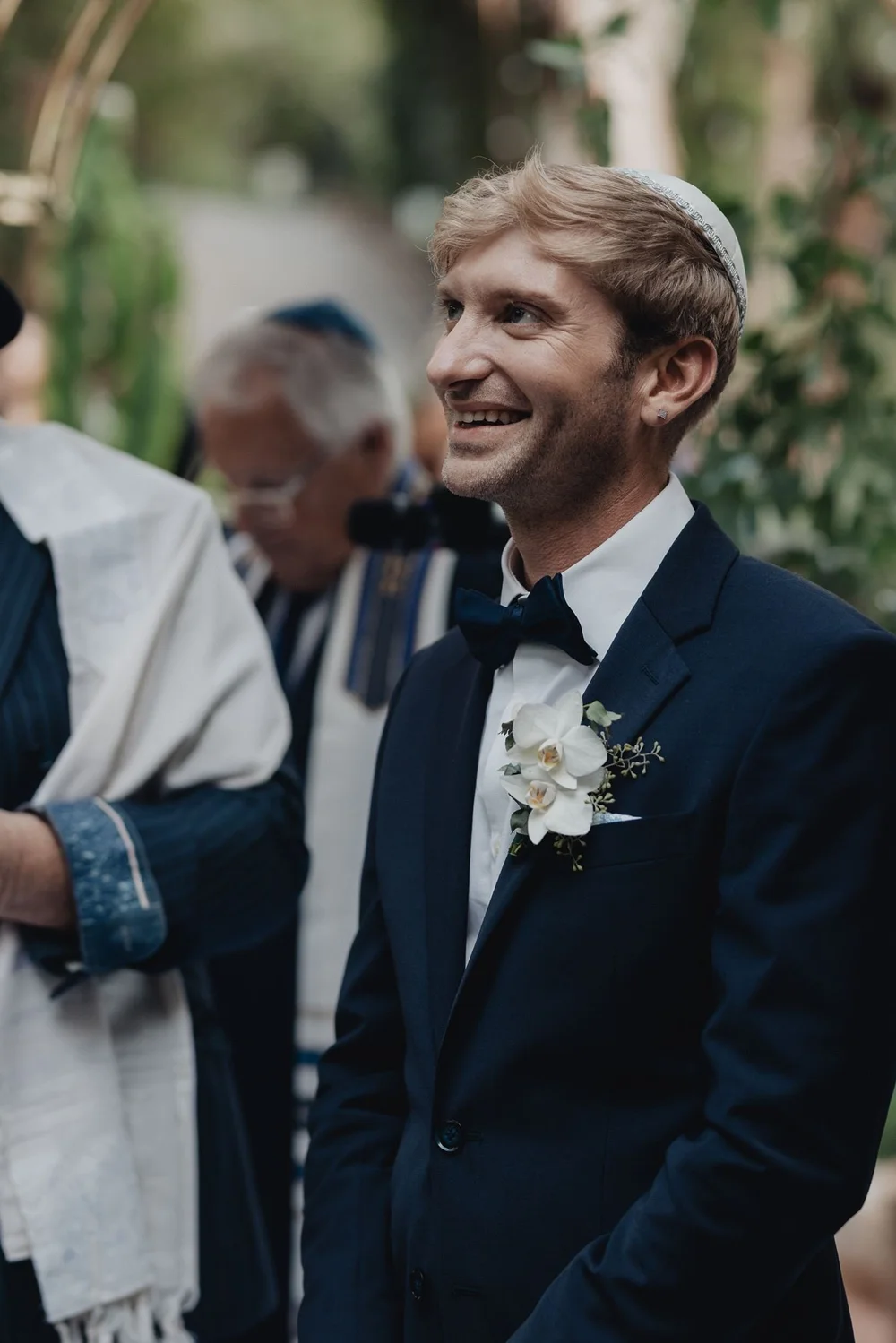
The bedeken — the groom veiling the bride — lasts about fifteen seconds and is frequently the most emotional frame of the day. There is no second take. We position before the groom is walked in, not while it is happening.
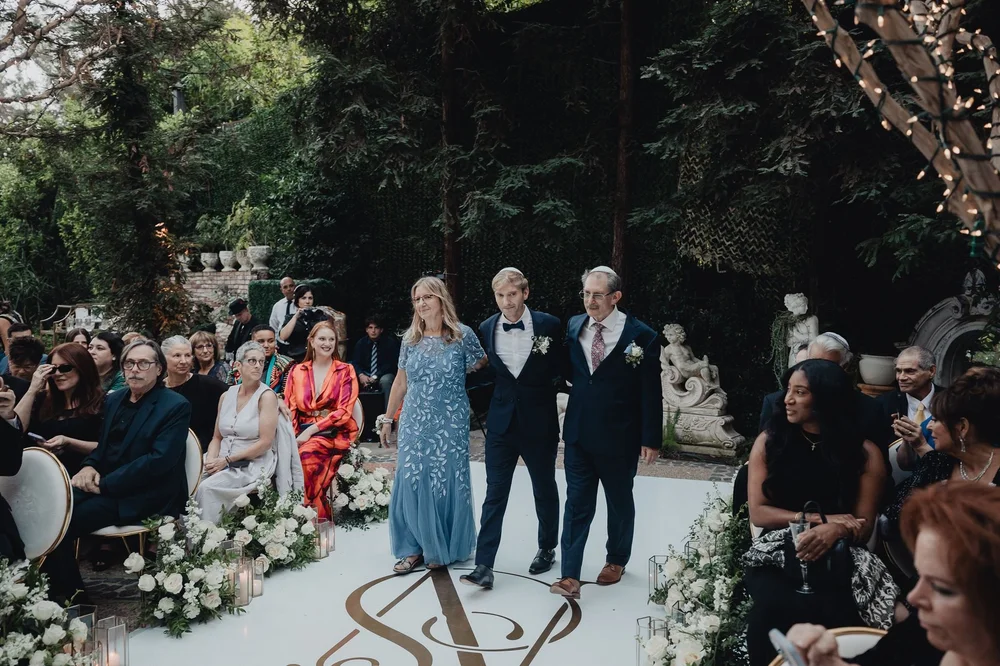
Under the chuppah, the constraint is geometry. Four posts, both sets of parents, a rabbi, and a couple who spend most of the ceremony facing away from the guests. We shoot the chuppah from angles that keep the canopy intact in frame and still show faces — and we plan the breaking of the glass in advance, because it happens once, fast, and everyone shouts. Our chuppah ceremony guide goes through the structure.
The Hora, Shot Properly
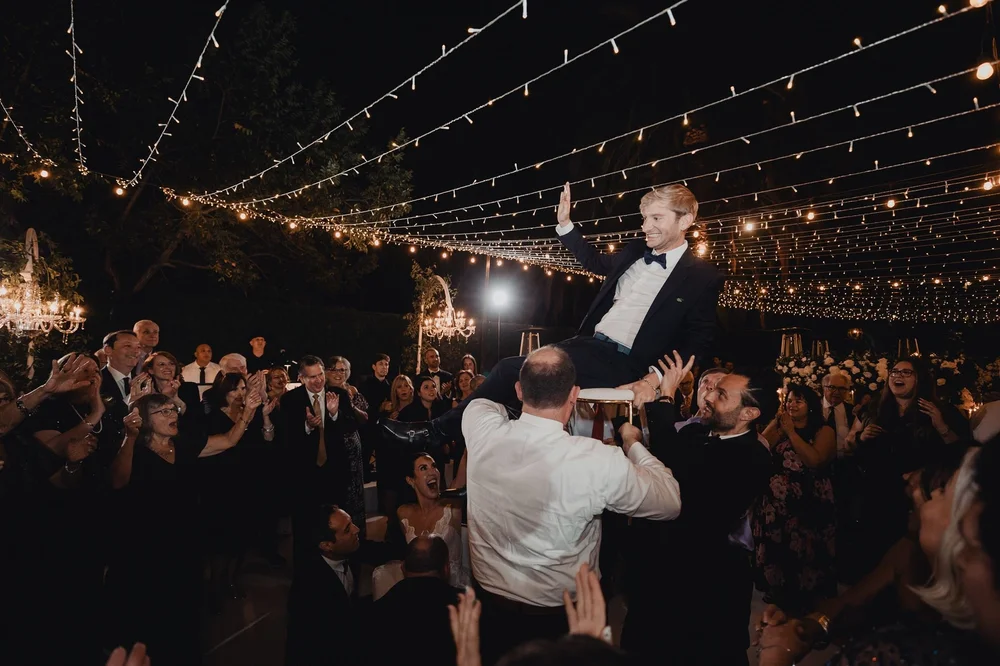
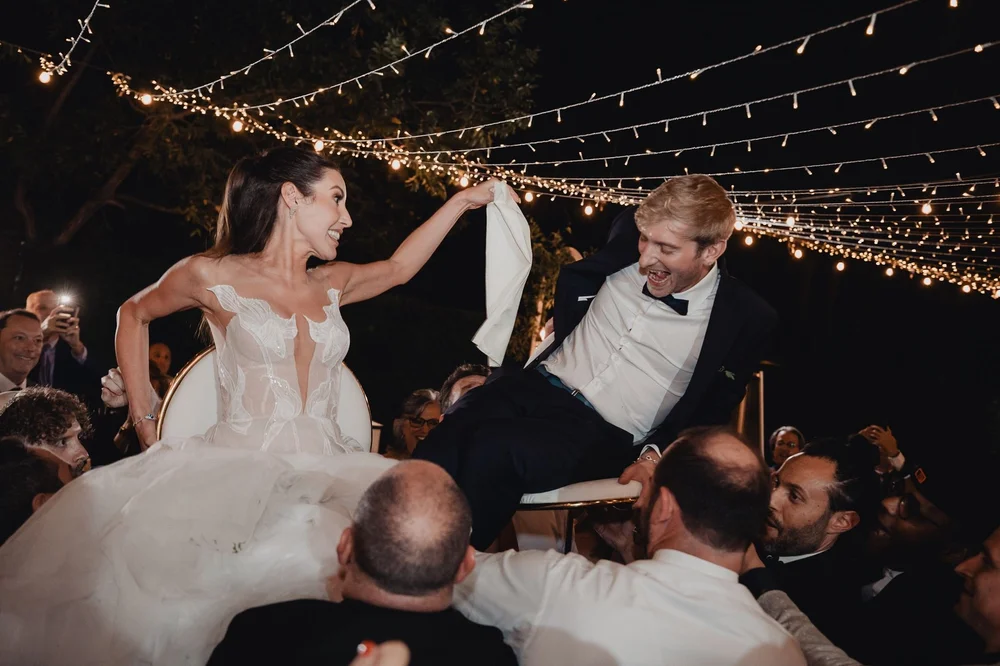
The hora is the hardest twenty minutes of a Jewish wedding to photograph and the easiest to get wrong. The floor is packed, the light is coloured and moving, and the couple goes up on chairs above everyone’s heads. Blurred, orange, half-cropped hora frames are the single most common failure in Jewish wedding galleries.
We shoot it with two photographers and our own light: one working the floor wide for the circle, one holding a clean line on the chairs so the lift exists sharp. We also watch the napkin — the couple held together by a handkerchief between the chairs is the frame that goes in the album. Our hora photography guide covers the sequence.
Working With Your Rabbi and Venue
Photography rules vary enormously between congregations. Some rabbis ask for no flash during the ceremony; some synagogues restrict where a photographer may stand; an Orthodox wedding may have separate dancing that needs a second shooter of the right gender to cover both sides properly.
We ask all of this at booking rather than discovering it on the day. If your ceremony is shomer negiah, if photography is not permitted on Shabbat until after sundown, or if the venue asks us to stay behind a line — we plan lenses and positions around it, and you still get the coverage. The worst version of this conversation is the one that happens ten minutes before the processional.
A Timeline That Holds the Whole Sequence
A typical Los Angeles Jewish wedding, with every ritual given the time it actually needs.
Getting ready and details
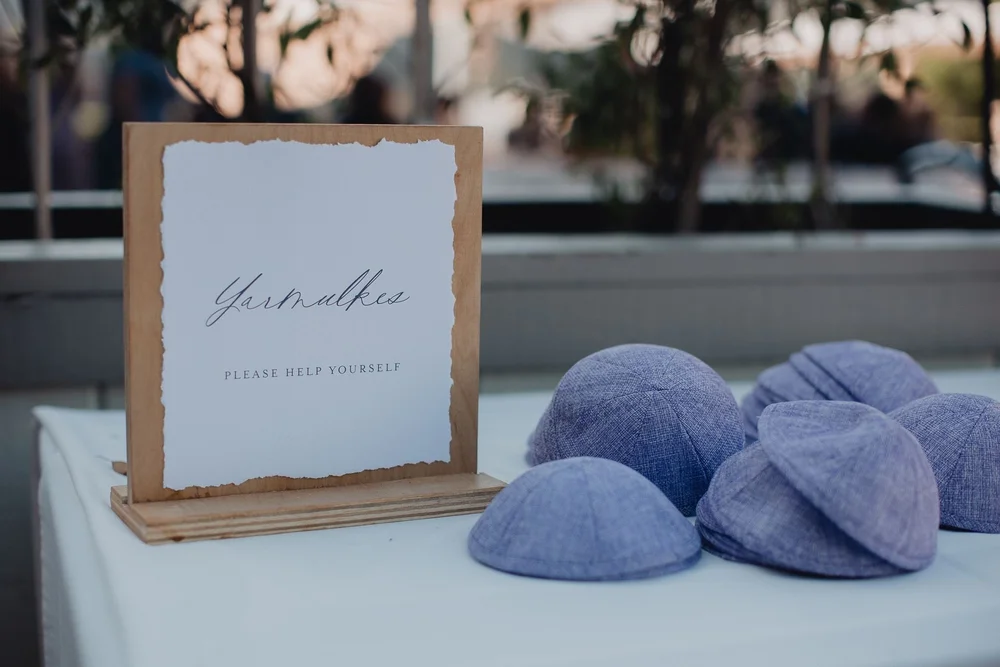
Both sides. The ketubah, the tallit, the kippot, the rings and the invitation suite photographed while the rooms are still calm.
Ketubah signing
Document photographed clean before signing, then the witnesses and the rabbi. Lit by us.
Bedeken
Fifteen seconds, no second take. We are in position before the groom is walked in.
Ceremony under the chuppah
Processional with both sets of parents, the seven blessings, the glass. Angles planned around the canopy.
Yichud, then family formals
The couple gets their private minutes; we use them to photograph the empty chuppah and the room. Formals immediately after, while everyone is still gathered.
Grand entrance and the hora
Two photographers and our own light. Wide for the circle, clean line on the chairs.
Dinner, speeches, and the room
Toasts from both families, and the quieter frames — grandparents at their table, the couple actually eating.
Late-night portraits and send-off
Ten minutes outside while the dance floor runs, then the exit.
How Jewish wedding timelines usually run
Most of the Jewish weddings we photograph settle into one of three shapes, set mostly by the ceremony time. About 25% include a first look and about 30% a grand entrance. These are starting points to adapt with your rabbi and planner.
Portraits first, evening ceremony
- 3:00 PMCoverage begins. Final hair and makeup, attire and details in both suites.
- 4:15 PMFirst look, then couple, wedding party and family portraits.
- 5:30 PMKetubah signing with close family, then a short pause before the processional.
- 6:15 PMCeremony under the chuppah.
- 7:00 PMYichud, about fifteen minutes. Guest candids meanwhile.
- 7:15 PMCocktail hour. Extended family groups and reception details.
- 8:00 PMReception. Grand entrance, first dance, toasts and dinner.
- 9:00 PMThe hora, then open dancing.
- 11:00 PMCoverage concludes while the party continues.
Afternoon ceremony, portraits at cocktail hour
- 1:30 PMCoverage begins. Getting ready, attire, rings and the ketubah photographed as details.
- 3:15 PMGuests arrive. The ceremony site and chuppah photographed before seating.
- 4:00 PMCeremony. Processional, blessings and the breaking of the glass.
- 4:45 PMCocktail hour. Family and wedding party portraits while guests mingle.
- 5:45 PMReception. Grand entrance, toasts and dinner.
- 7:00 PMFirst dance and parent dances, then the hora.
- 9:00 PMCake and open dancing, then coverage concludes.
Daytime ceremony, early evening finish
- 1:00 PMCoverage begins. Final getting ready and venue details.
- 2:00 PMGuests arrive. Pre-ceremony gatherings, where the family holds them.
- 2:45 PMCeremony, usually thirty to forty five minutes.
- 3:30 PMFamily photographs at the ceremony site while everyone is still together.
- 4:00 PMCocktail hour while the room is turned, or travel to the reception.
- 4:45 PMReception. Toasts, dinner and first dances.
- 6:00 PMThe hora and open dancing.
- 8:00 PMCoverage concludes.
What shapes a Jewish wedding timeline
The practical patterns from the Jewish weddings we photograph, and the choices that move the rest of the day.
Venues that come up again and again
Settings for the Jewish weddings we photograph, from temples and gardens to family homes.
- Skirball Cultural Center
- Westlake Village Inn
- Castle Green
- Descanso Gardens
- The Oviatt Penthouse
- LA River Center & Gardens
- Sephardic Temple, Westwood
- Inn of the Seventh Ray
- Hyatt Regency Huntington Beach
- Family homes and estates
Jewish wedding photography — questions we are asked
Have you photographed Orthodox weddings?
Yes, across the full range from Reform to Orthodox. Where there is separate dancing, we staff the day so both sides are covered properly rather than one being photographed through a doorway. Tell us the congregation and the rabbi at booking and we will plan the team around the requirements.
Will you use flash during the ceremony?
Only if your rabbi and venue permit it. Many do not, and we plan for that: fast lenses, positions chosen for the available light, and no shutter noise during the blessings. We ask the rabbi directly at the rehearsal or on arrival rather than assuming.
Can you photograph a Saturday evening wedding after Shabbat?
Yes. Post-Shabbat weddings start late and run late, and the coverage window has to be built backwards from sundown. We schedule those days differently, and we will tell you honestly how much of the getting-ready you will lose if coverage cannot begin until after havdalah.
How many photographers does a Jewish wedding need?
Two, in almost every case. The ketubah signing, bedeken and hora all have two things happening at once, and the chuppah has parents on both sides. One photographer covers a Jewish wedding by choosing what to miss.
How long should we book?
Every collection includes eight hours, and about half of the Jewish weddings we photograph fit in seven to eight. The ritual sequence starts well before the ceremony, so a day with a ketubah signing, bedeken, chuppah and a long hora may need nine or ten. Hours can be added before the day or on the day itself.
Do you photograph interfaith and multicultural weddings?
Often — see our multicultural wedding guide, and the specific guides to the ketubah signing, the chuppah and the hora.
Next step
Tell us about your day
Send us the date, the venue and which traditions you are keeping — and we will tell you what the day realistically needs.