
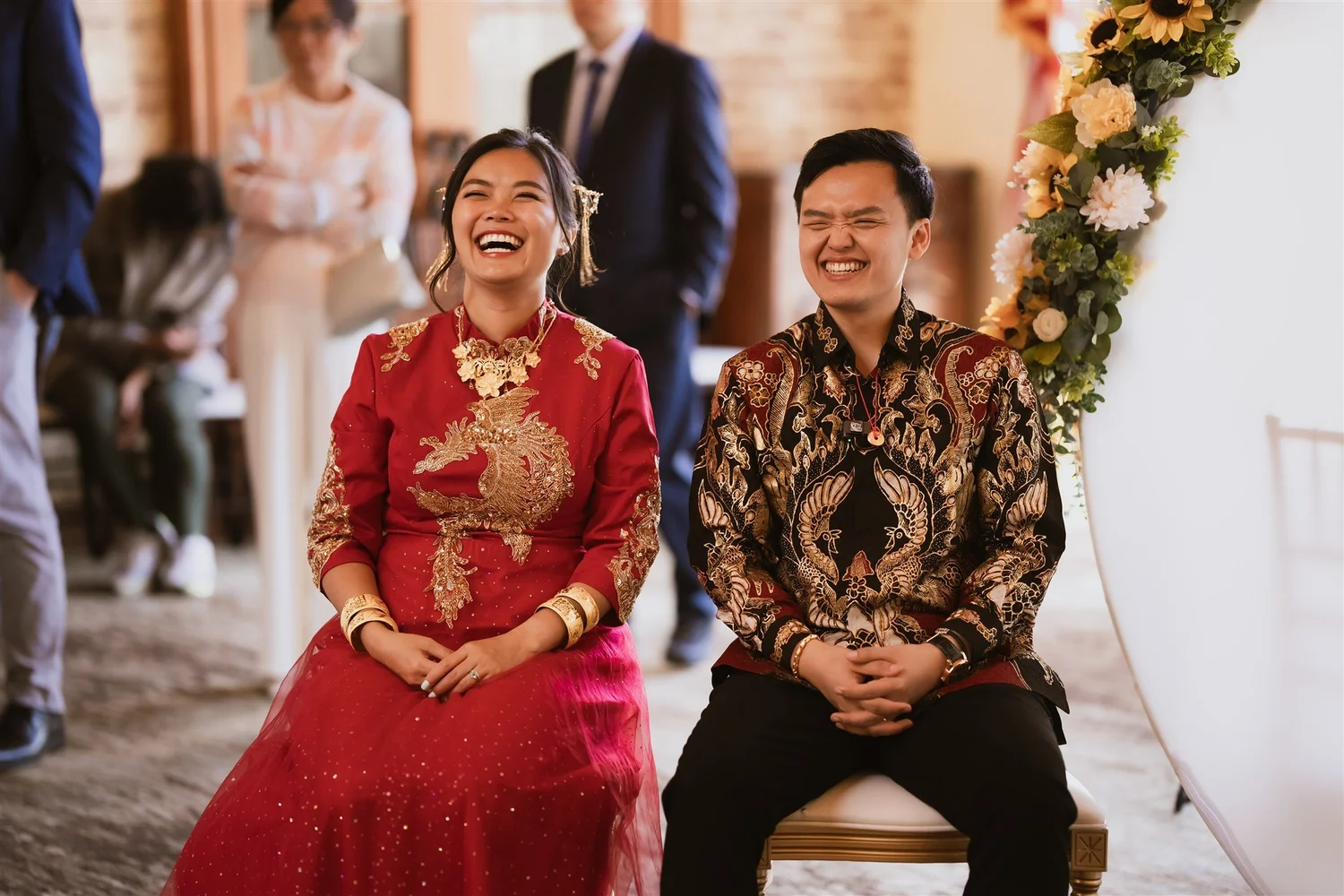
Multicultural Wedding Photographer in Los Angeles
Two families, two calendars, two sets of rules — and one Saturday to hold all of it.
We photograph weddings that carry more than one tradition: a morning tea ceremony and an evening chuppah, a Sofreh Aghd followed by a Western ceremony, a baraat that arrives while the church is still filling. One team, one cinematic style, and a timeline where neither culture is an afterthought.
A multicultural wedding is a scheduling problem before it is a design one
A multicultural wedding blends traditions and customs from different cultures, and it is one of the most beautiful things a photographer gets to stand inside. It is also, in practice, two weddings wearing one dress. The couples who enjoy their own day are the ones who worked out the order of it early.
Nobody remembers the wedding that split the difference. They remember the one where both grandmothers cried at the part that was theirs.
Lulan StudioPick two heritages. We will draft the shape of your day.
Choose the traditions on each side and this builds a merged running order — what happens, in what order, at roughly what time, what should not be cut, and where the two traditions are going to collide. It is the same first draft we would write for you in a planning call, and it takes about four seconds.
A Chinese and Hindu / Indian wedding
Both traditions fit inside one day. Below is the order that gives each of them its own light, its own room and its own hour.
- Onewedding day
- 11hours of coverage
- 13rituals to cover
- Yessecond shooter
In the weeks before
Separate events with their own guest lists. These are the pictures nobody else takes.
- BeforeChineseGuo Da Li — betrothal gifts exchanged between the familiesWeeks out, at home. Worth photographing if the families are in town.1.5 hr
- BeforeHindu / IndianMehndi — henna for the bride and the women of both familiesIts own evening. Warm light, hands, and the best laughing pictures of the week.3 hr
- BeforeHindu / IndianSangeet — choreographed performances by both familiesStage lighting, rehearsed numbers, and a dance floor that does not stop.4 hr
The wedding day
One day, both ceremonies, one team from first light to last dance.
- 8:25 amChineseHair-combing ceremony at each homeSmall, quiet, and over in minutes. Two rooms, two households.25 min
- 9:05 amChineseDoor games at the bride's doorThe loudest, funniest twenty minutes of the morning. The groomsmen will earn it.45 min
- 10:05 amChineseTea ceremony for both sets of parents and eldersOrder of service follows seniority. Get the list from the family the week before, not on the day.35 min
- 10:55 amHindu / IndianHaldi — turmeric on the bride and groomYellow, loud and messy. Plan the outfit change straight after it.1.5 hr
- 12:55 pmHindu / IndianBaraat — the groom's procession with dholNeeds street or driveway, a permit at some venues, and forty-five minutes nobody expects.45 min
- 2:10 pmHindu / IndianMilni and Varmala — families meet, garlands exchanged30 min
- 2:55 pmHindu / IndianKanyadaan, Mangal Phera and Saptapadi under the mandapThe fire, the seven steps, the vows. This is the hour that cannot be moved.1.5 hr
- 4:55 pmHindu / IndianVidaai — the send-offShort, emotional, and easy to miss if the timeline has slipped.20 min
- 6:00 pmChineseChange into a qipao for the banquet15 min
- 6:30 pmChineseTable-to-table toasts across the whole roomTwenty tables, two minutes each. It is a marathon, and it is where the candid frames live.45 min
- Door games at the bride's door
- Tea ceremony for both sets of parents and elders
- Table-to-table toasts across the whole room
AttireA red qipao or cheongsam for the tea, a gown for the ceremony, a third dress for the toasts.
Read the Chinese wedding photography guide →- Haldi — turmeric on the bride and groom
- Baraat — the groom's procession with dhol
- Kanyadaan, Mangal Phera and Saptapadi under the mandap
- Vidaai — the send-off
AttireA lehenga and sherwani for the ceremony, a separate reception outfit for the evening.
Read the Indian wedding photography guide →- Two full menus will not fit. Pick one culture for the seated courses and give the other the cocktail hour, the late-night table and the dessert. Guests remember the last thing they ate.
- Every toast will be said twice. Budget double the time for speeches, or brief one speaker per language instead of translating each one live.
- There is an open flame in the ceremony. Indoor venues will ask about it, and some will say no. Confirm it before the deposit, not after.
- The tea ceremony is almost always indoors in a small room with no window — it needs its own light, not the ballroom's.
- The ceremony is long and mostly seated — a second shooter on the guests is the difference between a record and a story.
This draft is for a Chinese and Hindu / Indian wedding. Every family runs its traditions a little differently, so treat it as a starting point rather than a rule book — read the Chinese wedding photography guide and the Indian wedding photography guide for the detail behind each ritual, send us the version you actually want and we will tell you honestly what it takes to cover, or see what coverage costs.
Two heritages, one day
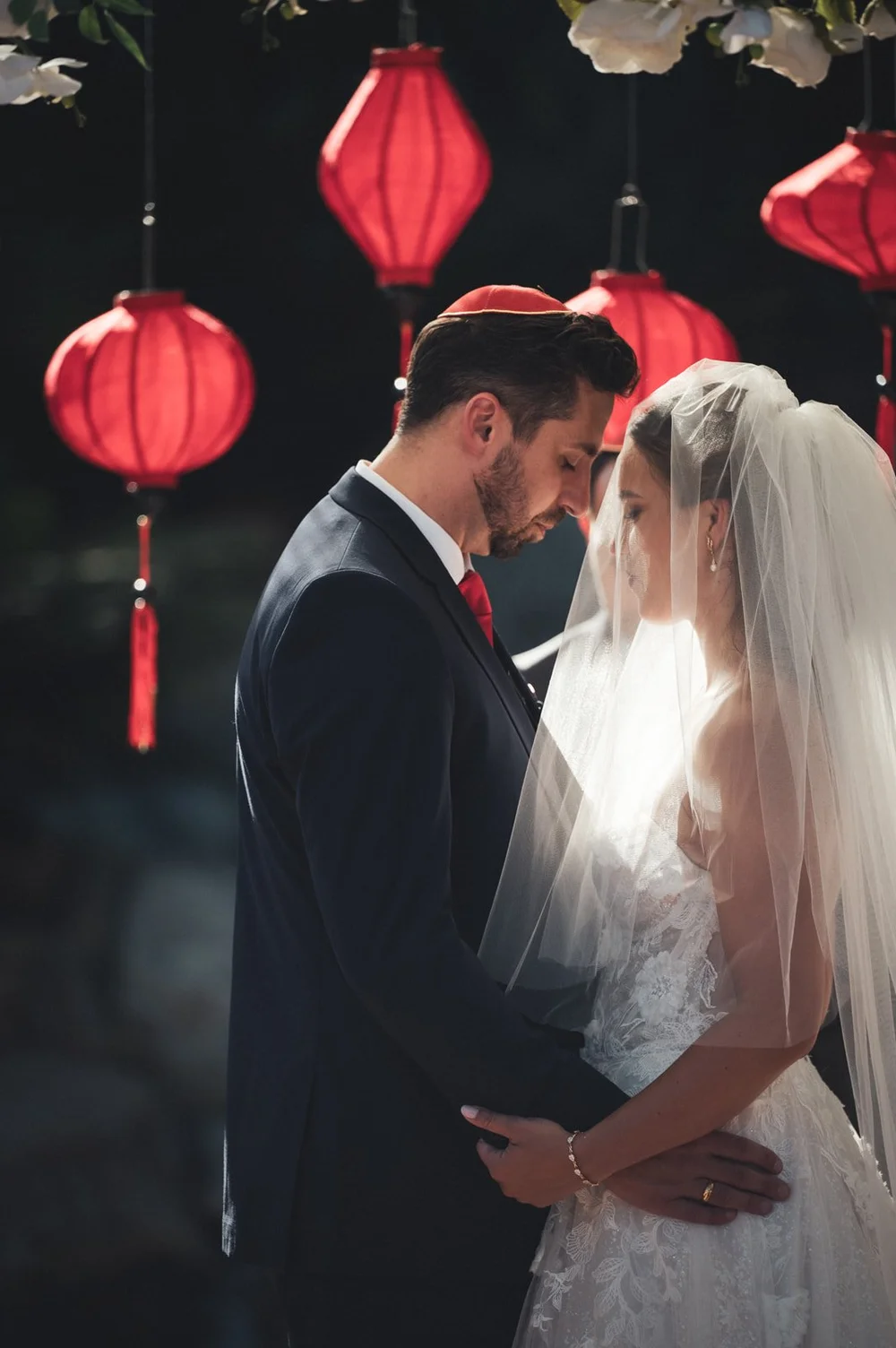
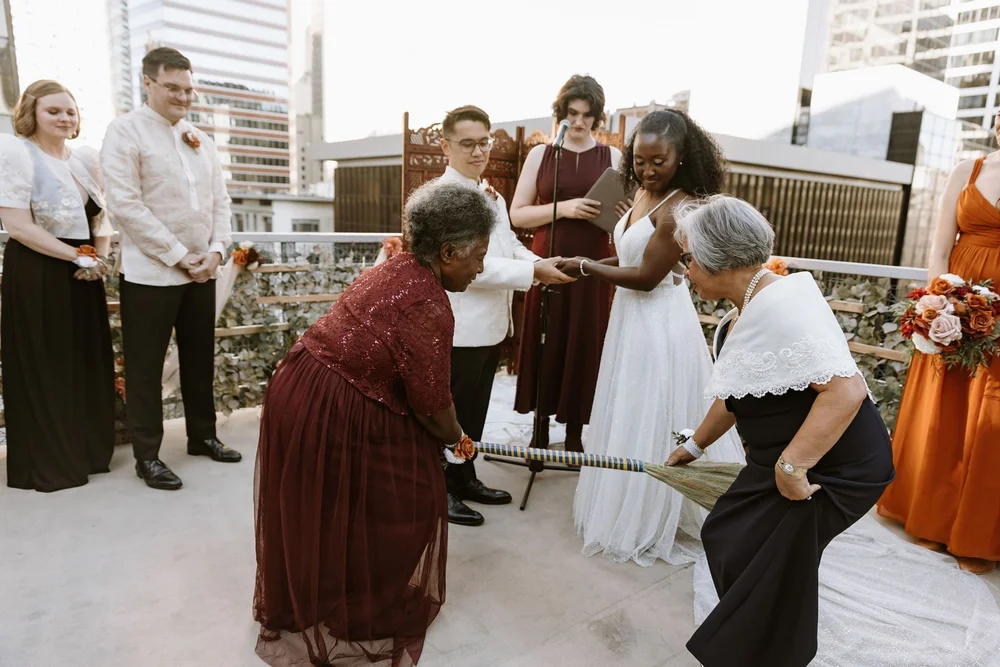
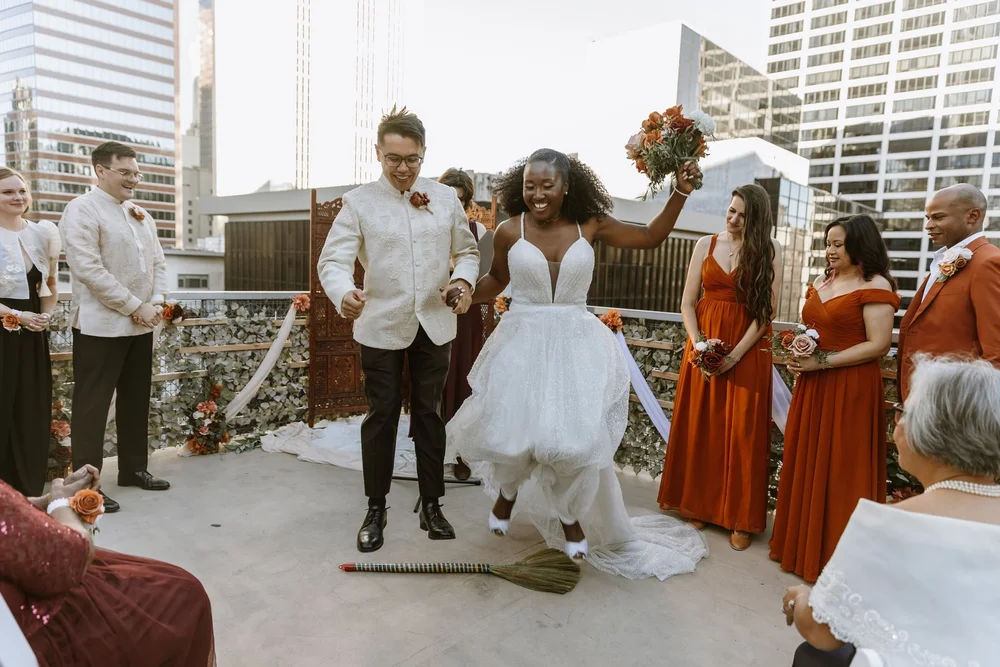
Real fusion weddings photographed by Lulan Studio.
The parts that cannot be moved
Every tradition has one moment that only happens once and never happens twice. The whole job is knowing which one it is, and standing in the right place before it starts.
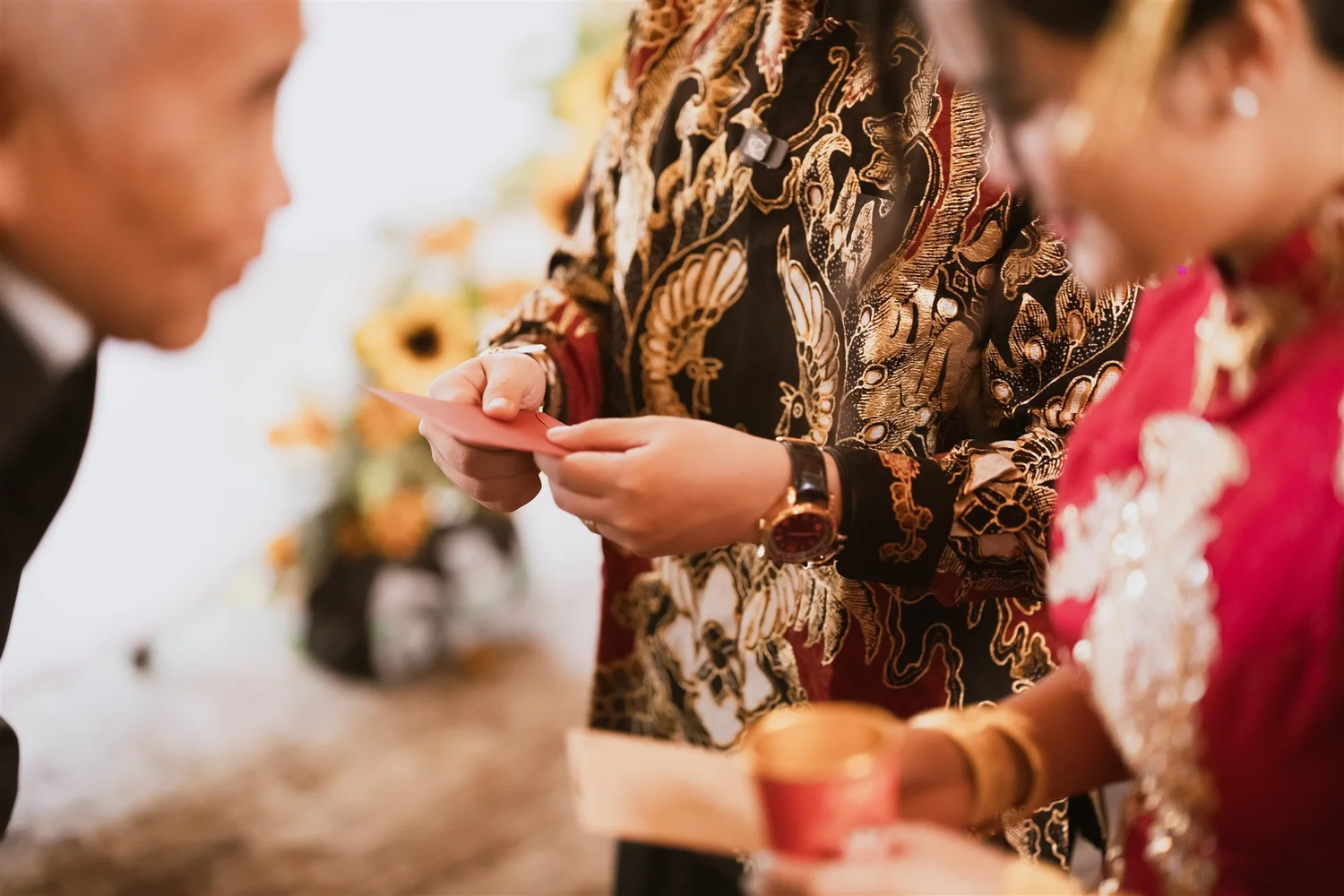

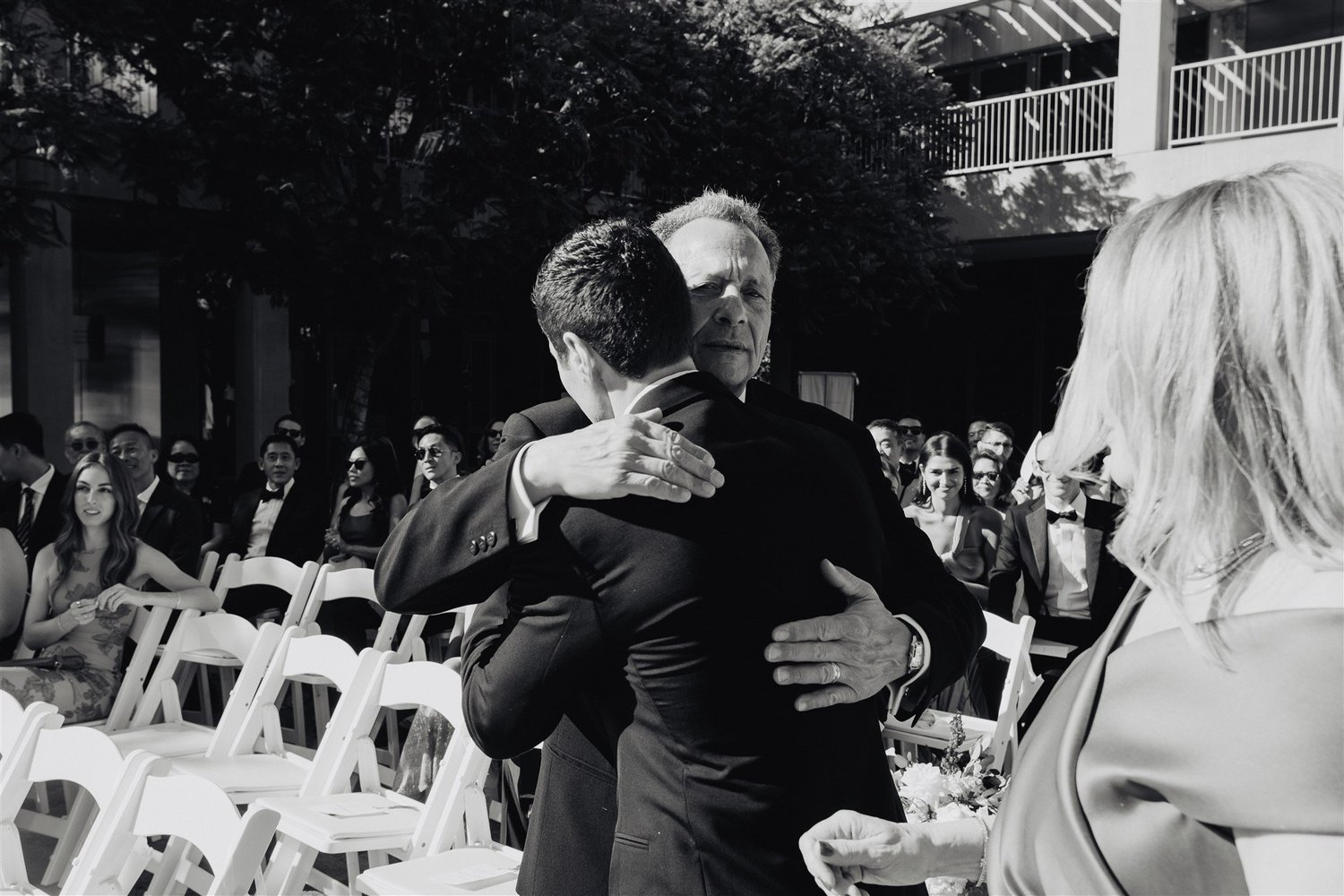
A Chinese tea ceremony and a church wedding, eleven hours apart
Brian and Gavi were married at the Neighborhood Church in Palos Verdes. The morning belonged to one family and the afternoon to the other, and the only reason both halves feel complete is that the tea ceremony was given its own hour and its own room instead of being squeezed into the gap before photographs.
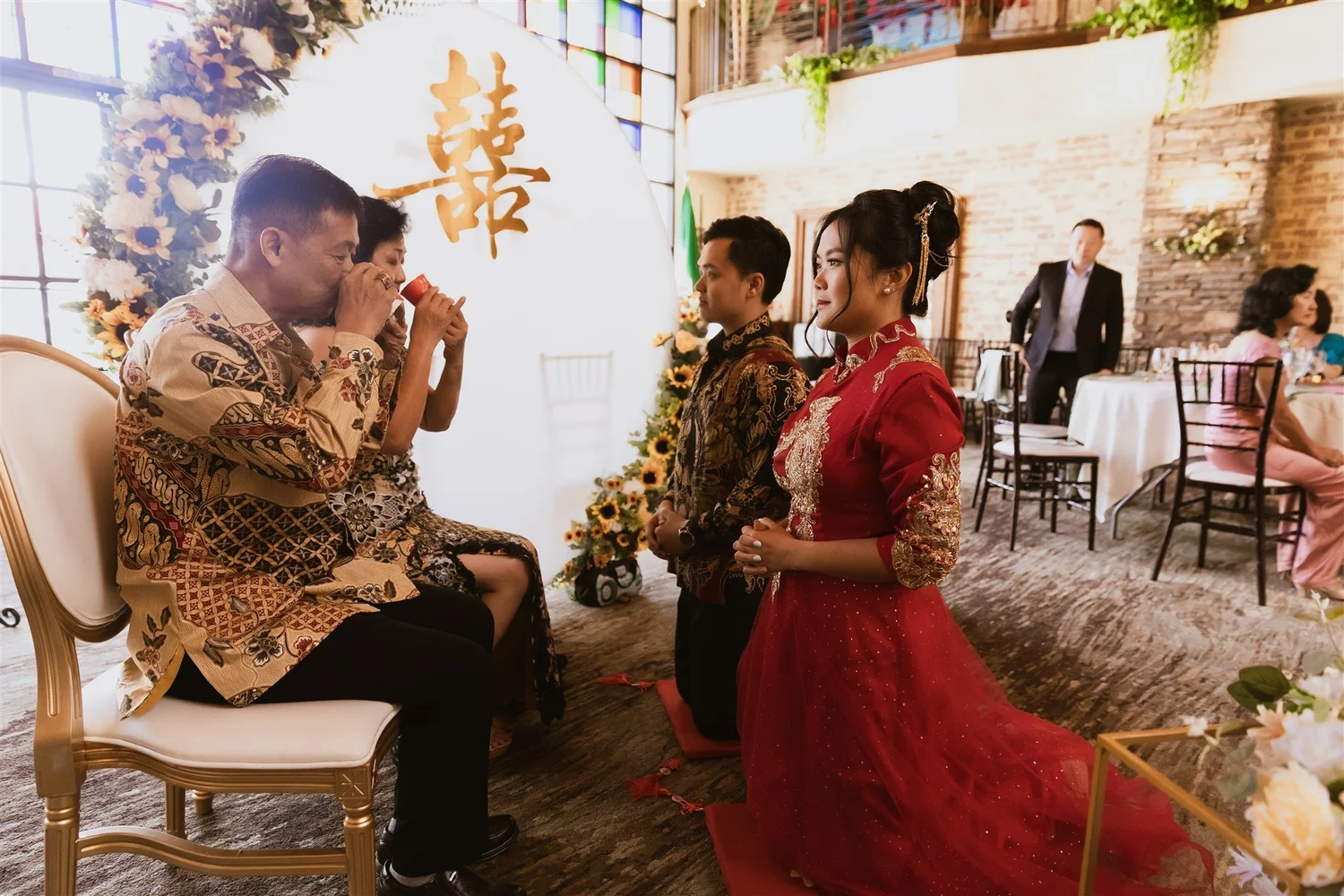
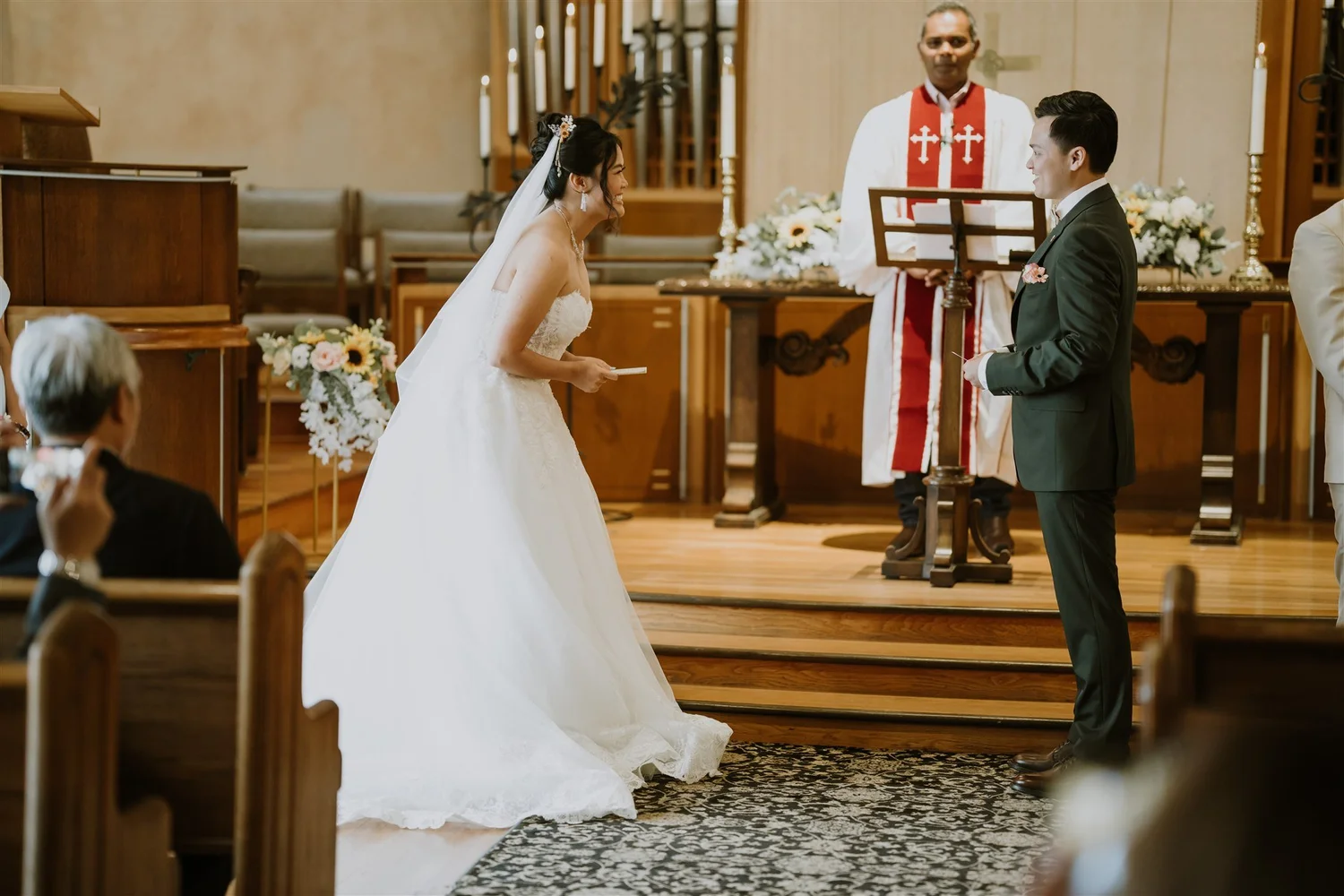
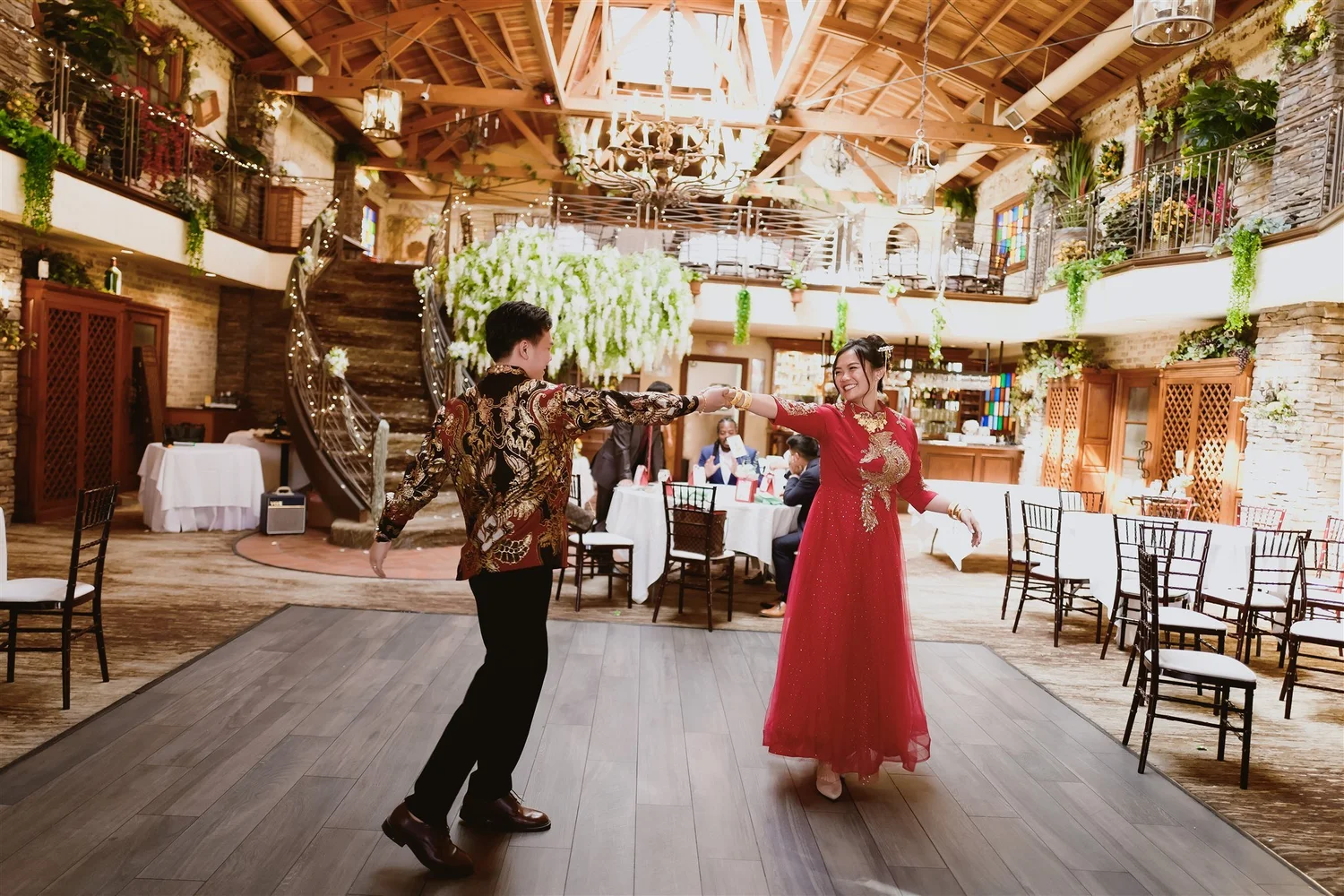
See the full gallery from that day · The Neighborhood Church · How the tea ceremony fits a Western timeline
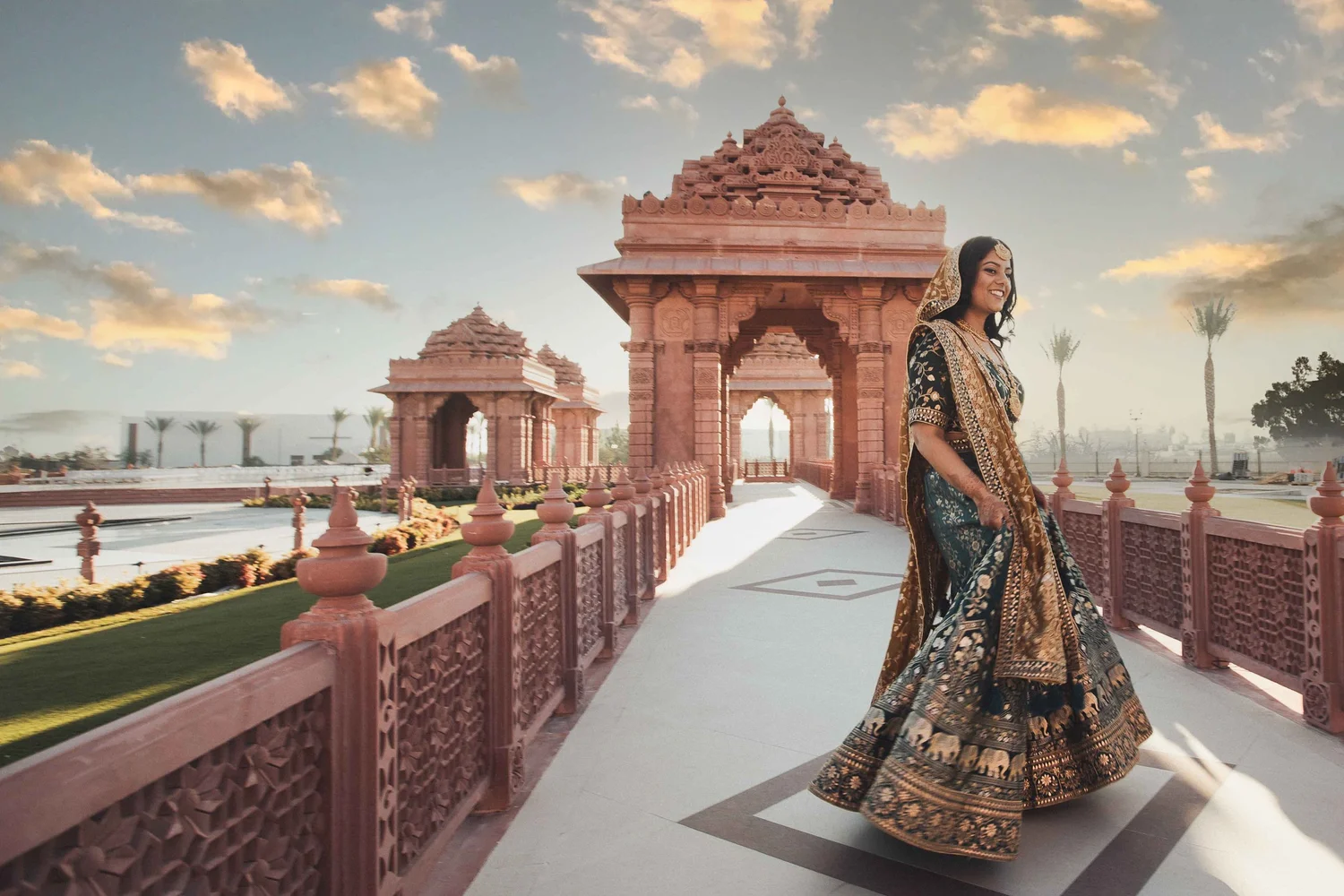
Seventeen traditions, and what each one needs from the day
Every one of these is a real thing families ask us for. Where we have a full guide for a tradition, the card links to it.
Tasting the four elements
The couple tastes four flavors — bitter, sour, hot and sweet — for the life they are about to share.
Australian weddingWedding unity bowl
Guests hold a stone through the ceremony and place it in a decorated bowl the couple keeps.
Chinese weddingDoor games and the tea ceremony
The groom earns his way through the bride's door, then both families are served tea in order of seniority.
Dutch weddingThe wishing tree
Guests write a wish, hang it on a decorated branch, and the couple reads them the week after.
Fijian weddingKava ceremony
The groom's family presents kava to the bride's as a sign of respect, then it is shared with the room.
Filipino weddingVeil, cord, coins and doves
Three pairs of sponsors, thirteen coins, and a release of doves for the new household.
Guatemalan weddingBreaking the bell
The groom's mother breaks a white bell filled with rice and grain as the couple enters the party.
Hawaiian weddingLei exchange
Leis of flowers, leaves or shells exchanged as a symbol of love and respect.
Indian weddingMehndi, sangeet, haldi and the mandap
Four separate celebrations before the fire is even lit — each one its own evening.
Italian weddingCandy confetti
Sugared almonds thrown as the couple leaves the church, five to a bag for the five wishes.
Jewish weddingThe ketubah and the chuppah
A signed contract, two witnesses, seven blessings and a glass broken underfoot.
Korean weddingHanbok and the pyebaek
Bows to the parents, dates and chestnuts caught in a cloth, all in twenty minutes.
Mexican weddingPadrinos, madrinas and el lazo
Sponsors who carry the couple, and a lasso that stays on through the vows.
Nigerian weddingAso-ebi
The whole family in one cloth, so that everyone can see at a glance who belongs to whom.
Persian weddingSofreh Aghd
A spread of mirror, candles, honey and sugar, each object standing in for something the marriage will need.
Spanish weddingThe black wedding dress
Worn as a statement of devotion, and one of the most striking things a photographer ever gets to light.
Vietnamese weddingLễ Gia Tiên tea ceremony
Red lacquer trays carried down the street, then tea and candles at the ancestral altar.
Ten steps, in the order they actually happen
If you and your partner come from different cultural backgrounds, planning a wedding that celebrates both can be challenging. This is the sequence we watch work, over and over.
Start with a vision
Think about the traditions, customs and beliefs that matter to you and to your partner's family, and decide together which elements of each culture belong in the wedding. Try not to get the family over-involved — hosting a wedding is stressful enough without a layer of comments at every step.
Research and consult
Talk to people who have done it: wedding planners, cultural consultants, an officiant who has run a fusion ceremony before, and friends or family who have already been through a multicultural wedding.
Choose a date and venue
Pick a date and a venue that can carry the cultural needs of both sides — availability, accessibility, proximity to a temple, church, gurdwara or mosque. A multi‑day wedding with separate ceremonies is often the easier answer, not the harder one. If one side needs a muhurat, start from our calendar of auspicious wedding dates for 2027 and 2028.
Select a ceremony format
A fusion ceremony blends elements from both cultures into one rite. Separate ceremonies honor each culture whole. Neither is wrong — decide which one your two families can actually sit through.
Create a menu
Research traditional dishes from both cultures and choose food that represents each. Be mindful of dietary restrictions, and offer a vegetarian, halal or kosher selection where it is needed.
Book the photography early
Documenting a multicultural wedding is a staffing question before it is an artistic one. Two ceremonies, two households and two languages need more than one camera. Talk through the whole shape of the day with your studio before you sign.
Plan attire and decor
Look for the details that carry each culture — traditional jewelry, headpieces, shoes, lanterns, flowers, candles. Count the outfit changes honestly, and give each one a room and fifteen minutes.
Communicate with vendors
Tell every vendor what the day actually is. A caterer, a florist and a DJ who understand the multicultural aspects of your wedding will offer ideas you had not thought of; one who finds out on the day will not.
Practice cultural sensitivity
Be respectful of every tradition in the room. Explain the rituals to guests who will not know them, so they can follow the etiquette rather than guess at it, and avoid using cultural elements decoratively or out of context.
Celebrate together
Then stop planning. Embrace the diversity of your families and friends, and share in the joy of a wedding that only the two of you could have had.
The eighteen-month runway
A timeline keeps the planning structured and on schedule. Every wedding is different and yours will vary with your traditions — treat this as a general guide, and stay ready to adjust it.
12–18 months before
- Discuss and agree on the overall vision for the wedding with your partner
- Create a budget and a list of priorities
- Research and book a venue that can accommodate the size and style of the wedding
- Consult with family members to determine which cultural traditions to include
- Book a wedding planner, if desired
- Start booking vendors, including a caterer, photographer, videographer, and DJ or band
- Select and order invitations and stationery
- Begin shopping for wedding attire for both partners
- Reserve hotel rooms for out-of-town guests
8–12 months before
- Finalize the guest list and send out save-the-date cards
- Arrange any necessary transportation for the wedding day
- Order floral arrangements and decor
- Choose and book a ceremony officiant who can honor both cultures
- Start planning the menu, including traditional dishes from both cultures
- Begin planning the rehearsal dinner
- Purchase or rent wedding bands
- Plan and book the honeymoon
4–8 months before
- Schedule hair and makeup trials for the bride and bridal party
- Finalize menu and beverage selections with the caterer
- Finalize wedding attire, including every cultural outfit change
- Plan the ceremony program and any readings or special performances
- Arrange rentals such as tables, chairs and linens
- Finalize floral arrangements and decor
- Select and purchase or rent wedding favors
- Begin addressing and mailing wedding invitations
2–4 months before
- Schedule final dress fittings and purchase any necessary accessories
- Plan and purchase bridal party gifts
- Confirm all vendor bookings and arrangements
- Plan and book the rehearsal dinner venue
- Finalize music selections with the DJ or band
- Create a seating chart for the reception
- Plan accommodations for guests with special needs
1–2 months before
- Obtain a marriage license
- Confirm final guest count and meal selections with the caterer
- Send final payments to vendors
- Plan the wedding day timeline and share it with vendors and the wedding party
- Have final consultations with hair and makeup artists
- Plan any pre-wedding events, such as a mehndi or sangeet party
- Confirm all transportation arrangements
- Purchase wedding day accessories such as a veil or jewelry
The week before
- Confirm final arrangements with all vendors
- Finalize the seating chart and escort cards
- Pack for the honeymoon
- Rehearse the ceremony and dinner with the wedding party
- Confirm the final headcount with the caterer and other vendors
On the wedding day
- Get ready for the big day with hair, makeup and dressing
- Exchange vows and rings during the ceremony
- Enjoy the reception with your guests, including traditional cultural dances and music
- Cut the cake and toss the bouquet
- Celebrate and dance the night away with your loved ones
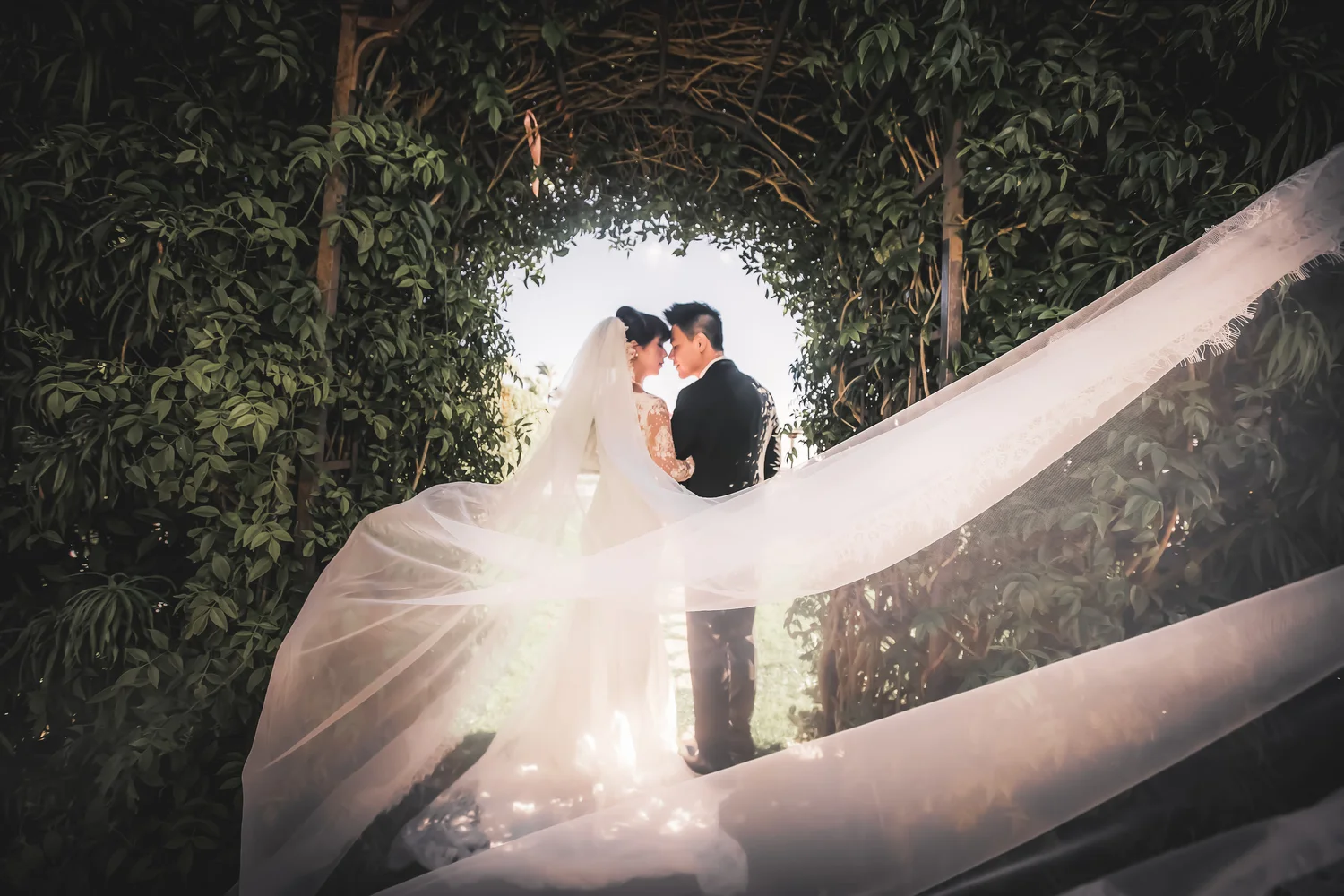
Read the guide for each side of your family
Written from weddings we have actually photographed in Los Angeles, Orange County and San Diego — what happens, how long it takes, and what it needs from a photographer.
South Asian weddings
The whole tradition — Hindu, Sikh, Muslim and Jain — in one guide.
IndianIndian wedding photographer
Mehndi to vidaai, and every ceremony in between.
PunjabiPunjabi weddings
North Indian ceremonies, chooda, and the dhol at the door.
SikhSikh weddings
Anand Karaj, the four Laavan, and photographing inside a gurdwara.
MuslimMuslim weddings
Nikah, rukhsati and walima, staffed the way your family needs.
PakistaniPakistani weddings
Mayoun, mehndi, baraat and walima across three days.
ChineseChinese weddings
Door games, the tea ceremony, and the qipao change before the toasts.
VietnameseVietnamese weddings
Lễ Gia Tiên, the ancestral altar, and the áo dài.
Tea ceremonyThe wedding tea ceremony
The Vietnamese and Chinese tea ceremony, and how to fit it in.
KoreanKorean weddings
Hanbok, and the pyebaek that gets forgotten off timelines.
JewishJewish weddings
Bedeken, ketubah, chuppah and the hora.
ChuppahThe chuppah ceremony
How to build one, and how to light it.
PersianPersian weddings
The aghd, the honey, and the sugar over your heads.
Sofreh AghdThe Sofreh Aghd
Every object on the spread and what it is doing there.
FilipinoFilipino weddings
Veil, cord, coins, sponsors and doves.
MexicanMexican weddings
Padrinos, el lazo, las arras and the mariachi hour.
NigerianNigerian weddings
The traditional day, the white wedding, and aso-ebi.
Igba NkwuThe traditional engagement
The letter, the prostration, and the outing of the bride.
ArmenianArmenian weddings
The crowning, the khnamakhos and the kef.
MediterraneanMediterranean and Middle Eastern weddings
The zaffa, the dabke and a very long night.
HaldiThe haldi ceremony
Turmeric, family, and a change of clothes straight after.
MehndiThe mehndi ceremony
Henna, hands, and the best light of the week.
SangeetSangeet night
Choreography, stage light and both families competing.
BaraatThe baraat
Dhol, a street, a permit, and forty-five minutes.
KanyadaanKanyadaan
The giving away, and where to stand for it.
ChurchChurch wedding photography
Parish policies, altar positions and the recessional.
Cultural venues we know well: Malibu Hindu Temple · Indian Hills Golf Club · Skirball Cultural Center · temple wedding venues in Los Angeles. Planning the whole wedding? Start with planning your wedding, Los Angeles wedding photography and wedding films. Still choosing the day? See auspicious wedding dates for 2027 and 2028.
Questions we are asked every week
What are some common challenges when planning a multicultural wedding?
The common challenges when planning a multicultural wedding include navigating cultural differences and expectations. Including traditions from different cultures so that both families feel represented and included in the celebration is sometimes a challenge — and the hardest version of it is usually time, not taste. Two full traditions rarely fit into one afternoon.
The fix is almost always sequencing. Give each tradition its own hour, its own room and its own light, rather than compressing both into the same ninety minutes.
How to prepare the menu for a multicultural wedding?
Preparing the menu for a multicultural wedding requires careful consideration and planning. Start by researching traditional dishes from both cultures. You can also consider creating a fusion menu that blends dishes from both cultures — a fun way to make something that honors both sides at once.
Working with a caterer who specializes in multicultural cuisine is the reliable route; they can advise on how to blend flavors and build a menu that reads as one meal rather than two. Be mindful of any dietary restrictions your guests may have, and offer vegetarian, halal or kosher selections where they are needed.
Are two-day multicultural weddings preferred over fusion weddings?
There is no one-size-fits-all answer. The choice depends on the couple's preferences, budget and cultural traditions. Some couples opt for a two-day celebration so that both cultures are fully represented, with ample time for guests to take part in each tradition. It costs more.
A fusion wedding blends both sets of traditions into one celebration. It is more cost-effective and can be a genuinely memorable experience for guests. Use the builder above as a rough test: if the combination you picked comes back as a two-day plan, compressing it into one day usually means losing half of each tradition.
What are examples of multicultural wedding traditions?
There are many examples of multicultural wedding traditions, each with its own customs. Chinese wedding door games, where the groom and his groomsmen complete challenges set by the bridesmaids before he is allowed to see the bride. Jewish ketubah signing, where the couple signs a marriage contract outlining their responsibilities to each other. Nigerian aso-ebi, where guests wear clothing made from the same fabric to show their support.
Persian Sofreh Aghd, where a spread is set with symbolic items such as honey, coins and bread. The Spanish black wedding dress, worn to symbolize devotion over material possessions. These are a few of the many multicultural wedding traditions that exist around the world.
What is the main purpose of marriage in different cultures?
The purpose of marriage varies among cultures, but it generally serves to establish a legal and social union between two people. In most cultures marriage is a way for two individuals to formally commit and establish a family. Some cultures view it primarily as a way to form alliances between families and to preserve social and cultural traditions, and in many it is also a religious sacrament.
While the specific purposes vary, the act of formalizing a union between two people is a common thread across many societies.
How many photographers do we need for a multicultural wedding?
Two, in most cases, and sometimes three. The moment two households are getting ready at the same time — or a tisch and a bride's reception are running in two rooms, or a baraat is arriving while the mandap is being blessed — one camera has to choose, and whatever it chooses, the other thing is gone.
We staff from your timeline rather than from a package. Send us the shape of the day and we will tell you honestly how many people it needs.
Can you photograph a ceremony inside a temple, church, gurdwara or mosque?
Yes, and the answer to how is always in the venue's own policy. Nearly every religious venue in Los Angeles has a written rule about where a photographer may stand, whether flash is allowed, and what happens during the most sacred minutes of the rite.
We ask for that policy in writing before the walkthrough and plan the coverage around it — long lenses, fixed positions, no flash where it is not welcome. It has never once stopped us getting the pictures.
Do you speak our families' languages?
Not all of them, and we would rather say so than pretend. What we do instead is learn the running order of your ceremony beforehand, ritual by ritual, so that we are standing in the right place when something happens that is not announced in English.
For the family portraits we ask for one relative on each side who can call names out loud. It is the single fastest way to get through a long list without losing the room.
More answers on the studio FAQ, or book a planning call.
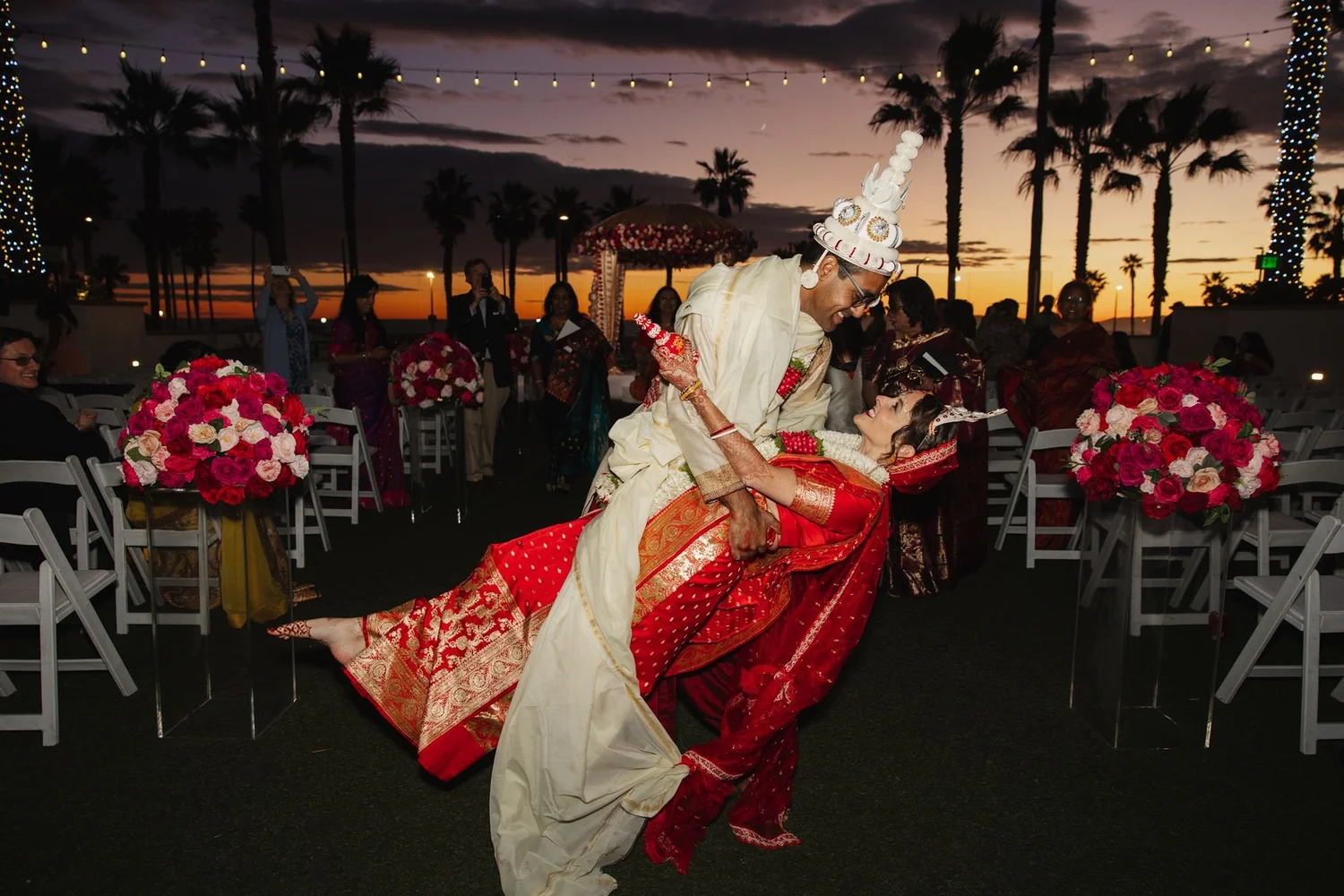
Send us the day you actually want
Both traditions, all of the events, and the parts your parents will not compromise on. We will come back with an honest read on what it takes to photograph — how many of us, for how long, and what we would move.