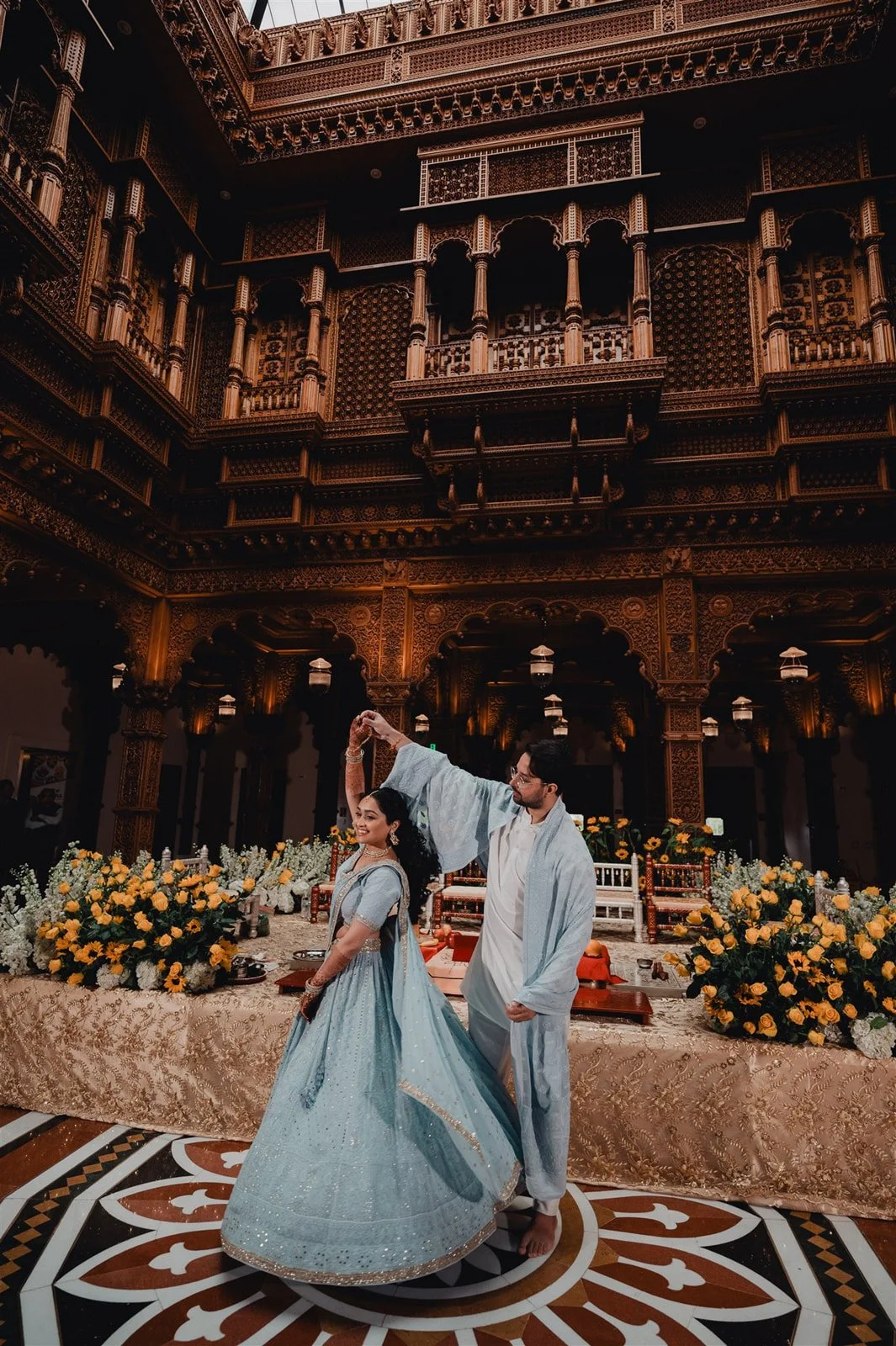
Baraat Ceremony: Traditions & Photography in Los Angeles
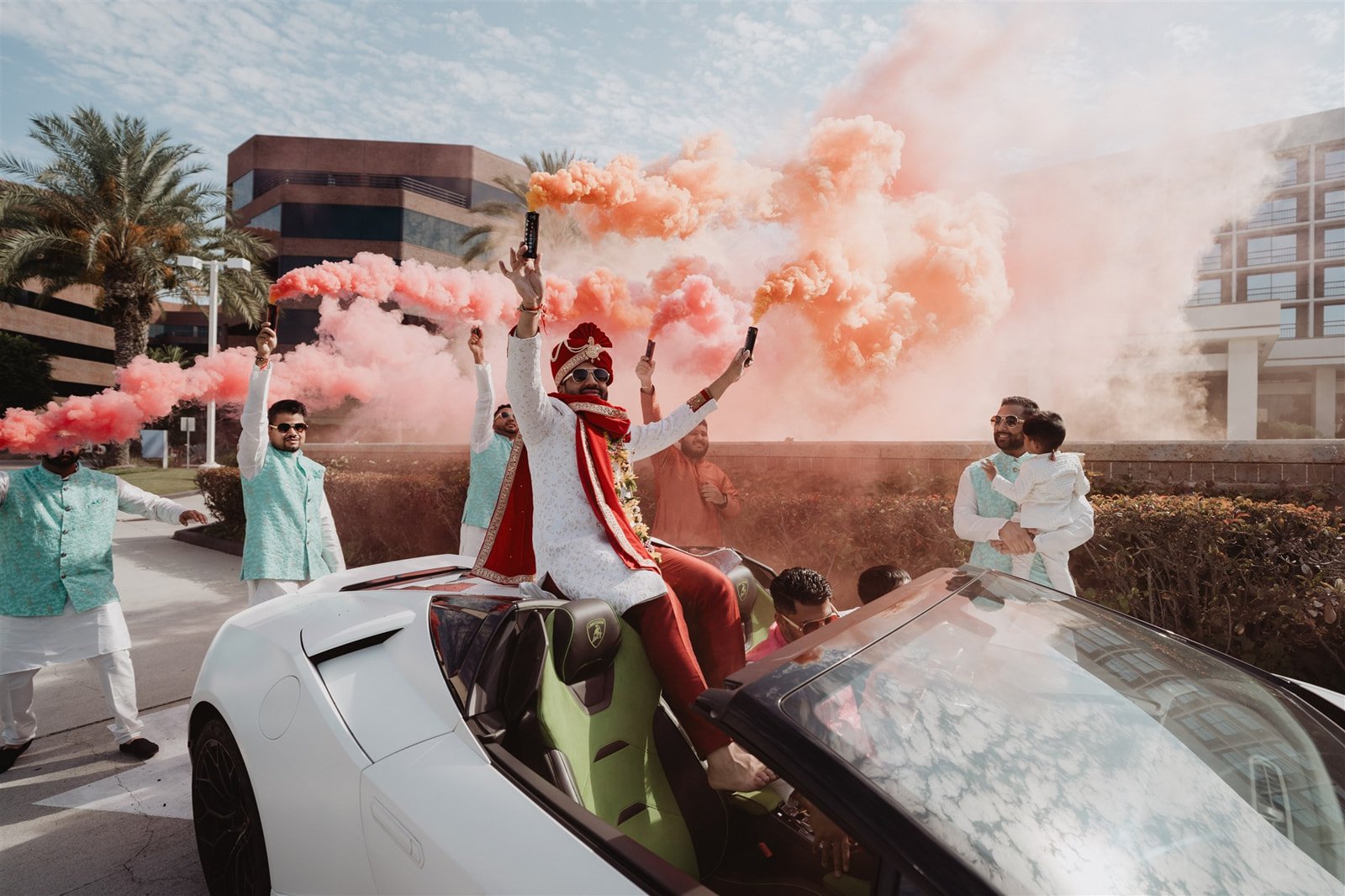
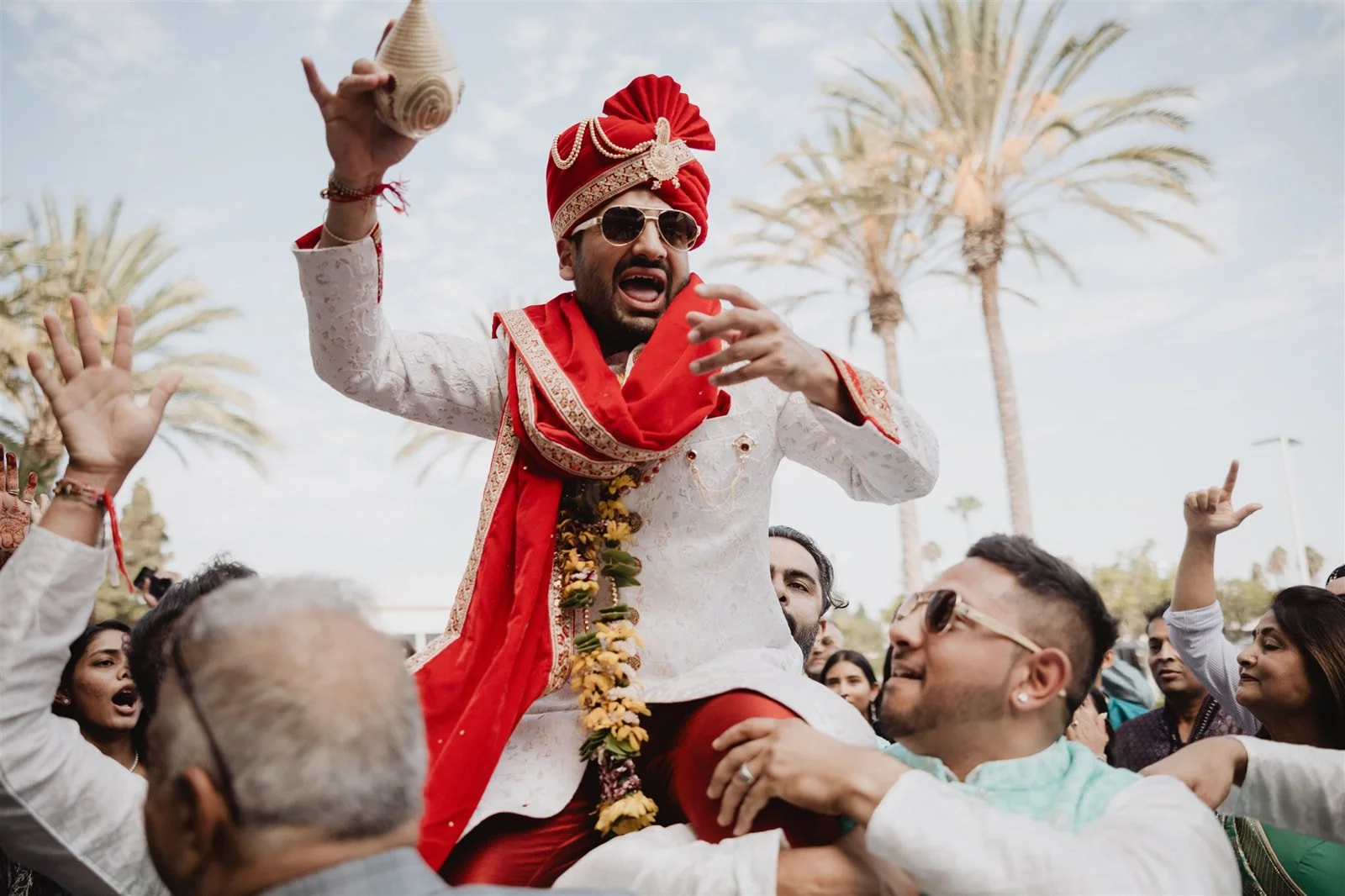
The baraat is the loudest, most joyful thirty minutes of an Indian wedding — the groom's procession arriving with dhol drums, dancing family, and a horse, vintage car, or even an elephant leading the way. It is also one of the hardest events to photograph well: a moving celebration in open sun with a hundred emotions happening at once. Lulan Studio has photographed baraats across Los Angeles for years, and this page explains exactly how we cover one — and how to plan yours so the photos are extraordinary.
How We Photograph a Baraat
A baraat is not a posed event; it is coverage in motion. Our approach:
- Two angles minimum. One photographer leads the procession walking backward for the groom's approach; a second works the crowd for dancing, dhol players, and grandparents on the sidelines.
- The groom first. Before the procession starts, we take five minutes for portraits on the horse or car while everyone is fresh and the turban and sehra are perfect.
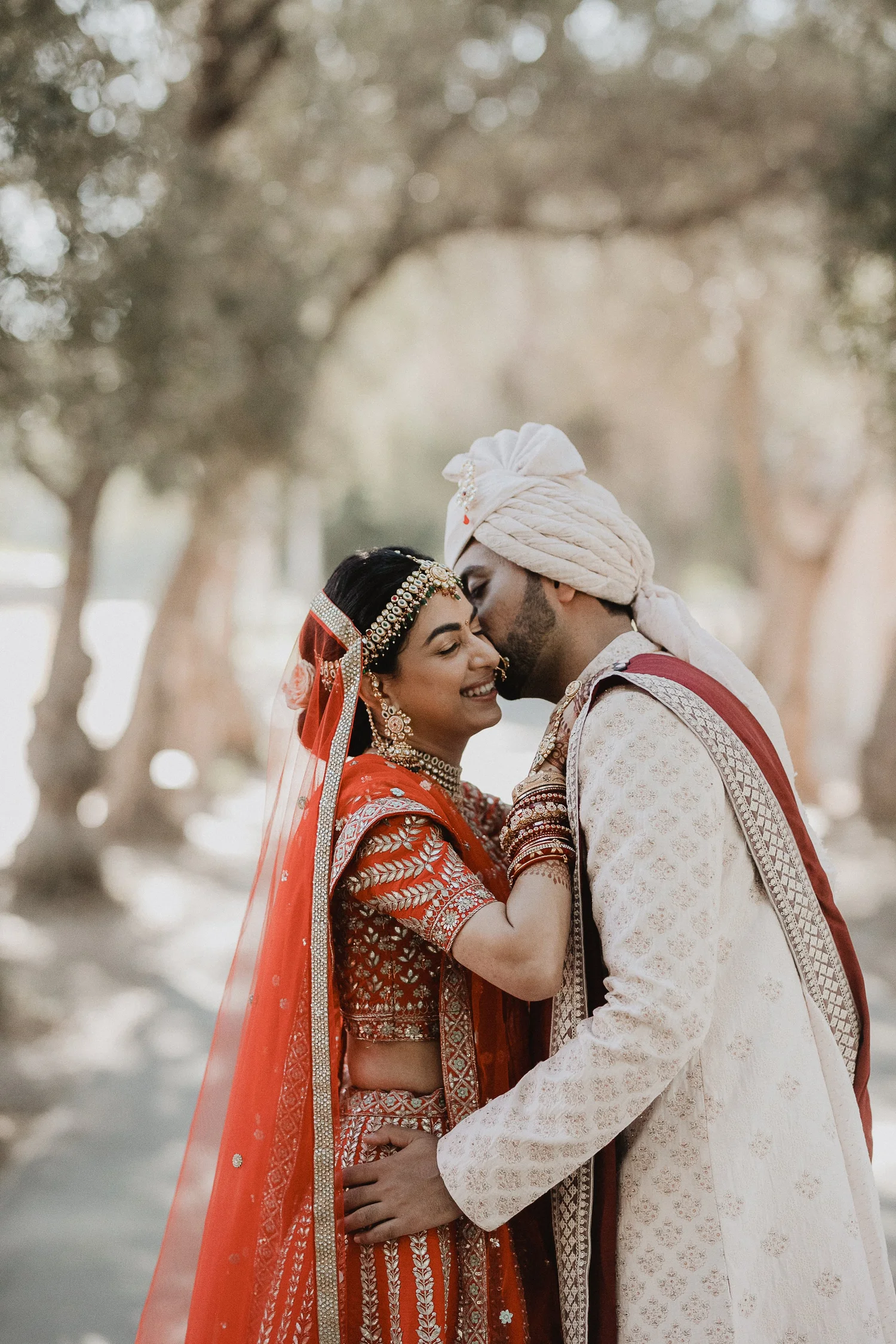
- The milni greeting. As the two families meet with garlands and embraces, we pre-position on both faces — these frames matter as much as the dancing.
- Real moments over staging. We never stop a baraat for a photo. The energy is the picture.
Planning a Baraat That Photographs Beautifully
- Route and direction. A 100–150 meter route is ideal — long enough to build energy, short enough to stay on schedule. If possible, process toward the venue entrance with the sun behind the cameras, not behind the groom.
- Timing and light. Late afternoon is the classic slot. In summer, a 4–5 PM baraat avoids harsh overhead sun; in winter, plan around a 4:45 sunset.
- Horse, car, or elephant. Licensed handlers keep everything calm and legal — your planner books this vendor, and we coordinate positions with the handler on arrival.
- Space for the dhol circle. The best images happen when the procession pauses to dance. Ask your planner to build one wide stopping point into the route.
A Baraat Timeline That Works
- T–45 min — Staging. Groom portraits on the horse or car; family gathers behind.
- T–0 — Procession begins. 20–30 minutes of dancing along the route.
- Pause point. One long stop for the dhol circle — the highest-energy frames of the day.
- Milni. Families exchange garlands at the entrance; we cover both sides.
- Entrance. The groom proceeds to the mandap or ballroom — and the ceremony coverage begins.
Five Tips for Better Baraat Photos
- Sunglasses off for the milni. Wear them for the ride if you like — but the family greeting is a face-to-face moment.
- Brief the dhol players. Ask them to face the crowd at the pause point; the drums pull every guest's expression toward the camera.
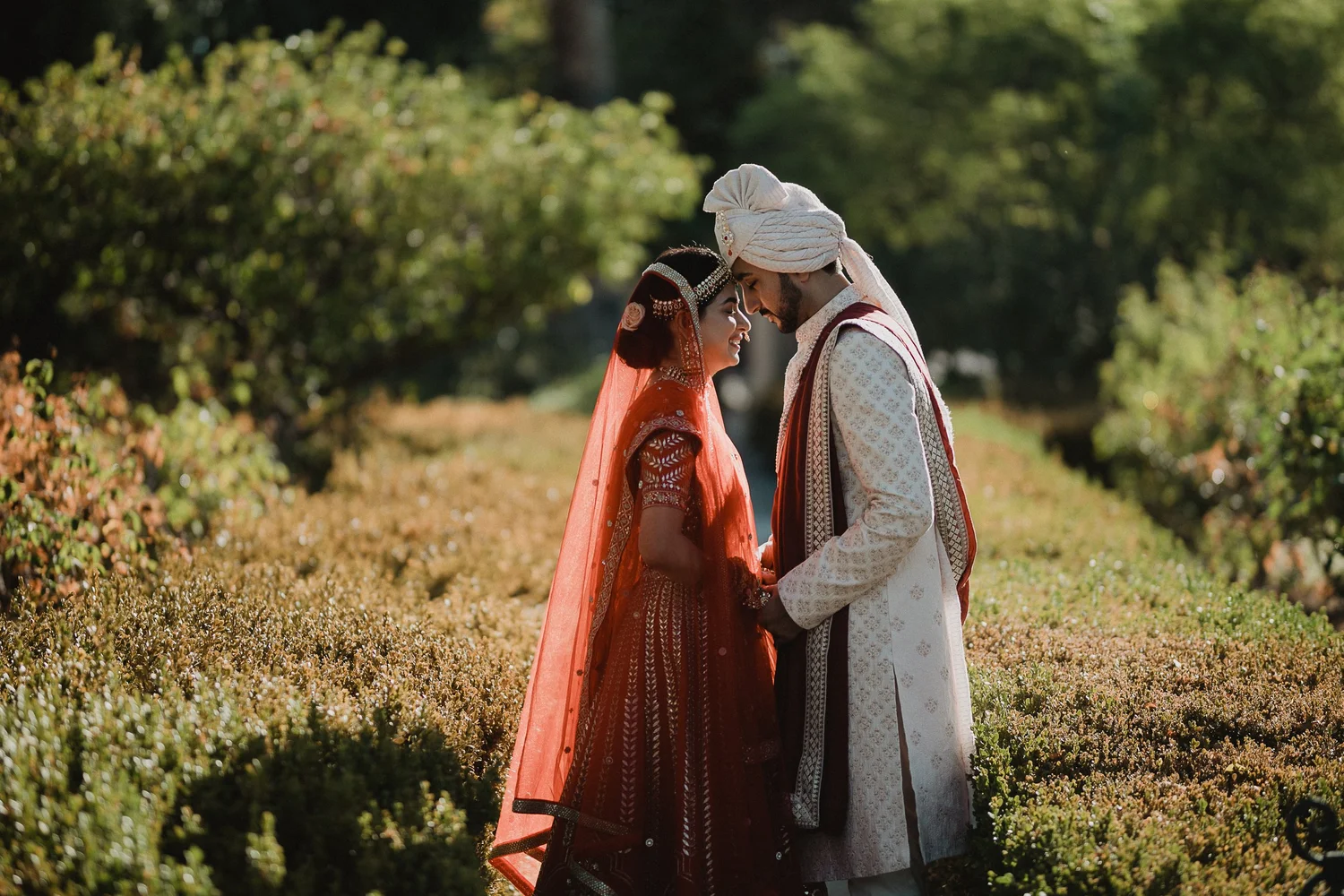
- Give the groom a moment alone. One quiet portrait before the noise — turban, sehra, and all — becomes the album opener.
- Keep water nearby. A Los Angeles baraat in June is a workout in a sherwani. Hydrated guests dance longer.
- Let it run long enough. Baraats cut to 10 minutes photograph like a walk. Give it 25–30 and the images carry the joy for a lifetime.
See Real Baraats and Indian Weddings
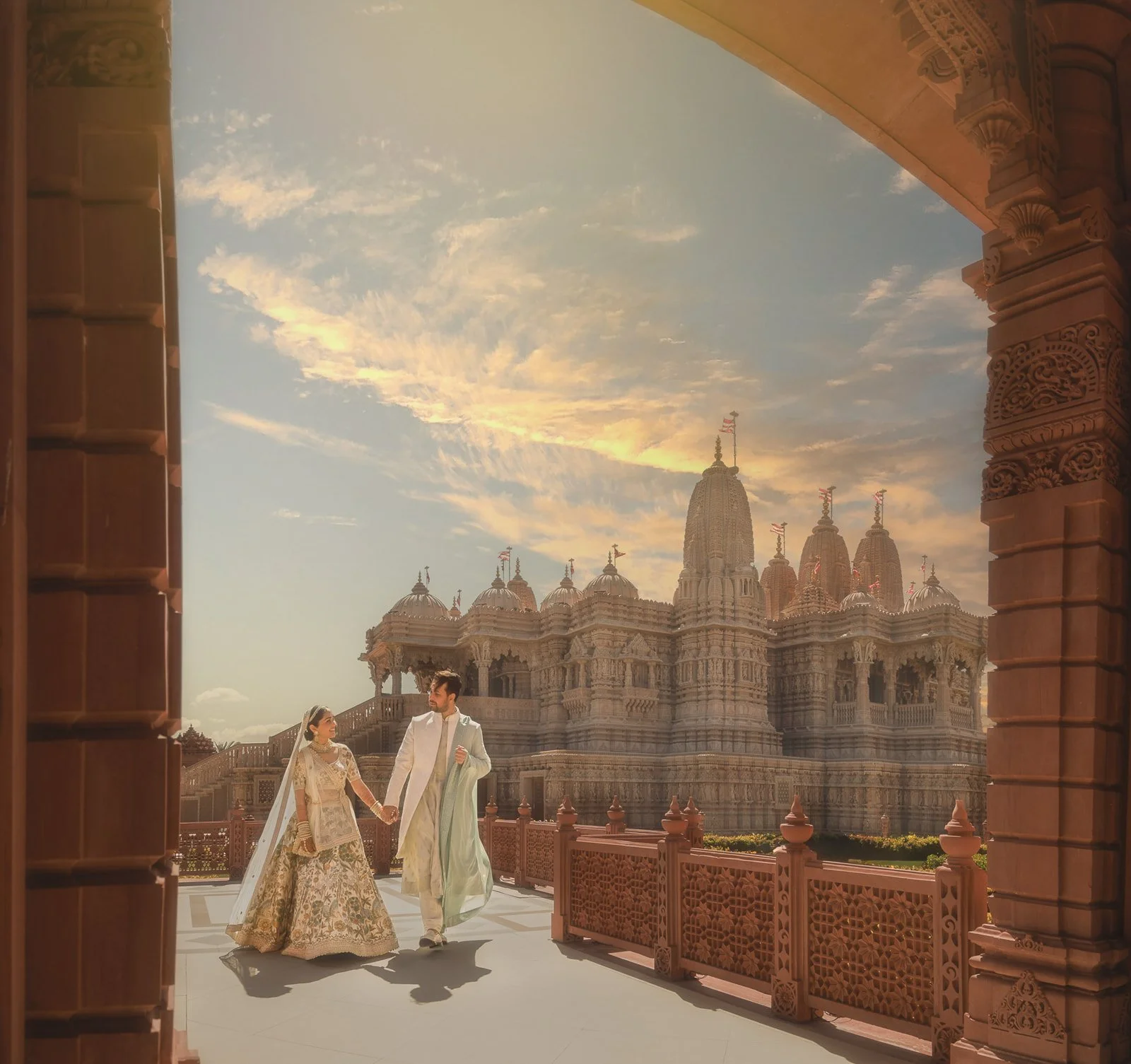
- BAPS temple Indian wedding in Los Angeles
- The Landmark Mission Hills Indian wedding gallery
- Our full Indian wedding photography guide
Baraat Photography FAQ
How long should we schedule for the baraat? About 45 minutes end to end: staging and groom portraits, a 20–30 minute procession with one dance pause, then the milni and entrance.
Can you photograph the baraat and the bride getting ready at the same time? Yes — we cover both simultaneously with multiple photographers, so neither side of the story is missed.
Do you photograph the milni ceremony too? Always. We position photographers on both families' faces during the garland exchange — it is a core part of our baraat coverage, not an extra.
What if our venue does not allow a horse? Many Los Angeles hotels have specific rules. A vintage or luxury car photographs beautifully, and rooftop or courtyard baraats on foot carry the same energy.
Does baraat coverage cost extra? No separate fee — it is part of your wedding-day coverage hours. Multi-event days (sangeet, baraat, ceremony, reception) are quoted as one collection.
Keep Exploring
- Sangeet and mehndi photography — the night-before celebrations, covered as full productions
- Same-day edit wedding films — morning baraat footage premiered at the evening reception
- Wedding photography timelines by season — plan the baraat around the light
- Top wedding venues in Los Angeles — including baraat-friendly properties
- Frequently asked questions
- Indian wedding photography — our complete ceremony-by-ceremony guide, from sangeet to reception
- Mandap wedding ceremony — how we photograph the altar where vows are exchanged
- Sikh wedding photographer — Anand Karaj and Punjabi wedding coverage
Check Your Date
We photograph a limited number of Indian weddings each season across Los Angeles, Orange County, and San Diego, and baraat-day dates book 12–18 months out. If the muhurat is not fixed yet, start from our guide to auspicious wedding dates for 2027 and 2028.
Check your date — contact us · View collections · Indian wedding photography
Explore Our South Asian Wedding Guides
South Asian Weddings · Indian Wedding Photographer · Punjabi Weddings · Sikh Weddings · Muslim Weddings · Multicultural Weddings · Haldi Ceremony · Mehndi Ceremony · Sangeet · Malibu Hindu Temple · Indian Hills Golf Club · Temple Wedding Venues · Auspicious Wedding Dates 2027 & 2028