
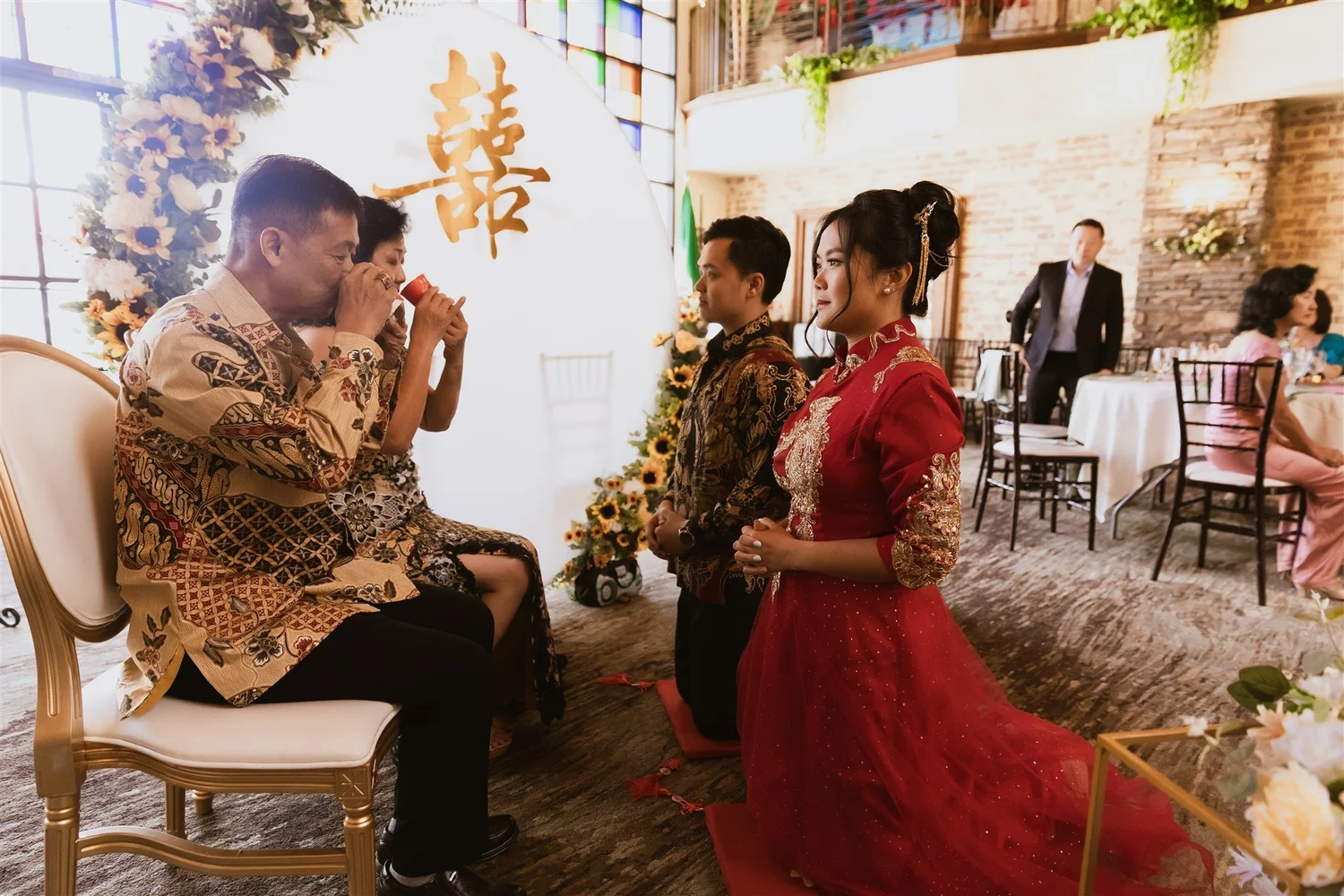
Chinese wedding traditions · Los Angeles
Chinese Wedding Traditions
and Photography in Los Angeles
The tea ceremony, the door games, the qun kwa and the lion dance — and how a Chinese wedding day fits a Western ceremony and banquet around them.
An introduction
Chinese weddings in Los Angeles
2,300+ weddings photographed · 35+ national awards · 382 five-star reviews — Cinematic on Film
A Chinese wedding in Southern California is usually two celebrations in one day. There is a morning at the family home — door games, the tea ceremony, red envelopes passed between generations — and then a Western ceremony and a banquet that can run to ten courses. The two halves are photographed differently, and the day only works if the person covering it knows what is coming next. For more customs families shared with us, see wedding traditions from around the world.
Lulan Studio photographs Chinese weddings across Los Angeles, the San Gabriel Valley and Orange County. We know which rituals happen in tight rooms with no light, which ones happen once and are never repeated, and where to stand so the parents’ faces are in the frame rather than the backs of heads.
The Tea Ceremony, Photographed Properly
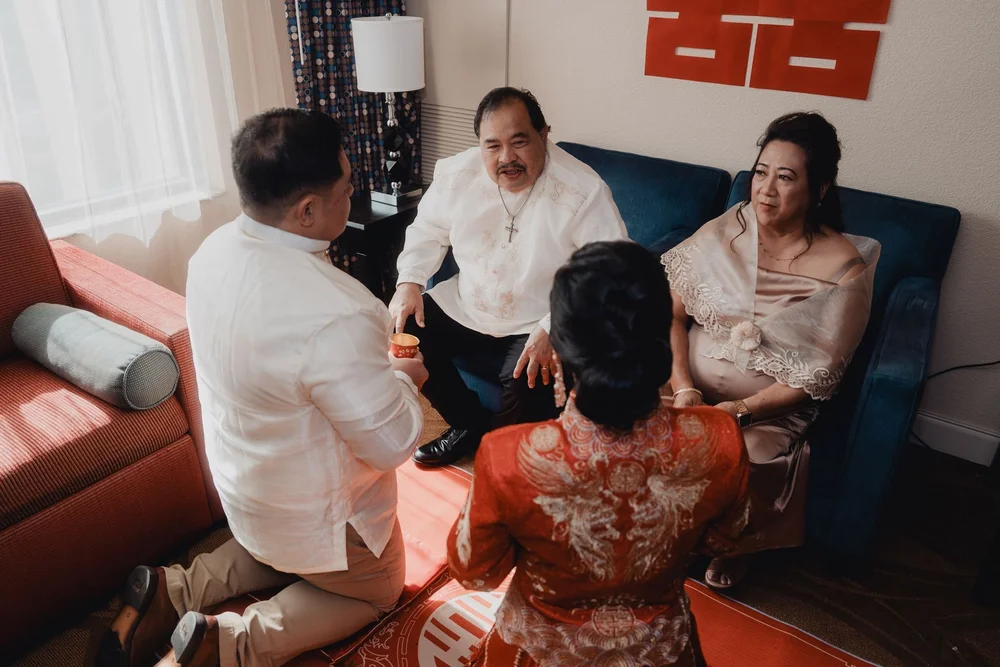
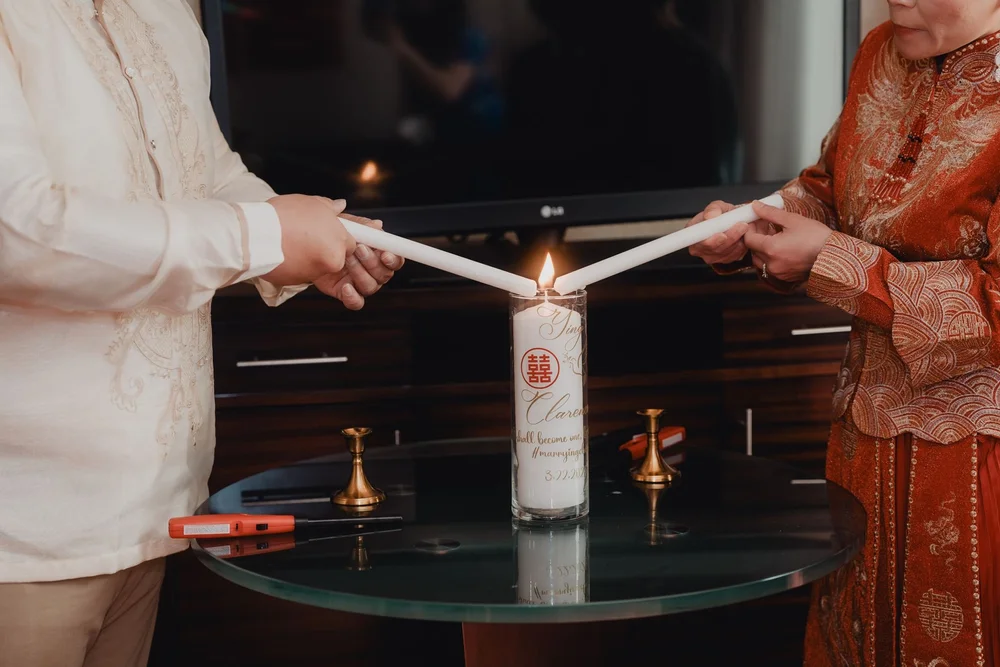
The tea ceremony is the emotional centre of the morning and the hardest part of the day to shoot well. It happens in a living room, it is over quickly, and it cannot be staged again. Our coverage plan (for what each step means, see our full tea ceremony guide):
- Kneeling and serving. We shoot from the elders’ side, low enough to hold both the couple’s hands on the cup and the parent receiving it.
- The red envelope. The hongbao passing between hands is the frame families ask for most — and the one most often missed, because it lasts under a second.
- The dragon and phoenix candle. Lit before the tea is served, and the best available light in the room. We photograph it before the family gathers.
- Details first. The tea set, the qun kwa, the mam qua trays and the double happiness backdrop are heirloom details — captured before anyone sits down.
We also bring our own light for the tea ceremony. Most family homes and hotel suites do not have windows where the elders are seated, and flash bounced badly turns a red qipao orange. More on how we keep skin and color true.
Door Games Without Losing the Morning
The groom and his groomsmen arrive to collect the bride, and the bridesmaids block the door until the challenges are done. It is the loudest, funniest half hour of the day, and it is genuinely chaotic to photograph — a hallway, a dozen people, and everyone moving.
We shoot door games with two photographers: one inside with the bride and her side, one outside with the groom. That way the reveal at the end — the door opening — exists from both sides rather than only one. We ask for the game list in advance so nothing surprises us, and we keep the schedule honest, because door games are the single most common reason a Chinese wedding day runs late.
The Lion Dance and the Banquet
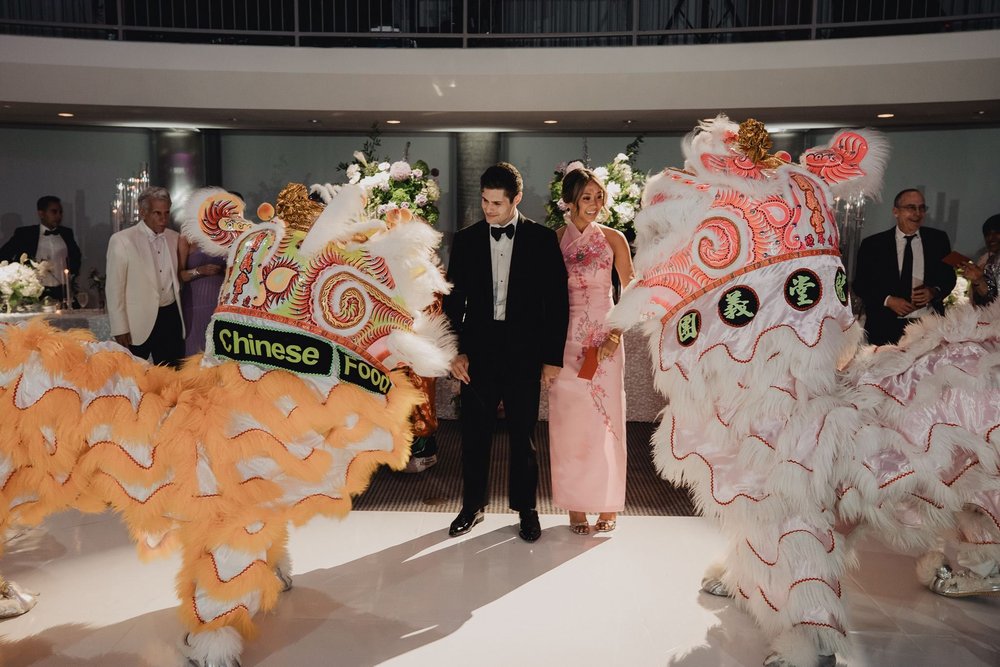
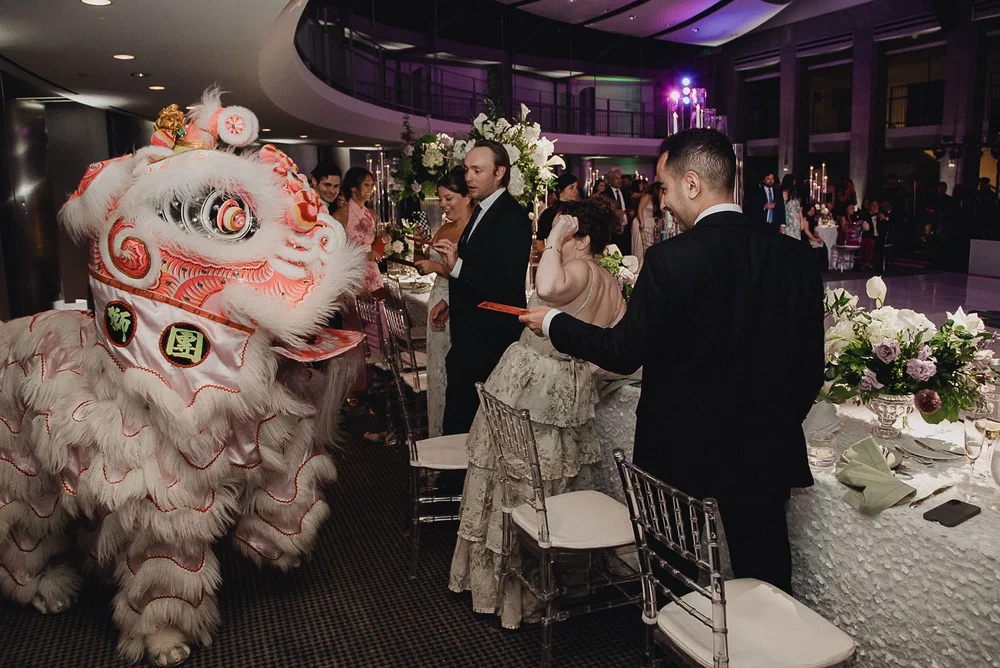
A lion dance at the reception entrance changes the room. It is also fast, loud, and lit by whatever the venue has — we shoot it at a shutter speed that holds the lion’s head sharp and keeps the drummer in frame. The choi cheng moment, when the lion takes the lettuce and the red envelope, is the shot; we position for it before the performance starts. Our lion dance coverage guide goes through the sequence in detail.
The banquet is its own discipline. Ten courses, speeches between them, and table visits where the couple toasts every table in the room. We photograph table visits as a run rather than a series of posed groups, so the images look like a night rather than a receiving line — and we make sure the couple has eaten before the toasting starts.
Two Dresses, One Timeline
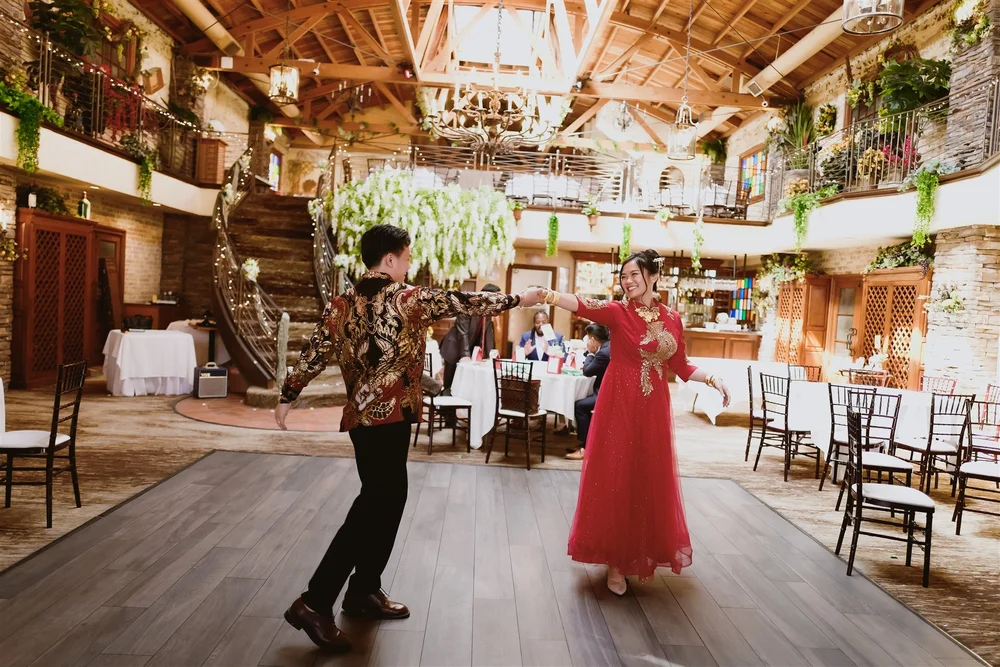
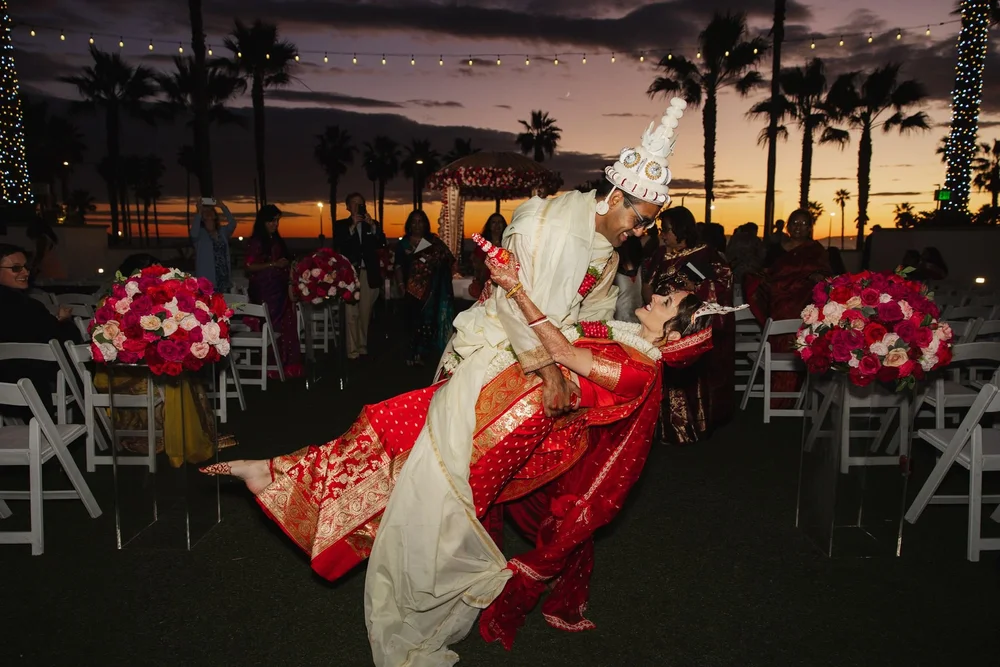
Most couples wear a qun kwa or qipao for the tea ceremony and table visits, and a Western gown for the ceremony and reception. The changeover is the part that quietly eats an hour if nobody plans it.
We build both looks into the timeline deliberately: portraits in the qun kwa before the tea ceremony while the styling is fresh, then a protected window for the change, then couple portraits in the gown. Red silk and gold embroidery also need different exposure than an ivory dress — we meter for the red rather than letting it blow out to orange, which is the most common way qun kwa photographs are ruined.
A Timeline That Honors Both Halves
A typical Los Angeles Chinese wedding, with the traditional morning intact and the Western day built around it.
Getting ready and details
Bride in the qun kwa, hair and makeup finishing. We photograph the tea set, the mam qua trays, the invitation suite and the jewellery while the room is still calm.
Door games
The groom’s party arrives. Two photographers — one inside, one outside — so the door opening exists from both sides.
Tea ceremony
Groom’s family first, then the bride’s, or both at one home if the families are combining. Lit by us, not by the room.
Change and travel
Into the Western gown. A protected window, not a scramble between locations.
Ceremony
Western ceremony, then family formals immediately after while everyone is still gathered.
Banquet entrance and lion dance
The lion dance at the doors, the grand entrance, first dance. We position for the choi cheng before the drums start.
Courses, speeches and table visits
Ten courses with toasts between them. Table visits photographed as one continuous run.
Send-off
Late-night portraits outside the venue while the banquet winds down — usually the quietest ten minutes the couple gets all day.
How Chinese wedding timelines usually run
Not every Chinese wedding follows the full traditional day shown on this page. These are the other shapes we photograph most often. Each is a composite of real timelines, rounded to the quarter hour, and a starting point to adapt with your planner and families.
Banquet only, tea ceremony at the restaurant
- 3:30 PMCoverage begins while the tables are set. Room details, the backdrop and the tea set.
- 4:00 PMTea ceremony at the restaurant, then family group photos before guests arrive.
- 4:30 PMGuests arrive and mingle.
- 5:15 PMWelcome speeches, introductions of both families and toasts.
- 5:30 PMDinner service begins. A lion dance, if booked, usually comes early in the courses.
- 6:00 PMTable visits during the early courses, photographed as the couple reaches each table.
- 8:00 PMThe couple's thank-you speech and cake cutting.
- 9:30 PMGoodnights at the door, then coverage concludes.
Tea ceremony at the venue, before the ceremony
- 1:00 PMCoverage begins. Final getting ready and details for both the traditional and Western looks.
- 2:30 PMFirst look and couple portraits.
- 3:30 PMChange into qun kwa or qipao.
- 4:00 PMTea ceremony on site with close family, about thirty minutes.
- 4:30 PMPortraits with parents and close relatives, then the change back into the gown.
- 5:30 PMWestern ceremony.
- 6:00 PMCocktail hour. Wedding party photos and sunset portraits if the light allows.
- 7:00 PMGrand entrance, dinner and speeches, then open dancing.
- 10:00 PMCoverage concludes.
Church at midday, banquet at night
- 11:00 AMCoverage begins with getting ready at a hotel or family home.
- 12:30 PMFirst look, sometimes with a parent as well, and wedding party photos.
- 2:30 PMCeremony at the church or chapel.
- 3:30 PMFamily formals outside, then couple portraits at a landmark such as Pasadena City Hall or Balboa Park.
- 4:30 PMA break for rest and travel while the restaurant sets up.
- 5:30 PMCoverage resumes at the restaurant with the room and table details.
- 6:00 PMGuests arrive, then the grand entrance.
- 7:00 PMDinner courses, speeches and table visits.
- 9:30 PMCoverage concludes.
One venue, seven to eight hours
- 2:00 PMCoverage begins. Details and getting ready, often in the venue's suites.
- 3:15 PMFirst look, sometimes with a parent or siblings too, then wedding party photos.
- 4:00 PMGuests arrive. Ceremony details photographed while the space is still empty.
- 4:30 PMCeremony.
- 5:00 PMFamily formals straight after the ceremony, then cocktail hour.
- 6:15 PMGrand entrance. Many couples go straight into their first dance.
- 7:00 PMDinner and speeches. Some couples take a photo with each table as they visit.
- 8:30 PMCake cutting and open dancing.
- 9:30 PMCoverage concludes.
What shapes a Chinese wedding timeline
The practical patterns from the Chinese weddings we photograph across Los Angeles, the San Gabriel Valley, Orange County and San Diego.
Where these weddings happen
Banquet restaurants, churches and venues that recur across the Chinese weddings we photograph.
- San Gabriel Valley banquet restaurants
- The Ebell of Los Angeles
- Richard Nixon Library
- Padua Hills Theatre
- Bel-Air Bay Club
- La Venta Inn
- Yamashiro
- Christ Cathedral
Chinese wedding photography — questions we are asked
Do you photograph the tea ceremony at the family home?
Yes, and it is included rather than treated as an add-on. Coverage usually starts at the home in the morning so the door games and tea ceremony are part of the day rather than something you buy extra hours for. We bring our own lighting, because family living rooms and hotel suites almost never have usable window light where the elders are seated.
Can you cover two homes in one morning?
Yes. Where the groom’s family and the bride’s family hold separate tea ceremonies, we split the team so both are photographed properly rather than one being rushed. This is worth deciding early, because it affects how many photographers your day needs.
Do your photographers speak Mandarin or Cantonese?
We have Mandarin and Cantonese speakers on the team and assign them to Chinese weddings wherever scheduling allows. It matters most during family formals, when instructions have to reach grandparents quickly and clearly. Tell us at booking which is preferred and we will plan the team around it.
How many hours does a Chinese wedding usually need?
Every collection includes eight hours, and about 35% of the Chinese weddings we photograph fit in seven to eight. A day with door games and a tea ceremony at the family home, then a Western ceremony and a banquet, usually runs ten hours or more. Hours can be added before the day or on the day itself.
Will red silk photograph accurately?
It will if it is exposed for deliberately. Red qun kwa and qipao are the easiest fabrics on a wedding day to render badly — they clip to orange under mixed light. We meter for the red and colour-grade to hold the gold embroidery, which is why the fabric looks like itself in our images rather than like a filter.
Do you photograph other cultural weddings?
Yes — see our guides to Vietnamese, Korean and multicultural weddings, or read more on the tea ceremony and the lion dance specifically.
Next step
Tell us about your day
Send us the date and the outline — one home or two, banquet venue, whether there is a lion dance — and we will tell you what the morning realistically needs.