
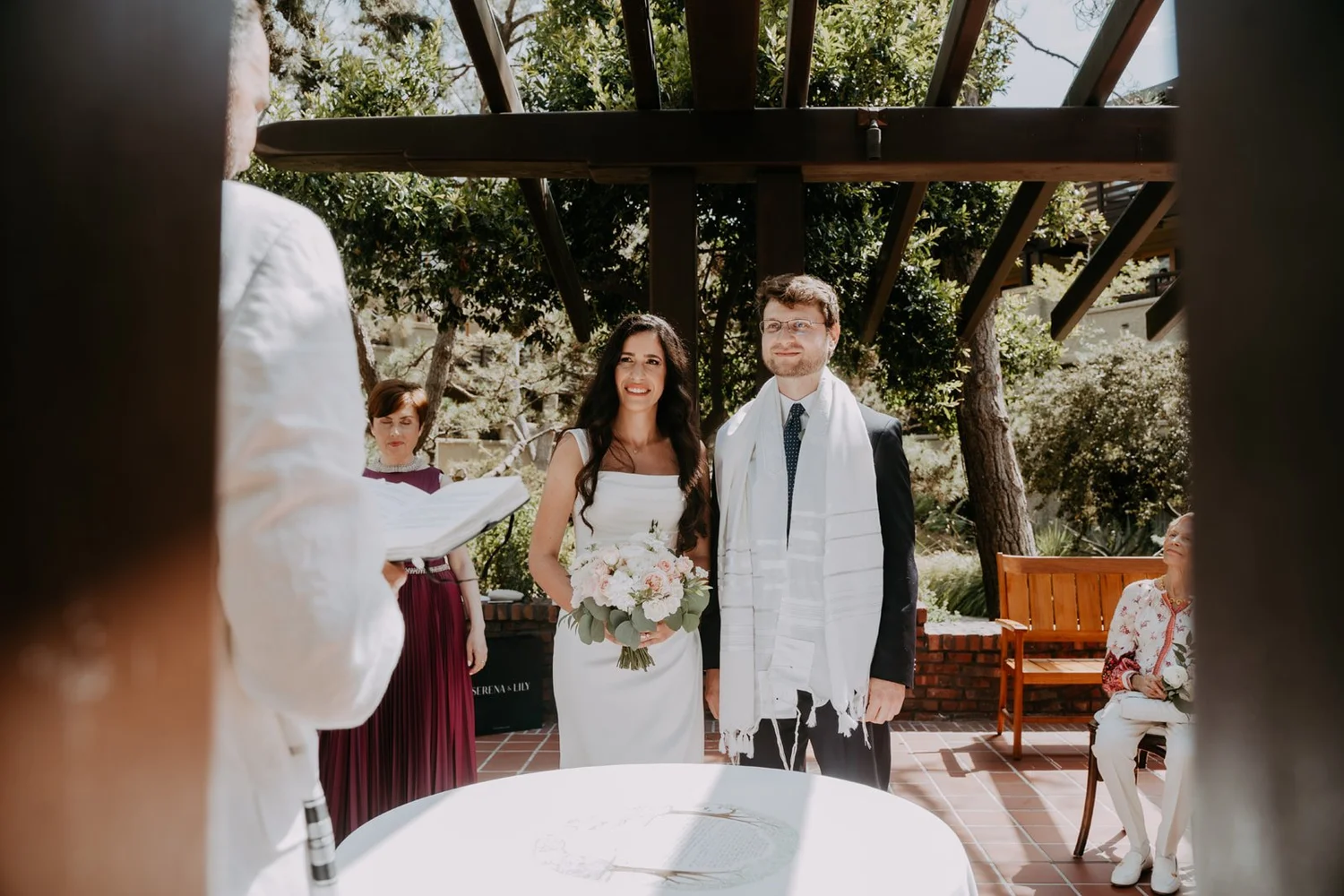
Jewish wedding ceremony · Los Angeles
Chuppah Ceremony:
Meaning, Traditions & Photography
Four poles, both sets of parents, seven blessings and a glass — the most concentrated twenty minutes of a Jewish wedding day.
The canopy
A symbol of a new home
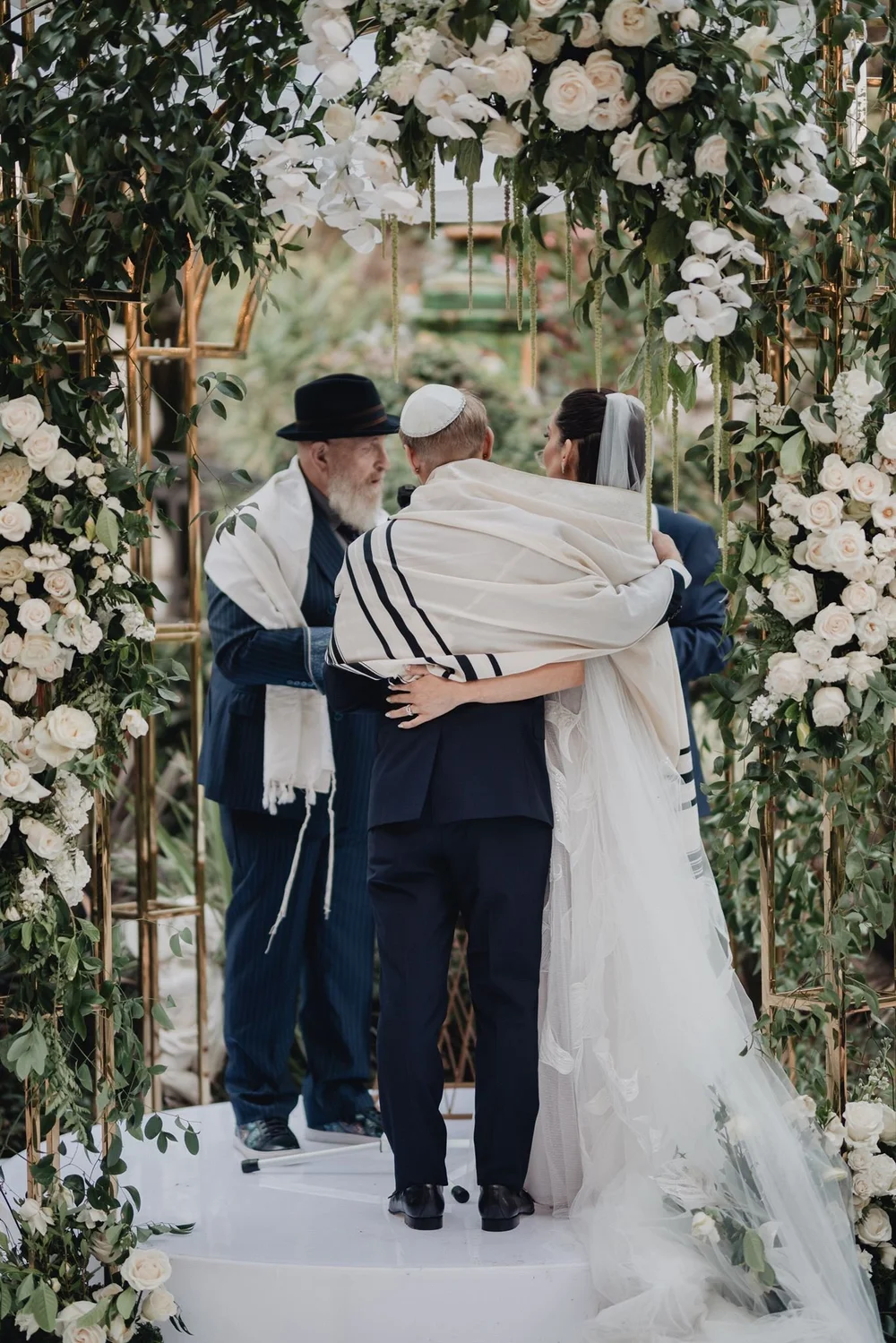
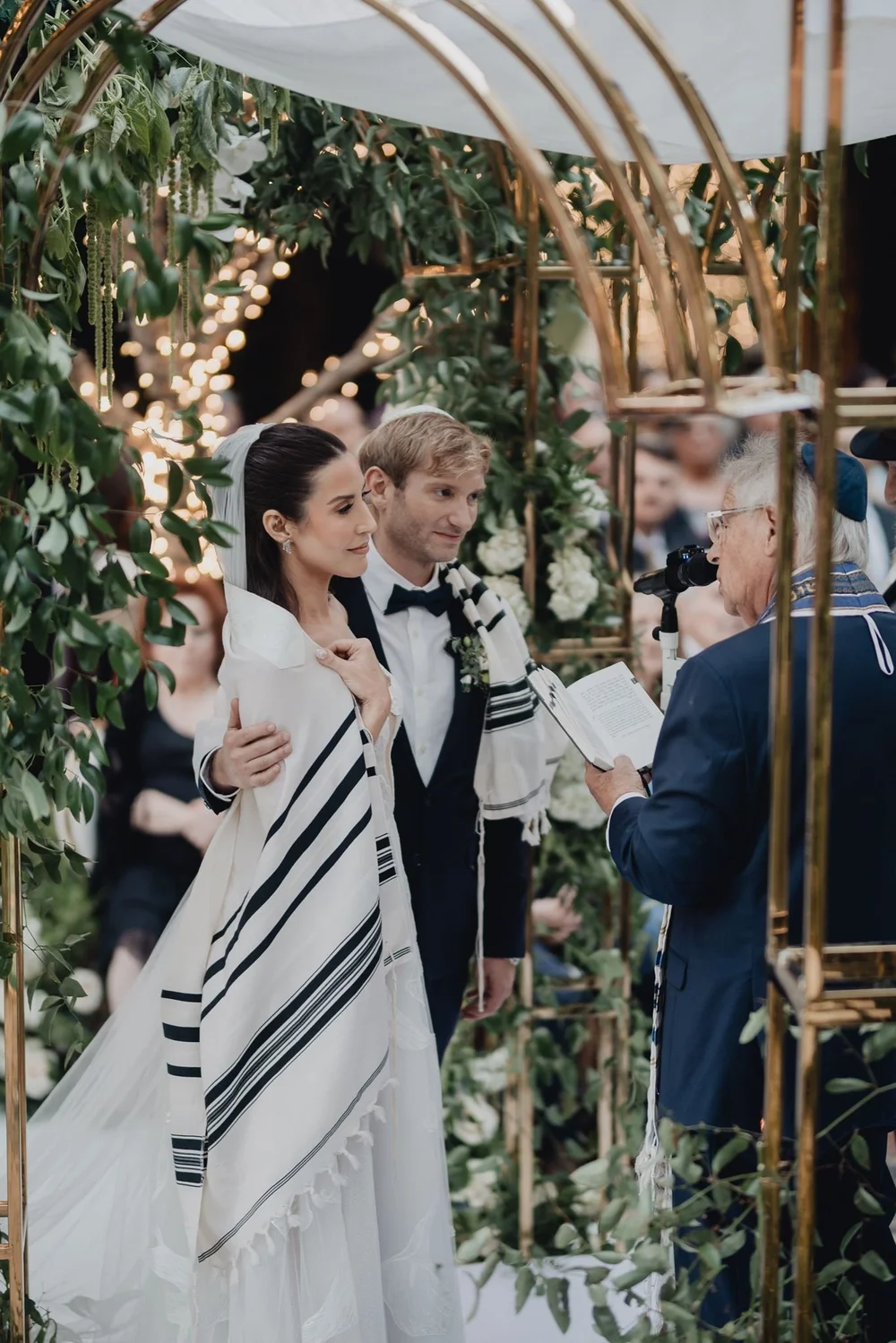
A chuppah is the canopy under which a Jewish wedding ceremony takes place. Open on all four sides and held aloft by four poles, it represents the home the couple will build together — a space with no walls, echoing the open-sided tent of Abraham and Sarah, who welcomed travellers without hesitation.
That spirit carries through to how couples treat the canopy itself. Some ask close family or friends to hold the poles by hand as a gesture of honour. Many chuppahs are adorned with flowers, flowing fabric, or a family heirloom such as a tallit passed down through generations — which is why we photograph the chuppah empty, before the processional, while the detail is still clean.
What Happens Under the Chuppah
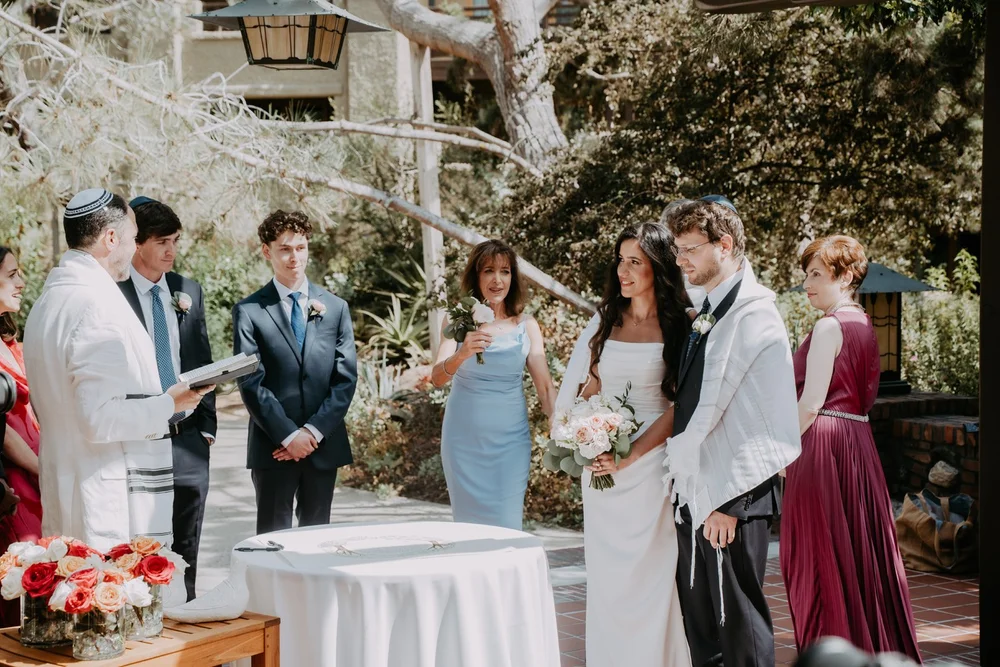
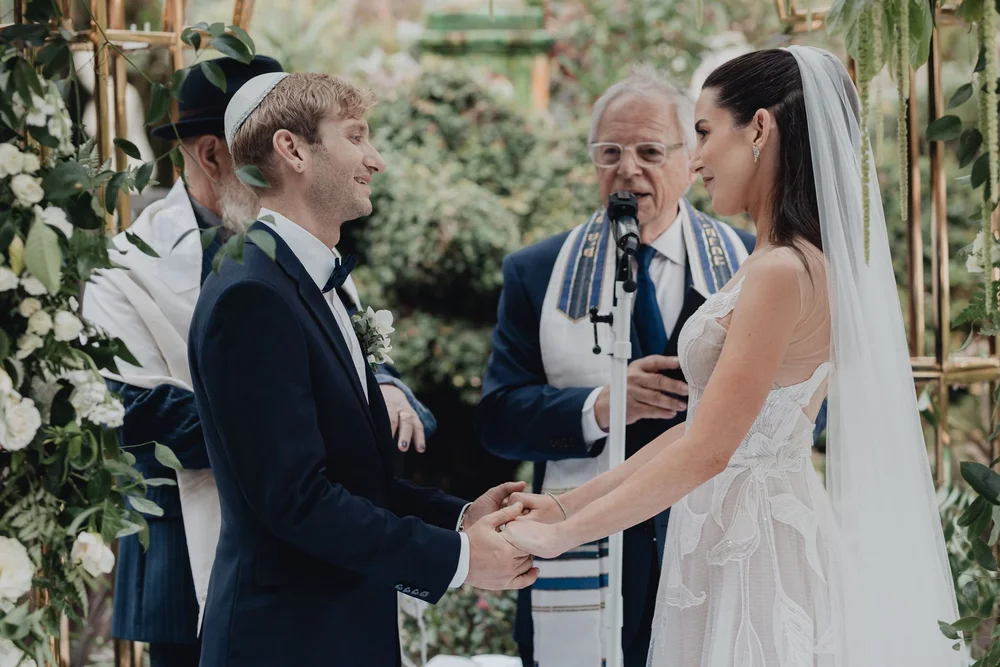
Every officiant and family brings their own touches, but most chuppah services follow a familiar arc: the processional and the couple’s arrival beneath the canopy, the blessings and vows, the ring exchange, and the breaking of the glass that sends the room into applause. For a photographer it is a compact, concentrated stretch where nearly every frame carries meaning.
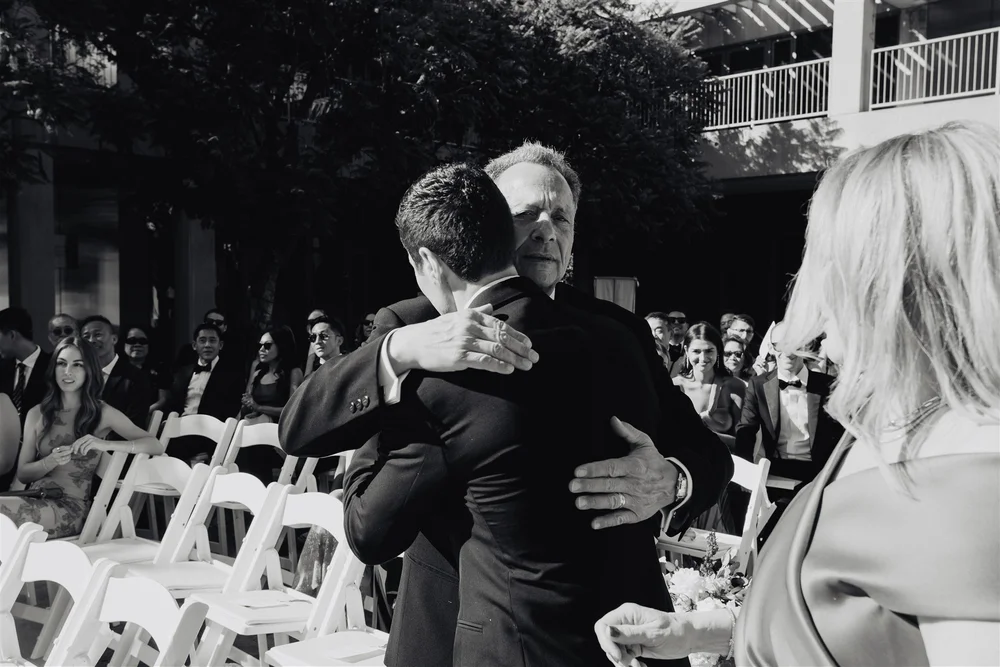
- The processional. Both sets of parents walk their children in. We shoot it long so the aisle and the canopy are in the same frame.
- Under the canopy. The couple faces away from guests for most of the service. We work from angles that keep the canopy intact and still show faces.
- The seven blessings. Often read by seven different people — we cover the readers as well as the couple, because families want both.
- The glass. Once, fast, and everyone shouts. We pre-focus on the foot and hold the frame through the cheer that follows.
Photographing a Structure You Cannot Move
The chuppah is the hardest ceremony structure in weddings to photograph well, because it is fixed, four-sided, and usually placed with the guests in mind rather than the camera. Outdoors it casts hard shadows across faces at exactly the wrong hour; indoors it is often the darkest object in the room.
We scout the canopy position before guests are seated, agree our two working positions with the officiant, and shoot with fast glass rather than flash where the rabbi asks for none. Two photographers matter here more than anywhere else in the day: one holds the wide frame with both families in it, the other stays tight on faces.
Where the chuppah sits in the day
The ceremony under the chuppah is short. What shapes the day is what has to happen before it and straight after it. These are the shapes we see most often, drawn from the Jewish weddings we photograph.
Late afternoon, portraits after
- 2:00 PMCoverage begins. Getting ready, attire and details.
- 3:45 PMChuppah and ceremony site photographed before guests are seated.
- 4:00 PMGuests arrive and take their seats.
- 4:30 PMProcessional, with both sets of parents walking their children in.
- 4:45 PMBlessings, rings and the breaking of the glass, then the recessional.
- 5:15 PMCocktail hour. Family and wedding party portraits while guests mingle.
- 6:15 PMReception begins.
Evening chuppah after a first look
- 3:00 PMCoverage begins. Final hair and makeup, attire and details.
- 4:15 PMFirst look, then couple, wedding party and family portraits.
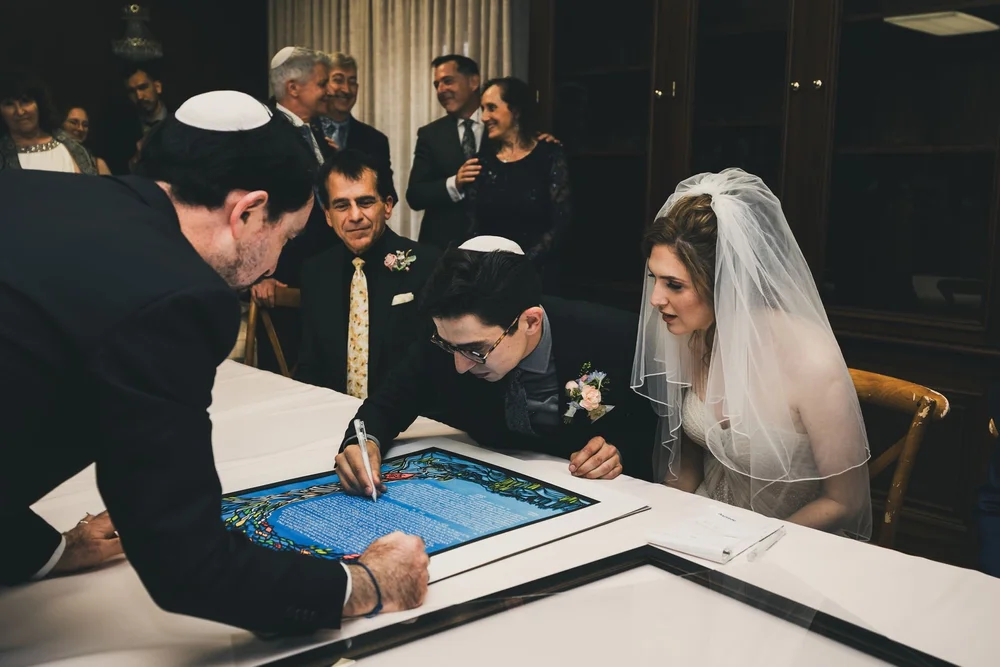
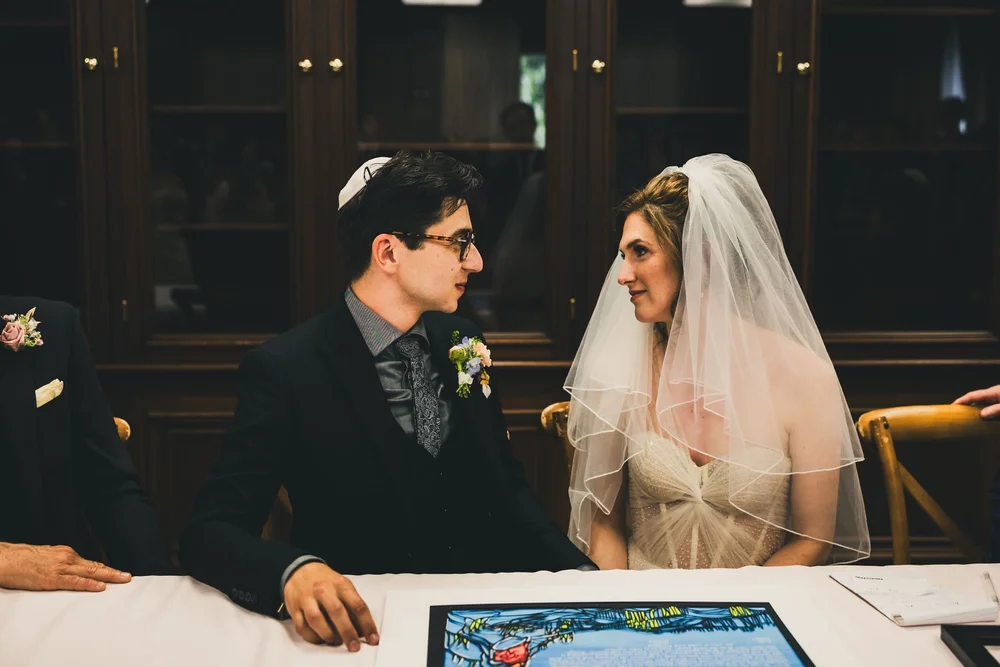
- 5:30 PMKetubah signing and bedeken with close family.
- 6:00 PMGuests seated. The chuppah photographed dressed and ready.
- 6:30 PMCeremony under the chuppah, often timed to sundown.
- 7:00 PMYichud, about fifteen minutes. Guest candids meanwhile.
- 7:15 PMCocktail hour with extended family groups.
- 8:00 PMReception. Grand entrance, dinner, then the hora.
Midday chuppah, room turned after
- 1:00 PMCoverage begins. Venue details and final getting ready.
- 2:00 PMGuests arrive. Pre-ceremony gatherings, where the family holds them.
- 2:45 PMCeremony under the chuppah, thirty to forty five minutes.
- 3:30 PMFamily photographs at the chuppah while everyone is still gathered.
- 4:00 PMCocktail hour while the room is turned, or travel to the reception.
- 4:45 PMReception. Toasts, dinner and dancing.
How much time the chuppah needs
The practical numbers around the ceremony, from the Jewish weddings we photograph.
Chuppah photography — questions we are asked
When should the chuppah be photographed empty?
Before guests are seated, and ideally before the florals are finished being fussed with. Once the room fills, a clean frame of the canopy no longer exists. If the chuppah incorporates a family tallit or heirloom fabric, we photograph that separately as a detail.
Will you use flash during the ceremony?
Only where your rabbi and venue allow it. Many do not. We ask directly rather than assuming, and we plan lenses and positions so an unlit ceremony is still properly exposed.
Can family hold the poles and still be in the photographs?
Yes, and it is worth planning for. Pole-holders end up in every wide frame of the ceremony, so we set our angles to include their faces rather than their backs.
What else should we cover on the day?
The chuppah sits inside a longer sequence — see our guides to the ketubah signing, the hora, and Jewish weddings generally.
Next step
Tell us about your ceremony
Send us the date, the venue and your officiant’s photography rules — we will plan positions around them.