Wedding Veil Lengths and the Return of the Dramatic Veil
If we could give one piece of bridal advice with the confidence of two thousand three hundred weddings behind it, it would be this: put the drama in the veil. A veil is lighter than a train, cheaper than a train, removable in three seconds, and it moves.
It is also the only part of a bridal look that reacts to weather. A gown does what it does. A veil does what the wind does, and some of the best photographs of a wedding day are the ones where the veil decided.
The lengths, shortest to longest
- Birdcage — a short piece of netting across the face or eyes. Retro, architectural, and worn with short or minimal gowns.
- Shoulder / flyaway — around 50 cm. Barely a veil; adds softness without covering the back of the dress.
- Elbow — around 65 cm. Ends at the waist. Practical, and good with a full skirt because it stops before the volume starts.
- Fingertip — around 90 cm. The most-worn length in bridal, and the most balanced: long enough to read as a veil, short enough to dance in.
- Waltz / ballet — around 1.4 m, ending mid-calf. Uncommon and underrated; it gives length without touching the floor.
- Chapel — around 2.1 m. Trails on the floor. Pairs naturally with a chapel or court train.
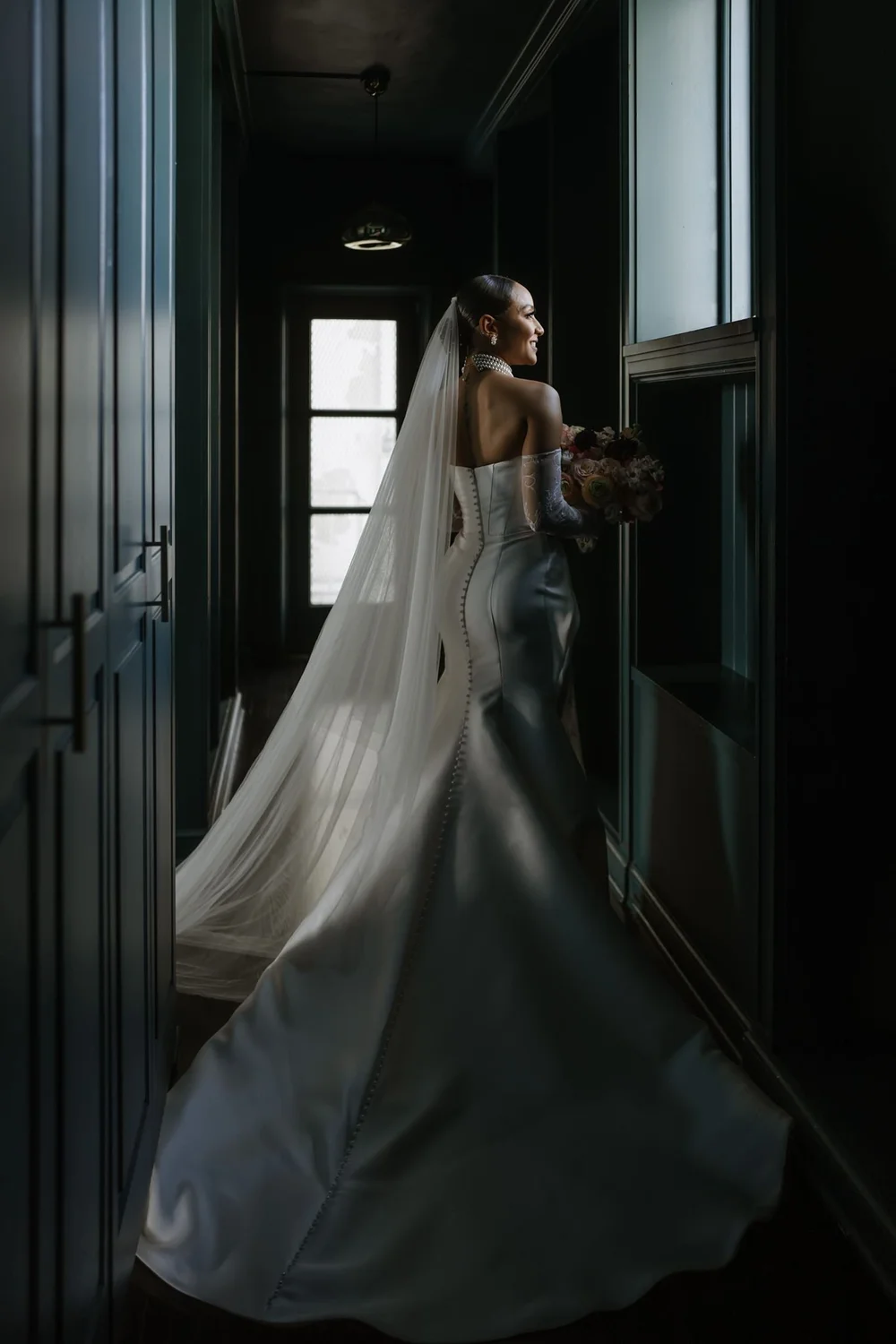
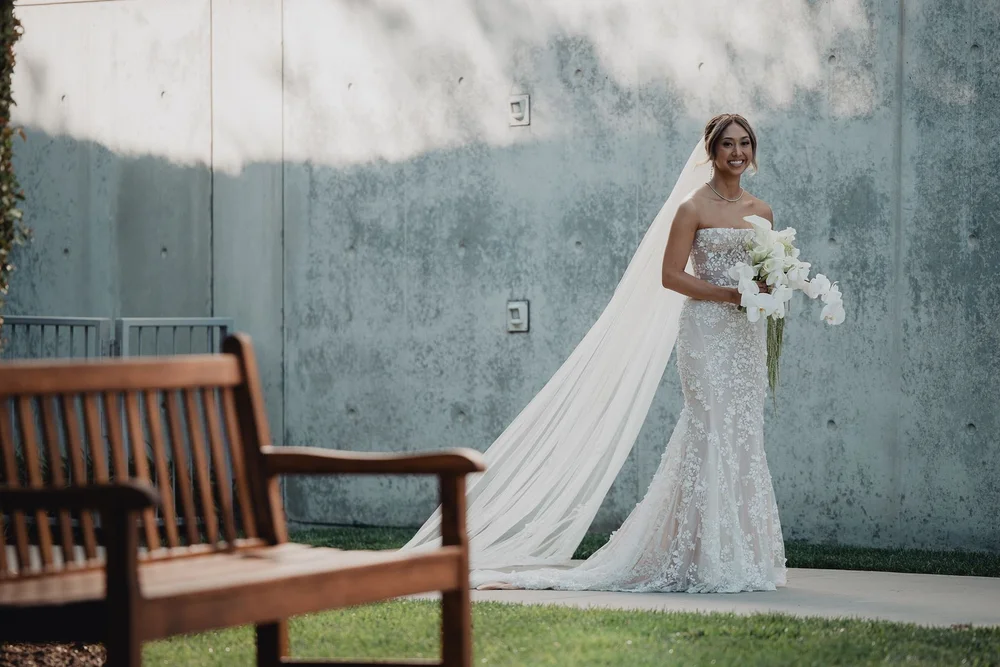
- Cathedral — 3 m and beyond. This is the one that fills a frame. Royal veils go to 4 m and further.
As with trains, designers measure differently — some from the comb, some from the crown. Always ask which, and always ask to see it on a person rather than on a hanger.
The cathedral veil — why we keep recommending it
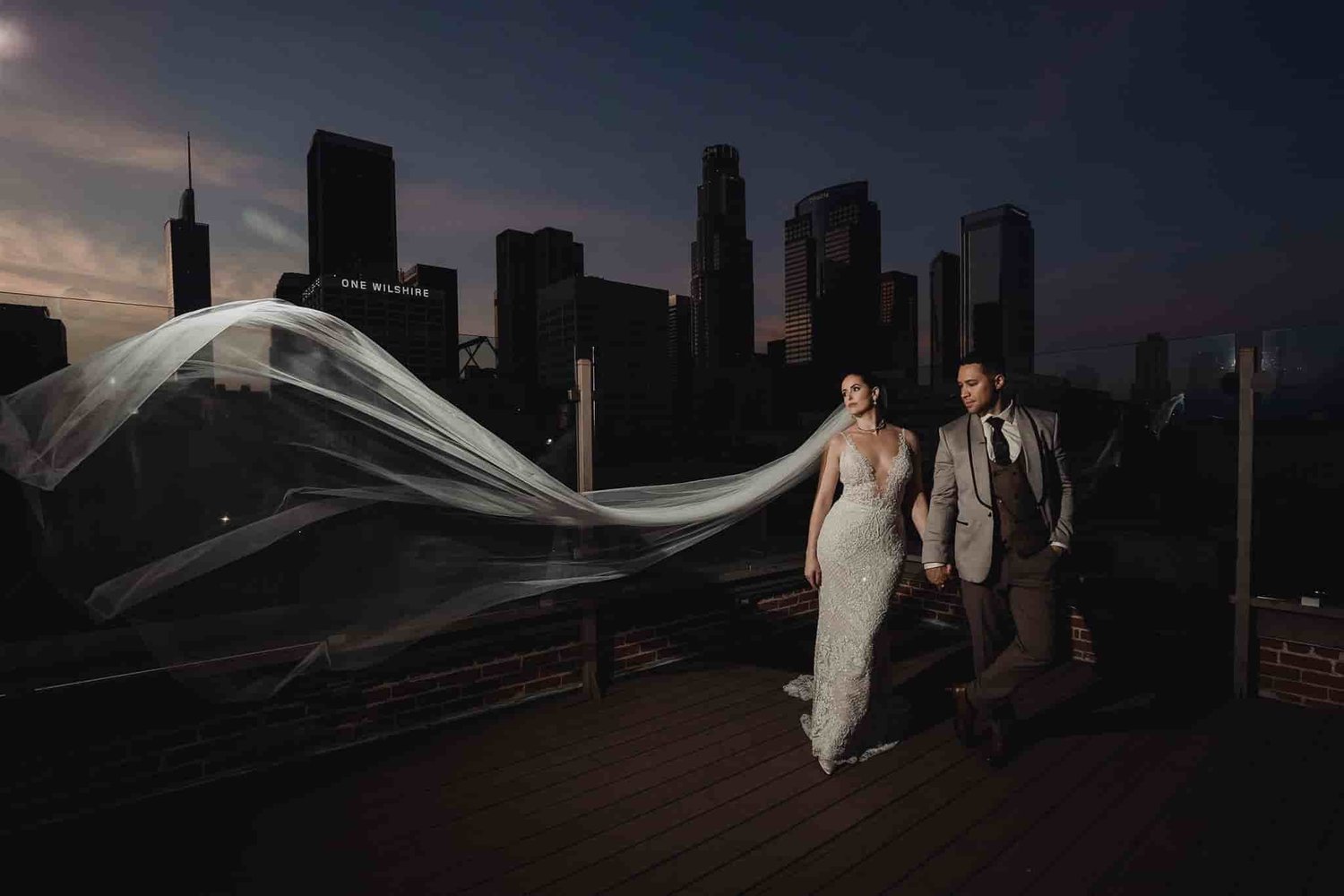
Look at that photograph and then consider what it would have cost to get the same effect from the dress. A cathedral train would have added weight, a multi-point bustle, an attendant, and a serious limit on where the bride could stand. The veil did it with three meters of tulle and a comb.
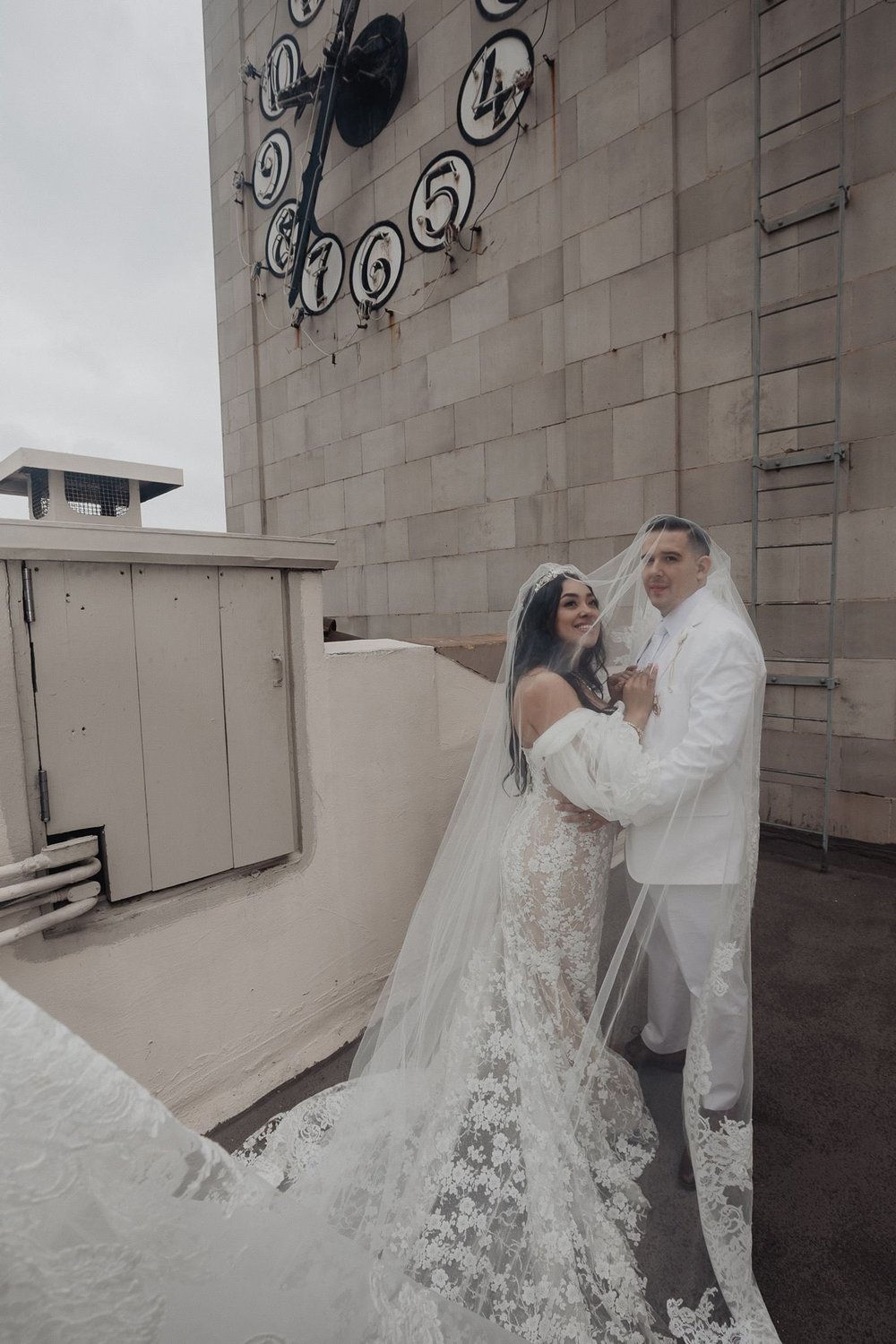
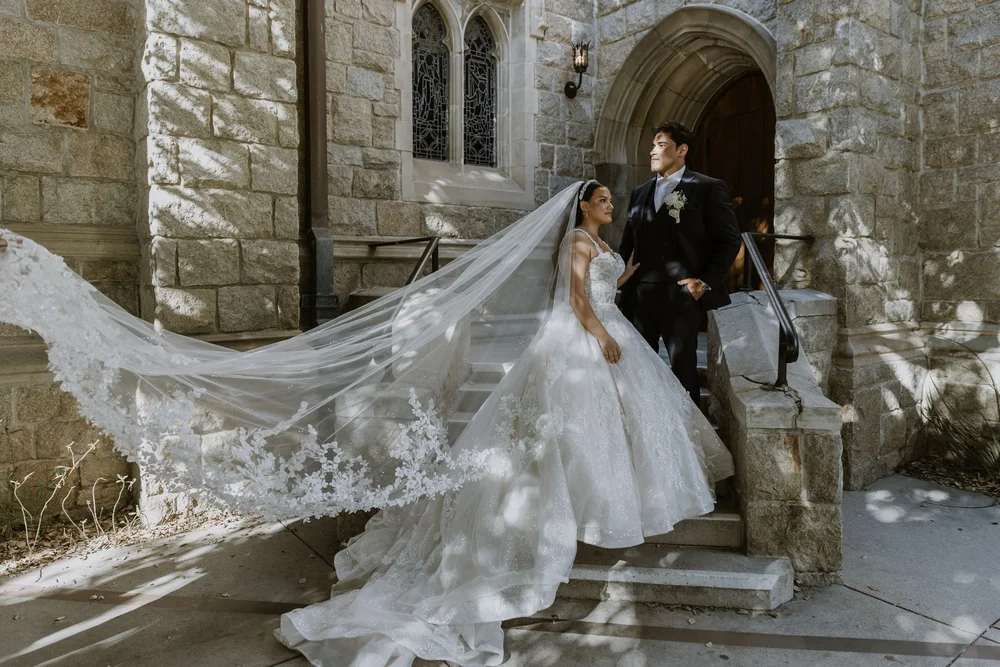
The other advantage is that a veil is reversible. If it is windy, if the ceremony is on a rooftop, if it is genuinely not working — you take it off, hand it to someone, and the look is still complete. A cathedral train cannot be handed to anyone.
The blusher and the lift
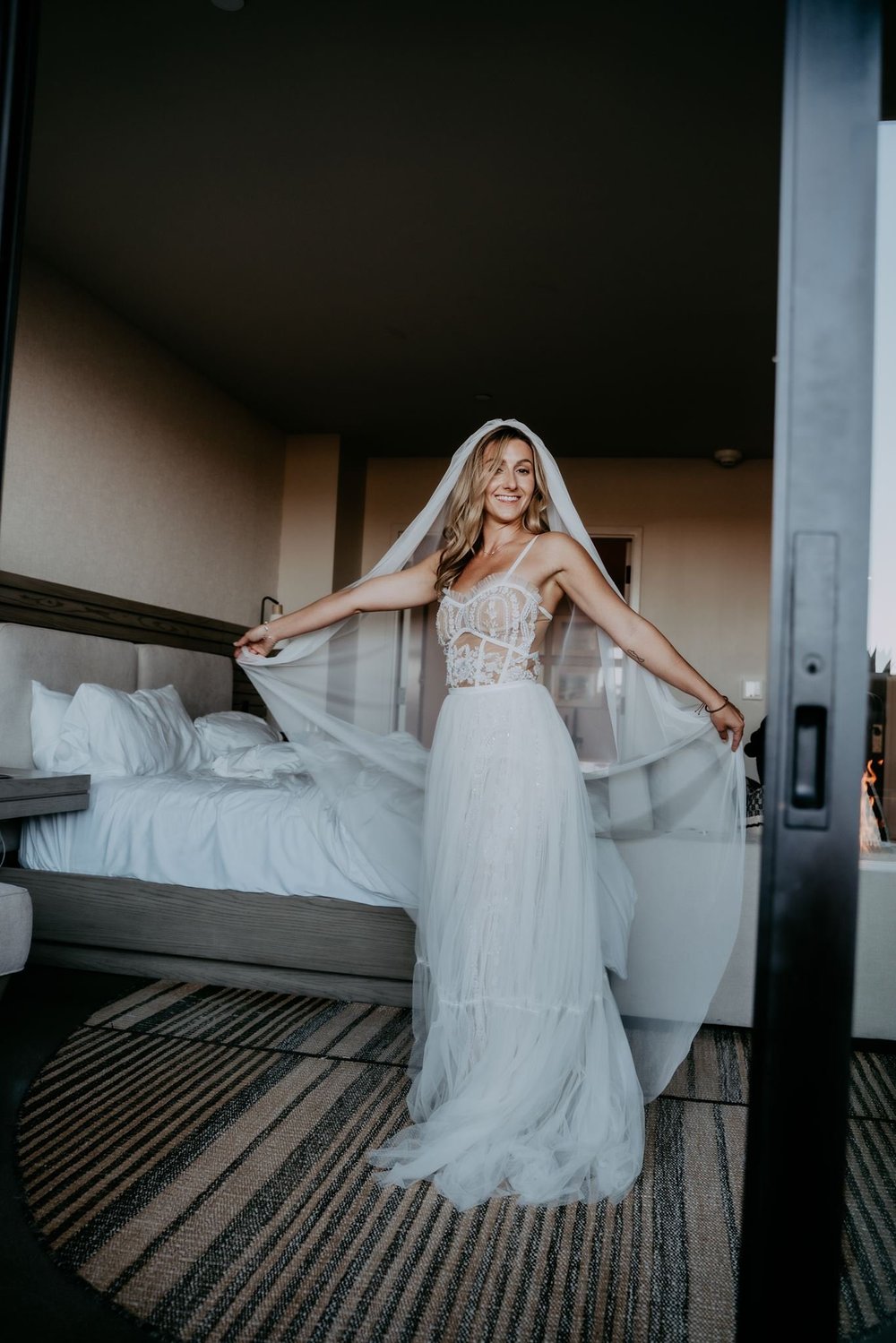
A blusher is the front layer worn over the face and lifted during the ceremony. It is the single most reliable emotional moment in a ceremony gallery, because it is the one action everybody in the room is watching and nobody is talking over.
If you want the lift photographed well, decide who lifts it and tell them. A blusher lifted by a parent at the end of the aisle and a blusher lifted by a partner before the vows are two different photographs, and both are better than one lifted awkwardly by the bride herself because nobody planned it.
The mantilla and the 3D floral veil
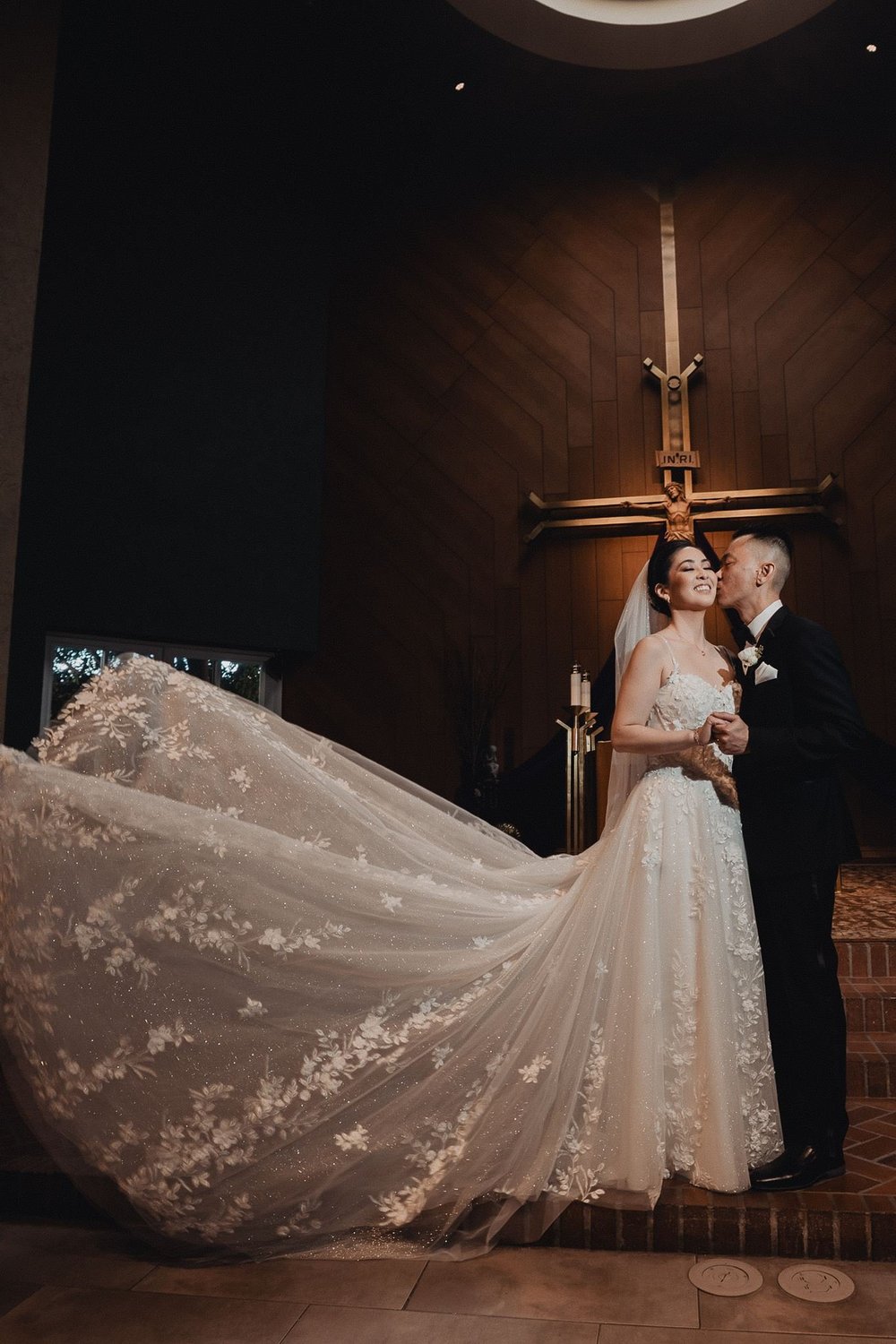
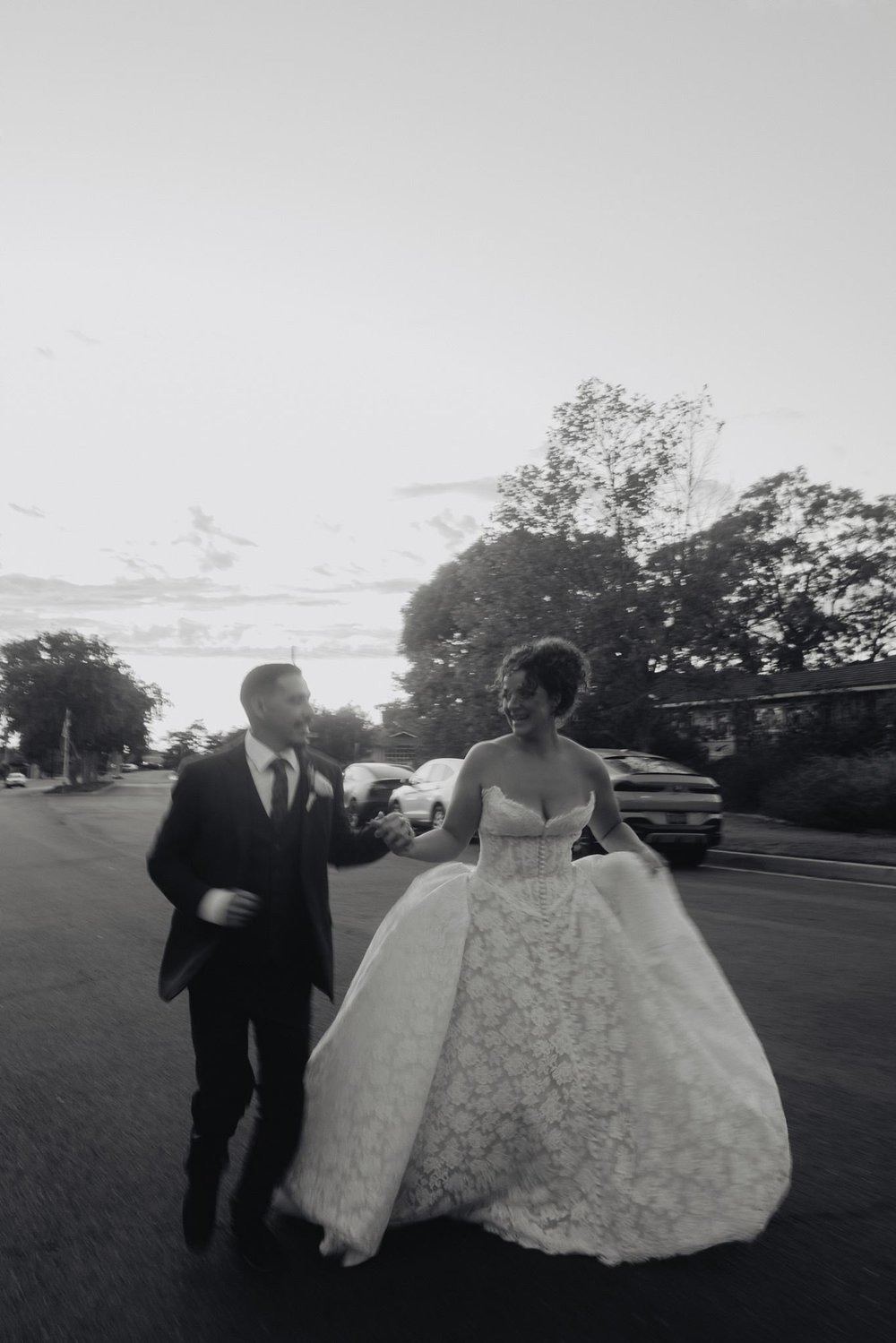
Two veil styles came back at once. The mantilla — the circular Spanish lace veil worn close to the head, edged in lace all the way round — was named in nearly every 2026 bridal fashion week report. And the decorated veil, with 3D floral appliqué, embroidery, pearls or a wide lace border, has moved from an occasional custom piece to a standard collection item.
Both are doing the same thing: putting the ornament where a camera is guaranteed to see it. A decorated veil is in every ceremony frame, every processional frame and every back-of-the-aisle wide shot, and it does not have to survive being sat on at dinner.
One practical note on heavily decorated veils: they are heavy. A cathedral veil with all-over appliqué can pull a comb backwards out of an updo over a few hours. Ask your hairstylist to build a foundation for it, and consider two combs rather than one.
Matching the veil to the dress
- Busy dress, plain veil. A heavily appliquéd gown under a heavily appliquéd veil becomes visual noise in a photograph.
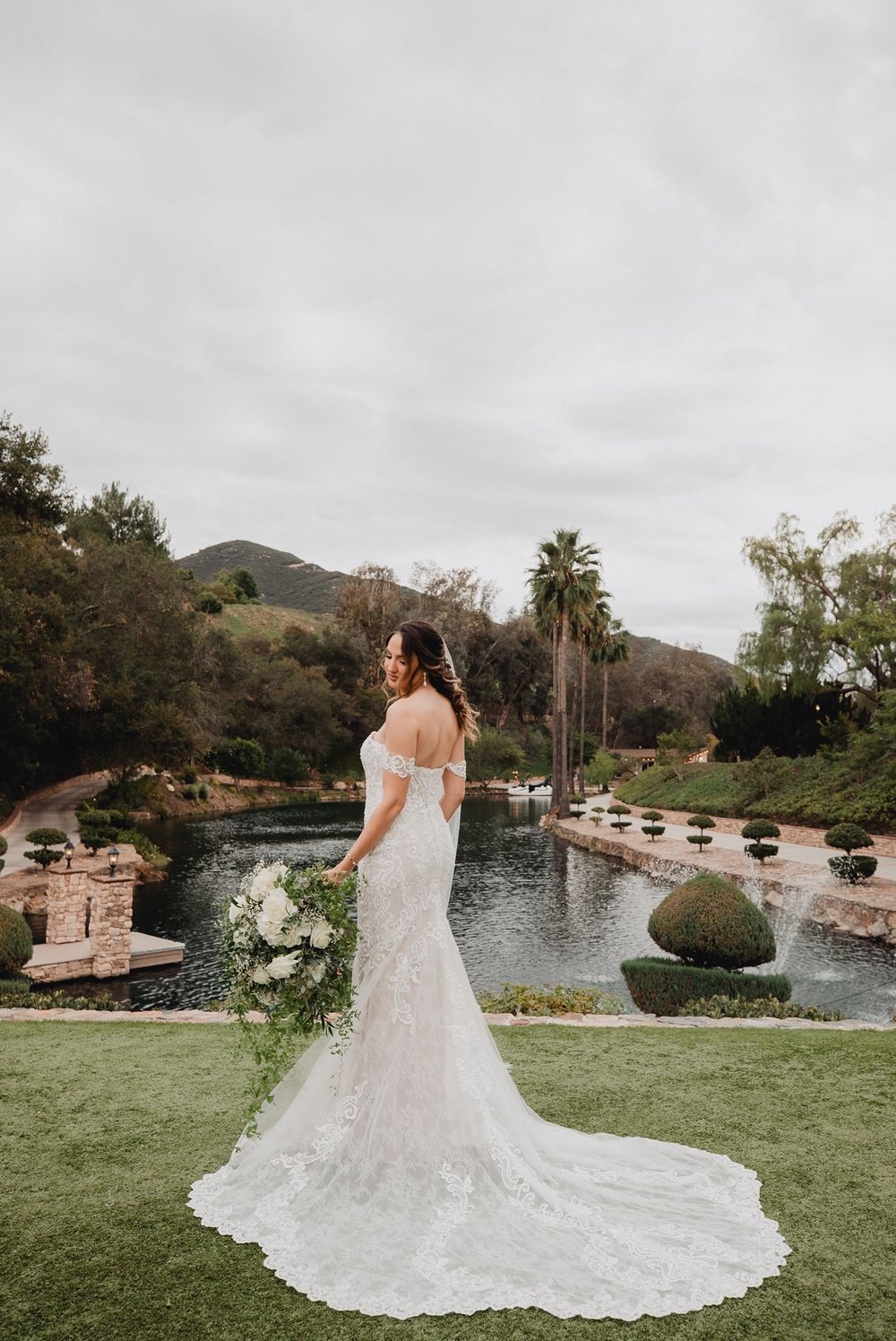
- Plain dress, decorated veil. This is the combination we see working most often — a clean crepe or silk column under a lace-edged or floral cathedral veil.
- Match the white, not the fabric. Optic white tulle over an ivory gown is instantly visible in photographs and impossible to fix afterwards. Take a fabric swatch to the veil appointment.
- Veil longer than the train. Almost always the better proportion. A veil that stops short of a long train cuts the line in half.
- Think about the back of your hair. A veil comb sits into the hairstyle; the hairstyle has to still work when the veil comes off at the reception.
Veil questions
What veil length is most popular?
Fingertip, at around 90 cm. It reads clearly as a veil, sits above the floor so it does not need managing, and works with almost every silhouette. Cathedral is the most dramatic and the most photographed.
Should my veil be longer than my train?
In most cases yes. A veil that ends short of the train visually cuts the line, whereas a veil extending past the train unifies the whole silhouette. The main exception is a very full ball gown, where an elbow-length veil deliberately stops before the volume begins.
Do I have to wear a blusher?
No, and many brides do not. It is worth considering purely because it produces one of the strongest moments in a ceremony gallery — but only if someone has agreed in advance to lift it.
What is a mantilla veil?
A circular veil, traditionally Spanish, edged in lace all the way around and worn close to the crown rather than on top of an updo. It was one of the named veil trends of the 2026 season and it suits close, sleek hair particularly well.
Will a long veil be a problem outdoors?
Wind is the variable. A long veil in a light breeze is the best thing that can happen to your photographs; a long veil in a strong coastal wind needs a second comb, a few pins, and a person nearby. Ask your photographer to shoot the windy frames early, before it becomes a nuisance.
When should I take my veil off?
Most brides remove it after the ceremony and the formal portraits, before the reception. If your veil is decorated and heavy, plan for it — removing it changes your hair, and it is worth having your stylist check it before you walk into the room.
Wearing a long veil?
Tell us. Wind, timing and where we stand all change with a cathedral veil, and those are the frames couples print. We photograph weddings across Los Angeles, Orange County, San Diego and Santa Barbara.
Check your dateSchedule a callMore from our bridal fashion series
Photographs by Lulan Studio — Los Angeles wedding photography and wedding films. Read the reviews or check your date.
We’d love to hear about your day
Lulan Studio is a Los Angeles wedding photography and videography team, shooting on film and digital across Los Angeles, Orange County, San Diego and Santa Barbara.
Or take a look at our rates and packages.