One Dress, Two Looks: Detachable Trains, Overskirts and the Reception Change
Somewhere between the ceremony and the first dance, most brides want a different dress. Not a different look — a different dress. Something they can dance in, sit down in, and get through a four-hour reception without an attendant.
A second gown is one answer. A convertible one is usually the better answer, and the 2026 collections have made it almost standard: detachable trains, clip-on overskirts, removable sleeves, and hems that were designed from the start to reveal a leg.
The detachable train — thirty seconds, two dresses
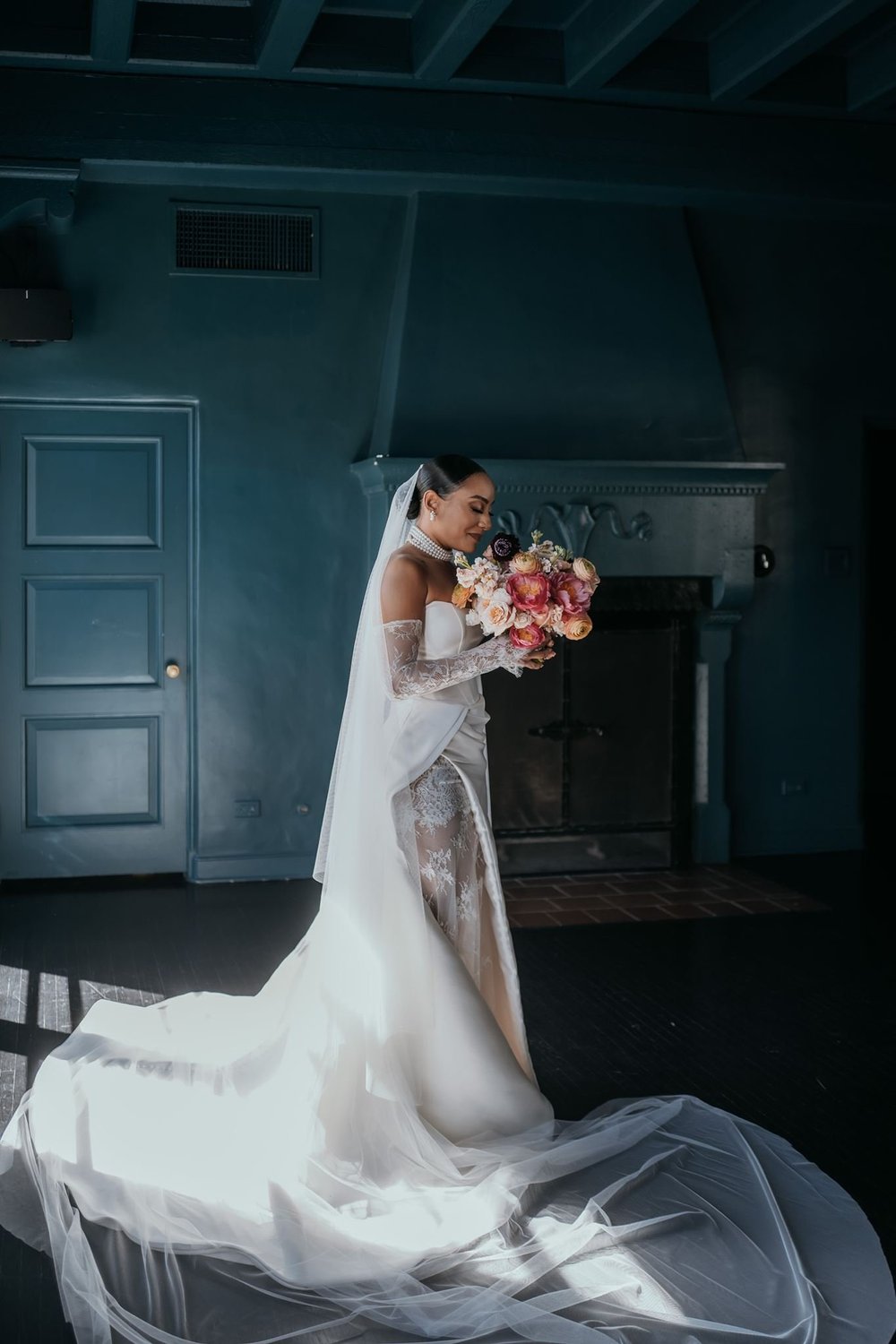
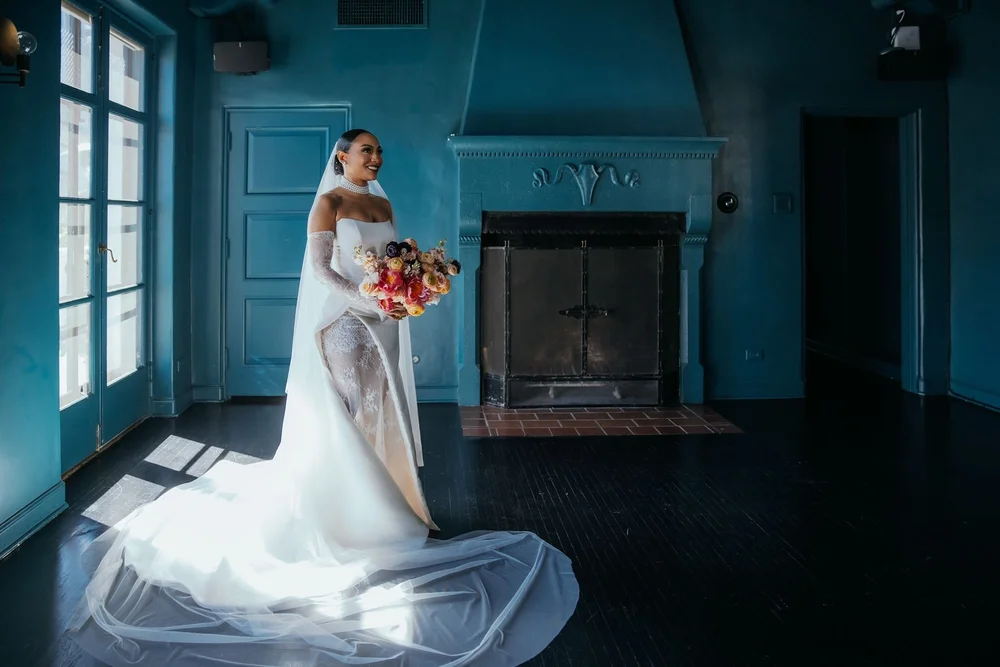
A detachable train attaches at the waist, usually with hooks and bars or a covered zip, and comes away in one piece. It is the single most useful thing in modern bridal, and it costs a fraction of a second dress.
What you get is two genuinely different photographs. The ceremony frames have length, weight and a train that composes. The reception frames have a clean silhouette that moves. And you skip the bustle entirely — which, if you have ever watched three people try to find seven ribbon loops in a dark bathroom while the band starts, is worth the money on its own.
Ask two things at the fitting: where does the train live after it comes off (someone needs a plan, and a hanger), and does the attachment show once removed. A well-made detachable leaves a clean waist seam. A poorly made one leaves visible hooks in every reception photograph.
The overskirt — a ball gown that becomes a column
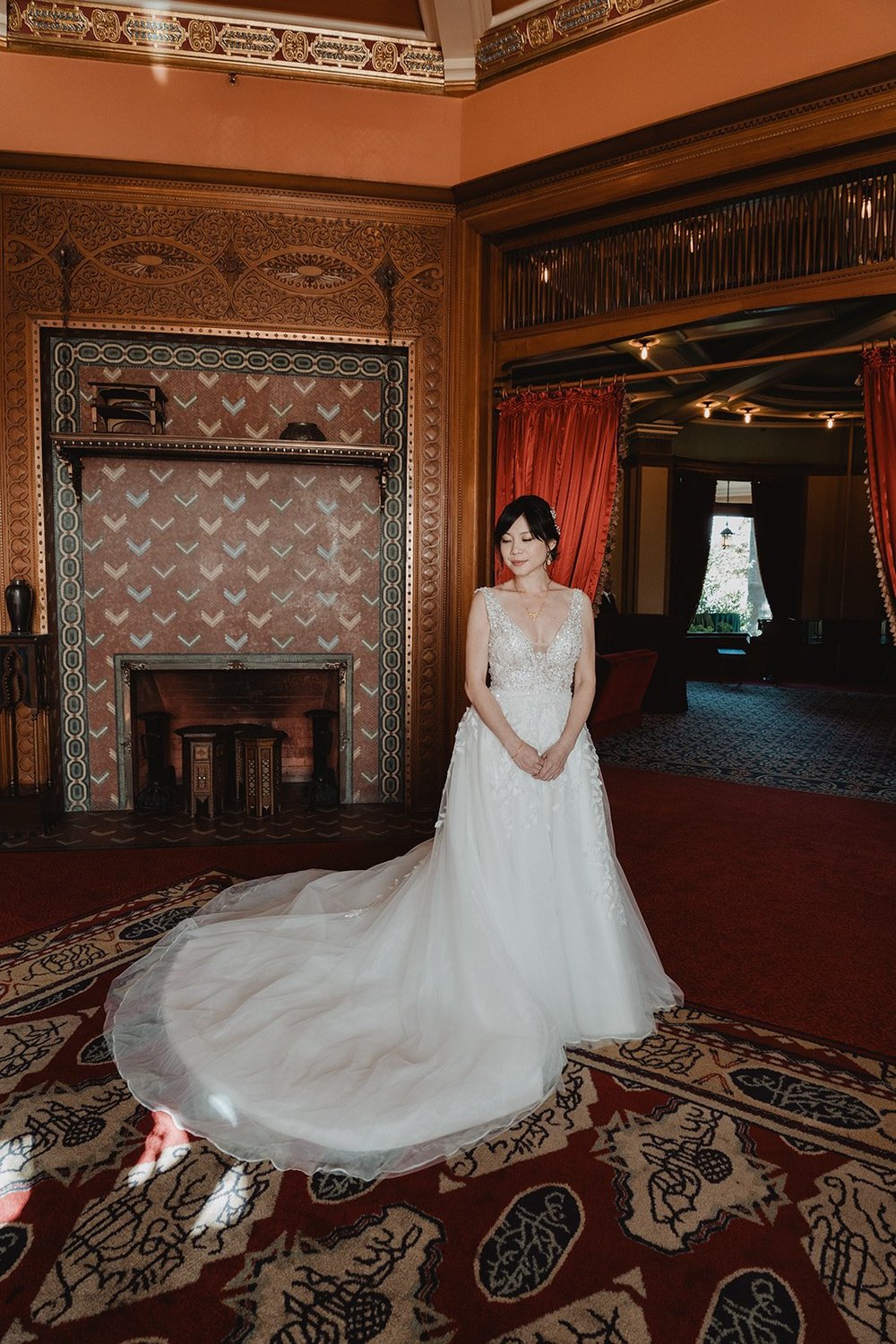
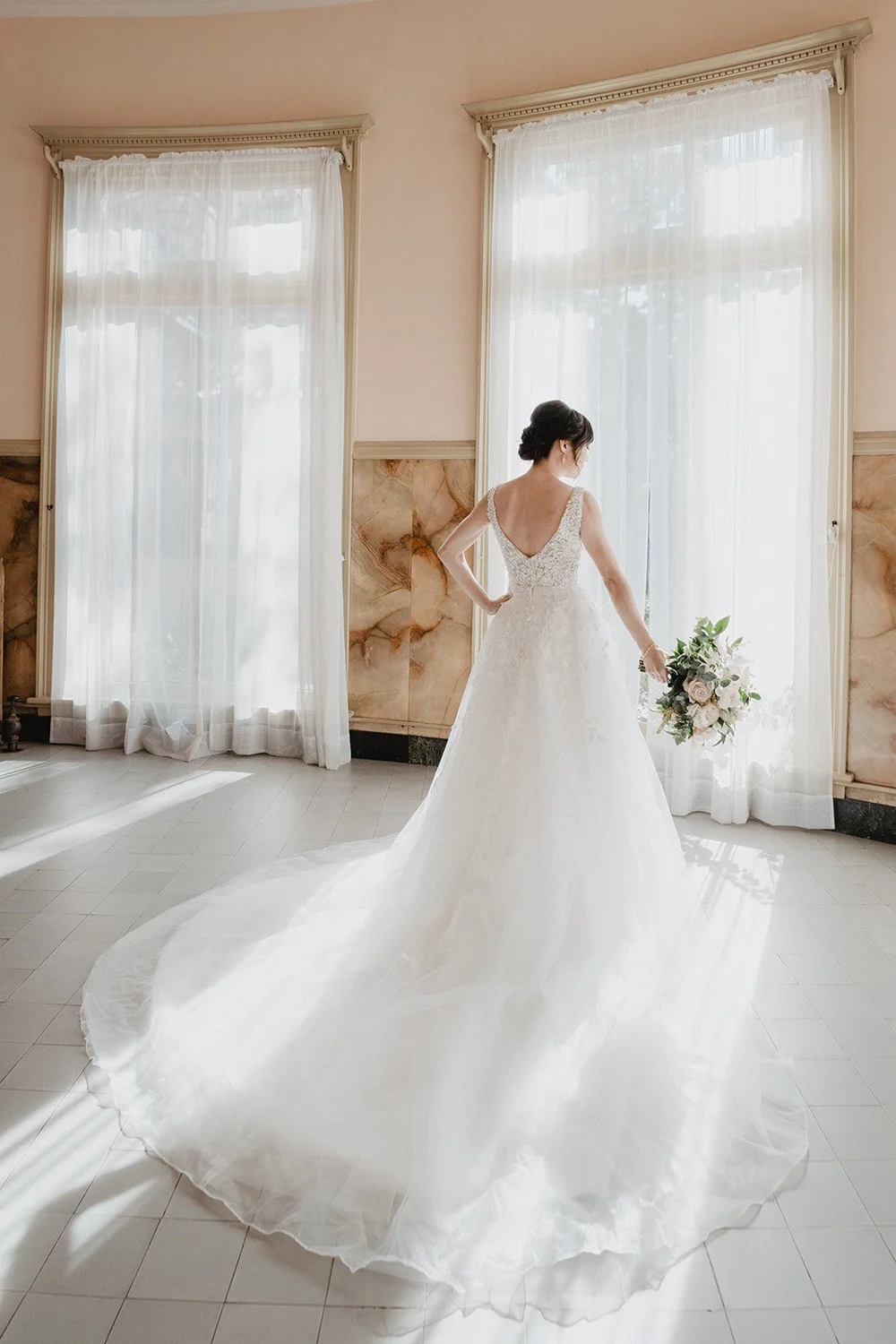
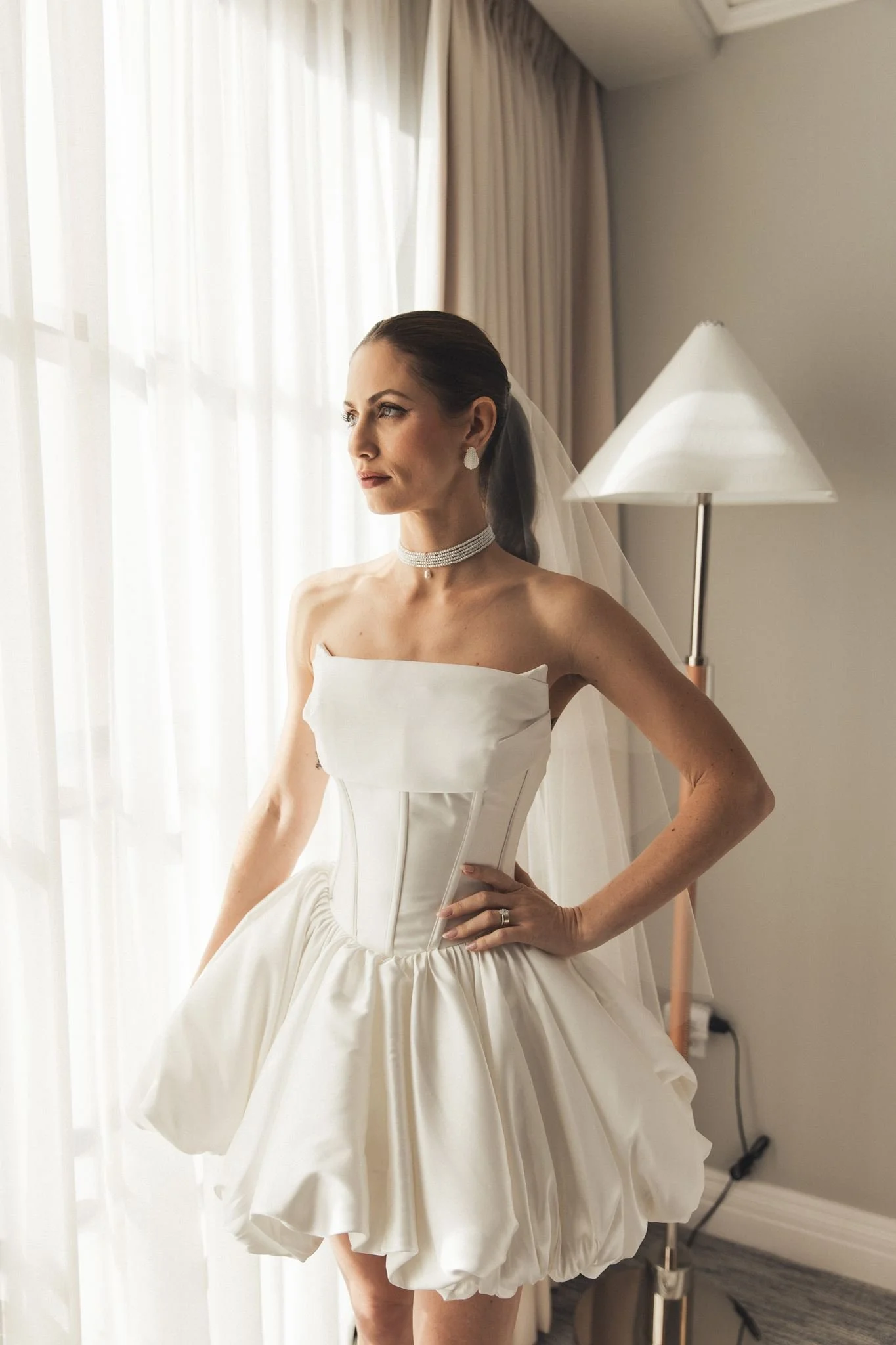
An overskirt is the same idea with more ambition. A separate skirt — tulle, silk, organza, sometimes lace — is worn over a fitted base gown and removed for the reception. The ceremony look is a ball gown. The reception look is a sheath or a fit-and-flare.
This is the version we would recommend to a bride torn between a full skirt and a fitted one, which is a very common place to be stuck. You are not compromising between the two silhouettes; you are wearing both, in the order that makes sense.
Overskirts are also the easiest convertible element to have made after the fact. If you have already bought a fitted gown and later wish it had volume, a good seamstress can build an overskirt from matching or complementary fabric. The reverse — removing volume from a built-in skirt — is far harder.
Removable sleeves and capelets
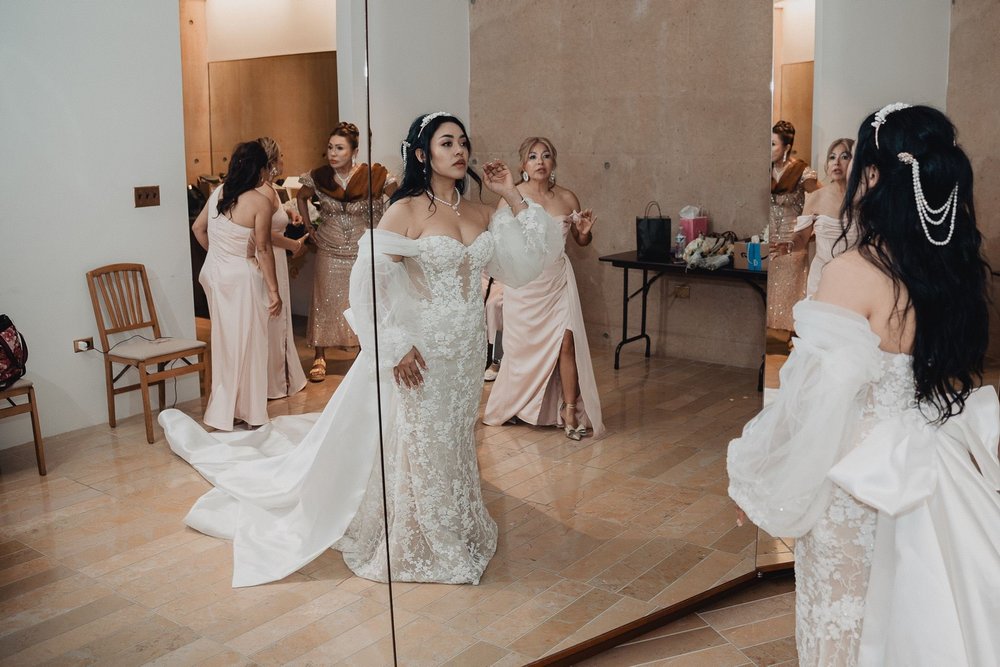
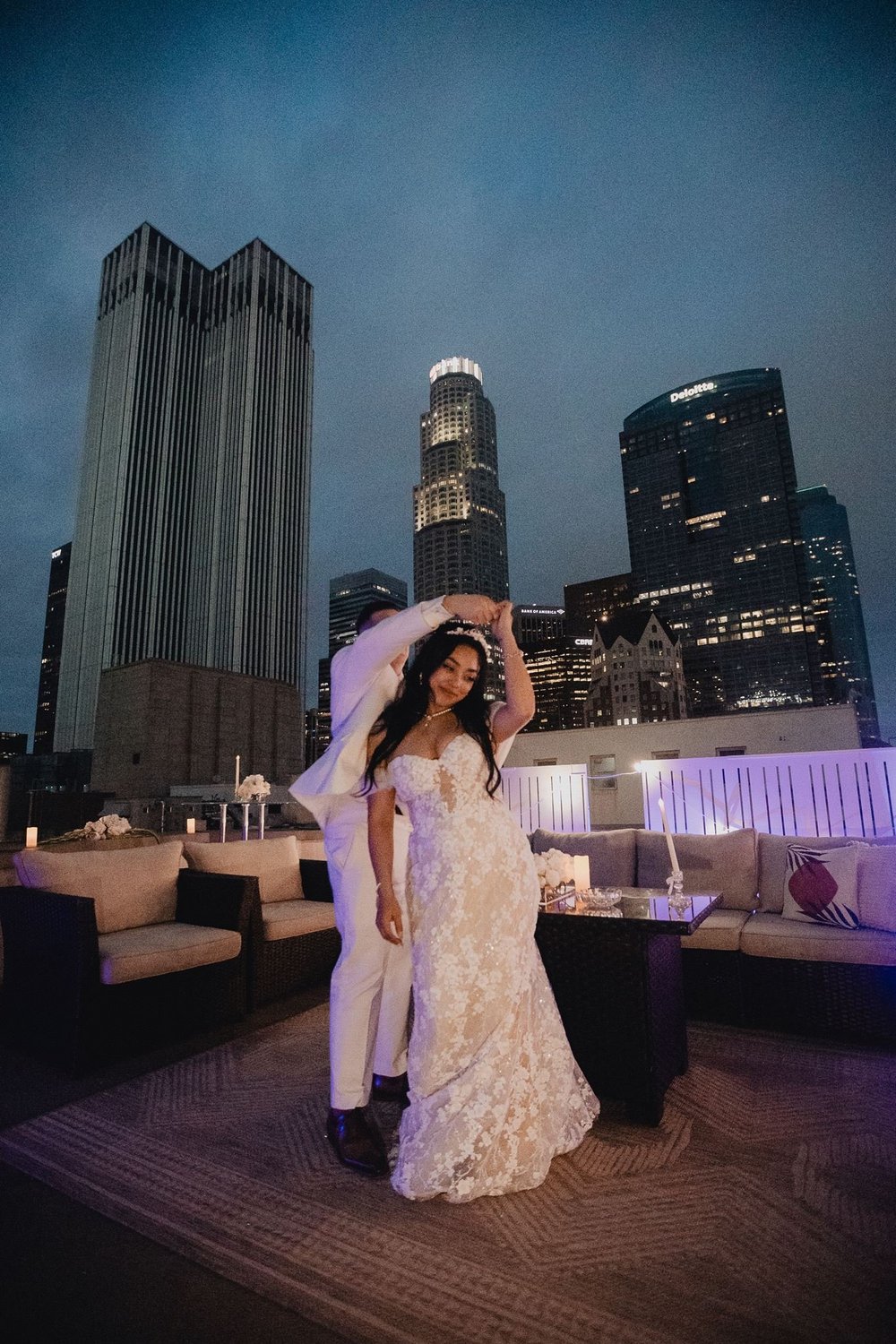
Detachable off-the-shoulder bands, clip-on long sleeves and capelets do above the waist exactly what a detachable train does below it. They are the standard answer when a ceremony has a coverage requirement and a reception does not.
They are also, quietly, the best value item in bridal. A removable sleeve is a small piece of fabric that changes the neckline of every photograph after you take it off — and neckline is what shows in a group photograph, a toast and a dance. More on necklines in sleeves and gloves.
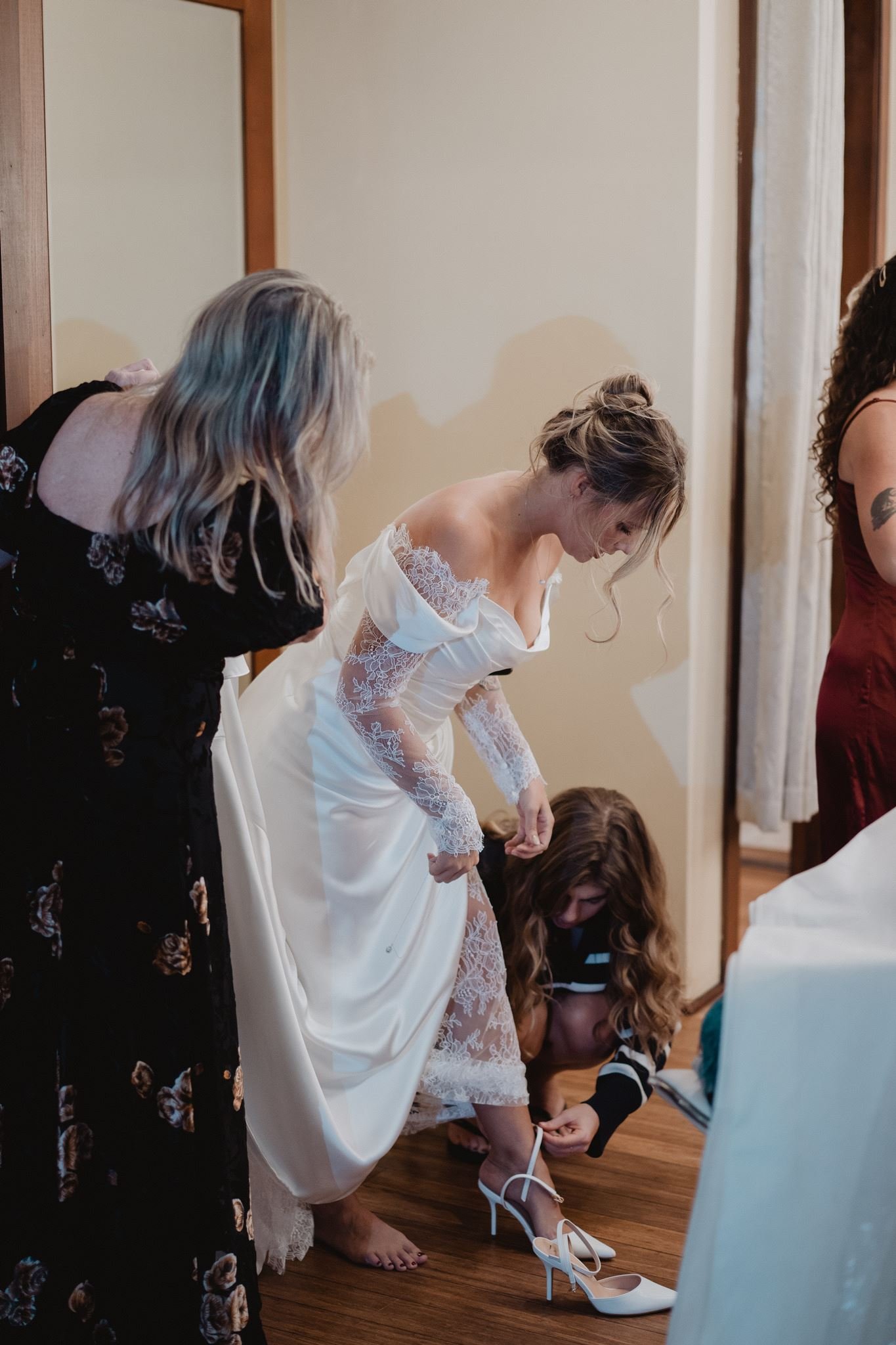
The high slit — a built-in second look
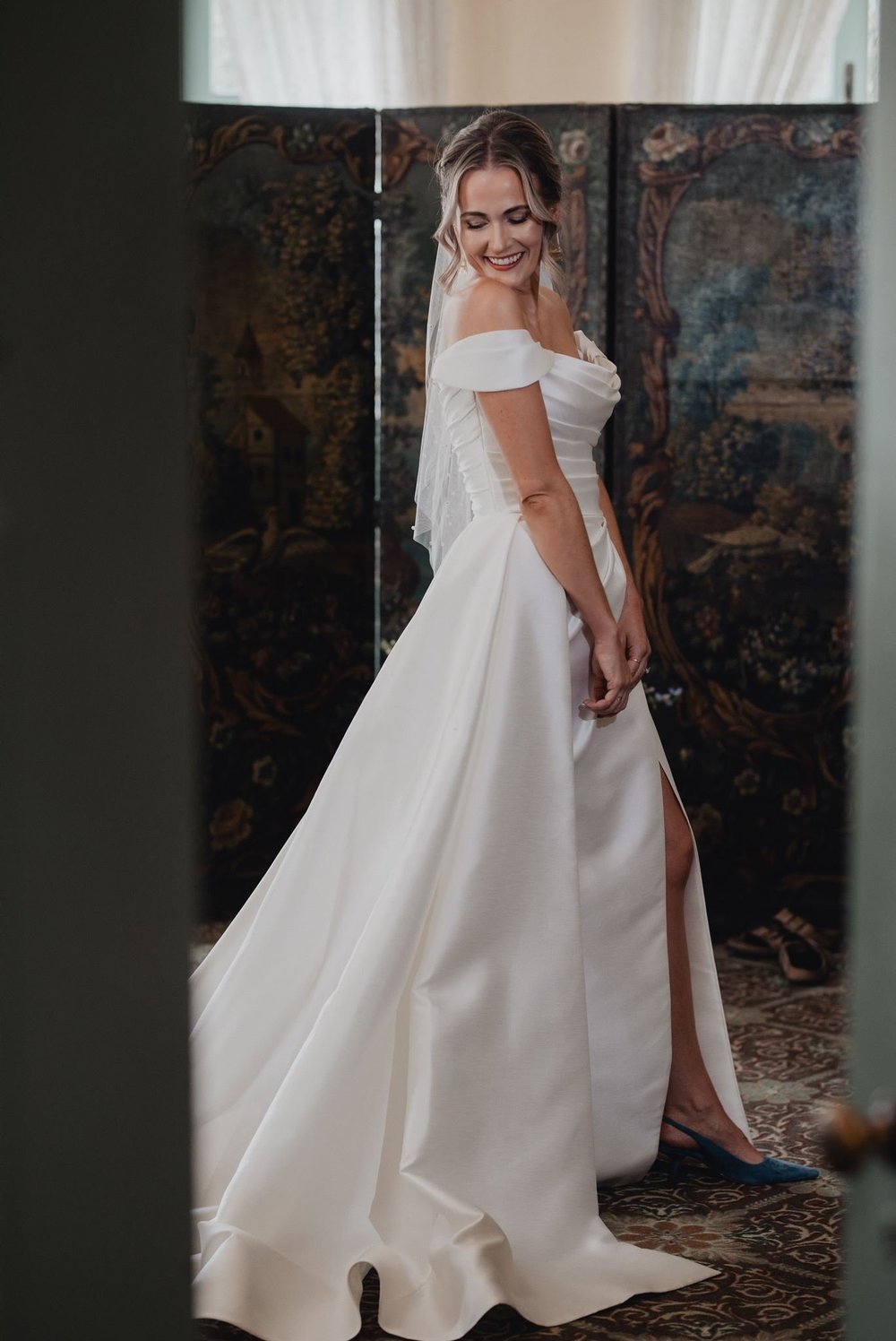
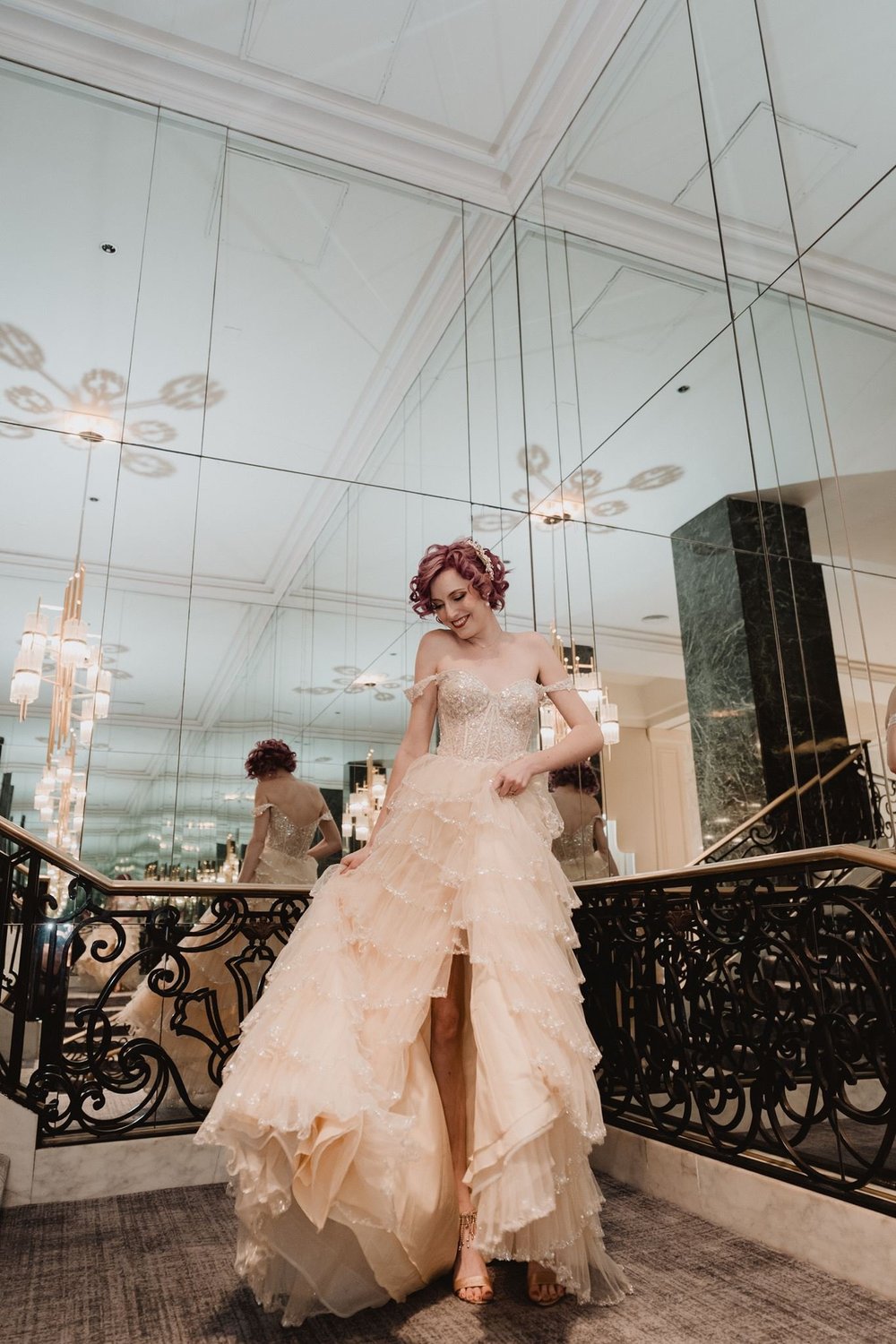
A high slit is the least discussed convertible feature in bridal, and it is a real one. Standing still and photographed from the front, a slit gown reads as a plain column. In motion — walking, dancing, climbing stairs — it becomes a completely different garment.
It is worth knowing that a slit changes the shoe conversation. If your gown has a thigh-high slit, your shoes are in the photographs, all night. Several of the brides in our archive who chose slit gowns also chose the most interesting shoes, and that is not a coincidence.
When a second dress is actually the right call
Convertible gowns cover most cases. There are three where a second dress genuinely earns its place:
- A cultural change of dress. Many South Asian, Chinese, Korean, Filipino and Nigerian weddings include a change as part of the day, not as a fashion decision. That is a different conversation — see our South Asian weddings work.
- A genuinely different party. A church ceremony followed by a late rooftop reception is two events. Two dresses is a reasonable response.
- You want to dance and your gown will not let you. If you have fallen in love with a heavy ball gown, buy it, wear it, and put a simple short dress in a garment bag for 10pm.
What we would gently push back on is the second dress bought because it seemed expected. In our experience the reception frames couples love most are the ones where the bride is unmistakably still in the dress she got married in.
Getting the change photographed properly
- Tell your photographer the plan. Whether the train comes off after the ceremony, after the formals or before the entrance changes where the camera needs to be.
- Do the full-length portraits in the ceremony look. The long version is the one that needs space and light. The reception version photographs well anywhere.
- Budget ten minutes, not two. A detachable train takes thirty seconds. Finding the person, the room and the hanger takes ten minutes.
- Photograph the transition. The removal itself — the unclipping, the skirt lifting away — is a good frame and it takes no extra time.
- Put the change in the timeline. Ask your planner to write it down. It is the single most-forgotten line item in a wedding day schedule.
Convertible gown questions
Can any wedding dress have a detachable train added?
Most can. A seamstress can build a waist-attached train and add hooks or a covered zip, though matching fabric is far easier to source at the point of order than a year later. If you think you might want one, ask the boutique before you buy.
Is an overskirt better than a detachable train?
They do different things. A detachable train adds length behind you; an overskirt adds volume all the way around. If you are torn between a ball gown and a fitted gown, the overskirt is the better answer. If you love your silhouette and just want ceremony drama, the train is.
Do I still need a bustle if my train detaches?
No, and that is one of the main advantages. A detachable train removes the need for a bustle entirely, which saves both money at alterations and time on the day.
How much does a second wedding dress cost?
It varies enormously, but a detachable train or overskirt is almost always a fraction of a second gown, and a short reception dress is usually less again. If budget is the deciding factor, convert rather than buy.
When should I change into my reception look?
Most commonly after the ceremony and the formal portraits, before the grand entrance. That way every full-length and family photograph is in the ceremony look, and the whole reception is in the version you can dance in.
Two looks in one day?
Tell us where the change falls and we will build the portrait block around it. We photograph weddings across Los Angeles, Orange County, San Diego and Santa Barbara, on film and digital.
Check your dateSchedule a callMore from our bridal fashion series
Photographs by Lulan Studio — Los Angeles wedding photography, engagement sessions and wedding films. See our collections and rates.
We’d love to hear about your day
Lulan Studio is a Los Angeles wedding photography and videography team, shooting on film and digital across Los Angeles, Orange County, San Diego and Santa Barbara.
Or take a look at our rates and packages.