Exposed Corsetry, Visible Boning and the Bubble Hem: Structured Bridal in 2026
If you had to name one idea that ran through every 2026 bridal collection, it would be structure you can see. Boning left visible on the outside of the bodice. Long-line corsets extending past the natural waist. Bubble hems held out by internal architecture rather than by tulle.
Bridal has spent a decade going soft — illusion tulle, unlined lace, floating layers. This is the correction. And unlike a lot of runway ideas, it has arrived at actual weddings quickly, because a corset does something no other bodice does: it holds a shape for twelve hours without your help.
The gown that made the case: a bubble hem mini
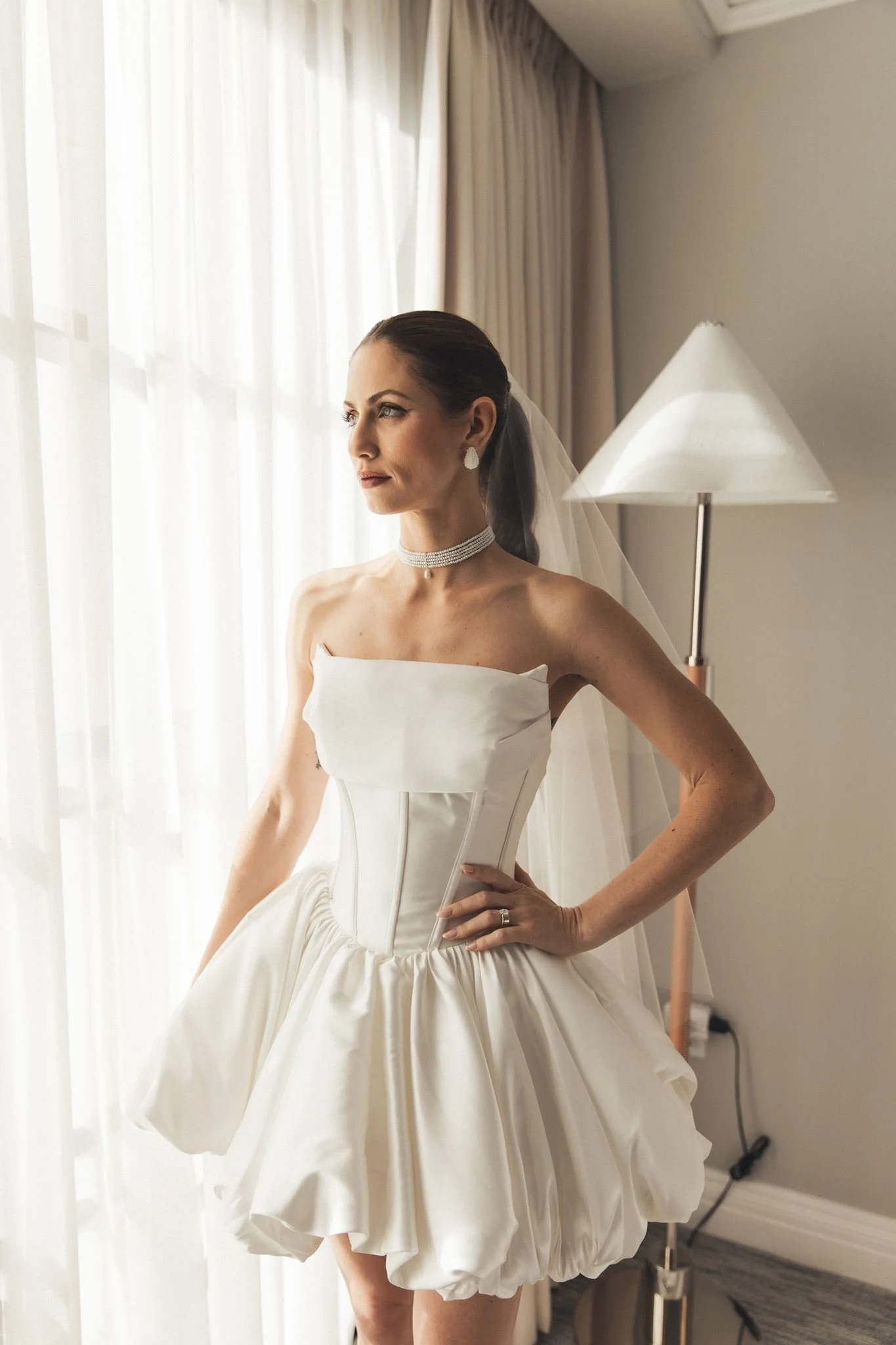
This is the most 2026 dress we photographed all year. A strapless corset bodice with a visible seamed structure, a hem that turns under and holds itself out, and a fabric choker at the throat — three separate trends stacked into one garment.
What it does for a photograph is unusual. There is no train to arrange and no skirt to catch light, so the frame moves up: shoulders, collarbone, jawline, hands. It is closer to a fashion portrait than a bridal portrait, and it wants a clean room and a strong single light rather than a pretty garden.
The bubble hem is the detail to watch. It appeared on nearly every 2026 runway and it is now filtering into full-length gowns as a hem treatment rather than a whole silhouette — a gathered, turned-under edge that gives a plain skirt a sculptural finish.
Visible boning — construction as decoration
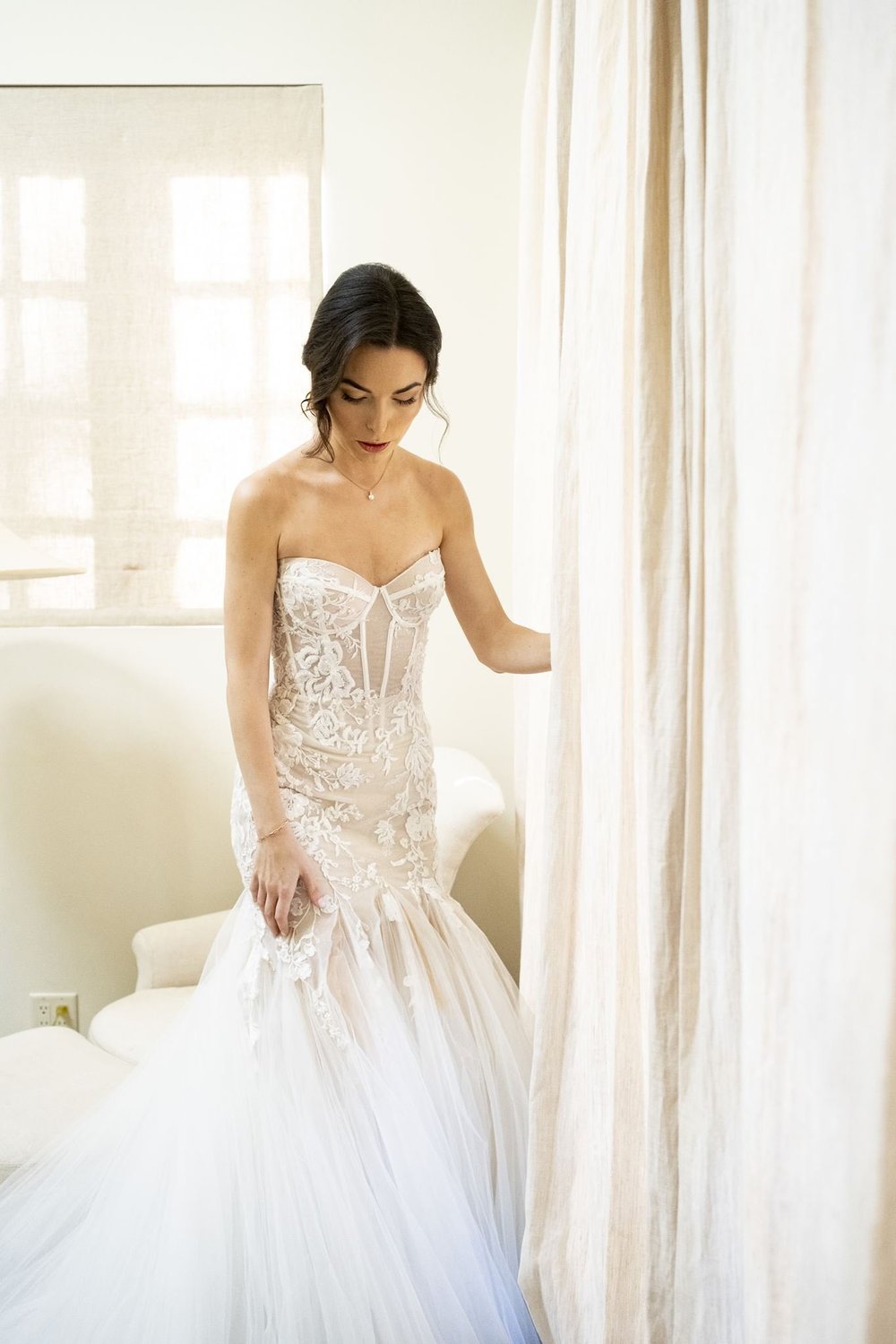
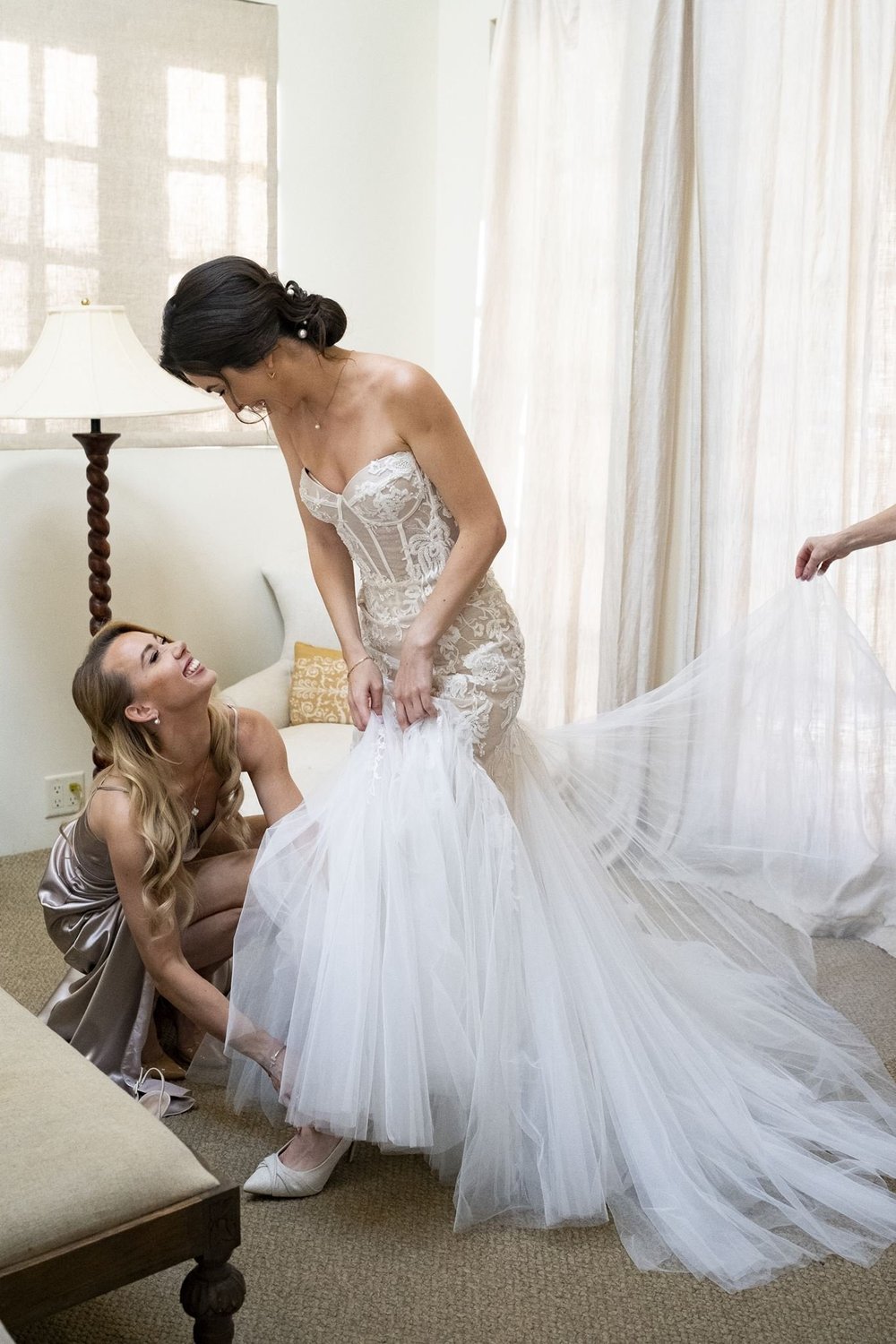
For a century, boning was the part of a wedding dress you were not supposed to see. Now designers are running it in visible vertical channels across the outside of the bodice, sometimes beaded, sometimes in a contrasting fabric, and letting the construction be the ornament.
On camera it does something specific and useful: it draws vertical lines through the torso. Vertical lines lengthen. A beaded, boned bodice photographs longer and narrower than a smooth one of exactly the same measurements, which is why it has spread so quickly.
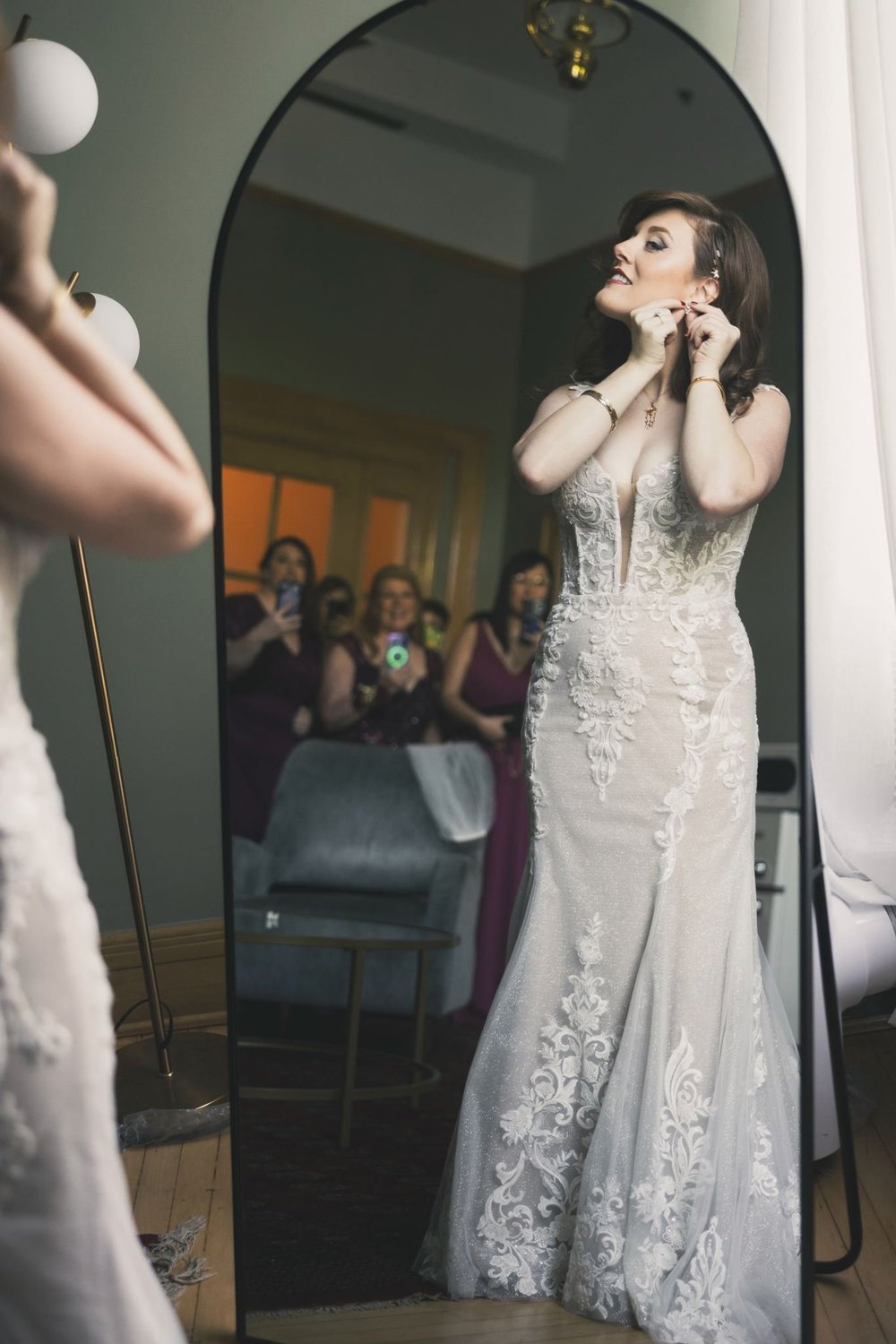
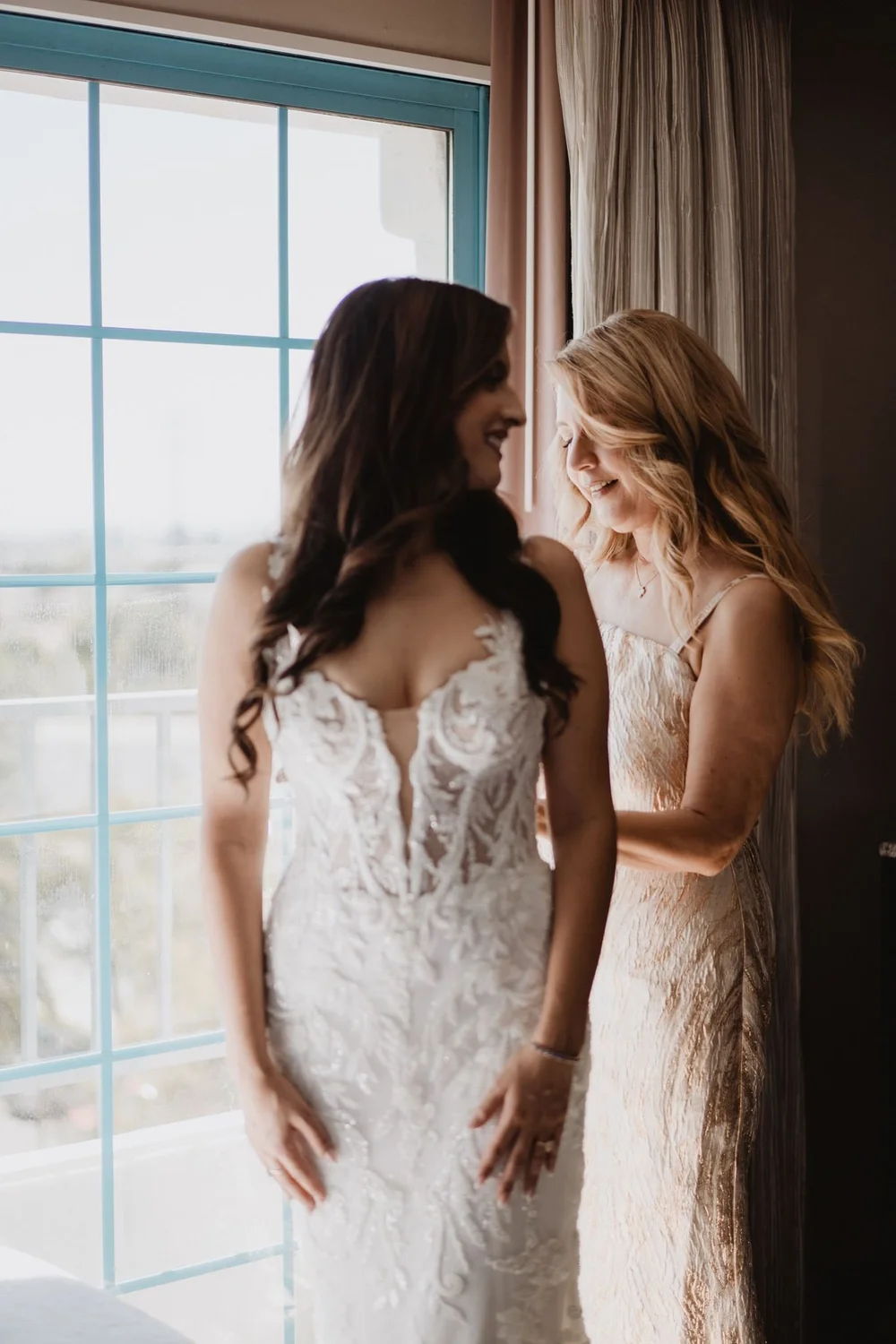
The long-line corset and the lowered waist
The other half of the trend is where the bodice stops. A long-line corset extends past the natural waist toward the hip, and the skirt is released from there. It is the same instinct as the basque and drop-waist revival: move the break lower, lengthen the body, make the skirt steeper.
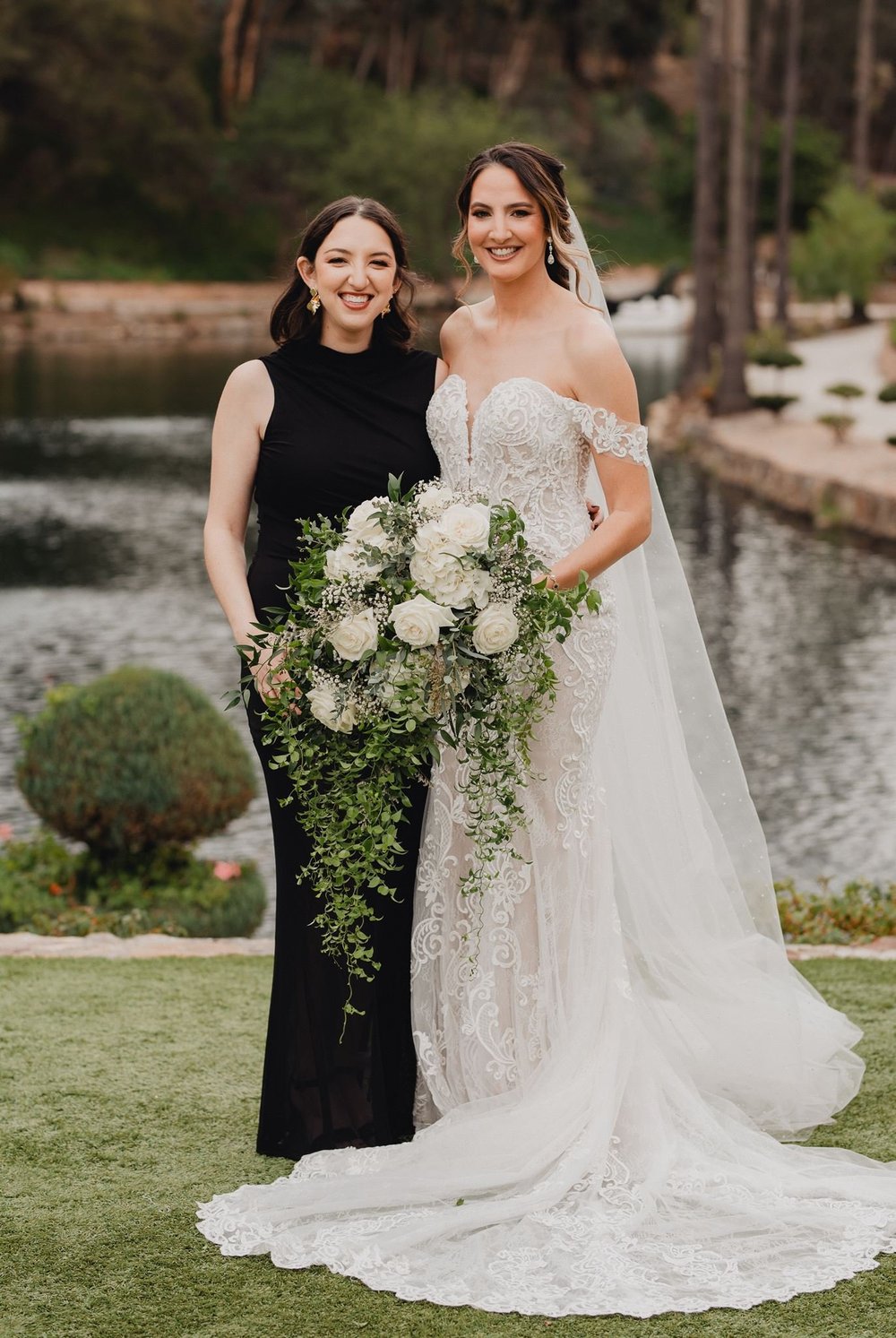
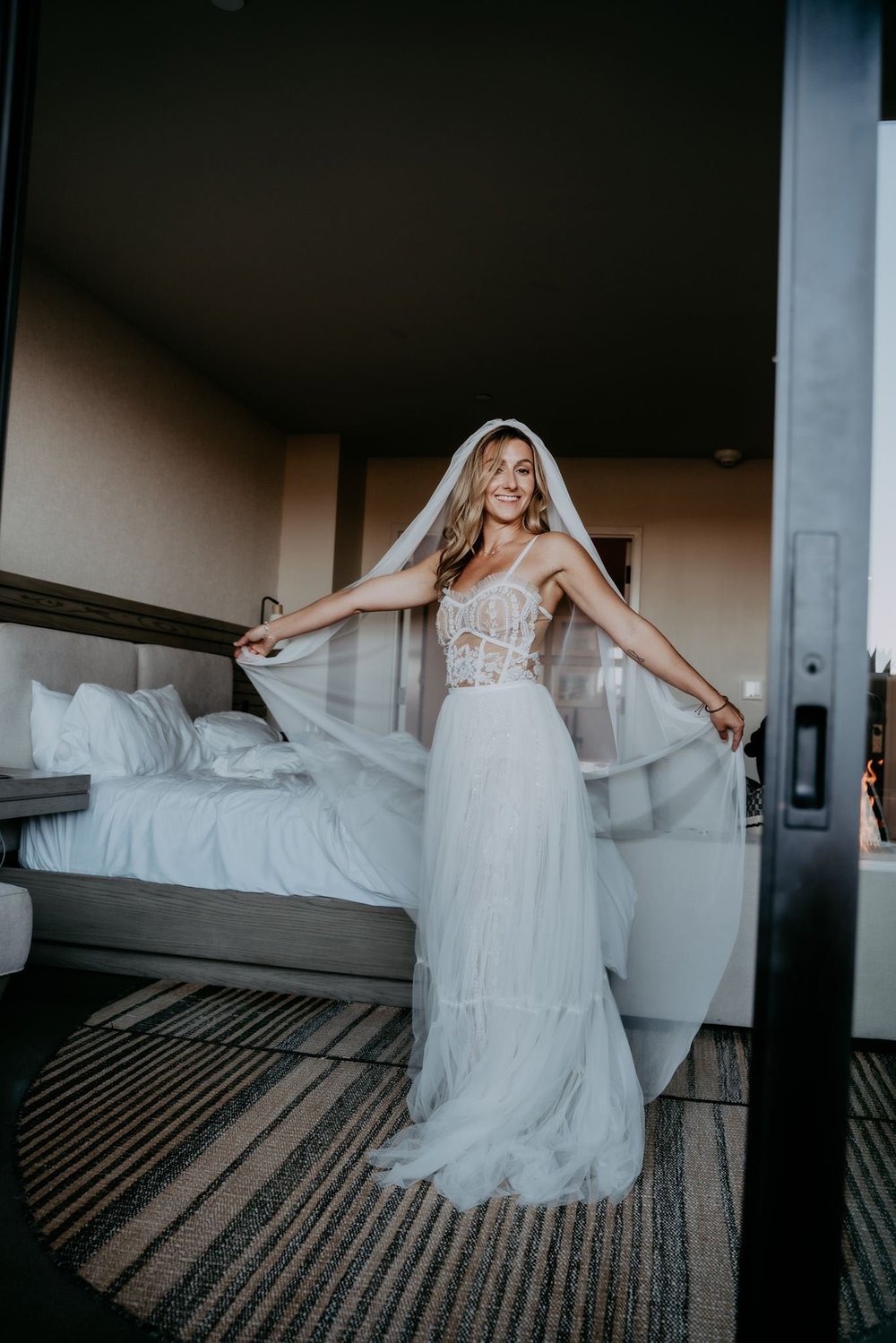
It also solves a real photographic problem. A high, natural waist plus a full skirt creates a horizontal band right across the middle of the frame, which cuts a standing figure in half. Drop the break and the figure stays whole.
What a corset gown is actually like to wear
We are photographers, not seamstresses, but we have spent a lot of full days with brides in corseted gowns and there are patterns.
- It gets tighter as the day goes on, not looser. Corsets settle. Have it laced at the final fitting to the tension you want at 9pm, not at 3pm.
- Eating is a real consideration. Brides in tightly laced corsets frequently do not eat. Ask for a slightly looser lace before dinner, or plan to have food during getting-ready, when the bodice is not yet fastened.
- Laced backs need a person. A zip is a thirty-second job; a corset back is a five-minute job that requires someone who has done it before. Build it into the timeline.
- Boning shows through thin fabric under flash. If your bodice is a light unlined silk over boning, a direct flash at the reception can reveal every channel. Worth a two-minute test at the fitting with a phone flash.
- The posture is free. This is the honest upside. A well-fitted corset holds your shoulders back all night, and it shows in every single frame.
Structure plus volume: the ball gown corset
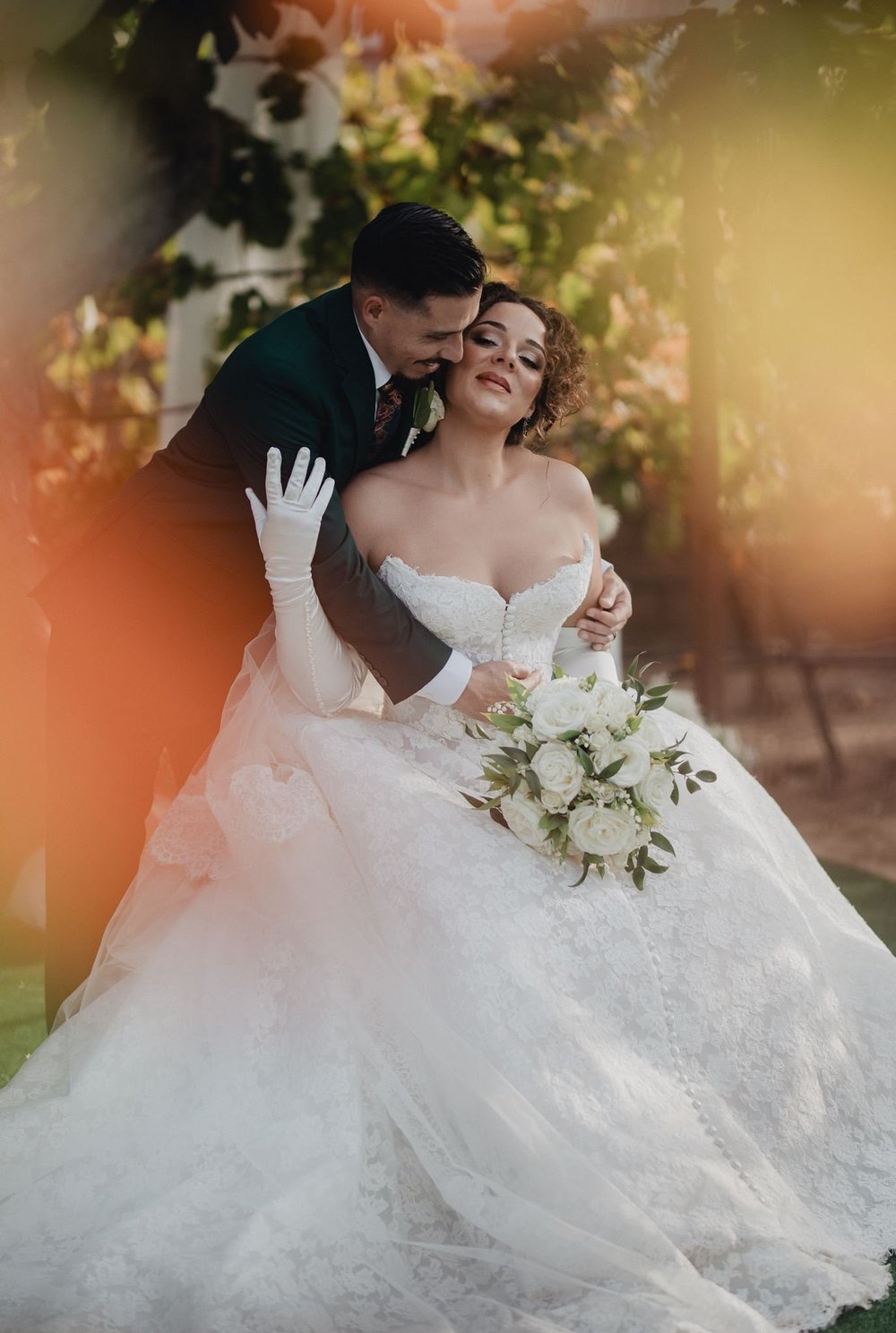
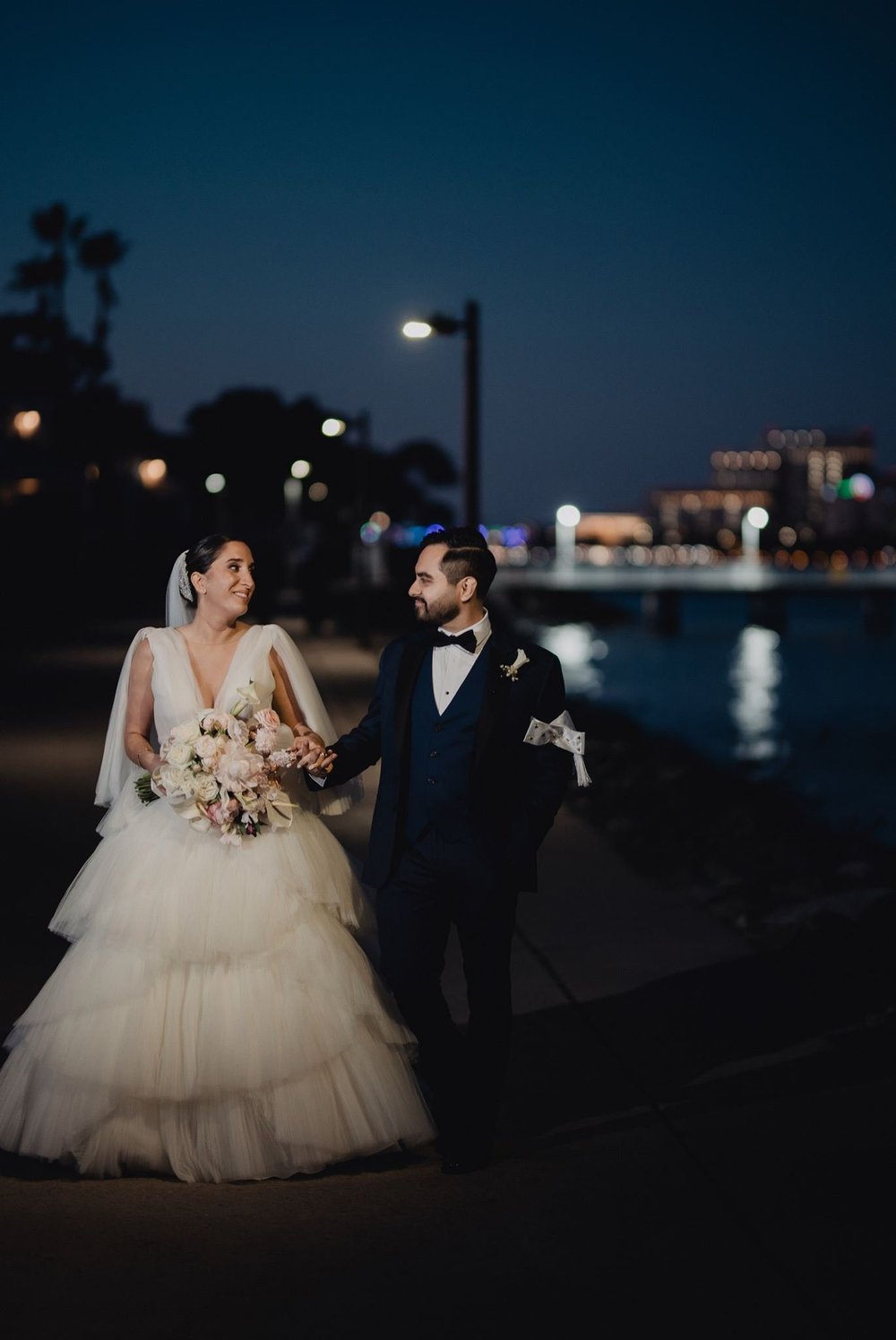
The reason corsetry and volume keep appearing together is mechanical: a heavy skirt has to be carried by something. A corseted, boned bodice distributes the weight of several kilograms of tulle or silk across the ribcage instead of hanging it off the shoulders. If you are drawn to a genuinely full ball gown or a heavily tiered skirt, structure is not a style choice — it is the thing making it possible.
Corset gown questions
Are corset wedding dresses still in style in 2026?
More than ever, and the emphasis has shifted from hiding the corset to showing it. Exposed boning, visible seaming and long-line bodices were on nearly every 2026 bridal runway, alongside the bubble hem and structured mini.
Is a corset back better than a zip?
For fit, yes — a laced back can be adjusted across a range of several inches, which is useful if your body changes at all between the final fitting and the wedding. For convenience, no: it takes several minutes and another person every time you get in or out of it.
Is a corset wedding dress comfortable for a whole day?
It can be, if it is laced to the right tension and fitted properly. The common mistake is lacing tightly in the morning when you feel fresh. Corsets settle over a few hours, so aim for the tension you want in the evening. Most brides also loosen slightly before dinner.
What is a bubble hem?
A hem that is gathered and turned under so the skirt rounds outward at the bottom instead of falling straight. It creates a sculptural, slightly retro shape and was one of the defining details of the 2026 collections. It appears both on full-length gowns and on short dresses.
Does exposed boning photograph well?
Very well. Vertical channels across the torso lengthen the figure in a frame. The only thing to watch is direct flash through a thin unlined bodice, which can reveal the structure more starkly than intended.
Structured gown, twelve-hour day?
We have photographed over 2,300 weddings across Los Angeles, Orange County, San Diego and Santa Barbara. We know what a corset looks like at hour one and at hour eleven.
Check your dateSchedule a callMore from our bridal fashion series
Photographs by Lulan Studio — Los Angeles wedding photography and engagement sessions. See our collections and rates or schedule a call.
We’d love to hear about your day
Lulan Studio is a Los Angeles wedding photography and videography team, shooting on film and digital across Los Angeles, Orange County, San Diego and Santa Barbara.
Or take a look at our rates and packages.