Wedding Dress Silhouettes in 2026: A-Line, Ball Gown, Mermaid, Sheath and Fit-and-Flare
Every bridal boutique in Los Angeles will hand you the same five words on your first appointment: A-line, ball gown, mermaid, sheath, fit-and-flare. They are useful words. They are also almost always demonstrated on a hanger, under shop lighting, standing still.
We photograph weddings for a living, which means we see the other version of that vocabulary — the one where the dress has to get into a car, walk a hundred feet of uneven garden path, sit through dinner and then survive a first dance. Every gown on this page was worn by a real bride at a real wedding we photographed, most of them in 2025 and 2026. Nothing here is a runway sample or a stock image.
What follows is the same six-silhouette vocabulary, but described from behind the camera: what each shape does with light, how it reads in a wide frame, and the small practical things nobody mentions in the fitting room.
The A-line
An A-line is fitted through the bodice and then releases from the natural waist in one clean, uninterrupted diagonal. It is the most photographed silhouette in bridal for a simple structural reason: the shape is legible from any distance. In a wide frame at the end of an aisle it still reads instantly as a wedding dress, which is not true of every gown.
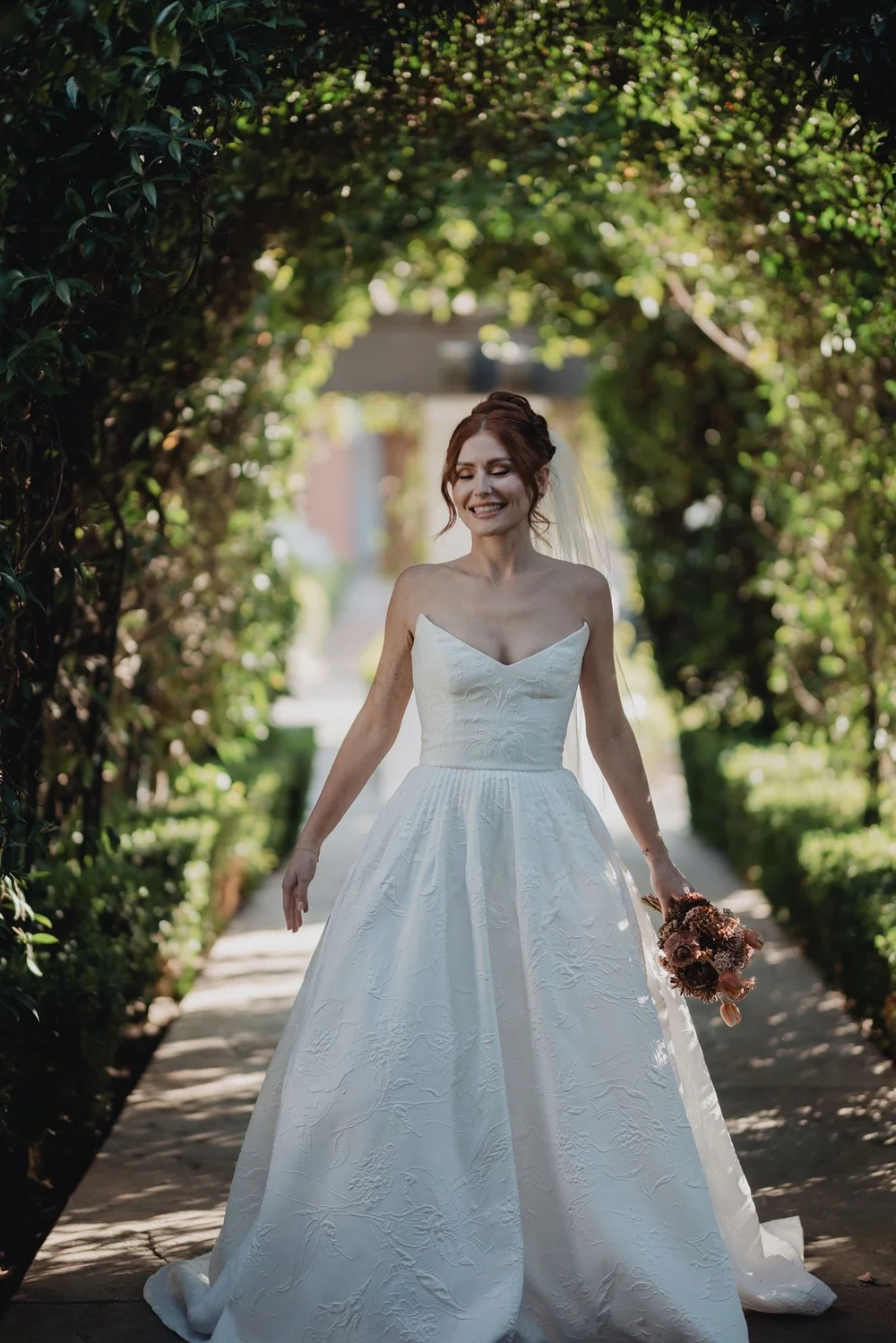
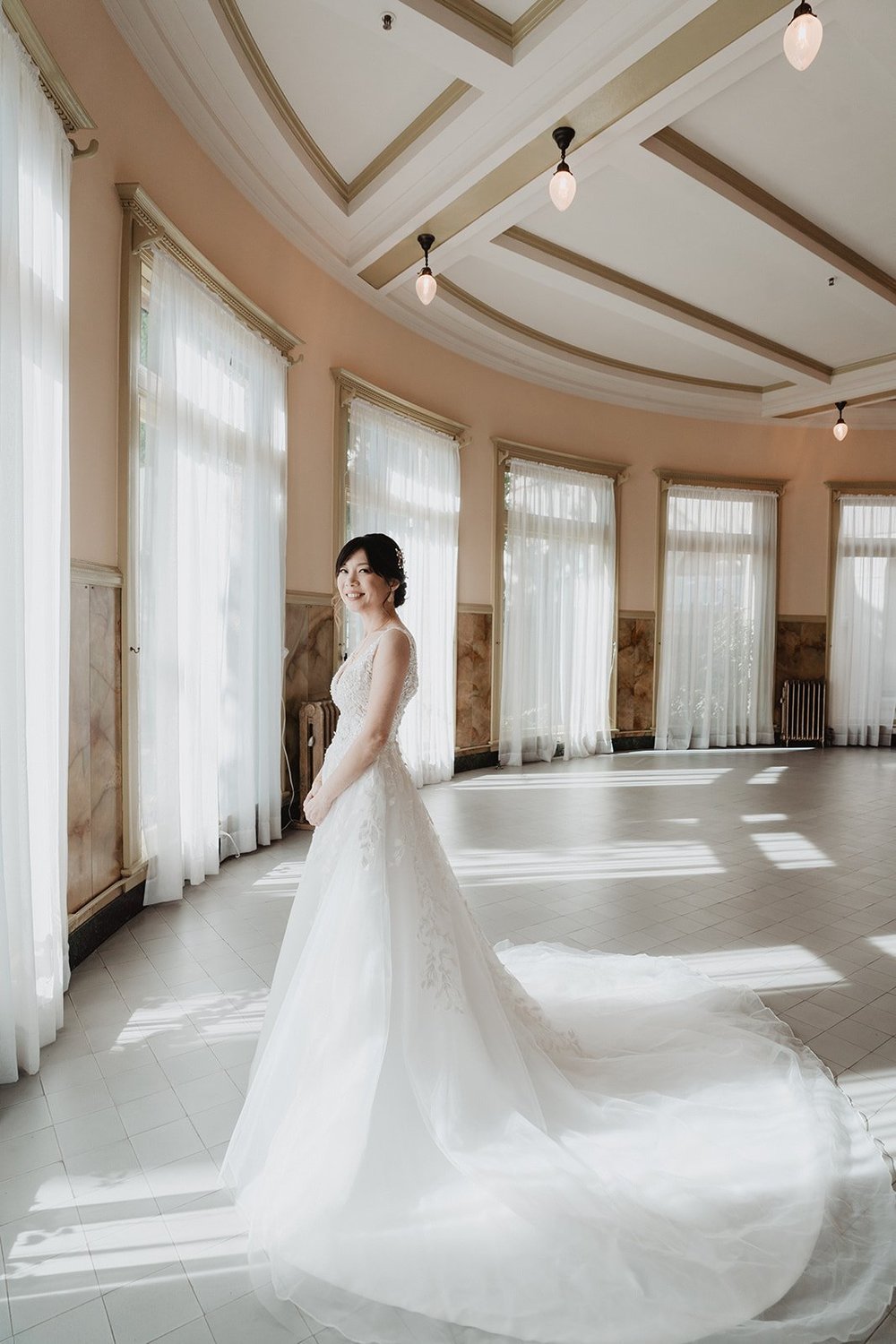
The A-line is also the most forgiving shape to sit down in. The skirt collapses and re-forms rather than creasing along a seam, which matters more than couples expect — a bride is seated for dinner and toasts for a long stretch of the evening, and a gown that photographs beautifully at 5pm should still photograph beautifully at 9pm.
Where it gets interesting in 2026 is the waistline. The basque and drop-waist hybrids coming out of the last two bridal fashion weeks push the release point lower, which lengthens the torso and gives the skirt a steeper diagonal. On camera the effect is genuinely dramatic — but it is also less forgiving of a bad hem, because the eye follows that longer line all the way to the floor.
Photographs best: full-length, from slightly below eye level, with room around the hem. Watch for: a hem that has been shortened for flats and then worn with heels.
The ball gown
Fitted bodice, hard break at the waist, and then volume. A ball gown is the only silhouette that changes the physics of a room — it decides how close your guests can stand, how wide the aisle needs to be, and whether a doorway is a doorway or an event.
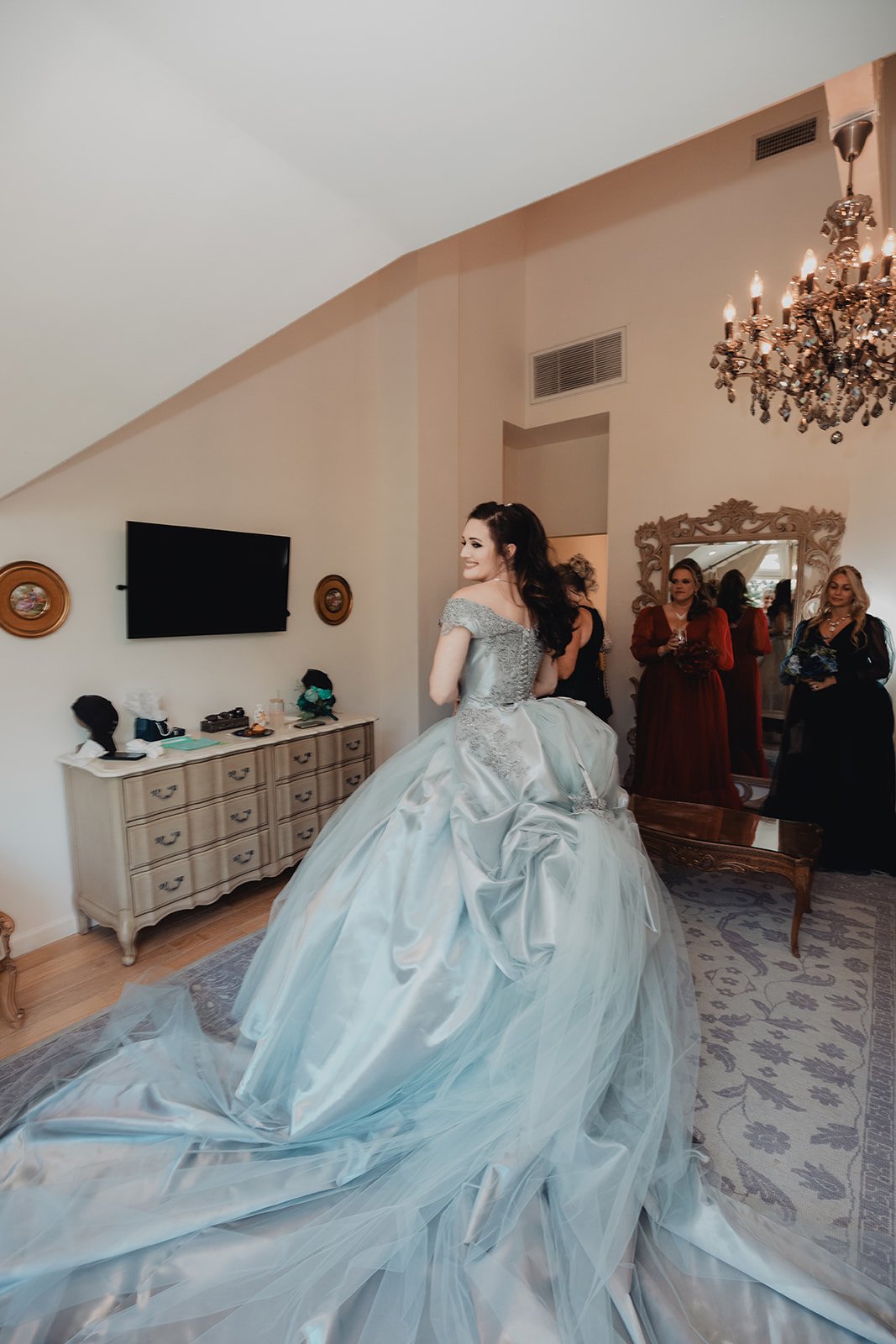
Volume is not a single thing. A tulle ball gown floats and catches backlight; a silk or Mikado ball gown holds a hard architectural edge and reflects light in broad planes. Those are two completely different photographs. If you are choosing between them, look at the venue first — tulle wants sun behind it, structured silk wants a strong side light and an interesting room.
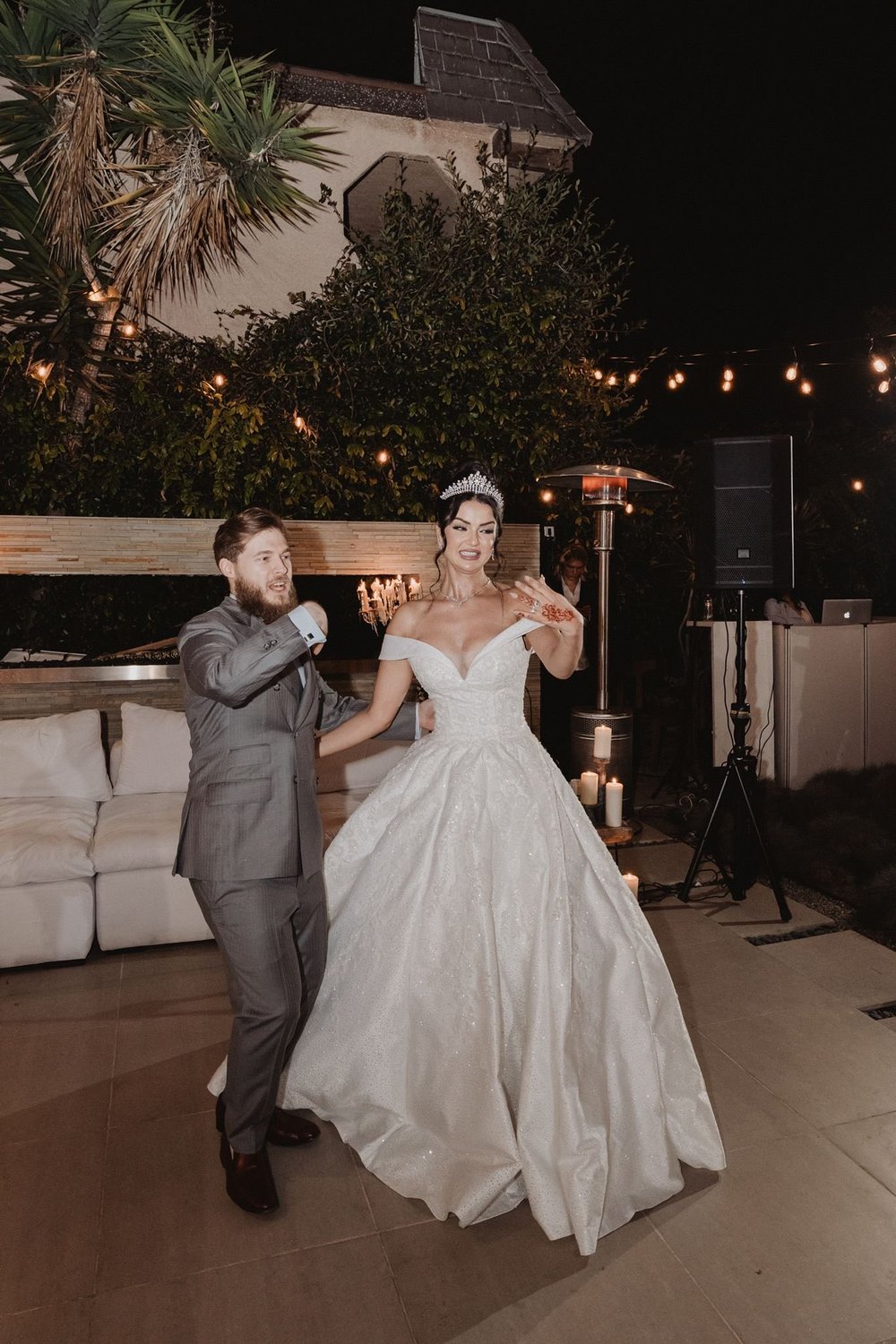
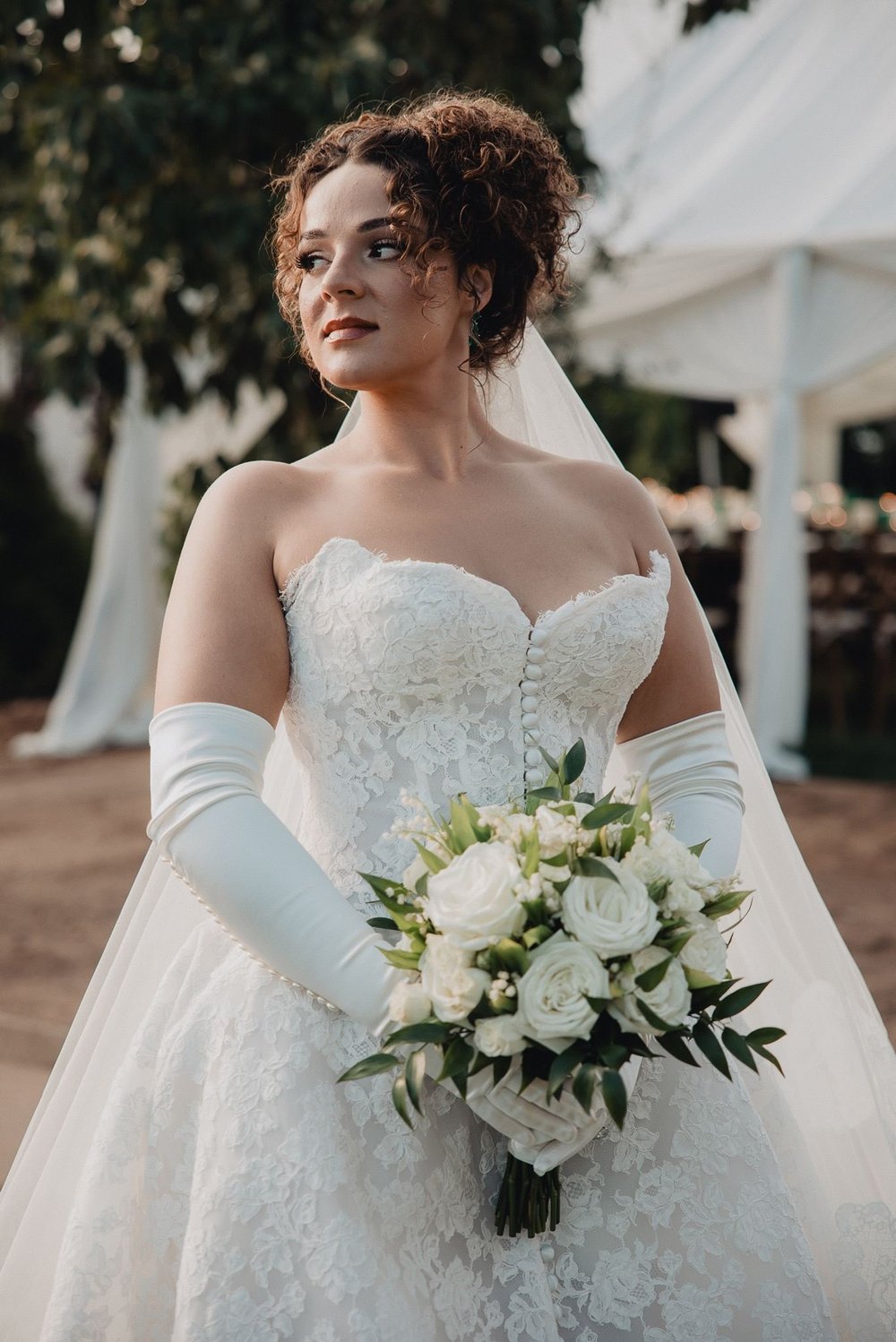
The practical note: a full ball gown needs a person. Not a helpful cousin — a person whose actual job for ten minutes is the skirt. We have photographed a lot of weddings, and the ball gowns that look effortless in the pictures are the ones where somebody was quietly holding fabric out of frame.
The mermaid
Fitted through the bodice, waist, hip and thigh, then flaring at or below the knee. The mermaid is the most sculptural silhouette in bridal and the least tolerant of a rushed fitting. It is also the one that rewards a photographer most, because it puts a real curve into the frame — the line of the body becomes the composition.
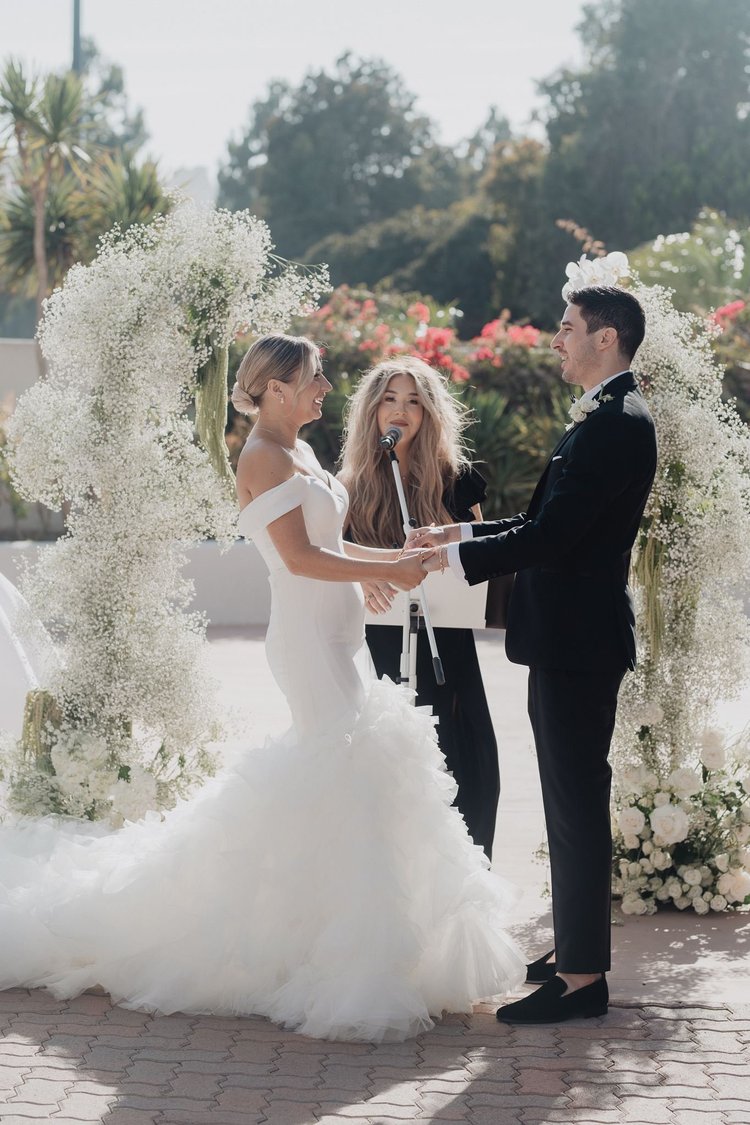
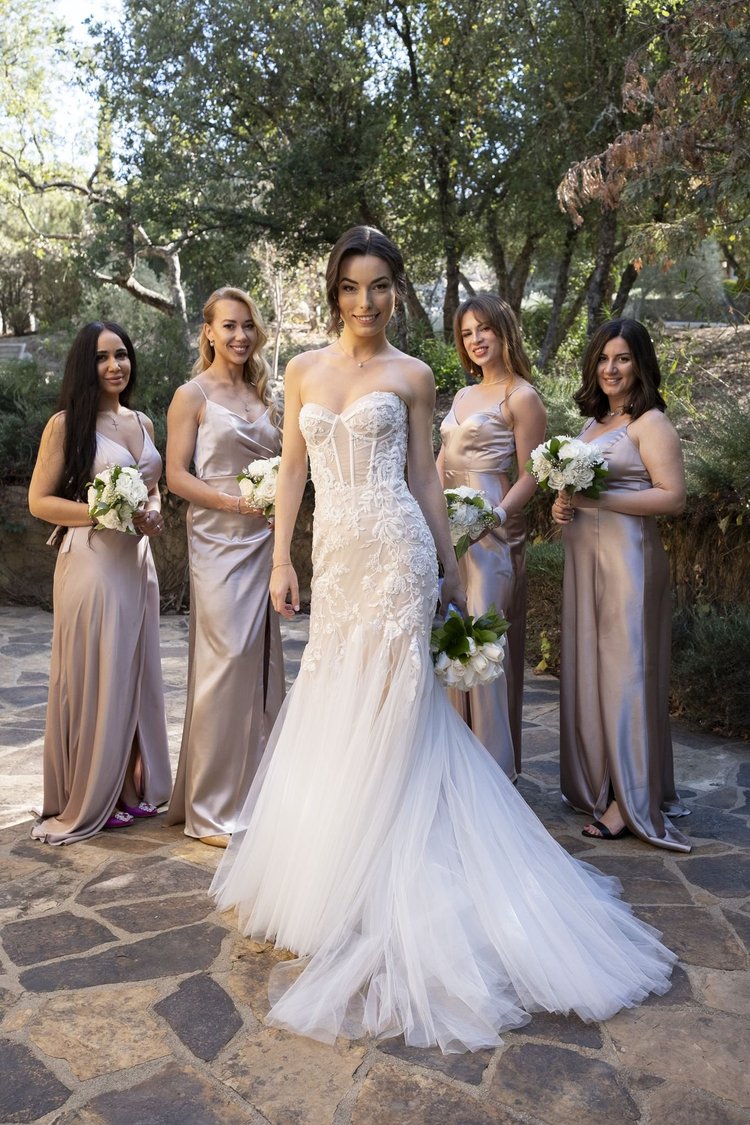
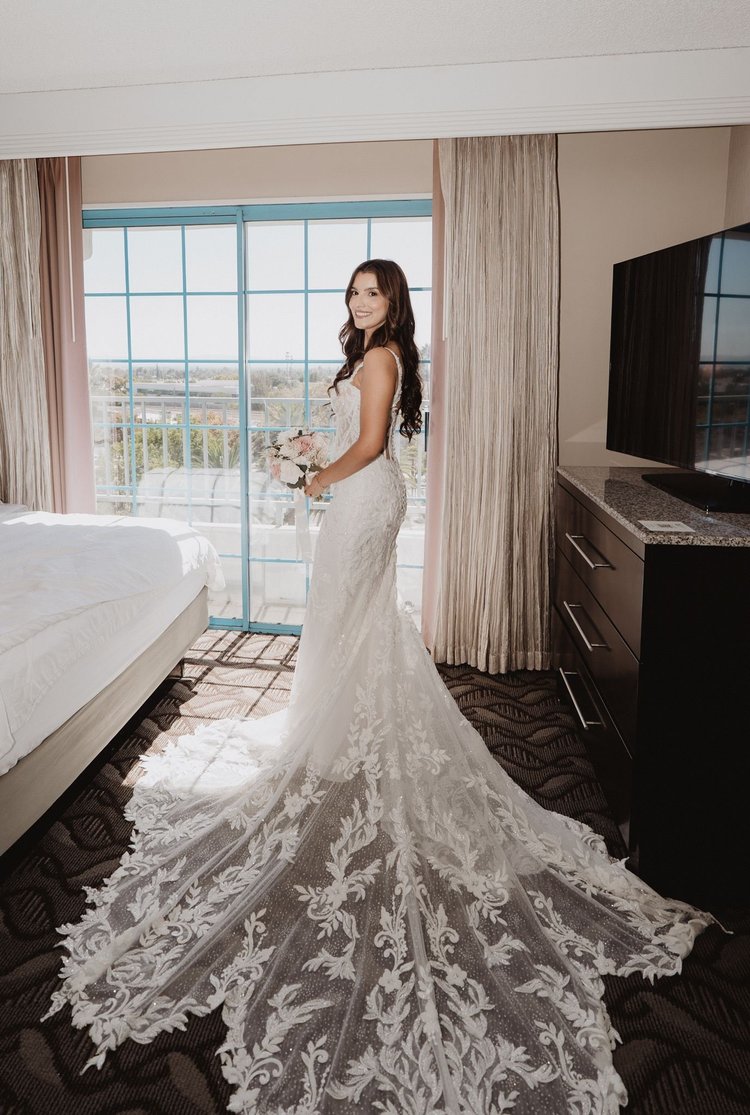
Two things we would tell any bride considering one. First, the flare point is everything: a few centimetres higher and it becomes a fit-and-flare, a few lower and stairs become genuinely difficult. Second, ask your seamstress to watch you walk uphill in it, not across a flat showroom floor. Half the ceremony sites in Los Angeles involve a slope.
In exchange you get the single most flattering profile in bridal photography, and a back view that does most of the work for you.
The sheath and the return of 90s minimalism
A sheath skims. No waist break, no flare, no structure fighting the body — just a column of fabric from shoulder to floor. It went quiet for a decade and it is now, unambiguously, back. Every bridal fashion week report from the last two seasons has said the same thing in different words: slip dresses, clean columns, Carolyn Bessette-Kennedy.
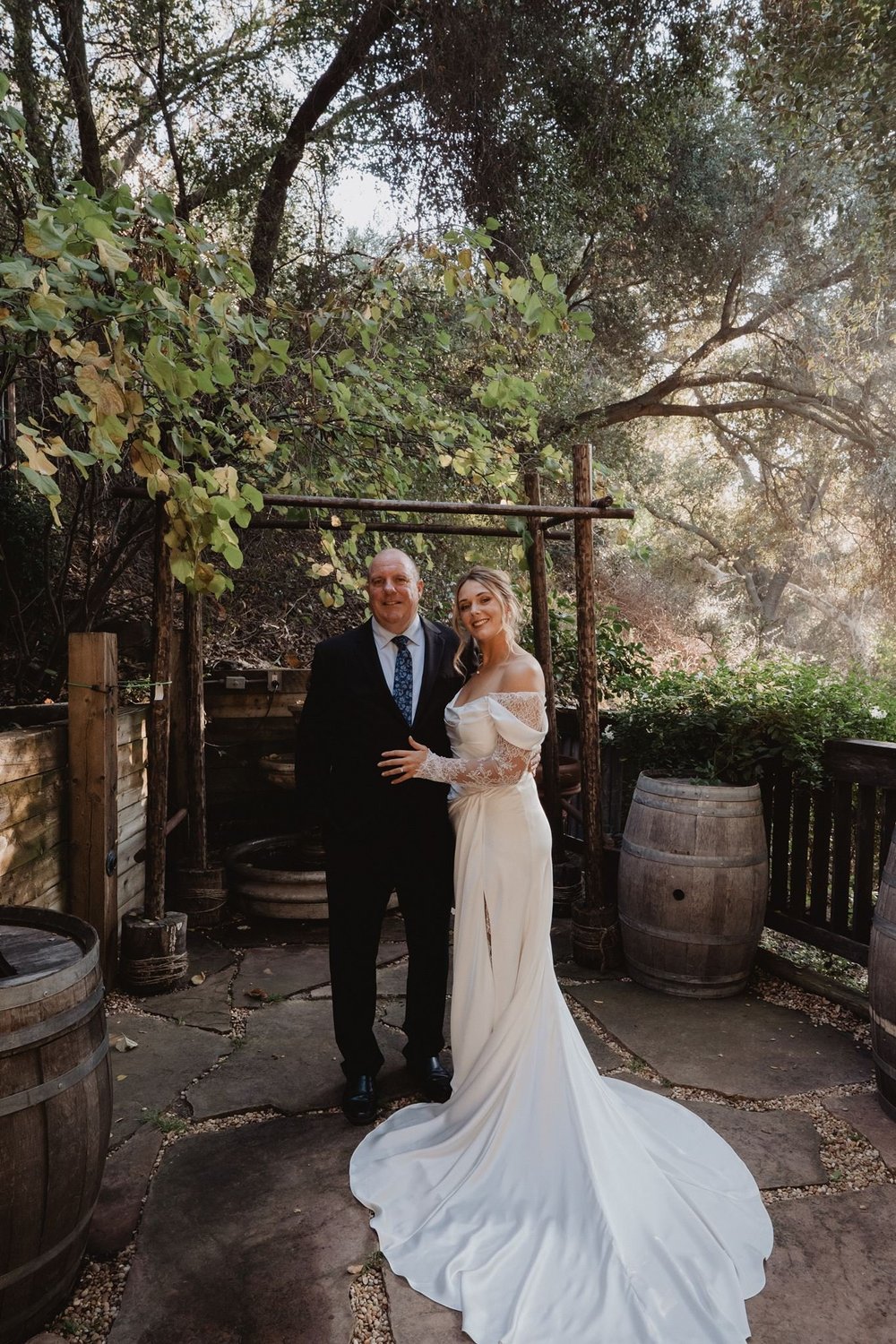
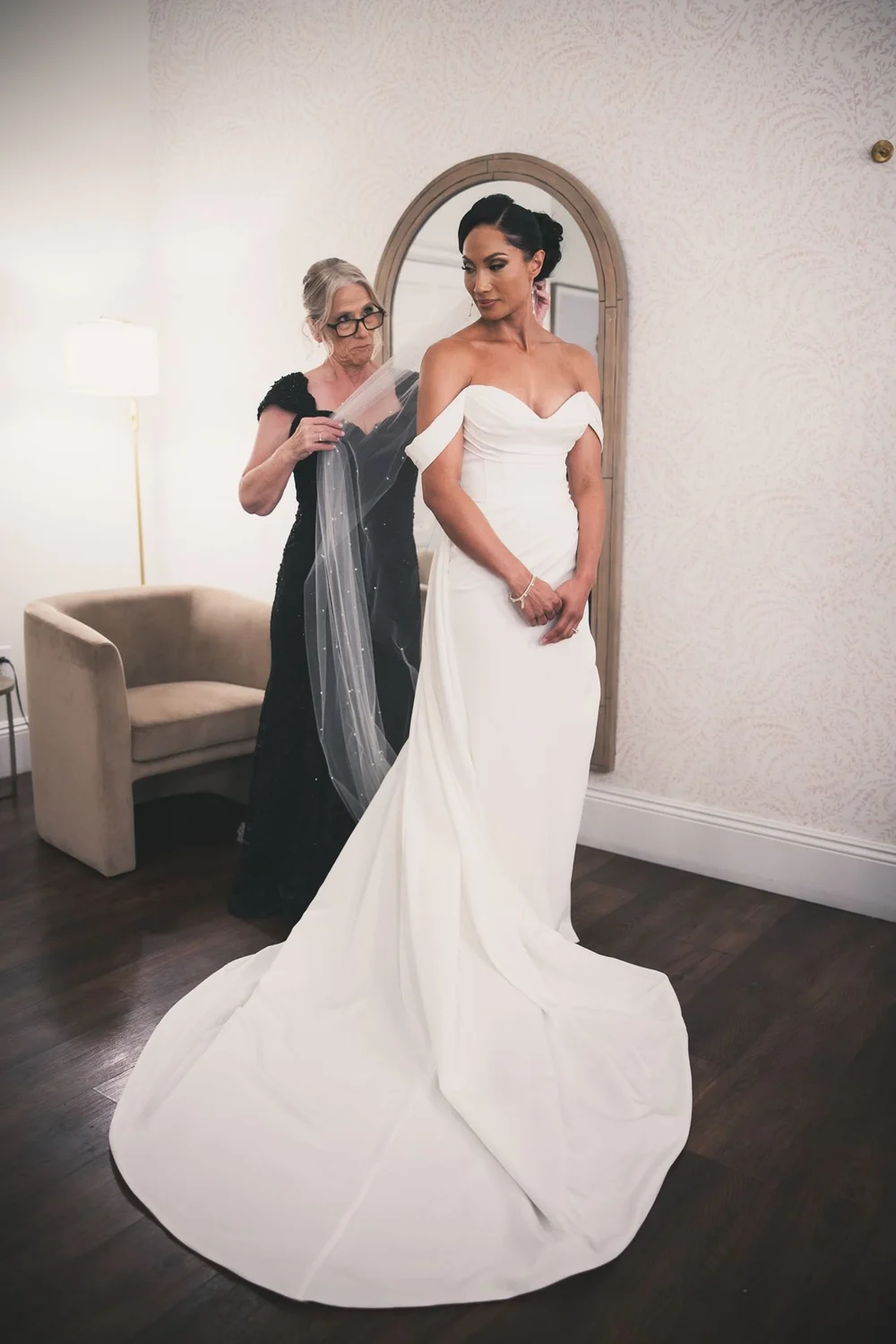
Here is the honest photographic assessment: a sheath is the hardest silhouette to photograph badly and the hardest to make interesting. There is no skirt to catch wind, no train to arrange, no volume to backlight. What you get instead is line — so the frame has to supply the drama that the dress deliberately withholds. Architecture, doorways, long corridors, strong shadow.
Which is why the minimal gowns in our archive are almost all photographed against something: a stone arch, a wall of windows, a staircase. If you are drawn to a clean column, choose a venue with bones. Our favorite Los Angeles wedding venues page is a reasonable place to start that conversation.
Fit-and-flare — the one most brides actually buy
Fit-and-flare sits between the mermaid and the A-line: fitted through the bodice and waist, released somewhere around the upper thigh. It is quietly the most common silhouette in our archive, and we think that is because it is the only shape that gives you a defined waist and the ability to climb a staircase without planning it.
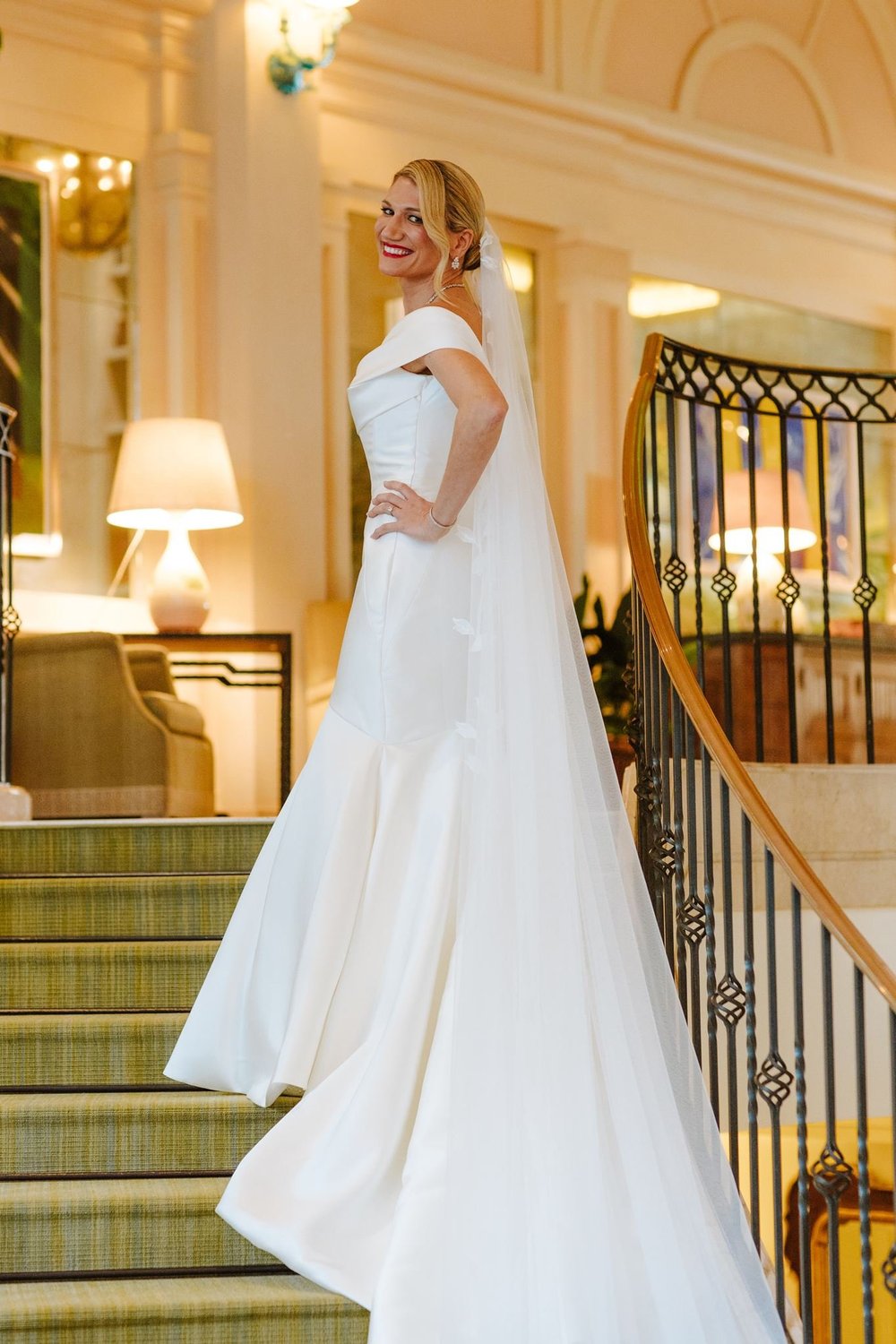
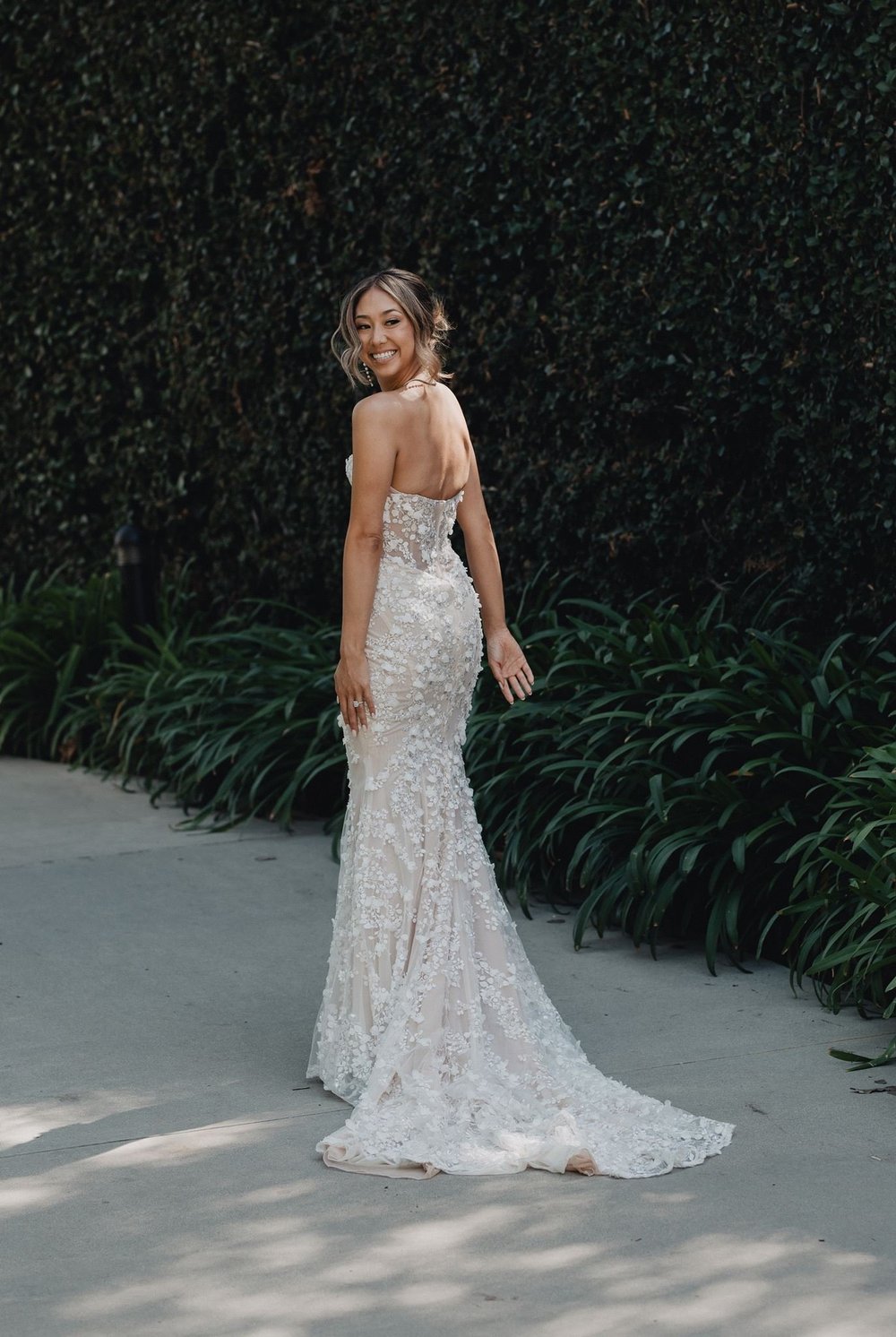
It also happens to be the silhouette that handles a long train most gracefully, because the flare gives the train somewhere to come from. A cathedral train on a true sheath tends to look bolted on; on a fit-and-flare it looks inevitable.
The short dress — no longer just for the after-party
The mini and the midi were on nearly every 2026 bridal runway, usually with a corset bodice and a bubble hem. We photographed one this year and it was, frankly, the most modern thing we shot all season.
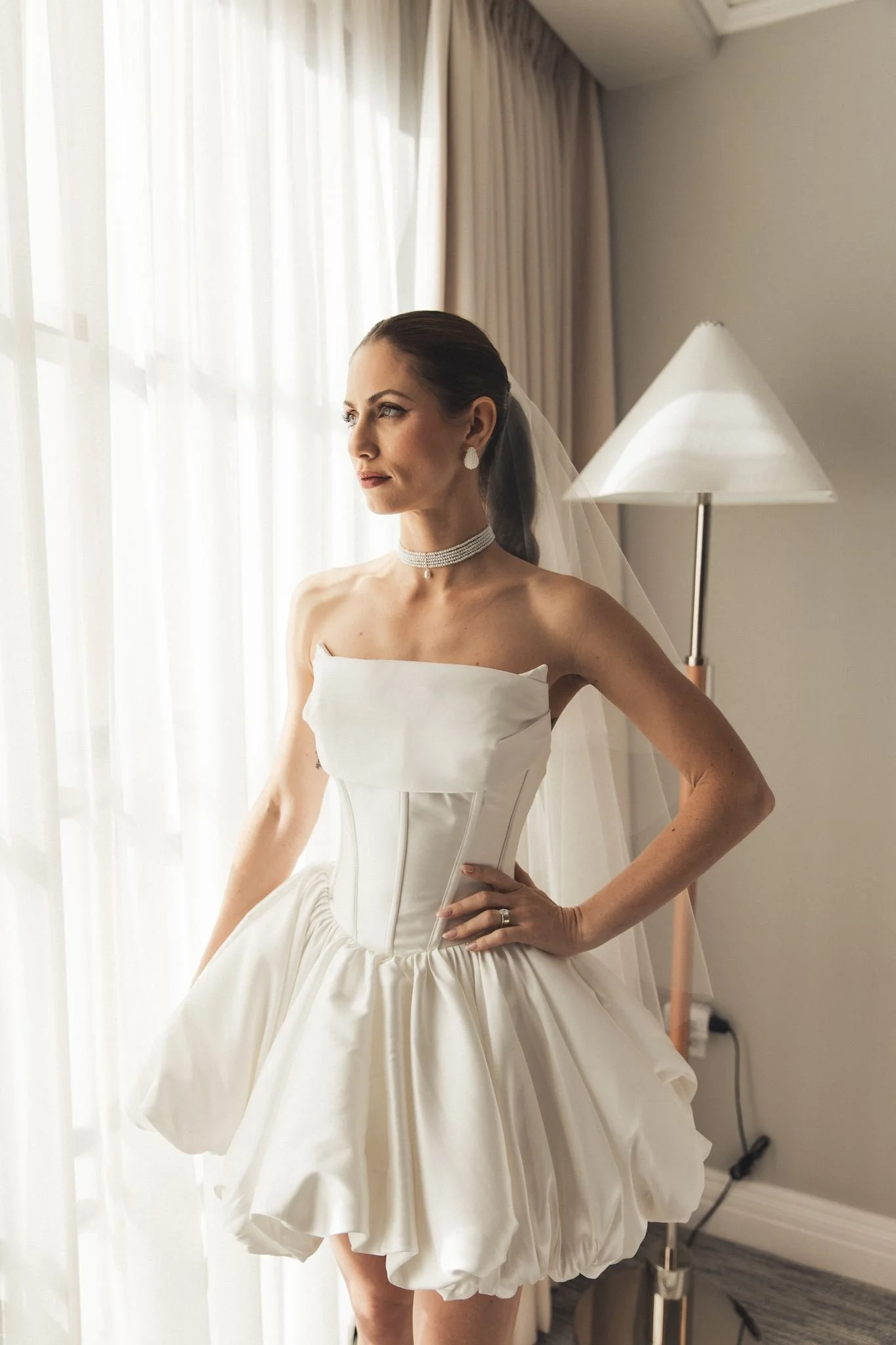
A short dress changes what the camera is looking at. With no skirt and no train, the frame moves up to the face, the shoulders and the hands — and shoes stop being a footnote. If you are considering one, budget attention for accessories in a way you would not need to with a full-length gown. The 2026 collections agree: chokers, gloves, capelets and neck scarves all came back at the same time as the mini.
Plenty of brides now do both — a full-length gown for the ceremony and a short dress for the reception. That is its own subject, and we have written it up in one dress, two looks.
How to pick a silhouette you will still like in the photographs
- Try the shape before the dress. Ask for one of each silhouette in roughly your size on your first appointment, regardless of price or detail. You are testing shapes, not shopping.
- Photograph yourself from behind. Guests see the back of your dress for the entire ceremony. Most brides never look at it before the wedding day.
- Move the way you will actually move. Sit. Climb three stairs. Raise both arms. Turn quickly. A gown that fails any of those will fail them again in front of two hundred people.
- Match the silhouette to the venue, not the season. A cathedral train in a tight garden aisle is a hazard; a plain sheath in a spectacular ballroom is a missed opportunity.
- Decide about the train early. Sweep, court, chapel and cathedral are not interchangeable — they change your aisle, your portraits and your bustle. We break all four down here.
Silhouette questions we get every season
What is the most flattering wedding dress silhouette?
There isn't one, and any boutique that gives you a single answer is guessing. What is true is that A-line and fit-and-flare suit the widest range of bodies with the least alteration, which is why they dominate most bridal collections. Mermaid and sheath are the least forgiving of fit — they can be the most flattering gowns in the room, but only after they've been properly altered.
Which silhouette photographs best?
Mermaid and fit-and-flare give a photographer the strongest line, ball gowns give the most spectacle, and sheaths give the cleanest portrait. The bigger variable is the venue. A dramatic gown in a flat, low-ceilinged room photographs worse than a simple gown in a beautiful one.
Can I change silhouette between the ceremony and the reception?
Yes, and it is increasingly common. A detachable train or overskirt turns a ball gown into a fit-and-flare in about thirty seconds, which is far cheaper than a second dress. Several of the gowns on this page do exactly that.
How early should I start dress shopping?
Nine to twelve months before the wedding for a made-to-order gown, because production plus alterations routinely runs six to eight months. Off-the-rack and sample gowns can be much faster. If your date is inside six months, say so at the first appointment — boutiques will show you a different rail.
Does the silhouette change how long portraits take?
A little. Ball gowns and cathedral trains need a person arranging fabric between frames, so we usually add ten to fifteen minutes to a portrait block. Sheaths and short dresses need none of that. It's worth mentioning to whoever is building your timeline.
Getting married in Los Angeles?
We are a Los Angeles wedding photography and videography team shooting on film and digital across LA, Orange County, San Diego and Santa Barbara. Over 2,300 weddings, 382 five-star reviews, and a lot of opinions about dresses.
Check your dateSchedule a callMore from our bridal fashion series
Photographs by Lulan Studio — Los Angeles wedding photography, videography and 35mm film. See our collections and rates, read the reviews, or check your date.
We’d love to hear about your day
Lulan Studio is a Los Angeles wedding photography and videography team, shooting on film and digital across Los Angeles, Orange County, San Diego and Santa Barbara.
Or take a look at our rates and packages.