Wedding Dress Train Lengths: Sweep, Court, Chapel and Cathedral, Photographed
A train is the one part of a wedding dress that exists purely for the photograph and the procession. It has no other job. Which makes it strange that most brides choose one from a single word on a tag — chapel, cathedral — without ever seeing it laid out at full length.
So here they are, at full length, on real brides at real Los Angeles weddings. We have arranged, lifted, bustled and stepped over every one of these trains, and we have opinions.
What the words actually mean
- Sweep train — roughly 15–30 cm past the hem. The shortest true train. It brushes the floor behind you and does not need bustling for most receptions.
- Court train — roughly 30–90 cm past the hem. A visible tail, still fully walkable, and the most common length in modern bridal.
- Chapel train — roughly 1–1.4 m from the waist. The classic. Long enough to be arranged, short enough to bustle simply.
- Cathedral train — roughly 1.8–2.7 m from the waist, and royal or monarch trains go further still. This is a production, and it is spectacular.
Measurements vary between designers — some measure from the waist, some from the hem — so always ask which. A "chapel" from one house can be a "court" from another.
The sweep train — the quiet one
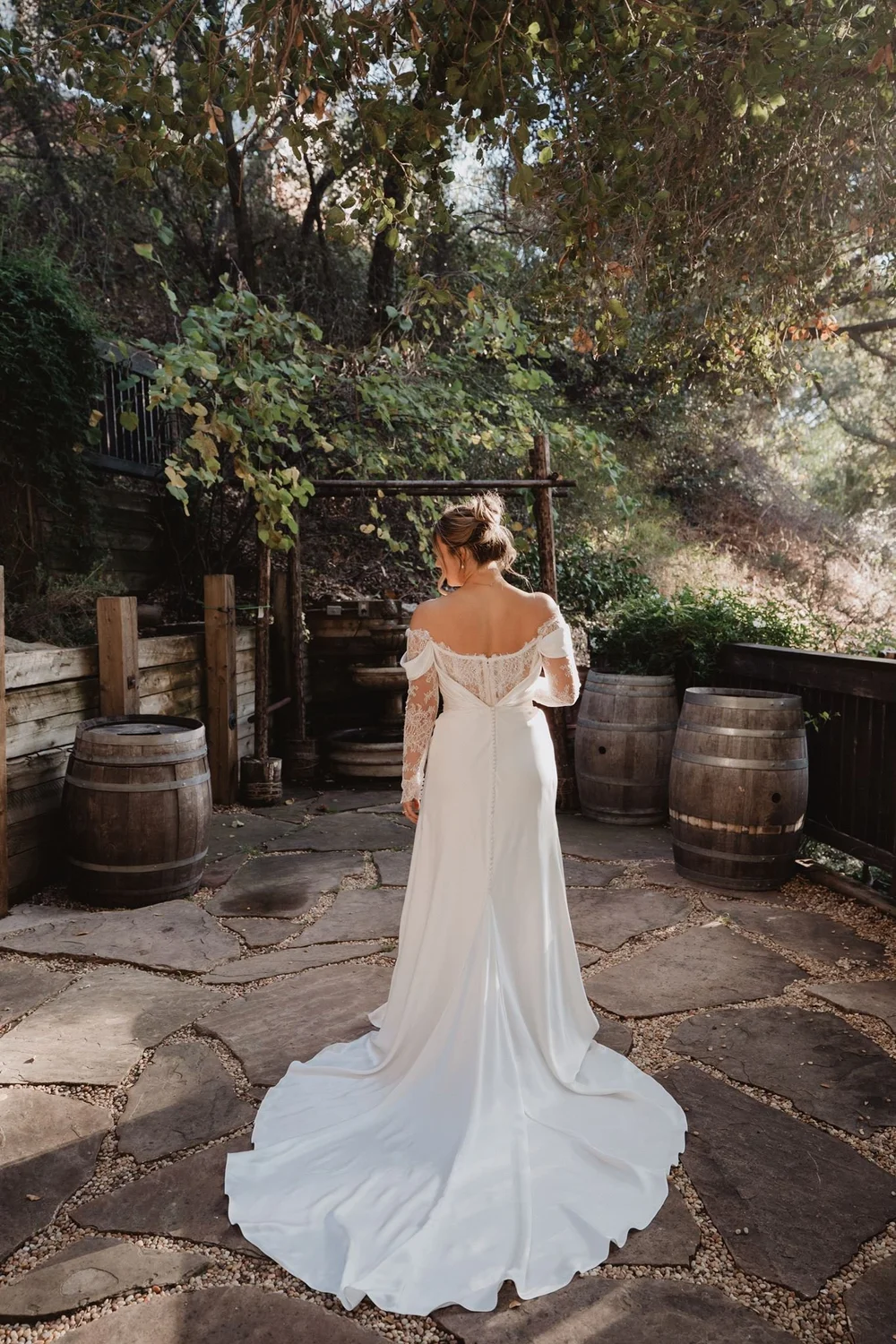
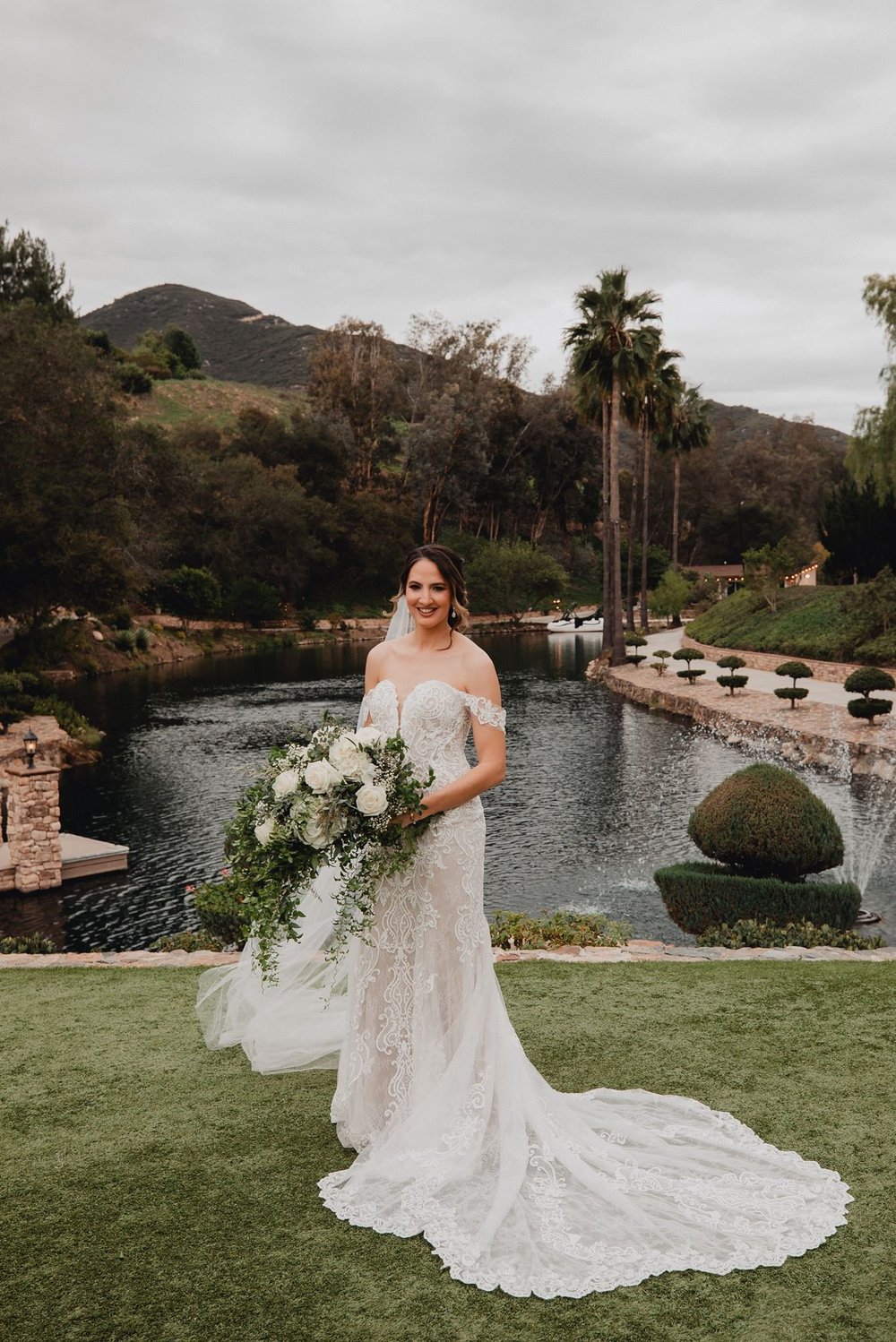
A sweep train is the sensible choice, and we do not mean that dismissively. It gives a full-length portrait a soft base, it photographs cleanly on grass, and it survives an outdoor wedding without turning brown. Of the thirty-three gowns in this collection, the sweep is the single most common length — ten of them.
What you give up: the aisle moment. A sweep does not announce itself from the back of a room. If the shot in your head is the one where the train fills the frame behind you, this is not that train.
The court train — the modern default
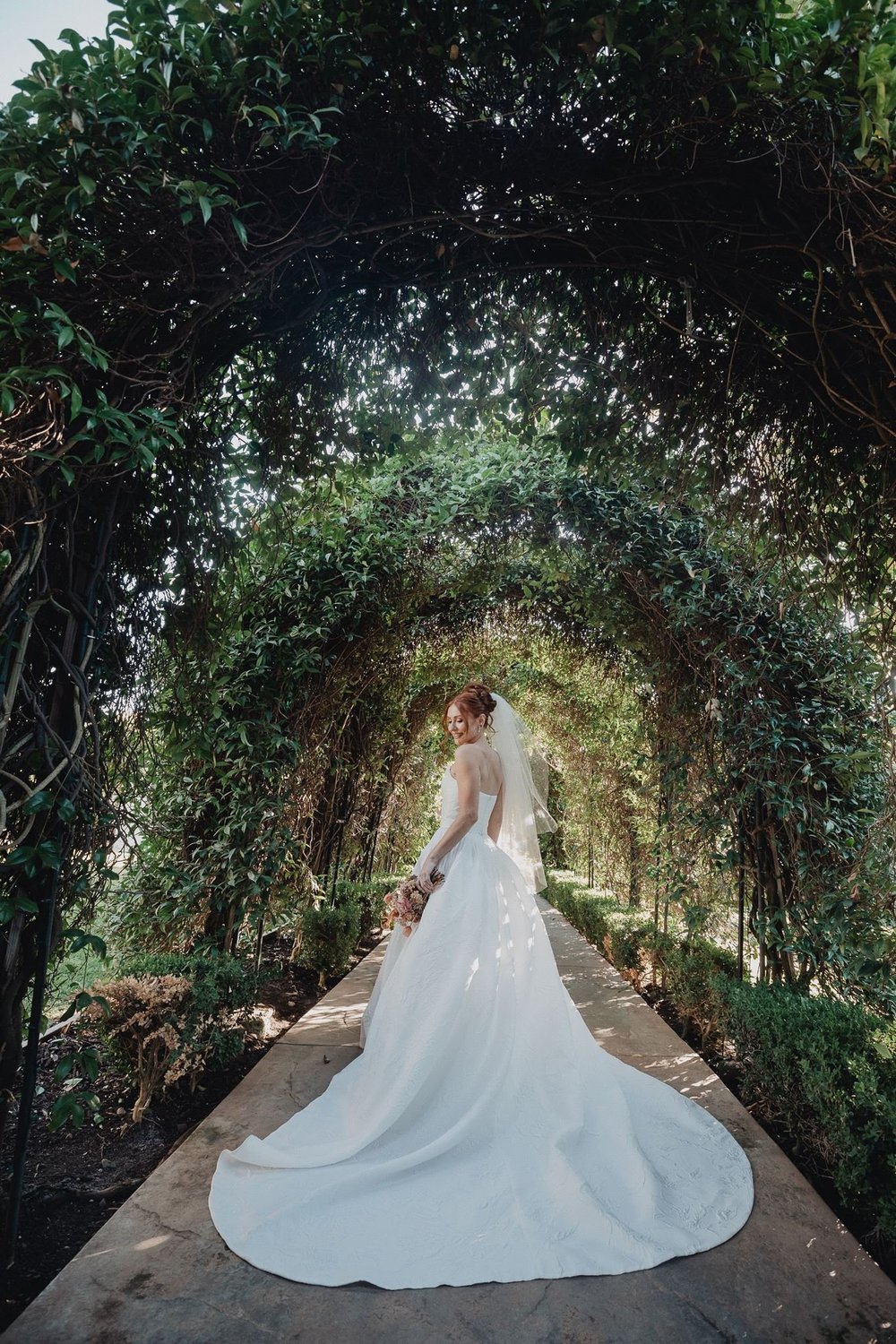
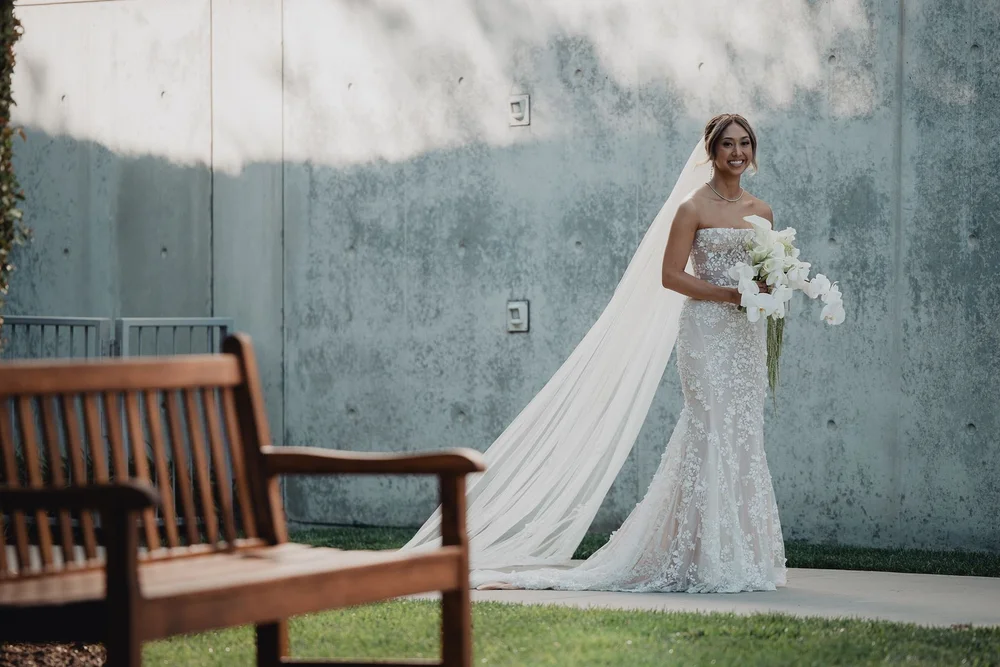
The court train is where most brides land once they have seen all four in person, and it is a good instinct. It reads clearly in a wide frame, it needs no attendant, and in most gowns it bustles into a single point.
It is also the most forgiving on uneven ground. A great many Los Angeles ceremony sites are lawns, decomposed granite paths or stone terraces, and a court train clears all three without collecting half the garden.
The chapel train — the classic
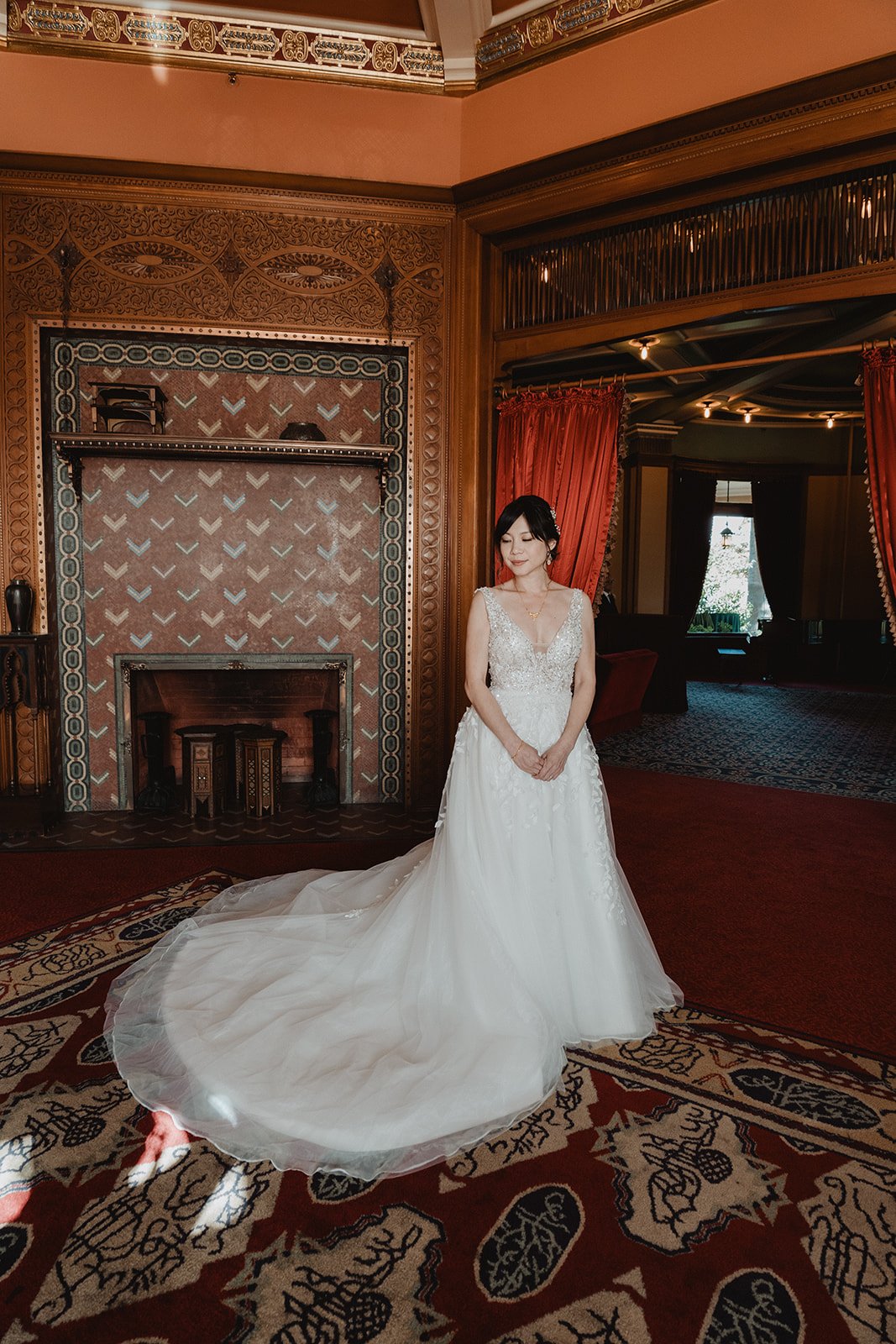
A chapel train is the length that photographers quietly hope for. It is long enough to be composed — fanned into a circle, curved along a staircase, laid down a corridor — and short enough that a bride can walk unassisted once it is dropped.
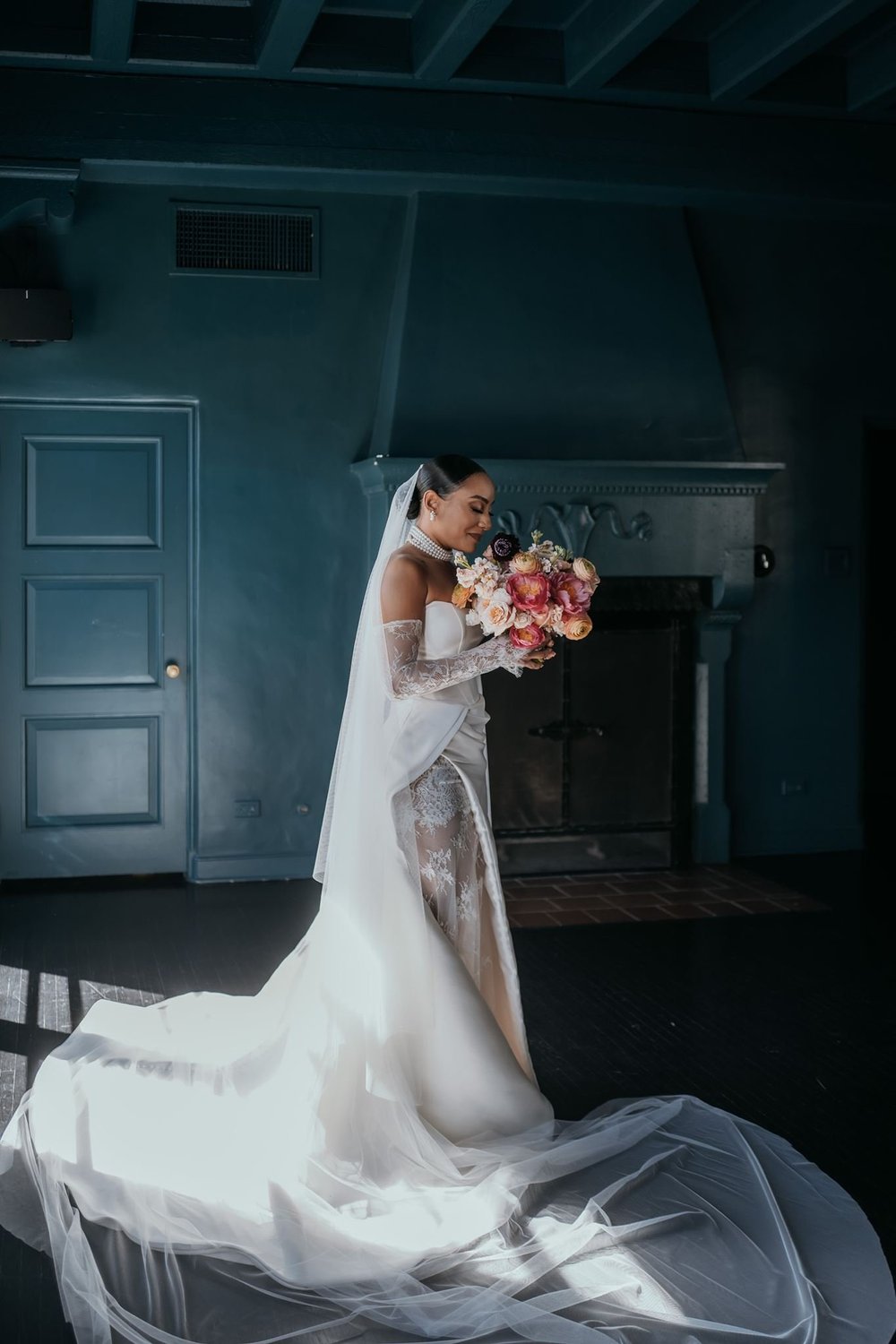
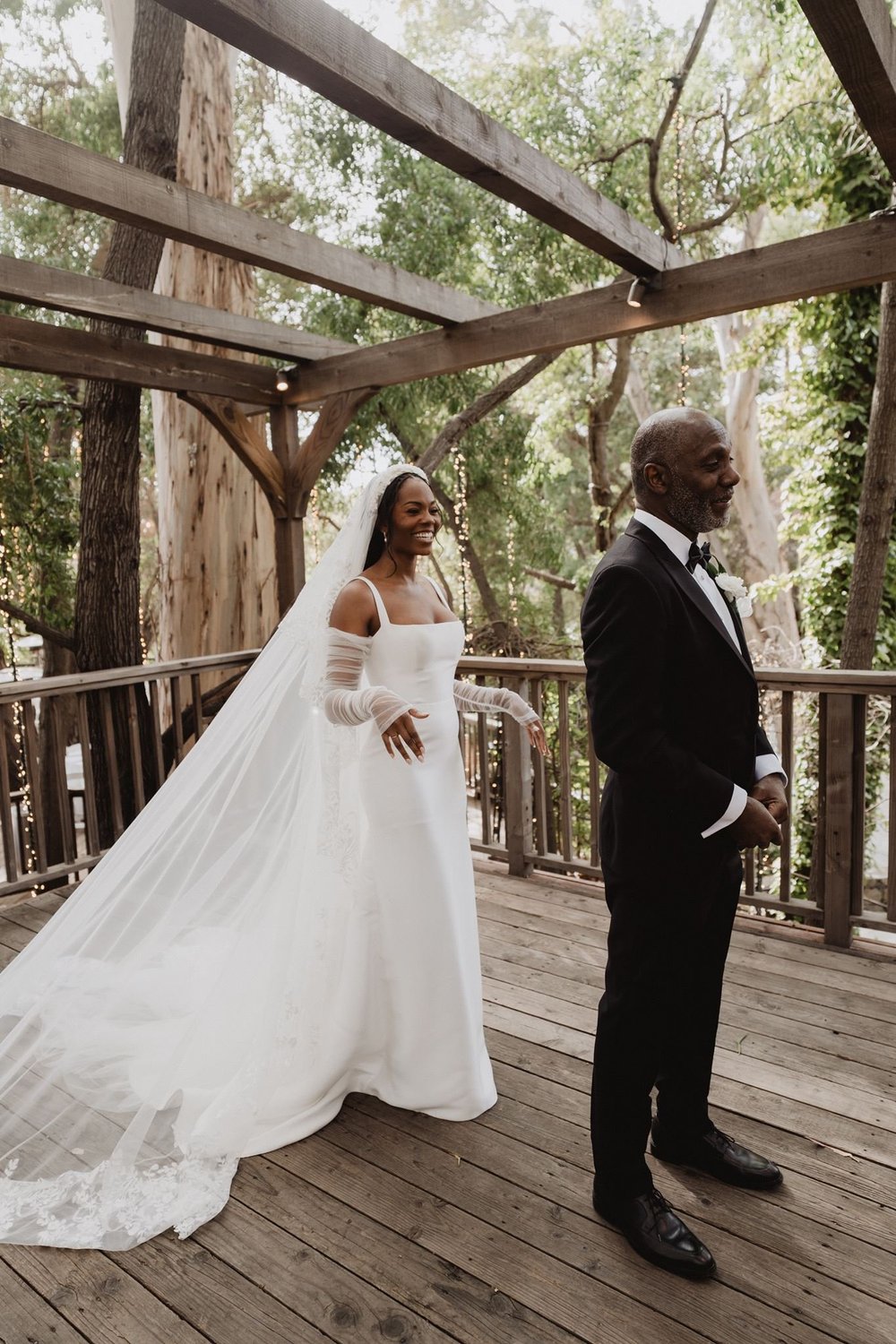
Ask your seamstress for a French bustle (under-bustle) on a chapel train rather than an American over-bustle. It hides the mechanism, and the silhouette from behind at the reception stays close to the silhouette from the ceremony.
The cathedral train — the one people remember
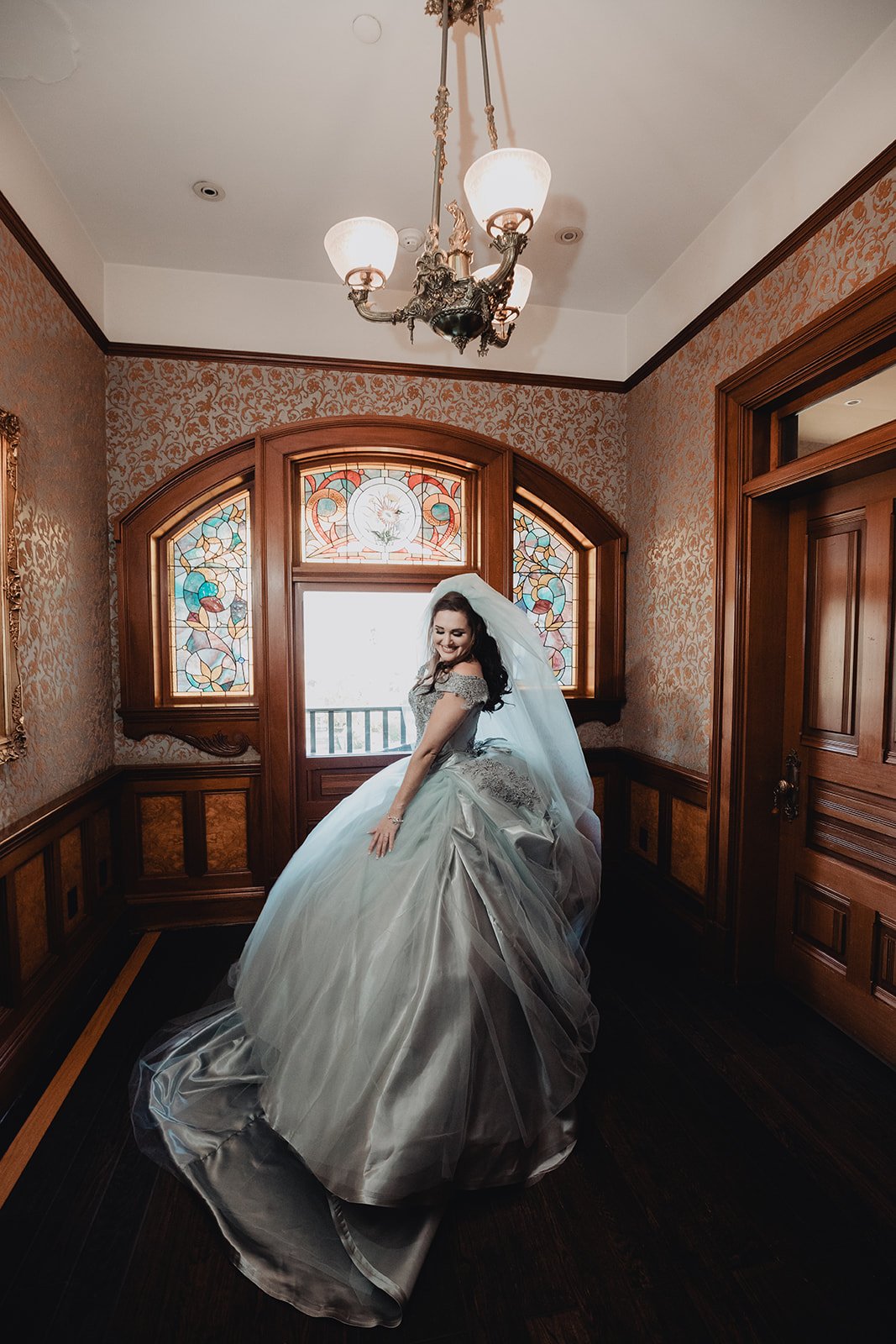
A cathedral train is two to nearly three meters of fabric behind you. It is genuinely spectacular and genuinely logistical. Everything about your day gets a little harder and every wide photograph gets a lot better.
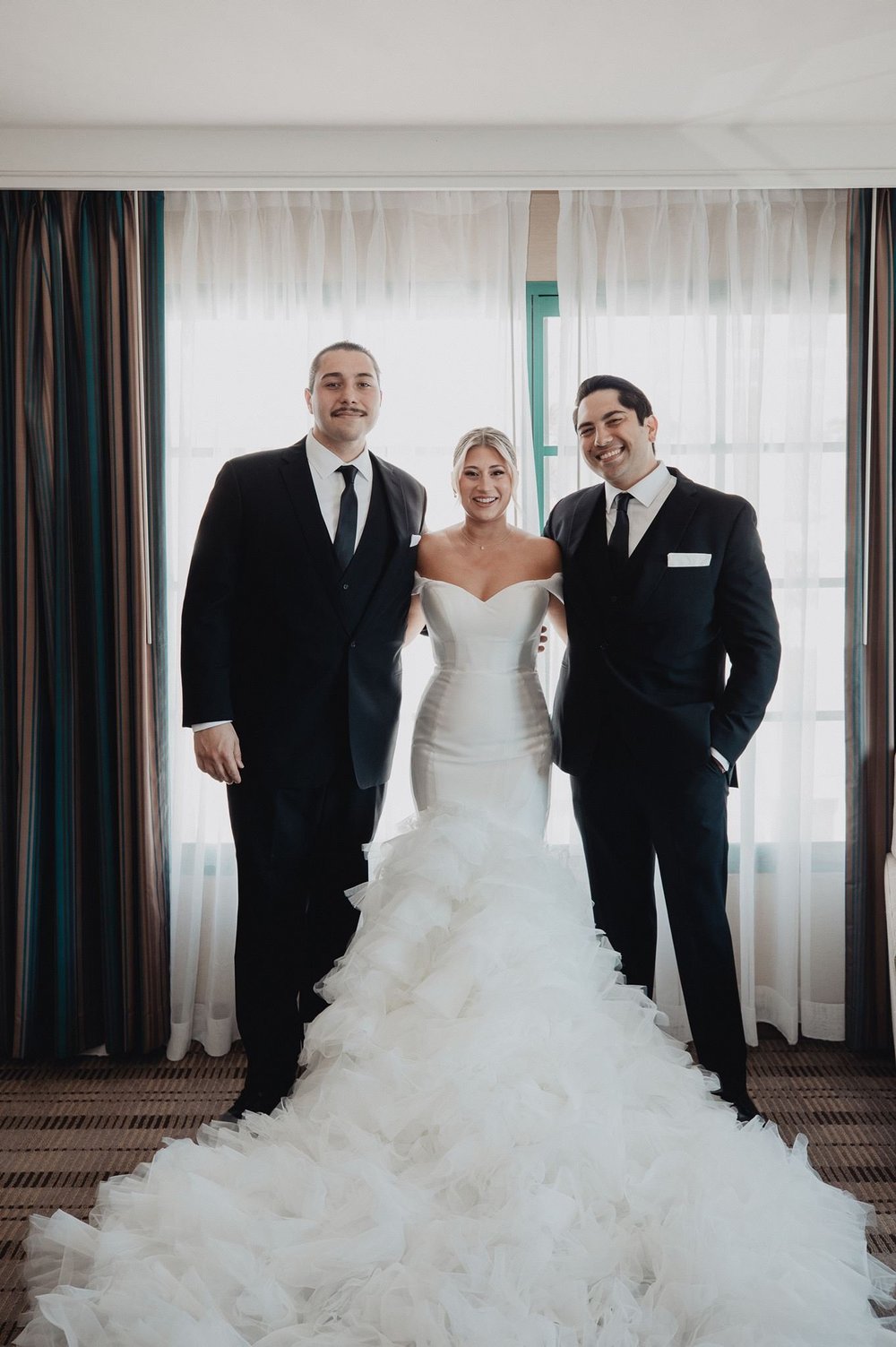
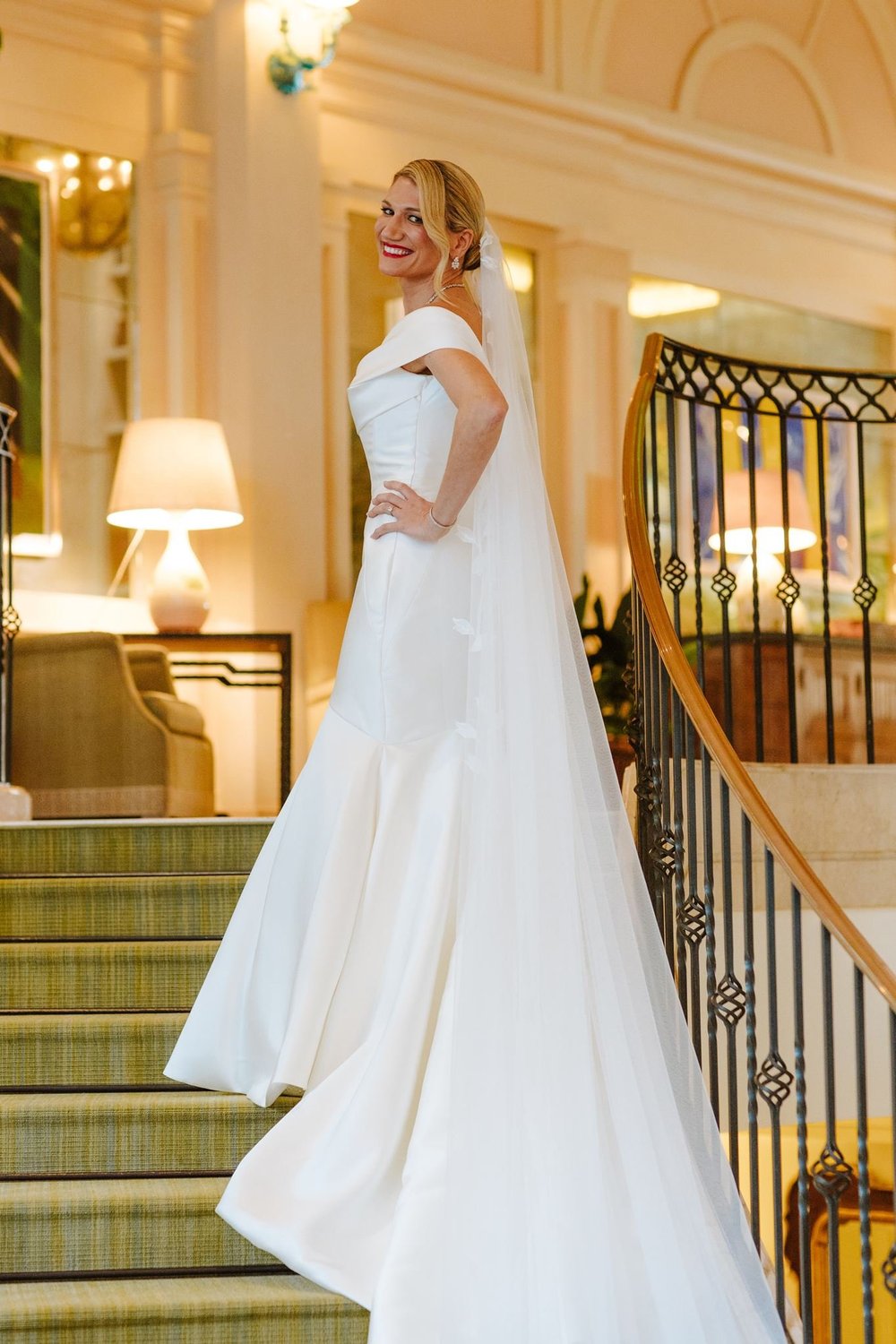
Three practical realities, all learned the expensive way:
- The car. A cathedral train does not fold into a sedan gracefully. Get in last, sit first, then have someone gather the train into your lap in one motion. Plan an extra ten minutes for every transfer.
- The aisle width. Measure it. A cathedral train in a 1.2 m garden aisle drags across chair legs and guests' shoes for the entire processional.
- The bustle. Cathedral trains usually need a multi-point bustle — often five to seven ties. Have the person who will do it practice at the final fitting, on their phone, filming it.
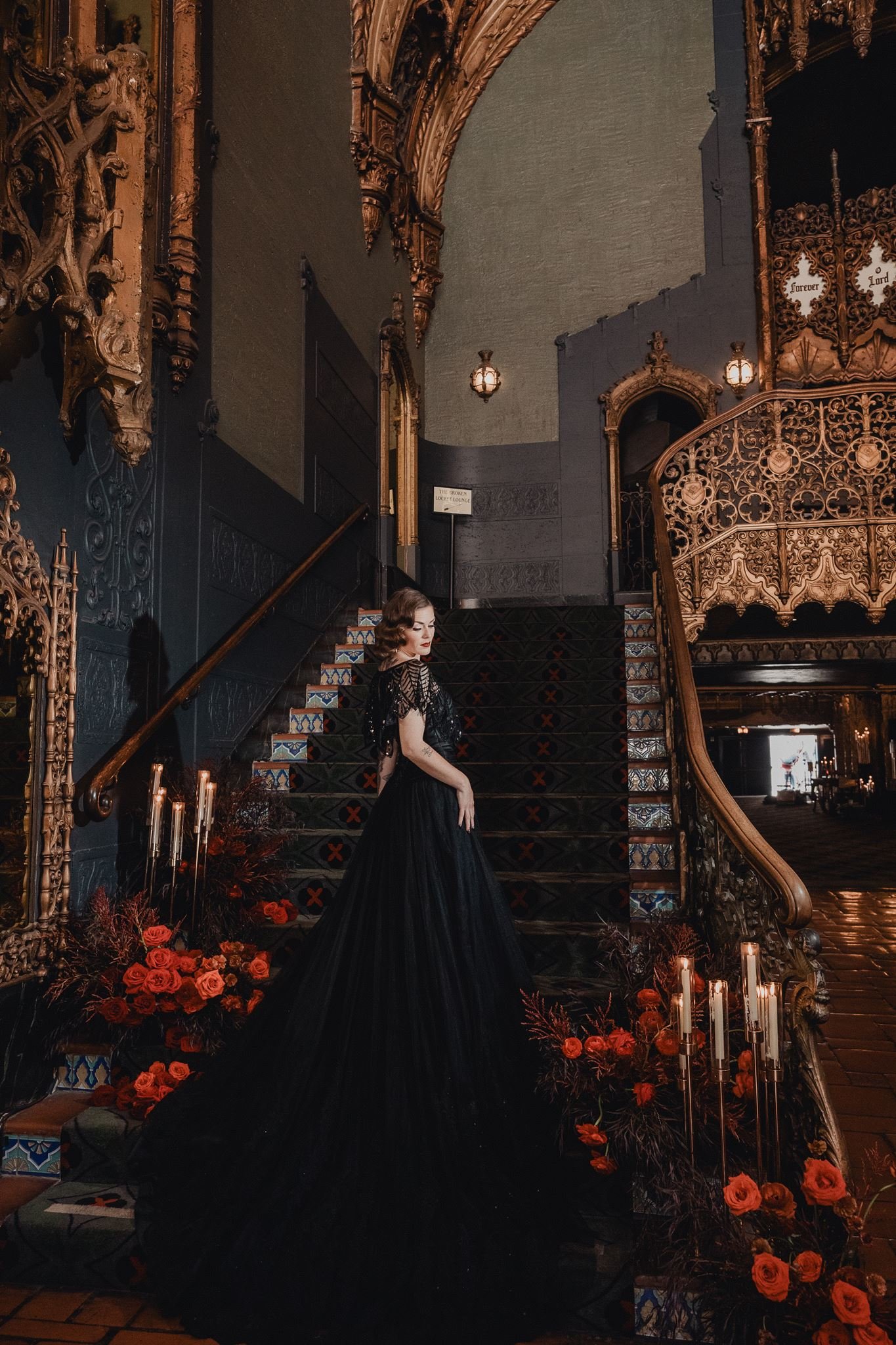
And the reward: in a wide frame, nothing else in bridal comes close. Gown 20 — a black art deco gown with a cathedral train on a historic Los Angeles theater staircase — is one of the most striking images in our entire archive, and the train is doing most of the work.
Train length and veil length are two different decisions
This trips up more brides than anything else on this page. A cathedral veil and a cathedral train are separate garments and separate lengths, and they do not have to match.
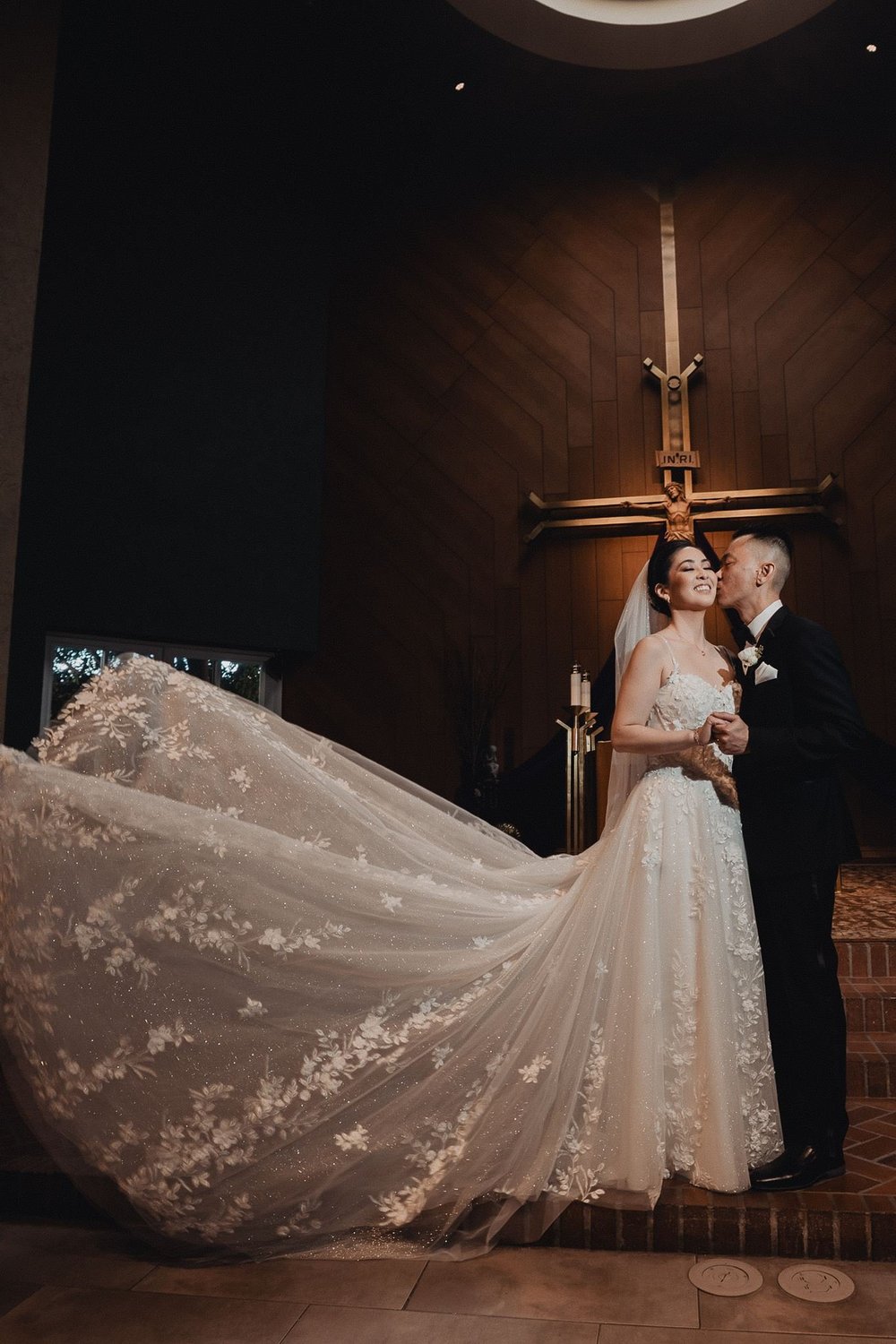
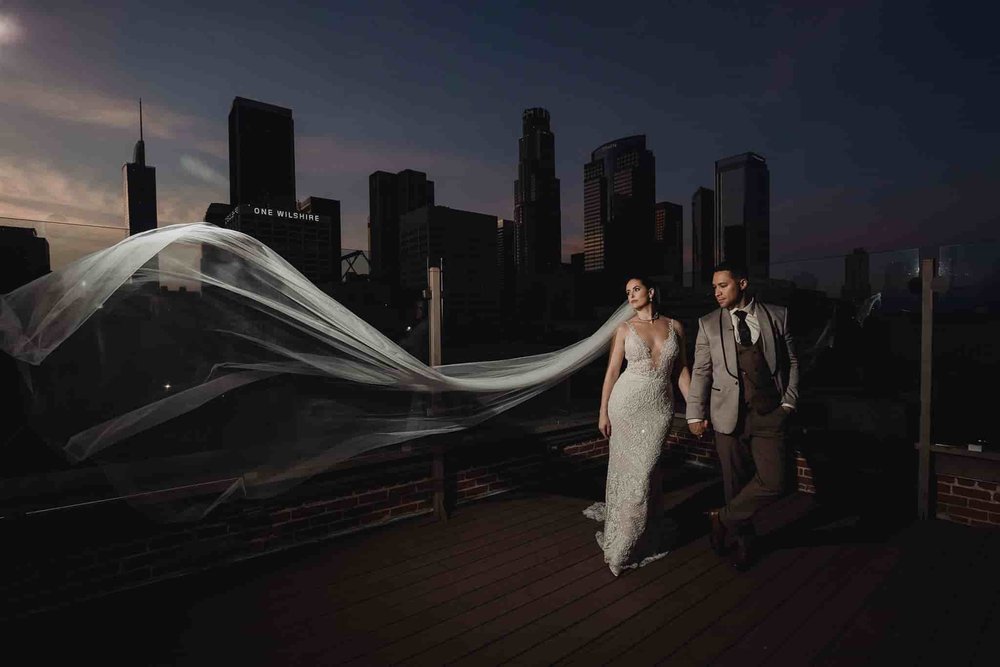
A long veil over a short train is, in our experience, the most photogenic combination available: you get the drama in every frame, and you can remove the entire thing before the reception. We go through veil lengths properly in the veil guide.
Choosing a train for your venue
- Grass and garden aisles — sweep or court. Anything longer collects grass clippings and dirt within twenty paces.
- Ballrooms, hotels and staircases — chapel or cathedral. Hard floors and long sightlines are what these lengths were designed for.
- Churches and cathedrals — chapel upwards. A long center aisle is the one situation where a cathedral train is unambiguously worth it.
- Beaches and rooftops — sweep, and think hard about wind. A long train plus coastal wind is beautiful for three frames and a problem for the other three hours.
- City hall and civil ceremonies — sweep or none. See our courthouse wedding guide.
- Detachable — if you cannot choose, do not. A detachable cathedral train over a sweep-train gown gives you both, and it is covered in one dress, two looks.
Train questions we get asked most
What is the difference between a chapel train and a cathedral train?
Length. A chapel train extends roughly 1 to 1.4 meters from the waist; a cathedral train extends roughly 1.8 to 2.7 meters. Practically, a chapel train can be walked in and bustled simply, while a cathedral train usually needs someone to help arrange it and a multi-point bustle for the reception.
Do I need to bustle my train?
If your train is court length or longer and you plan to dance, yes. A sweep train usually manages without. Ask for a French (under) bustle if you want the reception silhouette to match the ceremony one, and make sure at least two people have practiced it before the day.
Will a long train slow down my photographs?
A little. We usually allow an extra ten to fifteen minutes in a portrait block for a chapel or cathedral train, because the train has to be reset between most frames. It is time well spent — those are usually the pictures that end up printed.
Can a train be shortened after the wedding?
Yes. Many brides have a cathedral or chapel train cut down and the gown re-hemmed for a vow renewal, an anniversary session or a portrait session. It is a standard alteration, though it is not reversible.
What train length works best outdoors in Los Angeles?
Sweep or court. Most outdoor ceremony sites here are lawn, decomposed granite or stone terrace, and anything longer than a court train picks up dust and grass. If you want length outdoors, put it in the veil instead of the dress.
Planning a wedding with a train worth photographing?
We shoot weddings across Los Angeles, Orange County, San Diego and Santa Barbara on both film and digital. Tell us the venue and we will tell you honestly what your train is going to do there.
Check your dateSchedule a callMore from our bridal fashion series
Photographs by Lulan Studio — Los Angeles wedding photography and videography. See our collections and rates or check your date.
We’d love to hear about your day
Lulan Studio is a Los Angeles wedding photography and videography team, shooting on film and digital across Los Angeles, Orange County, San Diego and Santa Barbara.
Or take a look at our rates and packages.