
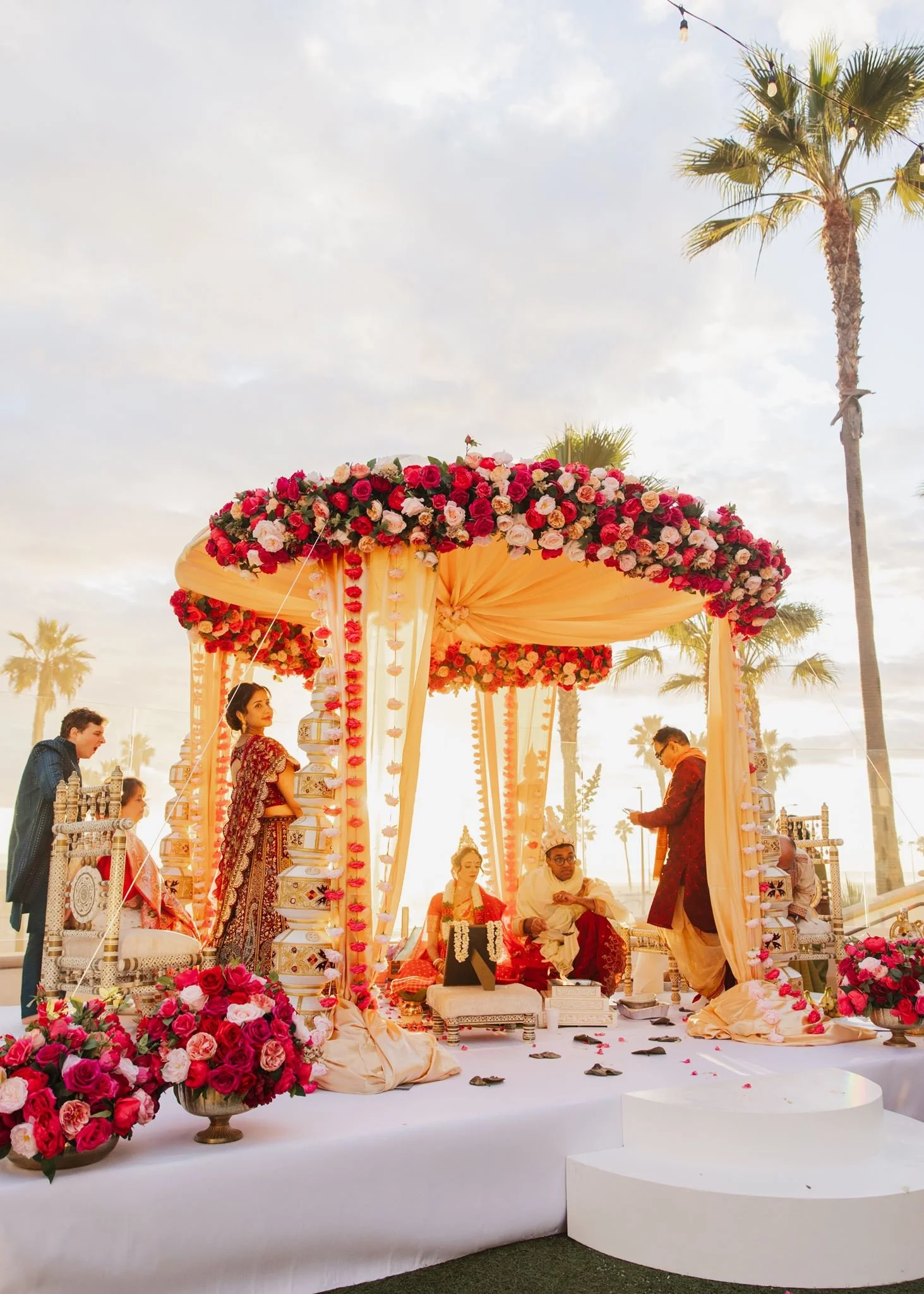
Kanyadaan Ceremony: Meaning, Rituals & Photos
in Indian Weddings?
Guide to the Kanyadaan Ceremony: Traditions,
Modern Takes, and Photography Tips

The Kanyadaan is one of the most sacred and emotional moments of a Hindu wedding. The word comes from Sanskrit — kanya (daughter) and daan (to give) — and marks the moment the bride's parents formally entrust their daughter to her partner and welcome him into their family. It is a ritual of love, trust, and blessing, performed at the mandap with Vedic mantras and, very often, a few happy tears.


The History and Meaning
Behind the Kanyadaan Ceremony
A Sacred Act of Trust
In the Vedic tradition, Kanyadaan is considered one of the highest and most selfless acts a parent can perform. By placing their daughter's hand into her partner's, the parents express complete faith that the couple will love and protect one another for life.
The Symbolism of Vishnu and Lakshmi
In many families the groom is honored as a form of Vishnu and the bride as Lakshmi, so their union is seen as sacred and auspicious. The ritual frames marriage not as a transaction but as the joining of two families in dharma.
A Blessing, Not a Farewell
Though deeply emotional, Kanyadaan is ultimately a blessing. The parents ask that their daughter be cherished, and the couple begins married life with the full blessing of their elders.
When Does the Kanyadaan Ceremony Take Place?
Within the Main Ceremony
Kanyadaan takes place during the main wedding ceremony, or vivaha, at the mandap. It usually comes near the start of the core rites, after the couple is seated and before Panigrahana (the joining of hands) and the Saptapadi (the seven steps).
Guided by the Priest
The family priest leads the ritual, chanting Vedic mantras as each step unfolds while parents and close family gather around the couple.
How Long It Takes
The full ritual typically lasts about 15 to 30 minutes, depending on the tradition, the region, and the family's customs.


Step-by-Step Guide to the Kanyadaan Ritual
1. Seating at the Mandap
The bride is seated beside her parents, facing the groom across the sacred fire.
2. Joining of Hands
The father, and often the mother, gently place the bride's right hand into the groom's right hand.
3. The Sacred Water
Holy water is poured over the joined hands as mantras are chanted, sealing the offering. In some families a coconut, coin, or betel nut is placed in the hands to symbolize prosperity.
4. The Groom's Promise
The groom assures the bride's family that he will stand by her in dharma (duty), artha (prosperity), and kama (love).
5. Blessings
The priest and elders bless the couple, and the wedding continues into the next sacred rites.


Modern Takes on the Kanyadaan Ceremony
Both Parents, Equal Roles
Many couples now include both the mother and father as equal participants, honoring the family as a whole rather than a single giver.
A Mutual Blessing
Some families reinterpret the ritual as a mutual blessing and a joining of two families, moving away from the idea of giving a daughter away.
Personal Touches
Couples often add readings, a few personal words from the parents, or a moment of gratitude that makes the ritual their own while honoring its roots.

Regional and Community Variations of Kanyadaan
South India
In Tamil and Telugu weddings the ritual is known as Kanyadaanam, often with the bride seated on her father's lap.
Bengal
The Bengali equivalent is Sampradan, where a family elder formally gives the bride away.
North India
The father commonly pours sacred water while a coconut or betel nut is passed between the hands, symbolizing prosperity and continuity.
A Living Tradition
Across regions the heart of the ritual stays the same: two families joining with trust and blessing.

How to Photograph the Kanyadaan Ceremony
Kanyadaan is one of the most emotional frames of the entire wedding, so coverage should prioritize genuine feeling over posing.
What to Capture
Faces first. Close-ups of the parents' expressions and the bride's eyes hold the heart of the moment.
The joined hands. A tight frame of the hands coming together, with the water pouring over them, is the signature image.
Wide context. A wide shot of the mandap, the priest, and the fire places the ritual in its setting.
Tips for Better Photos
Mandaps are often dimly lit, so fast lenses and careful exposure preserve the warm, candlelit mood without intrusive flash. The most powerful images usually come a beat before and after the ritual itself, so stay ready for the quiet, unposed emotion.
Where kanyadaan sits in the ceremony
Kanyadaan happens inside the ceremony, part way through, and it is one of the few moments where the parents are as much the subject as the couple. Knowing roughly when it falls is what lets a photographer be in the right place.
Inside a temple ceremony
- 8:00 AMArrivals, elders greeted, the mandap and ritual items photographed.
- 9:00 AMCeremony begins. Opening blessings and the entries.
- 9:45 AMGarland exchange.
- Mid-ceremonyKanyadaan. The parents are as much the subject of the frame as the couple.
- 11:00 AMThe core rituals continue, including the circuits around the fire.
- 12:00 PMRituals conclude. Stage group photographs.
- 1:00 PMFamily and couple portraits on the grounds.
Inside an afternoon ceremony
- 3:00 PMBaraat. Thirty to forty five minutes.
- 3:30 PMCeremony begins.
- 4:00 PMGarland exchange.
- Mid-ceremonyKanyadaan.
- 4:45 PMThe remaining rituals.
- 5:30 PMStage photographs.
- 6:30 PMCocktail hour, then the reception.
A shorter fusion ceremony
- BeforeThe mandap and ritual items photographed empty.
- StartEntries and blessings.
- EarlyKanyadaan, often placed early in a shortened ceremony.
- MiddleGarland exchange and the circuits.
- EndBlessings from the elders, then the stage photographs.
What this moment needs from the photographer
Short, quiet and easy to miss. These are the things that make the difference.
Where these ceremonies happen
Temples and venues that recur across the ceremonies we photograph.
- Malibu Hindu Temple
- BAPS Shri Swaminarayan Mandir, Chino Hills
- Sherwood Country Club
- Rancho Las Lomas
- Orcutt Ranch
- Hotel Maya, Long Beach
- Hotel ballrooms and banquet halls
Kanyadaan FAQ
What does Kanyadaan mean?
It means the giving of the daughter, from kanya (daughter) and daan (gift), and marks the parents entrusting their daughter to her partner.
Who performs the Kanyadaan?
Traditionally the bride's father, often together with the mother. Many modern families include both parents equally.
When does Kanyadaan happen in the wedding?
During the main ceremony at the mandap, before the joining of hands and the seven steps, or Saptapadi.
Is Kanyadaan part of every Hindu wedding?
It is very common but not universal. Some communities and couples adapt or omit it, and regional versions such as Kanyadaanam and Sampradan differ in their details.
How long does the ritual take?
Usually about 15 to 30 minutes, depending on the tradition and the priest. The hour it falls in is set by the muhurat, and the days those hours land on are mapped in our guide to auspicious wedding dates for 2027 and 2028.
Keep Exploring
Indian Wedding Photographer · Indian Wedding · North Indian Wedding · Sikh Wedding · Haldi Ceremony · Mehndi Ceremony · Sangeet · Baraat · Mandap Ceremony · Auspicious Wedding Dates