
Los Angeles · South Asian Weddings
Pakistani Wedding Traditions & Photography
Dholki to walima — several days, several venues, several outfit changes, covered by a team that already knows the running order.
The Scale
Not one day.A season.
A Pakistani wedding is a sequence of events rather than a single date — often spread across a week, hosted by alternating families, in different venues, with a different palette each night. Coverage has to be planned as a series, not booked as a day. Dates are freer than for Hindu families, and our guide to auspicious wedding dates for 2027 and 2028 shows exactly which weekends that leaves open.
Which events happen, what they are called and how they run varies a great deal by family, region and how long a family has been in the United States. Some couples hold all seven; many combine the mehndi into one night or skip the mayun entirely. We plan around your actual schedule, not a template.
The Events
What happens,and in what order.
The usual sequence, with the caveat that families order and combine these differently.
These are the loudest, most candid nights of the whole wedding and often the least formally photographed. They are usually held at home or in a hall, in low light, with a lot of movement.
The rukhsati is the moment families ask us about most often. It is brief, unrepeatable and genuinely emotional, so we cover it with two photographers — one on the couple, one on the parents.
How We Staff It
Two rooms,at once.
Through most of a Pakistani wedding the bride and groom are in different rooms, sometimes different buildings, and both sides are worth photographing. We staff multiple shooters by default so the groom’s baraat and the bride’s preparation are not an either-or choice.
Halls are usually dark and heavily uplit in a single strong color, which flatters almost nothing without a plan. We light for skin tone first and let the room stay as saturated as it actually is — the point is that a red mehndi night should still look red.
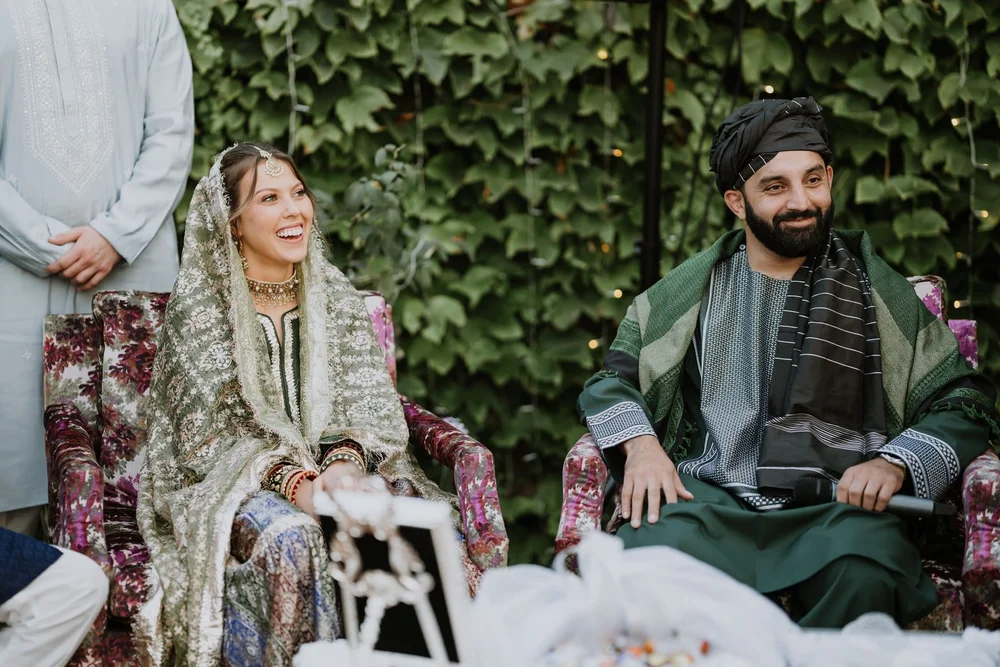
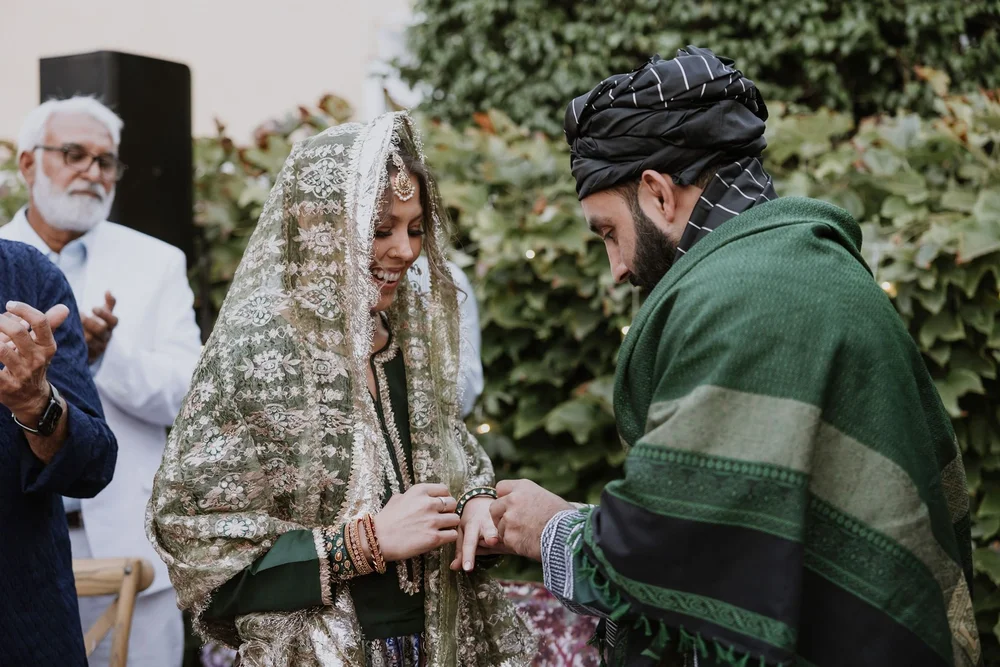
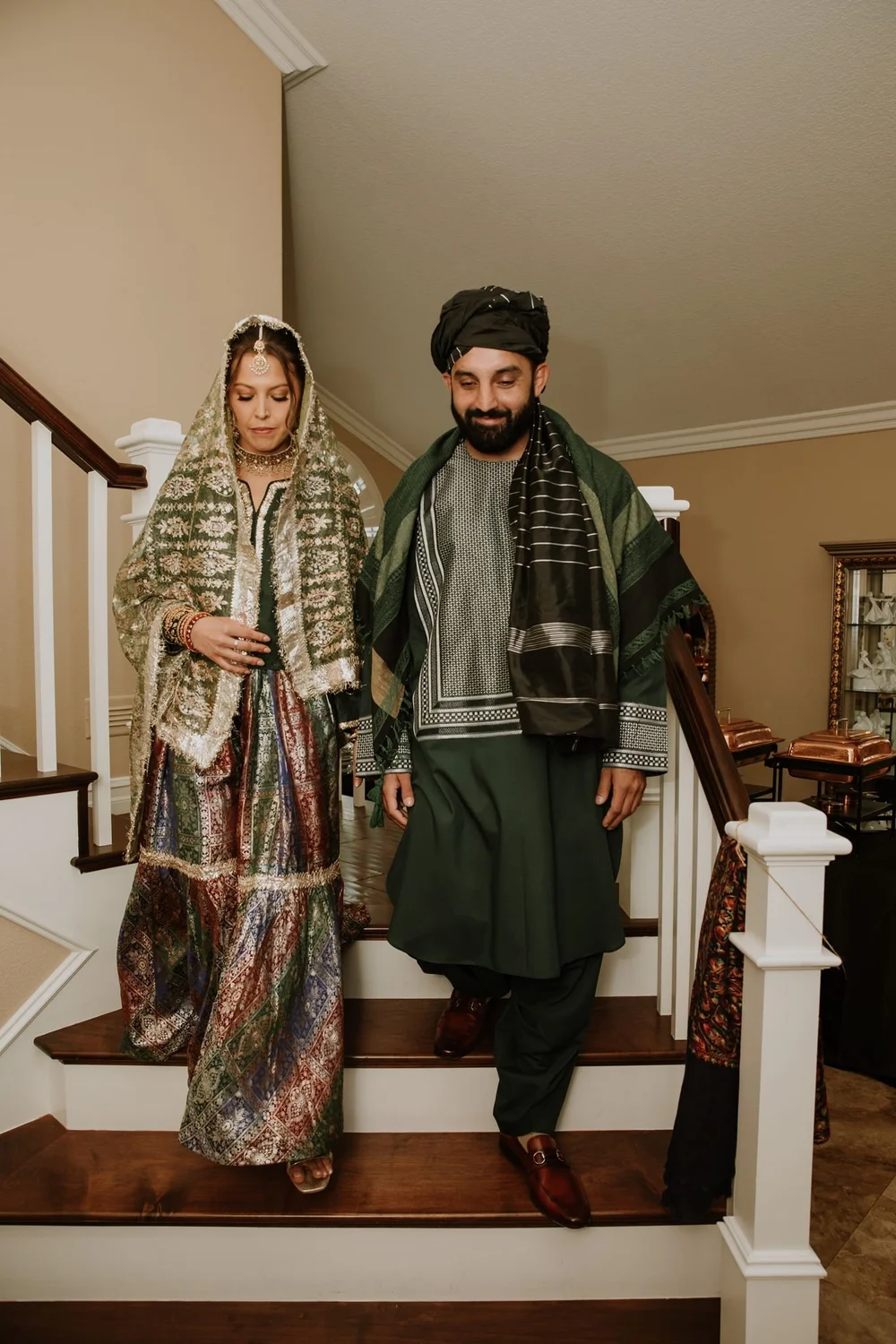
How the timeline usually runs
Most of these weddings run across several days, with a mehndi, a nikah and a reception each holding its own guest list and its own hours. Deciding which events are covered, and by how many people, is the first thing to settle.
Three events across three days
- Day 1, eveningMehndi, at a family home, community center or hotel event room. About four hours, sometimes one photographer is enough.
- Day 2, early afternoonGetting ready on both sides. Details, jewelry and attire.
- Day 2, afternoonFamily portraits, then the nikah, often short and covered without flash.
- Day 2, eveningDinner and celebration after the ceremony.
- Day 3, eveningWalima or a second reception, where the family holds one, sometimes on a later weekend. Six to eight hours.
One evening, ceremony and reception
- 2:30 PMCoverage begins. Getting ready, details, jewelry and attire.
- 3:30 PMCouple portraits and family groups while there is daylight, before guests arrive.
- 5:00 PMGuests arrive. Decor, stage and ceremony setup while the couple is tucked away.
- 5:30 PMCeremony. A nikah often runs fifteen to forty minutes.
- 6:15 PMPost-ceremony photographs, including the stage groups.
- 7:00 PMReception begins. Dinner and speeches.
- 7:45 PMGrand entrance or re-entrance, often with drummers or a dance group.
- 8:30 PMPerformances and open dancing.
- 10:30 PMCoverage concludes.
An evening that starts with the baraat
- 5:30 PMCoverage begins. Guest arrivals, decor and a cocktail period.
- 6:45 PMBaraat. The groom arrives with family, drums and music.
- 7:15 PMCouple and immediate family portraits, kept early so no one loses an hour later.
- 7:45 PMNikah or the main formal portion, short and covered quietly.
- 8:30 PMReception. Room details, dinner and speeches.
- 9:30 PMDancing and the main celebration.
- 11:00 PMCoverage concludes.
What shapes the timeline
The parts of these weddings that most often need a decision before the schedule can be written.
Where these weddings happen
Venues and settings that recur across the weddings we photograph.
- Siena Golf Club, Las Vegas
- Red Rock Resort, Las Vegas
- Garden Grove Sheraton
- Richard Nixon Library
- Los Verdes Golf Course
- Community centers for the mehndi
- Ranch and orchard properties in Ventura County
- Family homes and backyards
Questions
Before youbook the series.
Do we have to book every event?
What is the difference between this and your Muslim wedding page?
Can you cover the bride and groom at the same time?
Do you photograph events at home rather than a venue?
How far do you travel?
Serving LA, OC, San Diego & Las Vegas