
Mediterranean and Middle Eastern Weddings
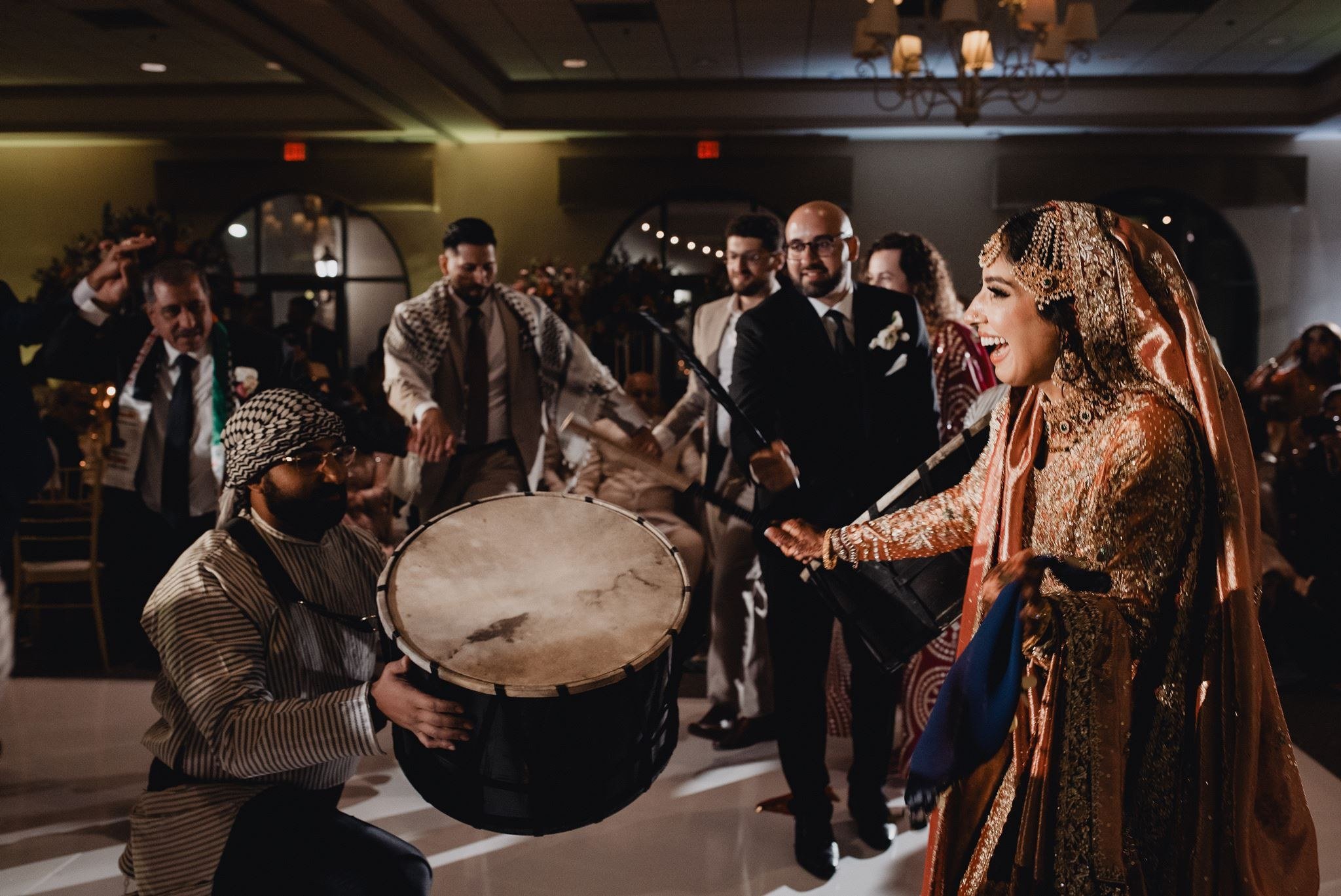
Drummers at the door, a zaffa that carries the couple into the room, a dance floor that fills before dinner is served. How we photograph Arab, Levantine and Greek weddings across Southern California.
Weddings built around family, music and the entrance
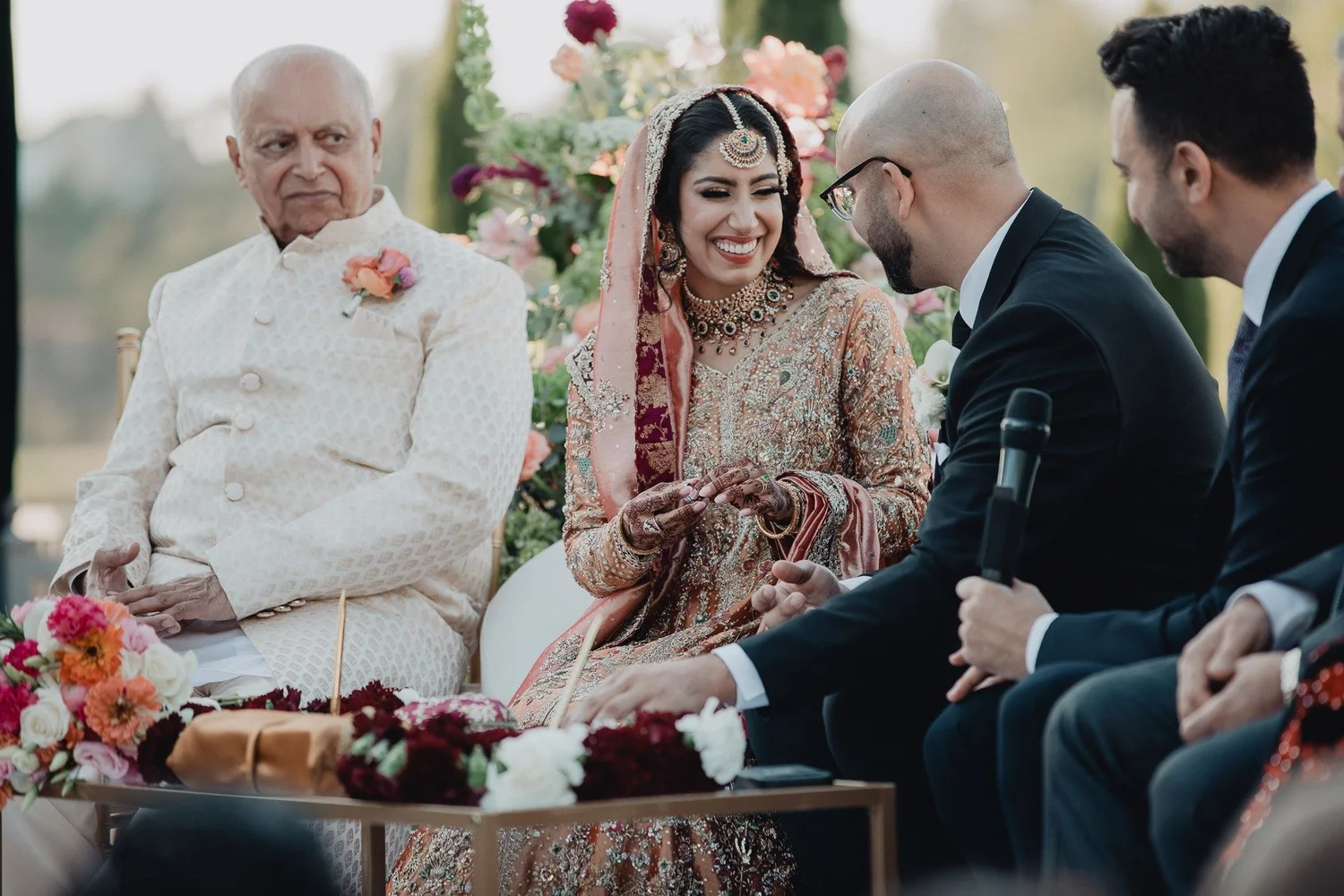
The weddings in this guide come from families with roots across the eastern Mediterranean and the Arab world: Lebanese, Palestinian, Syrian and Moroccan couples, Coptic families, and Greek Orthodox families whose weddings share much of the same rhythm. Many are interfaith or bicultural, with a church or mosque ceremony, a Western aisle ceremony, or both.
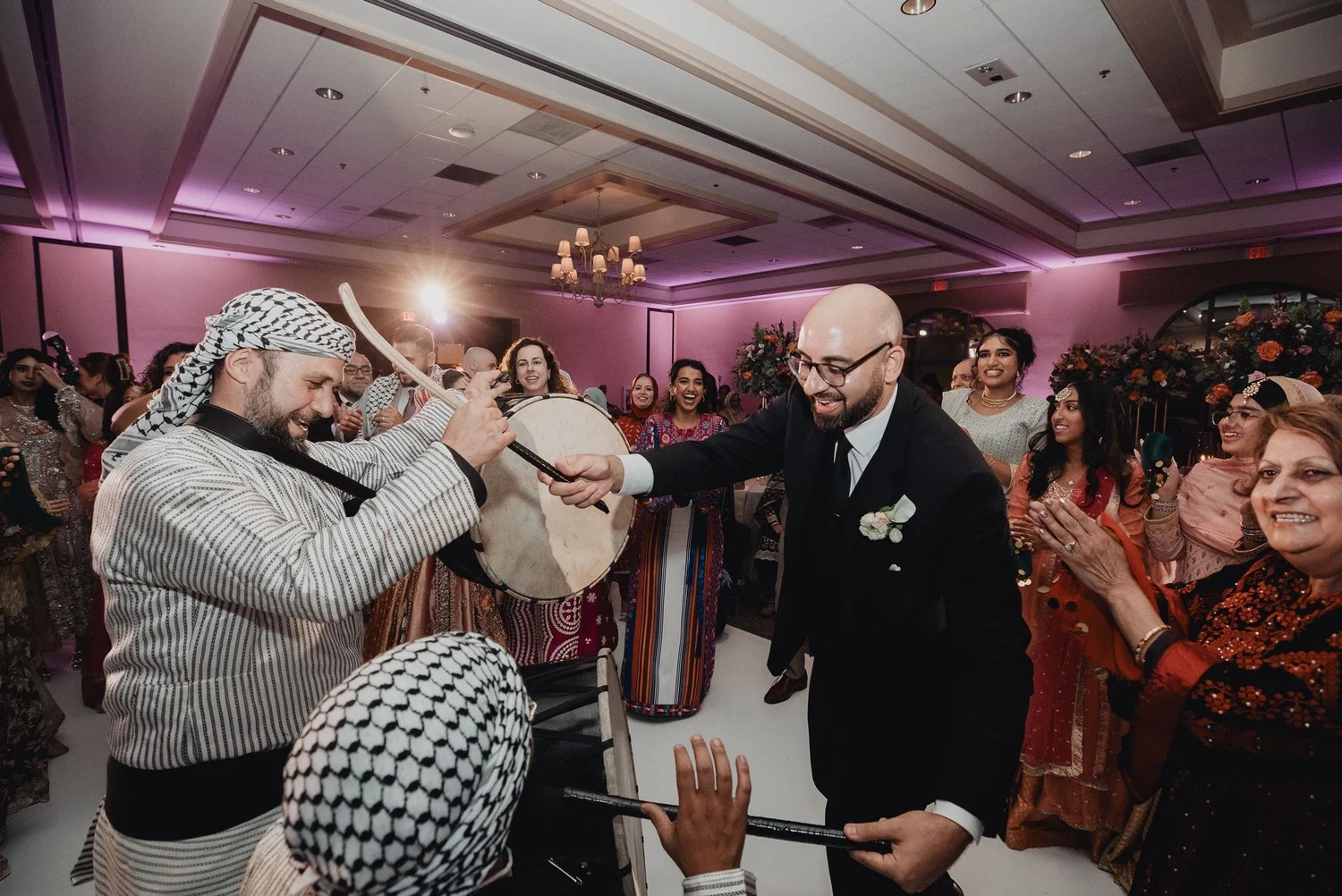
What ties them together is the reception. Guest lists run large, the entrance is an event of its own, and the dancing starts early and goes late. The zaffa, a procession led by drummers and often horns and dancers, brings the couple into the room, and dabke lines form as soon as the music allows. Our job is to keep up with all of it while still finding the quiet moments with parents and grandparents.
How we photograph a zaffa and a long night
A zaffa moves fast and in a tight crowd, so we plan it with the couple and the band before the day: where the drummers start, which door the couple comes through and where they stop to dance. One photographer works ahead of the procession and one behind it, so we have the couple's faces and the room's reaction. The rest of the evening is documentary coverage, with two photographers on the dance floor and short portrait sets tucked into cocktail hour or a break between ceremony and reception.
Good to know
- About half of these weddings are on a Saturday, with most of the rest on a Friday or Sunday
- Receptions often run past midnight, so plan which part of the night coverage should include
- Some families hold a zaffa at the bride's home in the morning when the groom's family arrives
- Church ceremonies, including Orthodox services, can have strict photography rules; ask your parish early
- A henna night is often a separate event, a day or two before the wedding
- Build in a prayer break if your families observe one during the reception
Where we like to shoot
- The bride's home in the morning, if the family holds a welcome there
- The church steps and aisle for family formals after the ceremony
- A garden, park or golf course terrace for sunset portraits
- The ballroom entrance for the zaffa
- The middle of the dance floor once the dabke begins
- The head table and cake for the late-night moments
Sample Mediterranean and Middle Eastern wedding timelines
These are composites drawn from the weddings we have photographed, rounded to the quarter hour. Use them as a starting point with your planner and band rather than a fixed schedule.
Eight hours, ceremony and reception at one venue
- 2:00 PMCoverage begins. Details, final touches and getting ready.
- 3:00 PMFirst look, then couple and wedding party portraits.
- 3:45 PMFamily portraits with both families, finished before guests arrive.
- 5:00 PMCeremony, thirty minutes to an hour.
- 6:00 PMCocktail hour and a short sunset portrait set.
- 7:00 PMZaffa with drummers and the grand entrance.
- 7:30 PMFirst dance, dabke and open dancing, then dinner.
- 8:45 PMSpeeches, cake cutting and more dancing. Coverage concludes at 10:00 PM.
Ten hours, church first and a late reception
- 12:30 PMGetting ready at home or a hotel. Details and family moments.
- 2:30 PMTravel to the church.
- 3:00 PMChurch ceremony, up to an hour for Orthodox services.
- 4:15 PMFamily formals inside the church, then wedding party photos outside.
- 5:00 PMBreak, or couple portraits at a park while guests travel.
- 6:00 PMCocktail hour at the reception venue.
- 7:00 PMZaffa and grand entrance, then first dance.
- 7:45 PMDinner, speeches and parent dances.
- 9:00 PMDabke, open dancing and cake. Coverage concludes at 10:30 PM.
A morning zaffa at home
- 11:00 AMCoverage begins at the bride's home. Dress, jewelry and time with family.
- 12:30 PMThe groom's family arrives with drummers. Music and dancing in the street or yard.
- 1:15 PMFamily portraits at the house, then travel to the ceremony.
- 2:00 PMCeremony.
- 3:00 PMPortraits at the ceremony site or a garden nearby.
- 6:00 PMReception with a second zaffa for the grand entrance.
What is specific to Mediterranean and Middle Eastern weddings
A few things that are worth settling early with your families, your band and your planner.
Related traditions
Guides for traditions that often share a wedding with these.
Questions couples ask
Have you photographed a zaffa before?
Yes. The zaffa is one of the most common parts of the Middle Eastern weddings we photograph, whether at the grand entrance or in the morning at the bride's home. We plan it with you and your band ahead of the day.
How many hours should we book?
About two thirds of the Mediterranean and Middle Eastern weddings we photograph book eight hours or more. Every collection includes eight hours, and a day with a church ceremony earlier in the afternoon often needs nine or ten. Hours can be added before the day or on the day itself.
Can you photograph inside an Orthodox church?
Yes, within the parish's rules. Many Orthodox churches limit movement and flash during the service, so we work from agreed positions and make family formals inside the church once it ends.
Do you also photograph henna nights and engagements?
Yes. Henna nights and engagement parties are often booked as a separate event with a few hours of coverage.
Our wedding mixes two cultures. Is that a problem?
Not at all. Many of the weddings in this guide are bicultural, with a church or nikah ceremony and a Western reception, or Arab and South Asian traditions in the same night.