
Planning/Wedding day etiquette
Wedding day etiquette · CeremonySlow down, look up, take it in
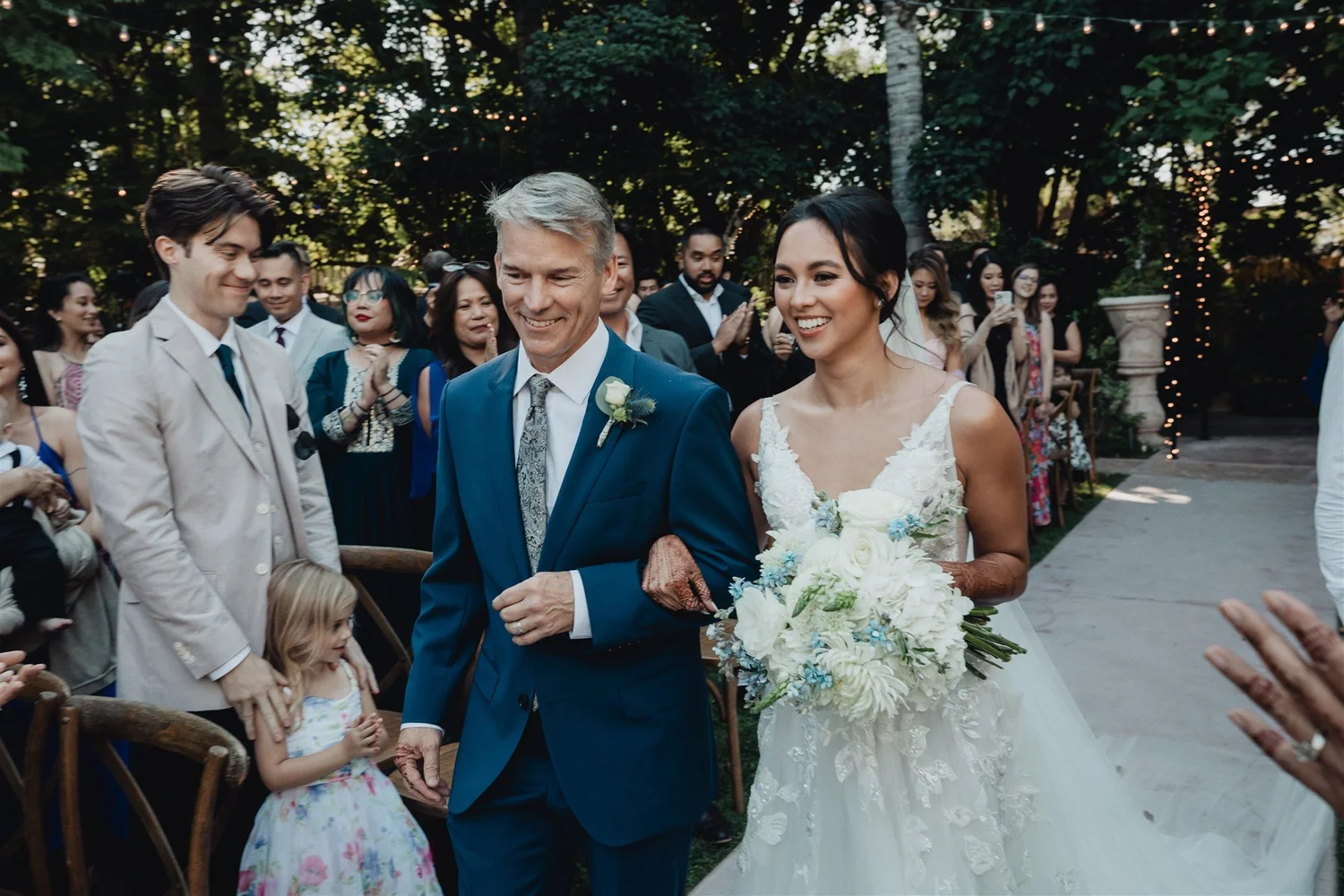
The walk down the aisle lasts less than a minute and is photographed from start to finish. A slower pace, a lower bouquet and one pause at the end make all the difference.
- PaceSlower than feels natural
- BouquetAt your hip bones
- LookAt your partner, then the room
- At the endPause, hug, hand off
Walk at half your normal speed, and look up. Everything else follows.
Nerves speed everyone up. Most people walking down an aisle move far faster than they mean to, and the moment is over before they have seen a single face. Practise at the rehearsal with the actual music, and walk slower than you think you should.
This guide is for anyone walking: the couple, an escort, the wedding party. For who walks in what order, see the processional order.
The walk, in six parts
Wait for your cue
Let the person ahead of you get at least halfway, ideally all the way, before you start. Space between walkers gives each one their own photographs.
Breathe and smile at the top
Pause for two seconds at the entrance. Guests stand and turn; let them see you.
Walk slowly and naturally
A slow, even, heel-to-toe walk. The old step-together “hesitation step” is optional and can look stiff.
Hold the bouquet low
At your hip bones, elbows relaxed. Held high, a bouquet hides your waist and the dress.
Look ahead, then around
Look at your partner first, then at the faces in the rows. Smile at someone you love.
Pause at the end
Stop, hug or kiss your escort, hand your bouquet to the maid or matron of honor, and step up.
Ways to walk, and who with

Alternative ways to walk down the aisle
Your Wedding Unlimited on YouTube. Walking alone, with both parents, with your partner, and more.
Who walks with you
A parent
The tradition: a father, or increasingly a mother, gives the bride away.
Both parents
Common at Jewish weddings and growing everywhere. Make sure the aisle is wide enough for three.
Alone
Confident and lovely. Some brides walk halfway alone and are met by a parent or their partner.
Your partner
Walking in together signals you are entering marriage side by side.
A sibling, child or grandparent
Anyone who matters. Many couples have a parent walk the first half and a grandparent the second.
Grooms walk too
Many grooms walk in with their parents, especially at Jewish and South Asian weddings.
If you are walking someone in
Do
- Offer your arm and let them hold it lightly, not grip it.
- Match their pace, not yours.
- Walk slightly ahead of a long train, never on it.
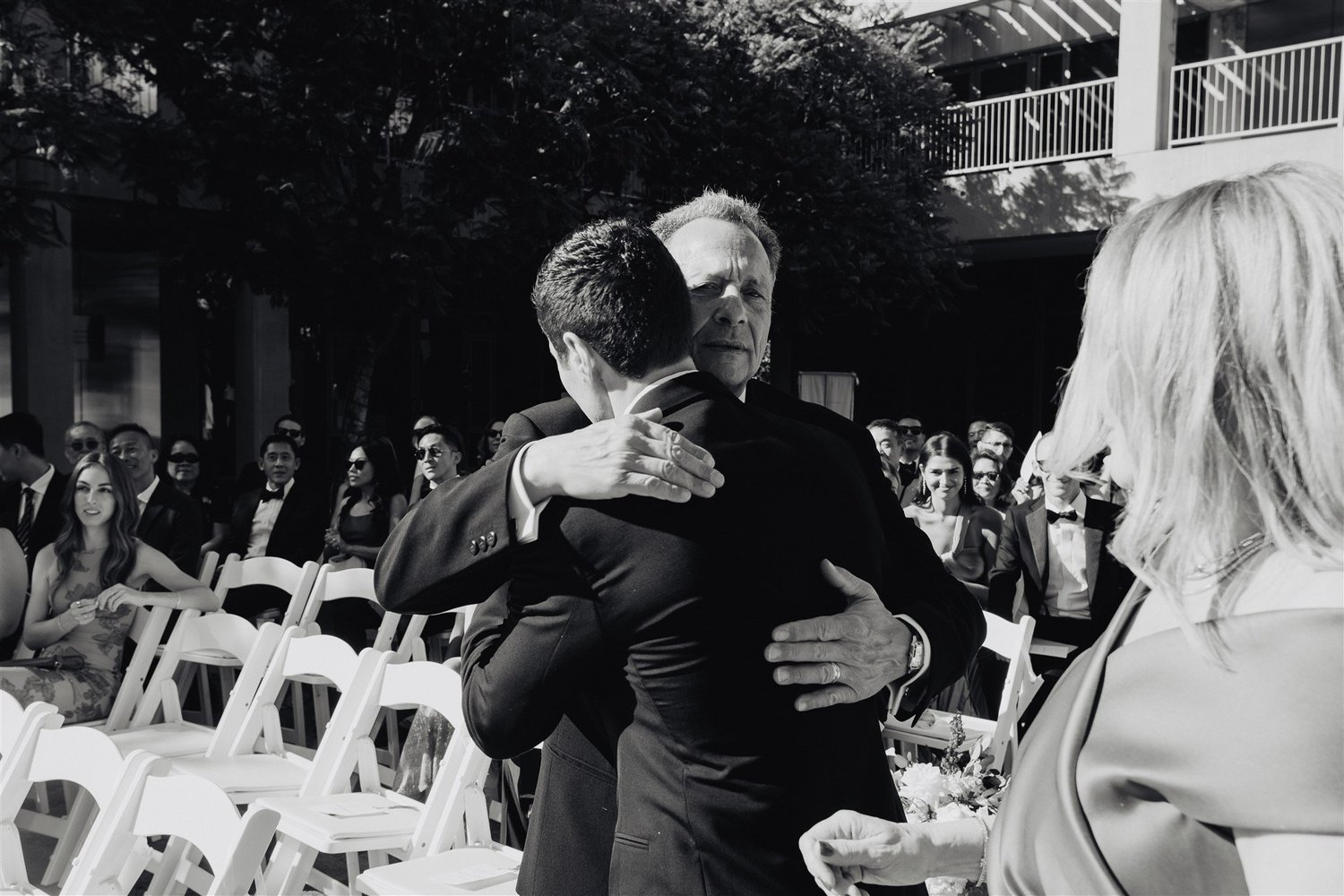
- Give a hug, a kiss or a word at the end, then lift the veil only if asked.
- Take your seat quickly so the ceremony can begin.
Don’t
- Rush. The front of the aisle is not a finish line.
- Hold a phone, or look at it.
- Turn your back on guests to chat with the officiant.
- Forget where you sit. It is usually the front row on the side you walked.
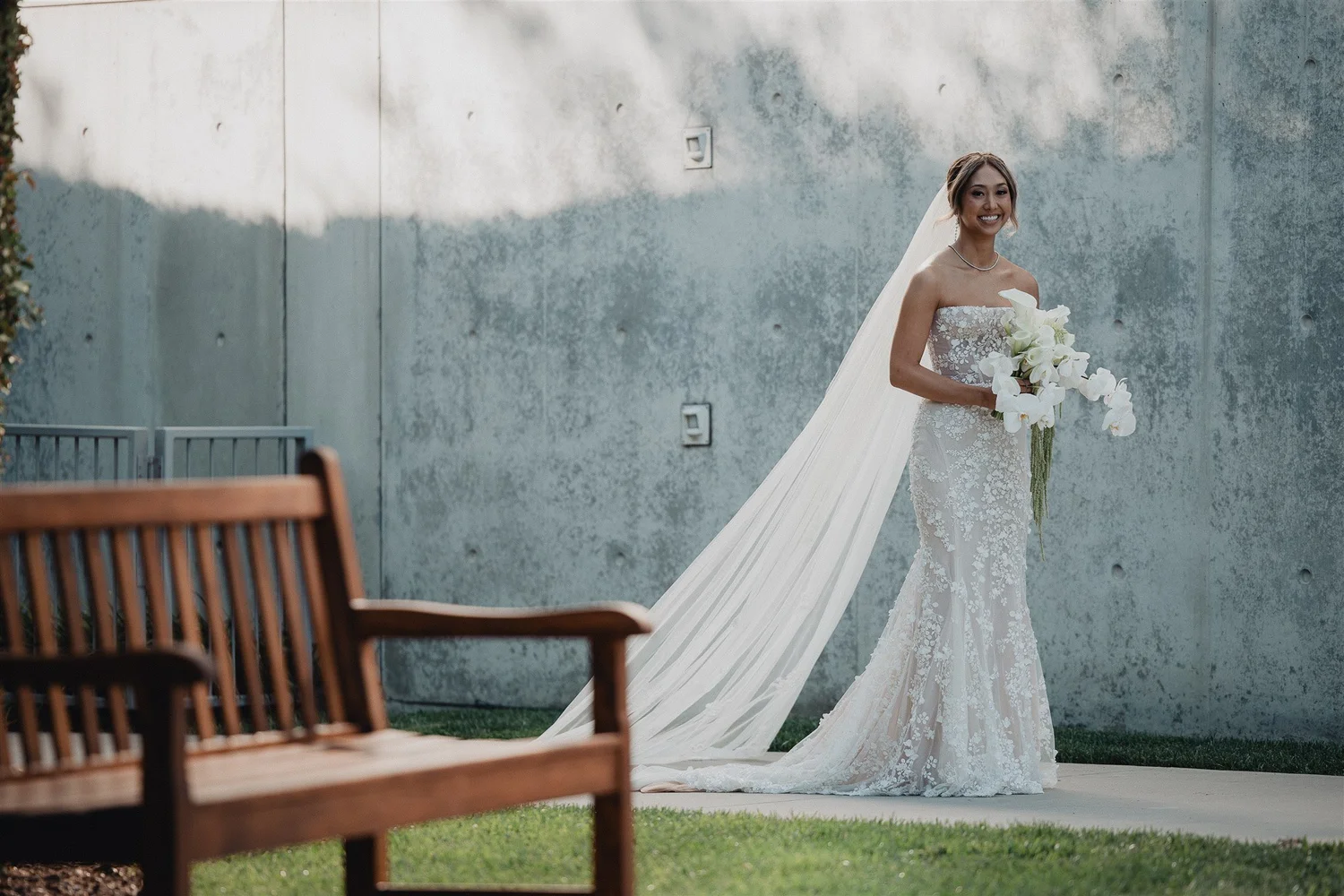
Leave a gap. If the flower girl is still at the front when you start walking, we photograph a crowd instead of you. Wait until the aisle is clear, count to three, then go.
Lulan Studio · wedding photographers & filmmakers
Walking down the aisle, answered
How fast should you walk down the aisle?
Slowly and naturally, at roughly half your normal walking speed. Nerves speed everyone up, so practise with the real music at the rehearsal.
How should you hold your bouquet walking down the aisle?
At hip-bone height, with relaxed elbows. Holding it higher hides the dress and your posture.
Who walks the bride down the aisle?
Traditionally her father, but it can be either or both parents, a sibling, a grandparent, a child, her partner, or no one at all.
Does the groom walk down the aisle?
Often, yes. At many Jewish and South Asian weddings the groom walks in with his parents; elsewhere he may enter from the side with the officiant.
Keep reading, before the big day
All twenty guides live in our wedding day etiquette collection.
Planning the day? Let’s talk it through.
Tell us who is speaking, who is walking and when the dancing starts. We will help you build a timeline that gives every one of these moments its light, and photograph them so they last.