
Filipino wedding traditions · Los Angeles
Filipino Wedding Traditions
and Photography in Los Angeles
The veil, the cord and the coins, the candles, the barong and the money dance — photographed by a team that knows who each sponsor is.
An introduction
Filipino weddings in Los Angeles
2,300+ weddings photographed · 35+ national awards · 382 five-star reviews — Cinematic on Film
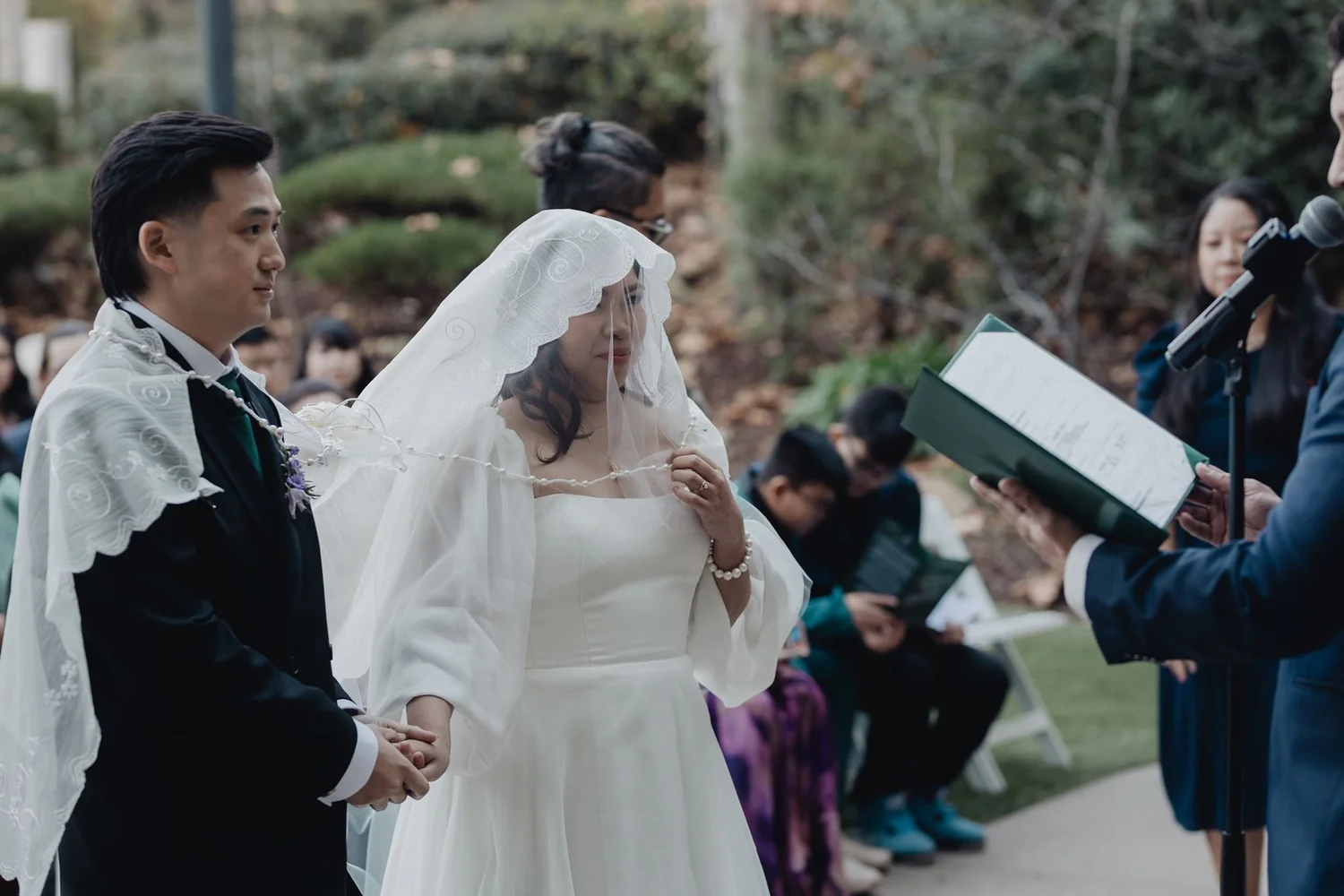
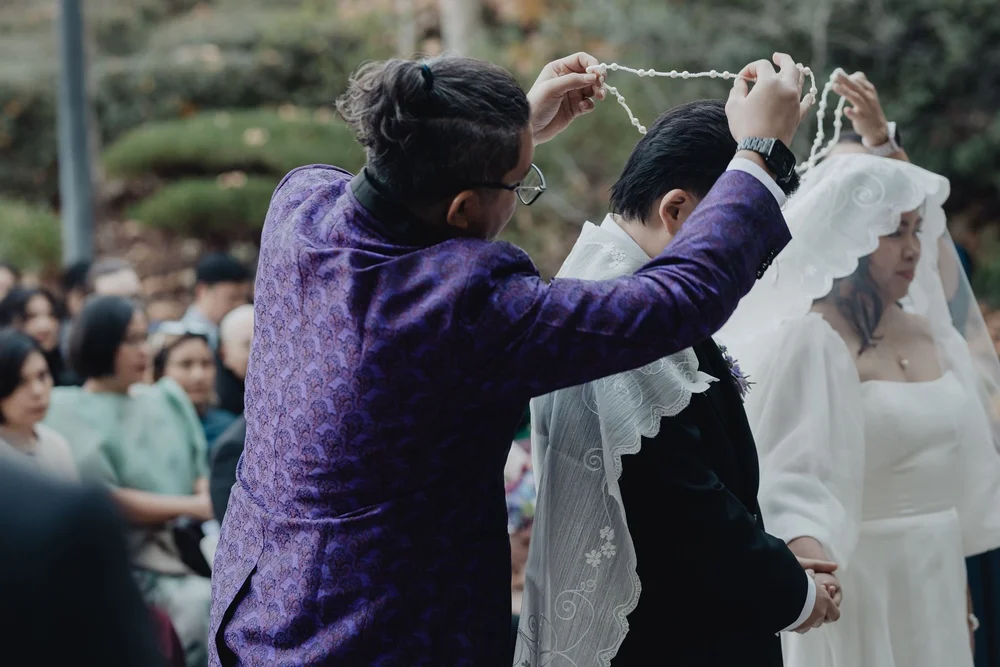
A Filipino wedding blends a Catholic Mass with a set of traditions that are family-led rather than officiant-led. The veil, the cord and the coins are placed by named sponsors — ninongs and ninangs chosen for the honour — and each of those placements is a photograph that a family will look for in the gallery by name.
We photograph Filipino weddings across Los Angeles’s Catholic churches and reception venues, blending documentary ceremony coverage with warm, editorial portraits of both families.
The Veil, the Cord and the Coins
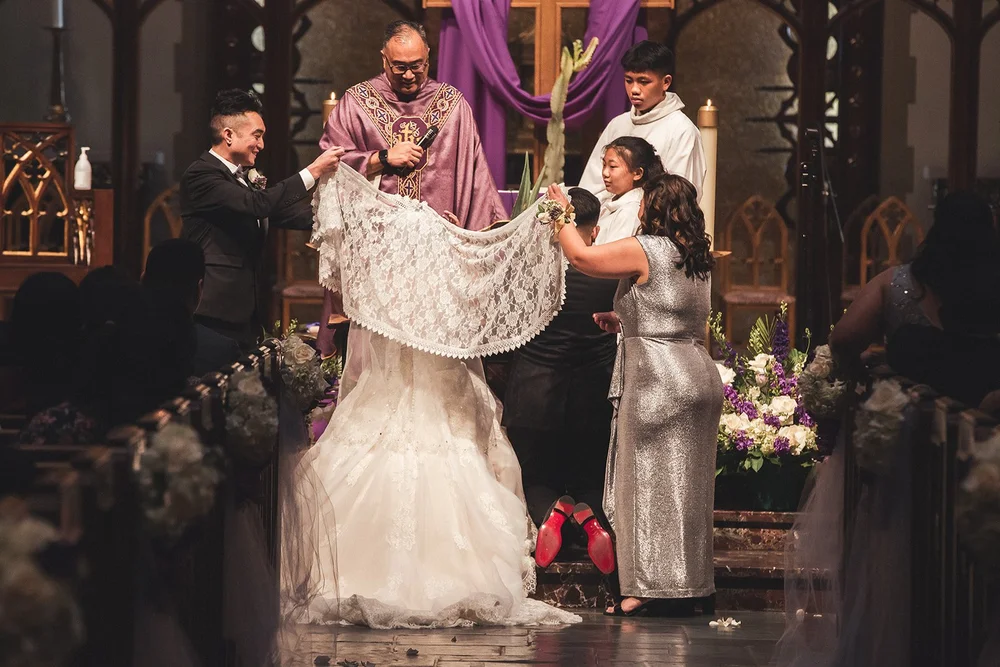
These three rituals happen back to back inside the Mass, they are quick, and they involve sponsors stepping up from the pews. If the photographer does not know the order, the frames get missed.
- The candles. Lit first, usually by the couple’s mothers. A dark church and a small flame — exposed for the flame, not the room.
- The veil. Pinned over the bride’s head and the groom’s shoulder, symbolising the two clothed as one. We shoot from the aisle so both faces and both sponsors are in frame.
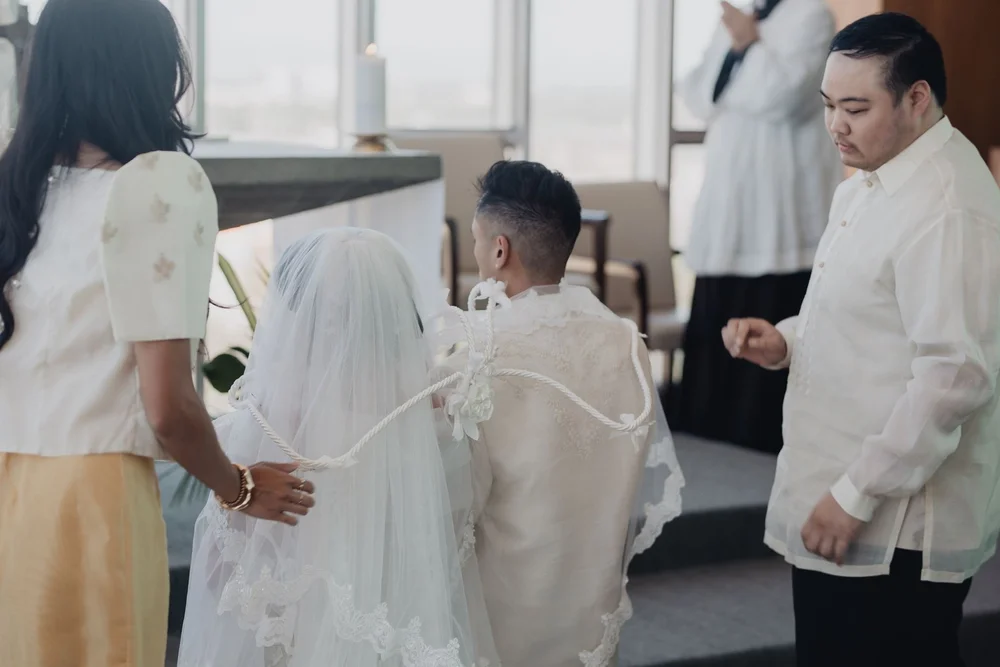
- The cord. The yugal laid in a figure of eight over the couple’s shoulders. Photographed from front-on, because the shape is the point.
- The arrhae. Thirteen coins passed between the couple’s hands. A tight frame — the hands are the image.
Our dedicated guide covers the ritual in detail on the veil, cord and coin ceremony page.
Attire, the Money Dance and the Reception
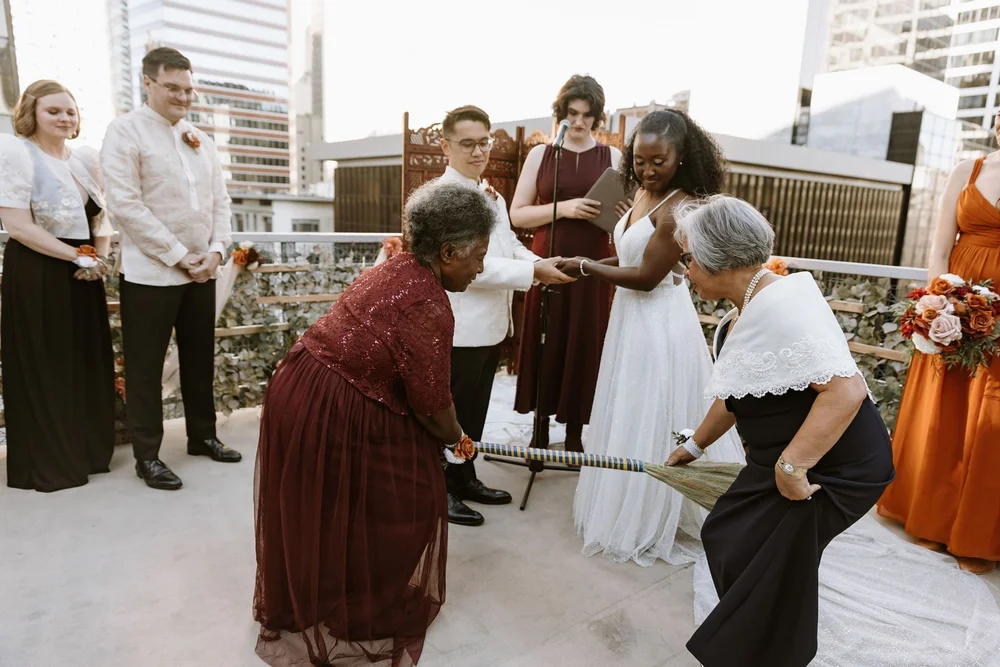
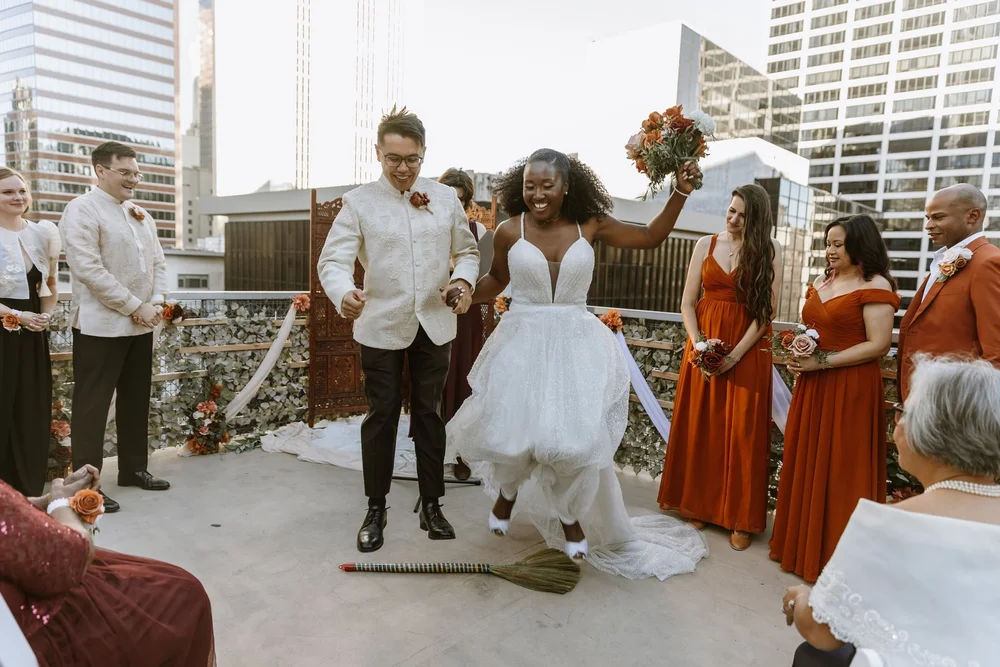
Barong Tagalog and Filipiniana attire photograph very differently from a black suit — piña and jusi fabric are semi-sheer and pick up backlight beautifully, which is worth using rather than fighting. We build a few minutes of portraits around it while the light is still good.
At the reception, the money dance is the moment the room participates: guests pin bills to the couple as they dance. It runs long and it is genuinely chaotic. We work it as a sequence rather than a series of posed frames, and we make a point of catching the grandparents pinning, because that is the frame families ask for afterwards.
How Filipino wedding timelines usually run
Most of the Filipino weddings we photograph take one of two shapes: a nuptial mass followed by an evening reception somewhere else, or a ceremony and reception at the same venue. Most have somewhere between 80 and 150 guests, and the sponsors add real time to the photographs.
A nuptial mass, then an evening reception
- 11:45 AMCoverage begins. Details, final touches, and sponsors or parents helping with the veil and blessings.
- 12:45 PMFirst look and wedding party portraits at the hotel.
- 1:30 PMTravel to the church, with time for traffic and parking.
- 2:00 PMNuptial mass with the coins, candle, veil and cord. Allow an hour to ninety minutes.
- 3:15 PMFamily and sponsor photographs at the church.
- 4:00 PMCouple and wedding party portraits at a garden, park or landmark nearby.
- 5:00 PMStandby or a break while the reception is set.
- 6:00 PMReception. Grand entrance, first dance, blessing of the food, dinner and speeches.
- 8:30 PMCake, the money dance, then open dancing.
Ceremony and reception at one venue
- 1:00 PMCoverage begins. Getting ready, details and attire.
- 2:15 PMFirst look, or portraits kept separate for each side.
- 3:00 PMWedding party and family photographs, including the sponsors.
- 3:45 PMThe couple is tucked away as guests arrive.
- 4:00 PMCeremony, thirty to forty minutes when it is not a full mass.
- 4:45 PMCocktail hour, large group photographs and couple portraits.
- 5:45 PMReception. Grand entrance, first dance, parent dances, speeches.
- 7:30 PMMoney dance, special performances and open dancing.
- 9:00 PMCoverage concludes.
What shapes a Filipino wedding timeline
The parts of the day that most often need planning, from the Filipino weddings we photograph.
Where these weddings happen
Churches and venues that recur across the Filipino weddings we photograph.
- Cathedral of Our Lady of the Angels
- Christ Cathedral and the Tower of Hope
- St. Brendan Church
- The Oviatt Penthouse
- Top of the Hub
- Green Gables Wedding Estate
- The Sanctuary
- Japanese Friendship Garden and Balboa Park
- Bahia Resort Hotel, San Diego
- Las Vegas chapels and venues
Filipino wedding photography — questions we are asked
Do you know the order of the veil, cord and coin ceremonies?
Yes, and we ask for your sponsor list in advance. Each ritual is performed by a specific pair of ninongs and ninangs, and families want the photographs identified by who did what. Knowing the order also means we are already in position rather than reacting.
Can you photograph inside a Catholic church?
Yes. Most Los Angeles parishes restrict where photographers may stand and many do not allow flash during the Mass. We confirm with the parish beforehand and shoot with fast lenses from the permitted positions rather than negotiating during the ceremony.
How long should we book?
Every collection includes eight hours, and eight is the most common booking for the Filipino weddings we photograph. About a quarter run nine to ten hours, because the Mass is long and the reception has its own program of dances and speeches. Hours can be added before the day or on the day itself.
Do you photograph other cultural weddings?
Yes — see our multicultural wedding guide, and our guides to Chinese, Nigerian and Vietnamese weddings.
Next step
Tell us about your day
Send us the date, the parish and your sponsor list — and we will tell you what the day realistically needs.